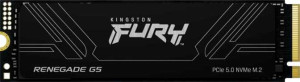
Kingston Fury Renegade G5 4TB
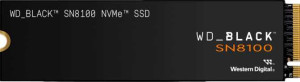
Western Digital WD Black SN8100 4TB

Kingston Fury Renegade G5 4TB Western Digital WD Black SN8100 4TB

Overview

Welcome to our in-depth specification comparison between the Kingston Fury Renegade G5 4TB and the Western Digital WD Black SN8100 4TB. Both drives share the same PCIe 5 platform and Silicon Motion SM2508 controller, making this a remarkably close contest. The key battlegrounds come down to peak random performance and long-term endurance, two factors that matter greatly depending on your workload. Read on to see exactly how these two top-tier NVMe SSDs stack up.

Common Features

  • Both drives use the M.2 form factor.
  • Both drives feature a DRAM cache.
  • Both drives are NVMe SSDs.
  • Both drives use NVMe version 2.
  • Both drives offer 4000GB of internal storage.
  • Both drives are powered by the Silicon Motion SM2508 controller.
  • Both drives use TLC NAND flash storage.
  • Both drives support PCIe version 5.
  • Both drives achieve a sequential write speed of 14000 MB/s.

Main Differences

  • Sequential read speed is 14800 MB/s on Kingston Fury Renegade G5 4TB and 14900 MB/s on Western Digital WD Black SN8100 4TB.
  • Random read speed is 2200000 IOPS on Kingston Fury Renegade G5 4TB and 2300000 IOPS on Western Digital WD Black SN8100 4TB.
  • Random write speed is 2200000 IOPS on Kingston Fury Renegade G5 4TB and 2400000 IOPS on Western Digital WD Black SN8100 4TB.
  • Terabytes Written (TBW) endurance rating is 4000 TBW on Kingston Fury Renegade G5 4TB and 2400 TBW on Western Digital WD Black SN8100 4TB.
Specs Comparison
Kingston Fury Renegade G5 4TB

Kingston Fury Renegade G5 4TB

Western Digital WD Black SN8100 4TB

Western Digital WD Black SN8100 4TB

Read speed:
sequential read speed 14800 MB/s 14900 MB/s
random read speed 2200000 IOPS 2300000 IOPS

Both drives operate at the very top of consumer NVMe performance, with sequential read speeds of 14800 MB/s (Fury Renegade G5) and 14900 MB/s (WD Black SN8100) — a difference so marginal it is essentially unmeasurable in real-world workloads. At these speeds, large sequential transfers such as loading massive game assets, moving multi-gigabyte video files, or reading large databases are bottlenecked far more by software overhead and system memory than by any gap between these two drives.

The random read performance tells a similar story: 2200000 IOPS versus 2300000 IOPS in favor of the SN8100. Random IOPS matter most under heavy multitasking, OS responsiveness, and database-style workloads with many small, scattered reads. A 100K IOPS advantage sounds large in absolute terms, but as a roughly 4.5% delta at this performance tier, the practical difference in day-to-day use — even in demanding professional scenarios — will be imperceptible without purpose-built benchmarking tools.

The WD Black SN8100 holds a narrow technical edge in both sequential and random read metrics, but the margins are too slim to be decisive for any typical use case. For all practical purposes, read performance between these two drives is a near-perfect tie, and neither choice will be a limiting factor in a read-speed-sensitive workload.

Write speed:
sequential write speed 14000 MB/s 14000 MB/s
random write speed 2200000 IOPS 2400000 IOPS

Sequential write performance is a dead heat: both the Fury Renegade G5 and the WD Black SN8100 cap out at 14000 MB/s. For sustained write workloads — ingesting large video captures, writing full drive backups, or transferring huge project folders — users will see no meaningful difference between the two drives. At this speed tier, the bottleneck in most systems will be elsewhere long before the drive itself becomes the constraint.

Where a distinction does emerge is in random write IOPS. The SN8100 posts 2400000 IOPS against the Renegade G5's 2200000 IOPS — a roughly 9% advantage. Random write performance is the metric most closely tied to real-world system feel under load: compiling large codebases, running virtual machines, handling database write transactions, or managing simultaneous file operations all lean heavily on this number. A 200K IOPS gap is more tangible than the read differential analyzed earlier, though whether it surfaces as a perceptible difference depends almost entirely on how write-intensive and concurrent the target workload is.

The WD Black SN8100 takes a clearer — if still modest — edge in this group. Sequential writes are tied, but the SN8100's random write advantage is the most consequential gap seen across both drives' speed specs so far, giving it a slight but genuine lead for write-heavy professional and prosumer workloads.

General info:
type M2 M2
SSD cache DRAM cache DRAM cache
Is an NVMe SSD
NVMe version 2 2
internal storage 4000GB 4000GB
release date April 2025 May 2025
controller Silicon Motion SM2508 Silicon Motion SM2508
SSD storage type TLC TLC
PCI Express (PCIe) version 5 5
Controller channels 8 8
Terabytes Written (TBW) 4000 2400
warranty period 5 years 5 years
Has an integrated heatsink
has RGB lighting

At the architectural level, these two drives are remarkably alike. Both use the same Silicon Motion SM2508 controller with 8 channels, the same PCIe 5.0 interface, NVMe 2.0 protocol, TLC NAND storage type, and DRAM cache — meaning the foundational engineering decisions are essentially identical. For buyers evaluating platform compatibility or cache-related sustained performance behavior, there is nothing to separate them here.

The one meaningful divergence in this group is endurance. The Fury Renegade G5 carries a 4000 TBW (Terabytes Written) rating versus 2400 TBW for the WD Black SN8100 — a 67% higher endurance ceiling. TBW is the manufacturer's rated threshold before NAND wear becomes a concern, and while most consumer users will never approach either limit, the gap is significant for write-intensive professional environments: NAS-adjacent workloads, continuous logging, video editing with heavy scratch disk use, or virtualization hosts that write aggressively day after day. For those users, the Renegade G5's rating provides a substantially longer projected lifespan under load.

Both drives share a 5-year warranty, so the endurance advantage of the Renegade G5 is the decisive factor in this group. For mainstream users the difference is academic, but for high-write workloads the Kingston Fury Renegade G5 holds a clear and quantifiable edge in long-term durability confidence.

Comparison Summary & Verdict

After examining every specification, these two drives are evenly matched in most areas, both delivering PCIe 5 speeds, TLC NAND, DRAM cache, and an identical sequential write speed of 14000 MB/s. Where they diverge is telling: the Western Digital WD Black SN8100 4TB edges ahead in random read and write IOPS, making it the stronger choice for latency-sensitive workloads like game streaming or heavy multitasking. On the other hand, the Kingston Fury Renegade G5 4TB offers a significantly higher TBW endurance rating of 4000 versus 2400, making it the more compelling option for users who write large volumes of data regularly and need a drive built to last.

Kingston Fury Renegade G5 4TB
Buy Kingston Fury Renegade G5 4TB if...

Buy the Kingston Fury Renegade G5 4TB if long-term durability is your priority, as its 4000 TBW endurance rating far exceeds that of the WD Black SN8100 4TB.

Western Digital WD Black SN8100 4TB
Buy Western Digital WD Black SN8100 4TB if...

Buy the Western Digital WD Black SN8100 4TB if you need the highest random read and write performance, as it leads in both IOPS categories over the Kingston Fury Renegade G5 4TB.