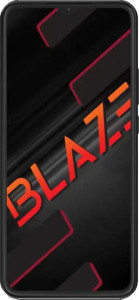
Lava Blaze Amoled 2
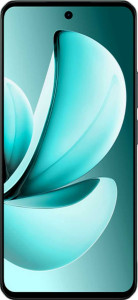
Realme C71

Lava Blaze Amoled 2 Realme C71

Overview

Welcome to our detailed spec comparison between the Lava Blaze Amoled 2 and the Realme C71. These two budget-friendly Android 15 smartphones may share the same screen size and base storage, but they take very different approaches to display quality, raw performance, and everyday durability. From display technology and chipset architecture to battery capacity and connectivity options, this head-to-head breakdown will help you understand which device truly fits your needs.

Common Features

  • Both phones do not have a rugged build.
  • Neither phone can be folded.
  • Both phones share the same screen size of 6.67″.
  • Both phones have a 120Hz refresh rate.
  • Neither phone has branded damage-resistant glass.
  • HDR10 support is not available on either phone.
  • HDR10+ support is not available on either phone.
  • Dolby Vision support is not available on either phone.
  • Neither phone has a secondary screen.
  • Both phones have a touch screen.
  • Both phones offer 128GB of internal storage.
  • Both phones come with 6GB of RAM.
  • Both phones have integrated LTE.
  • Both phones support 64-bit processing.
  • Both phones have integrated graphics.
  • Both phones support OpenGL ES version 3.2.
  • Both phones use big.LITTLE technology.
  • Both phones have 8 CPU threads.
  • Both phones have a 50 MP main camera.
  • Neither phone has a dual-lens or multi-lens main camera.
  • Neither phone has built-in optical image stabilization.
  • Both phones record video at 1080p 30fps on the main camera.
  • Neither phone has a dual-tone LED flash.
  • Both phones have a single LED flash.
  • Neither phone has a BSI sensor.
  • Both phones have a CMOS sensor.
  • Both phones run Android 15.
  • Both phones have clipboard warnings.
  • Both phones have location privacy options.
  • Both phones have camera and microphone privacy options.
  • Mail Privacy Protection is not available on either phone.
  • Both phones support theme customization.
  • Both phones can block app tracking.
  • Neither phone blocks cross-site tracking.
  • Neither phone supports wireless charging.
  • Both phones support fast charging.
  • Neither phone has a removable battery.
  • Both phones have a battery level indicator.
  • Both phones have a rechargeable battery.
  • Neither phone has stereo speakers.
  • aptX support is not available on either phone.
  • LDAC support is not available on either phone.
  • aptX HD support is not available on either phone.
  • aptX Adaptive support is not available on either phone.
  • aptX Lossless support is not available on either phone.
  • Both phones support Wi-Fi 4 (802.11n) and Wi-Fi 5 (802.11ac).
  • Both phones support dual SIM cards.
  • Both phones have an external memory slot.
  • Both phones have a USB Type-C port.
  • Both phones use USB version 2.
  • Both phones have a fingerprint scanner.
  • Emergency SOS via satellite is not available on either phone.
  • Crash detection is not available on either phone.
  • Both phones have a video light.
  • Neither phone has a sapphire glass display.
  • Neither phone has an e-paper display.

Main Differences

  • Water resistance is rated as water resistant on Lava Blaze Amoled 2 and waterproof on Realme C71.
  • Ingress Protection rating is IP64 on Lava Blaze Amoled 2 and IP68 on Realme C71.
  • Display type is OLED/AMOLED on Lava Blaze Amoled 2 and LCD IPS on Realme C71.
  • Pixel density is 395 ppi on Lava Blaze Amoled 2 and 264 ppi on Realme C71.
  • Resolution is 1080 x 2400 px on Lava Blaze Amoled 2 and 720 x 1604 px on Realme C71.
  • The chipset is Mediatek Dimensity 7060 on Lava Blaze Amoled 2 and Unisoc T7250 on Realme C71.
  • The GPU is IMG BXM-8-256 on Lava Blaze Amoled 2 and Mali G57 on Realme C71.
  • CPU speed is 2 x 2.6 & 6 x 2 GHz on Lava Blaze Amoled 2 and 2 x 1.8 & 6 x 1.6 GHz on Realme C71.
  • GPU clock speed is 900 MHz on Lava Blaze Amoled 2 and 850 MHz on Realme C71.
  • RAM speed is 3200 MHz on Lava Blaze Amoled 2 and 1866 MHz on Realme C71.
  • Semiconductor size is 6 nm on Lava Blaze Amoled 2 and 12 nm on Realme C71.
  • Maximum memory amount is 16GB on Lava Blaze Amoled 2 and 12GB on Realme C71.
  • GPU execution units number 4 on Lava Blaze Amoled 2 and 2 on Realme C71.
  • Thermal Design Power is 5W on Lava Blaze Amoled 2 and 10W on Realme C71.
  • DDR memory version is 5 on Lava Blaze Amoled 2 and 4 on Realme C71.
  • L3 cache is 2 MB on Lava Blaze Amoled 2 and 1 MB on Realme C71.
  • Front camera resolution is 8 MP on Lava Blaze Amoled 2 and 5 MP on Realme C71.
  • Battery capacity is 5000 mAh on Lava Blaze Amoled 2 and 6300 mAh on Realme C71.
  • Charging speed is 33W on Lava Blaze Amoled 2 and 45W on Realme C71.
  • A 3.5 mm audio jack is absent on Lava Blaze Amoled 2 but present on Realme C71.
  • 5G support is available on Lava Blaze Amoled 2 but not available on Realme C71.
  • Bluetooth version is 5.3 on Lava Blaze Amoled 2 and 5.2 on Realme C71.
  • NFC support is absent on Lava Blaze Amoled 2 but present on Realme C71.
  • Download speed is 2770 MBits/s on Lava Blaze Amoled 2 and 300 MBits/s on Realme C71.
  • Upload speed is 1250 MBits/s on Lava Blaze Amoled 2 and 150 MBits/s on Realme C71.
  • A gyroscope is present on Lava Blaze Amoled 2 but absent on Realme C71.
Specs Comparison
Lava Blaze Amoled 2

Lava Blaze Amoled 2

Realme C71

Realme C71

Design:
water resistance Water resistant Waterproof
Ingress Protection (IP) rating IP64 IP68
has a rugged build
can be folded

Both phones share a non-rugged, non-foldable form factor, so the real differentiator in this group comes down to water and dust protection. The Lava Blaze Amoled 2 carries an IP64 rating, which means it is fully protected against dust ingress and can handle water splashes from any direction — but it cannot survive submersion. The Realme C71 steps up significantly with an IP68 rating, meaning it is completely dust-tight and can withstand being submerged in water under defined conditions.

In practical terms, IP64 is adequate for rain, sweaty hands, or accidental spills, but any deeper contact with water poses a real risk. IP68, by contrast, gives users meaningful peace of mind in scenarios like dropping the phone in a sink or getting caught in a downpour — situations where IP64 could result in damage. This is not a marginal difference; it represents a fundamentally higher level of protection.

The Realme C71 holds a clear advantage in this group. Its IP68 certification offers substantially superior water resistance compared to the Lava's IP64, making it the better choice for users who prioritize device durability in wet or dusty environments.

Display:
Display type OLED/AMOLED LCD, IPS
screen size 6.67" 6.67"
pixel density 395 ppi 264 ppi
resolution 1080 x 2400 px 720 x 1604 px
refresh rate 120Hz 120Hz
has branded damage-resistant glass
supports HDR10
supports HDR10+
supports Dolby Vision
Has a secondary screen
has a touch screen

Both phones share an identical 6.67-inch screen size and a 120Hz refresh rate, so the smooth scrolling experience is comparable on paper. Where they diverge sharply, however, is in panel technology and resolution. The Lava Blaze Amoled 2 uses an AMOLED display, which delivers true blacks, higher contrast, and more vibrant colors by lighting pixels individually — while the Realme C71 relies on an IPS LCD panel, which uses a backlight and cannot match AMOLED's depth of contrast or color richness.

The resolution gap compounds this difference significantly. The Lava's 1080 x 2400 px resolution at 395 ppi ensures sharp, detailed imagery where individual pixels are essentially invisible at normal viewing distances. The Realme C71's 720 x 1604 px at 264 ppi is noticeably lower — text edges appear softer, fine detail in images is lost, and the overall visual experience feels less refined. Neither phone supports HDR10, HDR10+, or Dolby Vision, so that aspect is a wash.

The Lava Blaze Amoled 2 wins this category decisively. The combination of an AMOLED panel and a significantly higher pixel density gives it a substantial real-world display advantage, whether users are streaming video, reading text, or browsing social media.

Performance:
internal storage 128GB 128GB
RAM 6GB 6GB
Chipset (SoC) name Mediatek Dimensity 7060 Unisoc T7250
GPU name IMG BXM-8-256 Mali G57
CPU speed 2 x 2.6 & 6 x 2 GHz 2 x 1.8 & 6 x 1.6 GHz
GPU clock speed 900 MHz 850 MHz
Has integrated LTE
RAM speed 3200 MHz 1866 MHz
semiconductor size 6 nm 12 nm
Supports 64-bit
Has integrated graphics
OpenGL ES version 3.2 3.2
Uses big.LITTLE technology
CPU threads 8 threads 8 threads
Has TrustZone
OpenCL version 2 2
maximum memory amount 16GB 12GB
uses multithreading
GPU execution units 4 2
Thermal Design Power (TDP) 5W 10W
DDR memory version 5 4
shading units 64 64
L3 cache 2 MB 1 MB

On the surface, these two phones look identical — same 6GB of RAM, same 128GB of storage, same 8-thread CPU architecture. Dig into the silicon, however, and meaningful gaps emerge. The Lava Blaze Amoled 2 runs on the Mediatek Dimensity 7060, built on a 6nm process node, while the Realme C71 uses the Unisoc T7250 on a 12nm node. A smaller process node generally means more transistors per mm², translating to better performance-per-watt and less heat generation — a real advantage in sustained workloads.

The CPU clock speeds reinforce this gap. The Lava's cores run at up to 2.6 GHz on its performance cluster versus the Realme's 1.8 GHz, and even the efficiency cores differ: 2.0 GHz versus 1.6 GHz. The memory subsystem tells a similar story — the Lava uses LPDDR5 RAM at 3200 MHz, nearly double the Realme's LPDDR4 at 1866 MHz, which directly impacts how quickly data moves between the CPU and memory. The Lava also doubles the Realme's GPU execution units (4 vs 2), carries a larger 2 MB L3 cache, and has a notably lower TDP of 5W compared to the Realme's 10W — meaning it accomplishes more while consuming less power.

The Lava Blaze Amoled 2 holds a clear and well-rounded performance advantage. Its more modern chipset, faster memory, superior GPU configuration, and lower thermal footprint collectively point to a snappier everyday experience and better sustained performance under load.

Cameras:
megapixels (main camera) 50 MP 50 MP
Has a dual-lens (or multi-lens) main camera
megapixels (front camera) 8MP 5MP
has built-in optical image stabilization
video recording (main camera) 1080 x 30 fps 1080 x 30 fps
Has a dual-tone LED flash
number of flash LEDs 1 1
has a BSI sensor
has a CMOS sensor
has continuous autofocus when recording movies
Has phase-detection autofocus for photos
supports slow-motion video recording
has a built-in HDR mode
has manual exposure
has a flash
optical zoom 0x 0x
has manual ISO
has a serial shot mode
has manual focus
has a front camera
Has laser autofocus
Shoots 360° panorama
has manual white balance
shoots raw
has touch autofocus
has manual shutter speed
can create panoramas in-camera
Has timelapse function
Has a front-facing LED flash
has a dual-lens (or multi-lens) front camera
supports HDR10 recording
supports Dolby Vision recording
has a front-facing camera under the display
Has a RGB LED flash
has 3D photo/video recording capabilities

The rear camera systems on these two phones are, for all practical purposes, identical. Both shoot at 50 MP with a single-lens setup, cap video at 1080p at 30fps, and share the same autofocus stack — phase-detection, continuous, and touch autofocus are all present on both. Manual controls including ISO, exposure, focus, and white balance are equally available, as are HDR mode, slow-motion, timelapse, and panorama. Neither offers optical zoom or OIS. Any difference in rear camera output would come down to software and sensor quality, neither of which is specified here.

The only spec-level differentiator in this group is the front camera. The Lava Blaze Amoled 2 features an 8 MP selfie shooter versus the Realme C71's 5 MP. Higher megapixel count in a front camera typically translates to more detail in selfies and better clarity during video calls, particularly when cropping or zooming in on a shot. It is not a dramatic gap, but it is the sole distinguishing factor in an otherwise mirrored camera specification set.

The Lava Blaze Amoled 2 takes a narrow edge in this category purely on the strength of its higher-resolution front camera. The rear systems are functionally equivalent based on the provided specs, so users who prioritize selfie quality will find the Lava marginally more capable.

Operating system:
Android version Android 15 Android 15
has clipboard warnings
has location privacy options
has camera/microphone privacy options
has Mail Privacy Protection
has theme customization
can block app tracking
blocks cross-site tracking
has on-device machine learning
has notification permissions
has media picker
Can play games while they download
has dark mode
has Wi-Fi password sharing
has battery health check
has an extra dim mode
has focus modes
has dynamic theming
can offload apps
Has customizable notifications
has Live Text
has full-page screenshots
supports split screen
gets direct OS updates
has PiP
Can be used as a PC
Has sharing intents
has a child lock
Supports widgets
Is free and open source
Has offline voice recognition
has voice commands
Tracks the current position of a mobile device
is a multi-user system
has Quick Start

Rarely does a spec group produce a result this clear-cut: the Lava Blaze Amoled 2 and the Realme C71 run Android 15 and are, by every data point provided, completely identical in their software feature set. Privacy controls — including location, camera, and microphone permissions, app tracking blocking, and clipboard warnings — are present on both. Productivity staples like split-screen, Picture-in-Picture, widgets, and full-page screenshots are equally available. So are quality-of-life features such as dark mode, dynamic theming, battery health check, and extra dim mode.

This is a complete tie. Neither phone gets direct OS updates, neither supports cross-site tracking blocking or Wi-Fi password sharing, and both share the same on-device machine learning and offline voice recognition capabilities. There is no software feature, privacy tool, or system utility in the provided data that distinguishes one from the other.

Battery:
battery power 5000 mAh 6300 mAh
has wireless charging
Supports fast charging
charging speed 33W 45W
has a removable battery
has a battery level indicator
has a rechargeable battery

Battery is one area where the Realme C71 fights back decisively. Its 6300 mAh cell holds a substantial 1300 mAh advantage over the Lava Blaze Amoled 2's 5000 mAh — a gap large enough to translate into meaningfully longer screen-on time, particularly for heavy users who stream video, game, or browse for extended periods. A 5000 mAh battery is already competitive at this price tier, but 6300 mAh pushes the Realme into genuinely multi-day territory for moderate users.

The Realme C71 also charges faster, at 45W versus the Lava's 33W. Faster charging is especially relevant given the larger battery — a higher wattage helps offset the additional capacity, keeping top-up times reasonable. The Lava's 33W is not slow by any means, but paired with a smaller battery, it ends up being the lesser proposition on both fronts. Neither phone supports wireless charging, so that is a non-factor.

The Realme C71 wins this category cleanly, offering both a larger battery and faster wired charging. For users who prioritize longevity between charges — particularly those who travel frequently or have limited access to power outlets — this is a significant practical advantage.

Audio:
has a socket for a 3.5 mm audio jack
has stereo speakers
has aptX
has LDAC
has aptX HD
has aptX Adaptive
has aptX Lossless

Audio is a lean category for both phones, with neither offering stereo speakers or any high-quality Bluetooth codec support — no aptX, LDAC, or their variants. The single differentiator here is the presence of a 3.5mm headphone jack on the Realme C71, which the Lava Blaze Amoled 2 omits entirely.

For users who own wired headphones — whether for commuting, gaming, or casual listening — the absence of a headphone jack on the Lava is a genuine daily inconvenience, requiring either a USB-C adapter or a switch to Bluetooth audio. The Realme's jack eliminates that friction entirely, offering plug-and-play compatibility with any standard wired headset or earphones without additional accessories.

The Realme C71 takes this category by virtue of its 3.5mm jack alone. It is a single spec, but one with tangible everyday impact for a segment of users — particularly in a budget phone market where wired audio accessories remain widely used.

Connectivity & Features:
release date August 2025 June 2025
has 5G support
Wi-Fi version Wi-Fi 4 (802.11n), Wi-Fi 5 (802.11ac) Wi-Fi 4 (802.11n), Wi-Fi 5 (802.11ac)
SIM cards 2 SIM 2 SIM
Bluetooth version 5.3 5.2
has an external memory slot
Has USB Type-C
USB version 2 2
has NFC
download speed 2770 MBits/s 300 MBits/s
upload speed 1250 MBits/s 150 MBits/s
Has a fingerprint scanner
has emergency SOS via satellite
has crash detection
is DLNA-certified
has a gyroscope
supports ANT+
Has a heart rate monitor
has GPS
has a compass
supports Wi-Fi
Has an infrared sensor
has an accelerometer
has a cellular module
Has a barometer
has an HDMI output
Uses 3D facial recognition
Has an iris scanner
Stylus included
supports Galileo
Has motion tracking
Has optical tracking
Has a built-in projector

Connectivity is where the trade-offs between these two phones get genuinely interesting. The Lava Blaze Amoled 2 supports 5G, while the Realme C71 is limited to 4G LTE — a distinction that is directly reflected in their cellular speeds: the Lava reaches up to 2770 Mbps download versus the Realme's 300 Mbps. For users in areas with 5G coverage, this means dramatically faster mobile data, lower latency, and better future-proofing as 5G networks continue to expand. The Realme's 4G ceiling, by contrast, is adequate today but will age less gracefully.

The Realme C71 counters with NFC, which the Lava lacks entirely. NFC enables contactless payments and quick device pairing — a meaningful convenience for users who rely on mobile wallets. The Lava edges ahead on Bluetooth with version 5.3 versus 5.2, a minor difference, and also includes a gyroscope that the Realme omits — relevant for gaming, navigation apps, and augmented reality experiences. Both share the same Wi-Fi standards, dual SIM support, expandable storage, USB-C 2.0, fingerprint scanner, GPS, and Galileo.

This category does not have a single clean winner — it depends on user priorities. The Lava Blaze Amoled 2 has the broader connectivity advantage with 5G and a gyroscope, while the Realme C71 appeals to users who value NFC for contactless payments. On balance, 5G is the more impactful differentiator for most users, giving the Lava a slight overall edge here.
Miscellaneous:
has a video light
Has sapphire glass display
Has an e-paper display

The Miscellaneous category offers nothing to separate these two phones. Both have a video light, neither features sapphire glass nor an e-paper display — every data point is identical. This is a complete tie, and no meaningful conclusion can be drawn from the provided specs beyond that.

Comparison Summary & Verdict

After examining every spec category, it is clear that each phone serves a distinct type of user. The Lava Blaze Amoled 2 stands out with its OLED display at 395 ppi, a more powerful Dimensity 7060 chipset built on a 6 nm process, 5G connectivity, and a gyroscope — making it the stronger pick for users who value visual quality and future-proof networking. The Realme C71, on the other hand, counters with a superior IP68 waterproof rating, a larger 6300 mAh battery with 45W fast charging, a 3.5 mm headphone jack, and NFC support — advantages that appeal to users who prioritize endurance, durability, and everyday convenience. Both phones run Android 15 and offer 128GB of storage, so the choice ultimately comes down to your lifestyle priorities.

Lava Blaze Amoled 2
Buy Lava Blaze Amoled 2 if...

Buy the Lava Blaze Amoled 2 if you want a sharper OLED display, a more powerful chipset, and 5G connectivity for faster mobile speeds.

Realme C71
Buy Realme C71 if...

Buy the Realme C71 if you prioritize a larger battery with faster charging, full IP68 waterproofing, a headphone jack, and NFC support for contactless payments.