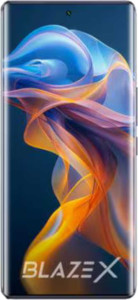
Lava Bold 5G
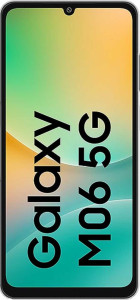
Samsung Galaxy M06 5G

Lava Bold 5G Samsung Galaxy M06 5G

Overview

When choosing between the Lava Bold 5G and the Samsung Galaxy M06 5G, shoppers are faced with two budget-friendly 5G smartphones that share the same processor and storage, yet take noticeably different paths in display quality, camera setup, and everyday usability. From screen technology to charging speeds, and from audio output to software version, these two devices each make distinct trade-offs worth examining closely before making a purchase decision.

Common Features

  • Neither the Lava Bold 5G nor the Samsung Galaxy M06 5G has a rugged build.
  • Neither product can be folded.
  • Both phones have a touchscreen.
  • Damage-resistant branded glass is not available on either product.
  • HDR10 support is not available on either product.
  • HDR10+ support is not available on either product.
  • Always-On Display is not available on either product.
  • Dolby Vision support is not available on either product.
  • Neither phone has a secondary screen.
  • Both phones use the MediaTek Dimensity 6300 chipset.
  • Both phones offer 128GB of internal storage.
  • The GPU on both phones is the Arm Mali-G57 MC2.
  • Both phones share the same CPU speed of 2 x 2.4 and 6 x 2 GHz.
  • Both phones have a 5000 mAh battery.
  • Fast charging is supported on both phones.
  • Neither phone supports wireless charging.
  • Both phones have a non-removable battery.
  • Both phones support 5G connectivity.
  • Both phones support Wi-Fi 4 (802.11n) and Wi-Fi 5 (802.11ac).
  • Both phones have a USB Type-C port with USB version 2.
  • Both phones accommodate 2 SIM cards and have an external memory slot.
  • A fingerprint scanner is present on both phones.
  • Neither phone has a 3.5mm audio jack.
  • Optical image stabilization is not available on the main camera of either phone.
  • Both phones record main camera video at 1080p 30fps.
  • Both phones have a CMOS sensor.
  • Phase-detection autofocus for photos is available on both phones.
  • Continuous autofocus when recording movies is supported on both phones.
  • Both phones include clipboard warnings and location privacy options.
  • Camera and microphone privacy options are available on both phones.
  • App tracking can be blocked on both phones.
  • On-device machine learning is present on both phones.

Main Differences

  • Water resistance is present on the Lava Bold 5G but not available on the Samsung Galaxy M06 5G.
  • The Lava Bold 5G weighs 183g while the Samsung Galaxy M06 5G weighs 191g.
  • The Lava Bold 5G is 8.5mm thick while the Samsung Galaxy M06 5G is 8mm thick.
  • The Lava Bold 5G is 73.9mm wide while the Samsung Galaxy M06 5G is 77.4mm wide.
  • The Lava Bold 5G is 162.4mm tall while the Samsung Galaxy M06 5G is 167.4mm tall.
  • The display type is OLED/AMOLED on the Lava Bold 5G and LCD IPS on the Samsung Galaxy M06 5G.
  • Screen size is 6.67″ on the Lava Bold 5G and 6.74″ on the Samsung Galaxy M06 5G.
  • Pixel density is 395 ppi on the Lava Bold 5G and 260 ppi on the Samsung Galaxy M06 5G.
  • Resolution is 1080 x 2400 px on the Lava Bold 5G and 720 x 1600 px on the Samsung Galaxy M06 5G.
  • The display refresh rate is 120Hz on the Lava Bold 5G and 90Hz on the Samsung Galaxy M06 5G.
  • RAM is 8GB on the Lava Bold 5G and 6GB on the Samsung Galaxy M06 5G.
  • The main camera is a dual-lens setup (64 and 2 MP) on the Lava Bold 5G, while the Samsung Galaxy M06 5G has a single 50MP main camera.
  • The front camera is 16MP on the Lava Bold 5G and 8MP on the Samsung Galaxy M06 5G.
  • Built-in HDR mode is available on the Lava Bold 5G but not on the Samsung Galaxy M06 5G.
  • The Lava Bold 5G runs Android 14 while the Samsung Galaxy M06 5G runs Android 15.
  • App offloading is supported on the Samsung Galaxy M06 5G but not on the Lava Bold 5G.
  • Charging speed is 33W on the Lava Bold 5G and 25W on the Samsung Galaxy M06 5G.
  • Stereo speakers are present on the Samsung Galaxy M06 5G but not on the Lava Bold 5G.
  • Bluetooth version is 5.2 on the Lava Bold 5G and 5.3 on the Samsung Galaxy M06 5G.
  • NFC is available on the Lava Bold 5G but not on the Samsung Galaxy M06 5G.
  • A curved display is featured on the Lava Bold 5G but not on the Samsung Galaxy M06 5G.
Specs Comparison
Lava Bold 5G

Lava Bold 5G

Samsung Galaxy M06 5G

Samsung Galaxy M06 5G

Design:
water resistance Water resistant None
weight 183 g 191 g
thickness 8.5 mm 8 mm
width 73.9 mm 77.4 mm
height 162.4 mm 167.4 mm
volume 102.01156 cm³ 103.65408 cm³
has a rugged build
can be folded

In terms of physical footprint, the Samsung Galaxy M06 5G is the larger of the two, measuring 167.4 × 77.4 mm compared to the Lava Bold 5G's 162.4 × 73.9 mm. That extra width and height make the M06 5G noticeably less one-hand-friendly, and its slightly higher weight of 191 g versus 183 g compounds that feel over extended use — a meaningful difference for users sensitive to device heft.

Where the Lava Bold 5G pulls ahead decisively is water resistance: it offers a rated level of protection, while the Samsung Galaxy M06 5G has none at all. In practical terms, this means the Lava can better survive splashes, rain, or accidental spills — a genuine everyday durability advantage, especially at this segment of the market where rugged builds are absent on both devices.

The Samsung counters with a marginally slimmer profile at 8 mm thick versus 8.5 mm, which contributes to a slightly more premium in-hand feel despite the larger chassis. Overall though, the Lava Bold 5G holds the design edge for most users: it is lighter, more compact, and critically, water resistant — a combination that translates directly to greater everyday practicality.

Display:
Display type OLED/AMOLED LCD, IPS
screen size 6.67" 6.74"
pixel density 395 ppi 260 ppi
resolution 1080 x 2400 px 720 x 1600 px
refresh rate 120Hz 90Hz
has branded damage-resistant glass
supports HDR10
supports HDR10+
Always-On Display
supports Dolby Vision
Has a secondary screen
has a touch screen

The display gap between these two devices is substantial and immediately felt in daily use. The Lava Bold 5G uses an OLED/AMOLED panel, delivering true blacks, vivid contrast, and more power-efficient rendering of dark content — qualities that an LCD IPS panel like the one on the Samsung Galaxy M06 5G simply cannot match at a physical level, regardless of size.

Resolution compounds that advantage further. The Lava's 1080 × 2400 px screen at 395 ppi renders text and images with sharp clarity, while the M06 5G's 720 × 1600 px panel lands at just 260 ppi — a difference that is plainly visible when reading fine text or viewing detailed images. The Lava also edges ahead on refresh rate with 120Hz versus 90Hz, meaning smoother scrolling and more responsive touch interactions across the UI.

The Samsung's marginally larger 6.74″ screen versus 6.67″ is the only display metric where it holds any ground, but more screen area means little when the underlying panel technology and pixel density trail this significantly. The Lava Bold 5G holds a clear display advantage across every meaningful dimension — panel quality, sharpness, and fluidity.

Performance:
internal storage 128GB 128GB
RAM 8GB 6GB
Chipset (SoC) name MediaTek Dimensity 6300 MediaTek Dimensity 6300
GPU name Arm Mali-G57 MC2 Arm Mali-G57 MC2
CPU speed 2 x 2.4 & 6 x 2 GHz 2 x 2.4 & 6 x 2 GHz
Geekbench 6 result (multi) 2012 2012
Geekbench 6 result (single) 782 782
GPU clock speed 950 MHz 950 MHz
Has integrated LTE
RAM speed 2133 MHz 2133 MHz
semiconductor size 6 nm 6 nm
Supports 64-bit
DirectX version DirectX 12 DirectX 12
Has integrated graphics
Uses big.LITTLE technology
CPU threads 8 threads 8 threads
Uses HMP
maximum memory bandwidth 17.07 GB/s 17.07 GB/s
L2 cache 1 MB 1 MB
L1 cache 512 KB 512 KB
maximum memory amount 12GB 12GB
uses multithreading
DDR memory version 4 4
L3 cache 2 MB 2 MB

Both devices are powered by the identical MediaTek Dimensity 6300 chipset — same CPU cores, same Arm Mali-G57 MC2 GPU, same 6 nm fabrication process, and identical Geekbench 6 scores of 2012 multi-core and 782 single-core. In practice, this means raw processing power, thermal behavior, and GPU performance in gaming or graphics-intensive tasks will be indistinguishable between the two phones.

The only differentiator within this group is RAM: the Lava Bold 5G ships with 8 GB versus the Samsung Galaxy M06 5G's 6 GB. While both share the same memory architecture and speed, more RAM directly translates to better multitasking — keeping more apps alive in the background, smoother switching between heavy applications, and greater headroom as software demands grow over time. Both phones support up to 12 GB maximum memory, suggesting the M06 5G may offer a higher RAM variant elsewhere, but based solely on the specs provided, the Lava ships with the larger allocation.

Given the otherwise perfectly matched silicon, the Lava Bold 5G holds a narrow but real performance edge purely due to its higher base RAM — a practically meaningful advantage for users who multitask heavily or plan to keep the device for several years.

Cameras:
megapixels (main camera) 64 & 2 MP 50 MP
Has a dual-lens (or multi-lens) main camera
megapixels (front camera) 16MP 8MP
has built-in optical image stabilization
video recording (main camera) 1080 x 30 fps 1080 x 30 fps
Has a dual-tone LED flash
number of flash LEDs 1 1
has a BSI sensor
has a CMOS sensor
has continuous autofocus when recording movies
Has phase-detection autofocus for photos
supports slow-motion video recording
has a built-in HDR mode
has manual exposure
has a flash
optical zoom 0x 0x
has manual ISO
has a serial shot mode
has manual focus
has a front camera
Has laser autofocus
Shoots 360° panorama
has manual white balance
shoots raw
has touch autofocus
has manual shutter speed
can create panoramas in-camera
Has timelapse function
Has a front-facing LED flash
has a dual-lens (or multi-lens) front camera
supports HDR10 recording
supports Dolby Vision recording
has a front-facing camera under the display
Has a RGB LED flash
has 3D photo/video recording capabilities

The rear camera systems take notably different approaches. The Lava Bold 5G opts for a dual-lens setup — 64 MP + 2 MP — while the Samsung Galaxy M06 5G relies on a single 50 MP sensor. The Lava's secondary lens adds versatility, typically serving depth-sensing duties for portrait shots, and its higher primary resolution offers more flexibility for cropping. The M06 5G's single-sensor approach keeps things simpler but more limited in shooting scenarios.

Selfie capability is another meaningful split: the Lava's 16 MP front camera doubles the resolution of the M06 5G's 8 MP shooter — a tangible advantage for users who prioritize video calls or self-portraits. The Lava also includes a built-in HDR mode for stills, which the M06 5G lacks entirely; this matters in high-contrast scenes like backlit subjects or bright skies, where HDR processing preserves detail that would otherwise be blown out or crushed. Both phones cap video at 1080p at 30 fps and share the same core feature set — phase-detection autofocus, continuous autofocus during recording, slow-motion, and manual controls.

Across the key differentiators — rear camera count, primary resolution, front camera resolution, and HDR support — the Lava Bold 5G holds a clear camera advantage, offering more versatility and capability in both photography and video use cases based strictly on the provided data.

Operating system:
Android version Android 14 Android 15
has clipboard warnings
has location privacy options
has camera/microphone privacy options
has Mail Privacy Protection
has theme customization
can block app tracking
blocks cross-site tracking
has on-device machine learning
has notification permissions
has media picker
Can play games while they download
has dark mode
has Wi-Fi password sharing
has battery health check
has an extra dim mode
has focus modes
has dynamic theming
can offload apps
Has customizable notifications
has Live Text
has full-page screenshots
supports split screen
gets direct OS updates
has PiP
Can be used as a PC
Has sharing intents
has a child lock
Supports widgets
Is free and open source
Has offline voice recognition
has voice commands
Tracks the current position of a mobile device
is a multi-user system
has Quick Start

Software parity between these two devices is remarkably high — both run Android, support the same broad feature set spanning privacy controls, split-screen multitasking, dark mode, dynamic theming, and on-device machine learning. For the vast majority of day-to-day tasks, users switching between these phones would notice little functional difference in the OS experience.

Two distinctions stand out. The Samsung Galaxy M06 5G ships with Android 15 versus the Lava Bold 5G's Android 14 — a full version behind at launch. Android 15 brings incremental improvements in privacy, performance, and system behavior, and starting on a newer version also means the M06 5G has a longer runway before it ages out of future updates, assuming comparable update policies. The second difference is app offloading support, available on the M06 5G but absent on the Lava — a useful feature that frees up storage by removing app data while preserving the app itself for reinstallation, handy on devices where storage can fill up over time.

Neither gap is dramatic, but they consistently favor the same device. The Samsung Galaxy M06 5G holds a modest OS advantage by virtue of launching on a newer Android version and supporting app offloading — two features that contribute to a more future-proof and storage-flexible software experience.

Battery:
battery power 5000 mAh 5000 mAh
has wireless charging
Supports fast charging
charging speed 33W 25W
has a removable battery
has a battery level indicator
has a rechargeable battery

Battery capacity is a straight tie — both devices carry a 5000 mAh cell, which at this size typically supports a full day of mixed use without needing a top-up. Neither supports wireless charging, and neither has a removable battery, so the charging experience comes down entirely to wired speed.

That is where a real difference emerges: the Lava Bold 5G charges at 33W versus the Samsung Galaxy M06 5G's 25W. The gap of 8W may sound modest, but in practice it translates to meaningfully shorter time plugged in — particularly relevant when topping up quickly before heading out. For a 5000 mAh battery, that difference can amount to 20–30 minutes faster to a full charge, a tangible daily convenience advantage.

With identical energy reserves and both phones supporting fast charging, the only lever here is replenishment speed — and the Lava Bold 5G holds the edge by virtue of its faster 33W charging, making it the more practical choice for users who frequently need quick top-ups.

Audio:
has a socket for a 3.5 mm audio jack
has stereo speakers
has LDAC
has aptX Lossless

Audio is an area where these two phones share most of their limitations — neither includes a 3.5 mm headphone jack, and neither supports high-fidelity wireless codecs like LDAC or aptX Lossless, meaning wired listeners must rely on an adapter and wireless listeners are capped at standard Bluetooth audio quality.

The one meaningful split is speaker configuration. The Samsung Galaxy M06 5G offers stereo speakers, while the Lava Bold 5G makes do with a single-channel setup. For media consumption — streaming video, gaming, or casual music playback without headphones — stereo output creates a wider, more immersive soundstage that a mono speaker simply cannot replicate. It is a feature that disproportionately benefits users who regularly consume content out loud rather than through earphones.

Given how sparse the shared audio feature set is, stereo speakers become the decisive factor here, and they belong to the Samsung Galaxy M06 5G — giving it a clear audio advantage for speaker-based listening despite the two phones being otherwise evenly matched in this category.

Connectivity & Features:
release date April 2025 February 2025
has 5G support
Wi-Fi version Wi-Fi 4 (802.11n), Wi-Fi 5 (802.11ac) Wi-Fi 4 (802.11n), Wi-Fi 5 (802.11ac)
SIM cards 2 SIM 2 SIM
Bluetooth version 5.2 5.3
has an external memory slot
Has USB Type-C
USB version 2 2
has NFC
download speed 3300 MBits/s 3300 MBits/s
Has a fingerprint scanner
has emergency SOS via satellite
has crash detection
is DLNA-certified
has a gyroscope
supports ANT+
Has a heart rate monitor
has GPS
has a compass
supports Wi-Fi
Has an infrared sensor
has an accelerometer
has a cellular module
Has a barometer
has an HDMI output
Uses 3D facial recognition
Has an iris scanner
Stylus included
supports Galileo
Has motion tracking
Has optical tracking
Has a built-in projector

Across the core connectivity stack — 5G, dual SIM, Wi-Fi 5, USB Type-C, expandable storage, GPS, and fingerprint authentication — these two phones are functionally identical. For most users, day-to-day connectivity will feel indistinguishable between them.

Two specs diverge and pull in opposite directions. The Lava Bold 5G includes NFC, which the Samsung Galaxy M06 5G omits entirely. NFC is the backbone of contactless payments, quick device pairing, and tap-to-transfer workflows — its absence on the M06 5G is a meaningful gap for users who rely on mobile payments or smart accessories. Conversely, the M06 5G carries Bluetooth 5.3 versus the Lava's 5.2 — a minor version increment that brings marginal improvements in connection efficiency and interference handling, though the practical difference in everyday wireless audio or peripheral use is negligible.

Weighing these against each other, NFC is the more consequential feature — it unlocks an entire ecosystem of contactless functionality that Bluetooth versioning simply does not. As a result, the Lava Bold 5G holds the connectivity edge, with its NFC support representing a more impactful real-world advantage than the M06 5G's fractional Bluetooth upgrade.

Miscellaneous:
has a video light
Has sapphire glass display
Has a curved display
Has an e-paper display

This category is lean on data points, with both phones sharing a video light and neither featuring sapphire glass or an e-paper display. The sole differentiator is display curvature: the Lava Bold 5G has a curved display, while the Samsung Galaxy M06 5G uses a flat panel.

A curved screen is primarily an aesthetic and ergonomic choice — it softens the visual transition between the display and the frame, lending a more premium look and feel in hand. Some users appreciate the way curved edges reduce the perception of bezels, though others find flat displays easier to use with screen protectors and less prone to accidental edge touches. Neither design is objectively superior, but the curved panel does give the Lava a more distinctive, upscale appearance relative to the M06 5G's conventional flat glass.

With so little separating them here, the Lava Bold 5G holds a marginal edge in this group solely due to its curved display — a feature that contributes to a more refined aesthetic, even if its functional impact is largely a matter of personal preference.

Comparison Summary & Verdict

After a thorough comparison, both phones prove to be capable budget 5G devices built on the same MediaTek Dimensity 6300 chipset with 128GB storage, yet they cater to different priorities. The Lava Bold 5G stands out with its superior OLED display at 395 ppi and 120Hz, more RAM (8GB), a dual-lens camera with HDR mode, faster 33W charging, NFC support, and water resistance, making it the better pick for users who value display quality and versatile features. The Samsung Galaxy M06 5G, on the other hand, counters with stereo speakers, a newer Android 15 out of the box, Bluetooth 5.3, and app offloading support, appealing to users who prioritize audio experience and up-to-date software. Neither phone is a clear overall winner; the right choice depends entirely on what matters most to you.

Lava Bold 5G
Buy Lava Bold 5G if...

Buy the Lava Bold 5G if you prioritize a sharper OLED display, faster 33W charging, NFC support, and water resistance for a more feature-rich experience.

Samsung Galaxy M06 5G
Buy Samsung Galaxy M06 5G if...

Buy the Samsung Galaxy M06 5G if stereo speakers, the latest Android 15 software, and Bluetooth 5.3 matter more to you than display resolution.