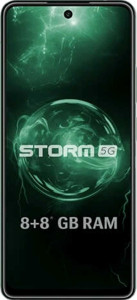
Lava Storm Lite 5G
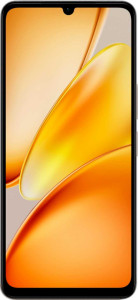
Vivo T4 Lite 5G

Lava Storm Lite 5G Vivo T4 Lite 5G

Overview

Welcome to our in-depth spec comparison between the Lava Storm Lite 5G and the Vivo T4 Lite 5G — two budget-friendly 5G smartphones that share more common ground than you might expect. While both devices run Android 15 and sport similar displays, the real story lies in their contrasting approaches to performance and RAM, battery capacity, and audio features. Read on to discover which of these two contenders is the right fit for your needs.

Common Features

  • Both phones are water resistant with an IP64 ingress protection rating.
  • Neither phone has a rugged build.
  • Neither phone can be folded.
  • Both phones feature an LCD IPS display type.
  • Both phones share a pixel density of 260 ppi.
  • Both phones have a resolution of 720 x 1600 px.
  • Neither phone has branded damage-resistant glass.
  • Neither phone supports HDR10.
  • Neither phone supports HDR10+.
  • Neither phone has an Always-On Display.
  • Neither phone supports Dolby Vision.
  • Both phones use an Arm Mali-G57 MC2 GPU running at 950 MHz.
  • Both phones have integrated LTE.
  • Both phones use RAM running at 2133 MHz.
  • Both phones are built on a 6 nm semiconductor process.
  • Both phones support 64-bit processing.
  • Both phones support DirectX 12.
  • Both phones have integrated graphics.
  • Both phones feature a 5 MP front camera.
  • Neither phone has built-in optical image stabilization.
  • Neither phone has a dual-tone LED flash.
  • Both phones have a single LED flash.
  • Neither phone has a BSI sensor.
  • Both phones have a CMOS sensor.
  • Both phones support continuous autofocus when recording video.
  • Both phones feature phase-detection autofocus for photos.
  • Both phones run Android 15.
  • Both phones include clipboard warnings.
  • Both phones offer location privacy options.
  • Both phones provide camera and microphone privacy options.
  • Neither phone has Mail Privacy Protection.
  • Both phones support theme customization.
  • Both phones can block app tracking.
  • Neither phone blocks cross-site tracking.
  • Neither phone supports wireless charging.
  • Both phones support fast charging at 15W.
  • Neither phone has a removable battery.
  • Both phones have a battery level indicator.
  • Both phones have a rechargeable battery.
  • Both phones include a 3.5 mm audio jack.
  • Neither phone supports aptX, LDAC, aptX HD, aptX Adaptive, aptX Lossless.
  • Both phones support 5G connectivity.
  • Both phones support Wi-Fi 4 (802.11n) and Wi-Fi 5 (802.11ac).
  • Both phones accommodate 2 SIM cards.
  • Both phones have an external memory slot.
  • Both phones feature a USB Type-C port with USB version 2.
  • Neither phone has NFC.
  • Both phones have a download speed of 3300 MBits/s.
  • Both phones have a video light.
  • Neither phone has a sapphire glass display.
  • Neither phone has a curved display.
  • Neither phone has an e-paper display.

Main Differences

  • Weight is 196 g on Lava Storm Lite 5G and 202 g on Vivo T4 Lite 5G.
  • Thickness is 8.3 mm on Lava Storm Lite 5G and 8.2 mm on Vivo T4 Lite 5G.
  • Width is 78.1 mm on Lava Storm Lite 5G and 77 mm on Vivo T4 Lite 5G.
  • Height is 168.8 mm on Lava Storm Lite 5G and 167.3 mm on Vivo T4 Lite 5G.
  • Volume is 109.42 cm³ on Lava Storm Lite 5G and 105.63 cm³ on Vivo T4 Lite 5G.
  • Screen size is 6.75″ on Lava Storm Lite 5G and 6.74″ on Vivo T4 Lite 5G.
  • Refresh rate is 120 Hz on Lava Storm Lite 5G and 90 Hz on Vivo T4 Lite 5G.
  • Internal storage is 128 GB on Lava Storm Lite 5G and 256 GB on Vivo T4 Lite 5G.
  • RAM is 4 GB on Lava Storm Lite 5G and 8 GB on Vivo T4 Lite 5G.
  • The chipset is MediaTek Dimensity 6400 on Lava Storm Lite 5G and MediaTek Dimensity 6300 on Vivo T4 Lite 5G.
  • CPU speed is 2 x 2.5 & 6 x 2 GHz on Lava Storm Lite 5G and 2 x 2.4 & 6 x 2 GHz on Vivo T4 Lite 5G.
  • Maximum memory bandwidth is 17.1 GB/s on Lava Storm Lite 5G and 17.07 GB/s on Vivo T4 Lite 5G.
  • The main camera is 50 MP on Lava Storm Lite 5G and 50 & 2 MP on Vivo T4 Lite 5G.
  • A dual-lens main camera is present on Vivo T4 Lite 5G but not available on Lava Storm Lite 5G.
  • Video recording on the main camera reaches 1440 x 30 fps on Lava Storm Lite 5G and 1080 x 30 fps on Vivo T4 Lite 5G.
  • Battery power is 5000 mAh on Lava Storm Lite 5G and 6000 mAh on Vivo T4 Lite 5G.
  • Stereo speakers are present on Vivo T4 Lite 5G but not available on Lava Storm Lite 5G.
  • A built-in radio is present on Vivo T4 Lite 5G but not available on Lava Storm Lite 5G.
  • Bluetooth version is 5.2 on Lava Storm Lite 5G and 5.4 on Vivo T4 Lite 5G.
  • A gyroscope is present on Lava Storm Lite 5G but not available on Vivo T4 Lite 5G.
Specs Comparison
Lava Storm Lite 5G

Lava Storm Lite 5G

Vivo T4 Lite 5G

Vivo T4 Lite 5G

Design:
water resistance Water resistant Water resistant
weight 196 g 202 g
thickness 8.3 mm 8.2 mm
width 78.1 mm 77 mm
height 168.8 mm 167.3 mm
volume 109.421224 cm³ 105.63322 cm³
Ingress Protection (IP) rating IP64 IP64
has a rugged build
can be folded

Both the Lava Storm Lite 5G and the Vivo T4 Lite 5G share the same IP64 water and dust resistance rating, meaning neither is submersible but both can handle splashes, rain, and dusty environments with equal confidence. Neither features a rugged build or a folding form factor, so they occupy the same conventional slab category.

Where they diverge is in their physical dimensions. The Lava is the larger device overall — slightly taller at 168.8 mm, wider at 78.1 mm, and with a measurably bigger volume of 109.4 cm³ versus the Vivo's 105.6 cm³. In hand, that extra footprint is noticeable, particularly for one-handed use. However, the Lava partially compensates by being 6 g lighter at 196 g compared to the Vivo's 202 g — a modest but real difference during prolonged use. The Vivo, for its part, edges out a 0.1 mm slimmer profile at 8.2 mm, though that gap is imperceptible in daily handling.

On balance, neither phone holds a decisive design advantage. The Vivo T4 Lite 5G is the more compact and slightly sleeker device, which may appeal to users prioritizing pocketability. The Lava Storm Lite 5G is lighter despite its larger frame, which can reduce fatigue during extended sessions. For most users, these are marginal trade-offs, and the two phones are effectively evenly matched in this category.

Display:
Display type LCD, IPS LCD, IPS
screen size 6.75" 6.74"
pixel density 260 ppi 260 ppi
resolution 720 x 1600 px 720 x 1600 px
refresh rate 120Hz 90Hz
has branded damage-resistant glass
supports HDR10
supports HDR10+
Always-On Display
supports Dolby Vision
Has a secondary screen
has a touch screen

The display story here is largely one of shared foundations: both phones use an LCD IPS panel at virtually identical sizes — 6.75″ on the Lava versus 6.74″ on the Vivo — and both land at the same 720 x 1600 px resolution and 260 ppi pixel density. At that density, text and images will look reasonably sharp for everyday use, though fine detail falls noticeably short of the 400+ ppi found on premium displays. Neither screen supports HDR10, Dolby Vision, or damage-resistant glass, so content richness and physical durability are on equal footing.

The one meaningful differentiator is the refresh rate. The Lava Storm Lite 5G steps up to 120Hz, while the Vivo T4 Lite 5G tops out at 90Hz. In practice, 120Hz translates to visibly smoother scrolling, more fluid animations, and a generally more responsive feel during everyday interactions — a tangible upgrade over 90Hz that most users will notice, not just benchmark enthusiasts.

Given that resolution, panel type, size, and feature support are essentially identical, the 120Hz refresh rate gives the Lava Storm Lite 5G a clear edge in this category. For users who spend significant time scrolling social feeds, browsing, or playing games, that smoother experience is a genuine real-world advantage that the Vivo cannot match on paper.

Performance:
internal storage 128GB 256GB
RAM 4GB 8GB
Chipset (SoC) name MediaTek Dimensity 6400 MediaTek Dimensity 6300
GPU name Arm Mali-G57 MC2 Arm Mali-G57 MC2
CPU speed 2 x 2.5 & 6 x 2 GHz 2 x 2.4 & 6 x 2 GHz
GPU clock speed 950 MHz 950 MHz
Has integrated LTE
RAM speed 2133 MHz 2133 MHz
semiconductor size 6 nm 6 nm
Supports 64-bit
DirectX version DirectX 12 DirectX 12
Has integrated graphics
Uses big.LITTLE technology
maximum memory bandwidth 17.1 GB/s 17.07 GB/s
uses multithreading
DDR memory version 4 4

Under the hood, these two phones are built on closely related silicon. The Lava Storm Lite 5G runs on the MediaTek Dimensity 6400 while the Vivo T4 Lite 5G uses the Dimensity 6300 — both fabricated on a 6 nm process and sharing the same GPU, GPU clock speed, memory bandwidth, and DDR4 memory architecture. The Lava's peak CPU cores clock marginally higher at 2.5 GHz versus the Vivo's 2.4 GHz, but a 0.1 GHz gap in this range produces no perceptible real-world difference in everyday tasks or even light gaming.

Where the Vivo T4 Lite 5G pulls decisively ahead is in memory and storage. It ships with 8GB of RAM — double the Lava's 4GB — and 256GB of internal storage versus the Lava's 128GB. More RAM directly translates to smoother multitasking, fewer app reloads when switching between applications, and better headroom for demanding workloads. Meanwhile, double the storage means significantly more room for photos, videos, apps, and offline content without relying on external expansion.

Despite the Lava's fractionally newer chipset, the performance advantage of 8GB RAM and 256GB storage on the Vivo T4 Lite 5G is far more impactful in day-to-day use. The Vivo holds a clear edge in this category for users who multitask heavily or consume a lot of local media.

Cameras:
megapixels (main camera) 50 MP 50 & 2 MP
Has a dual-lens (or multi-lens) main camera
megapixels (front camera) 5MP 5MP
has built-in optical image stabilization
video recording (main camera) 1440 x 30 fps 1080 x 30 fps
Has a dual-tone LED flash
number of flash LEDs 1 1
has a BSI sensor
has a CMOS sensor
has continuous autofocus when recording movies
Has phase-detection autofocus for photos
supports slow-motion video recording
has a built-in HDR mode
has manual exposure
has a flash
optical zoom 0x 0x
has manual ISO
has manual focus
has a front camera
Has laser autofocus
Shoots 360° panorama
has manual white balance
shoots raw
has touch autofocus
has manual shutter speed
can create panoramas in-camera
Has timelapse function
Has a front-facing LED flash
has a dual-lens (or multi-lens) front camera
supports HDR10 recording
supports Dolby Vision recording
has a front-facing camera under the display
Has a RGB LED flash
has 3D photo/video recording capabilities

The rear camera systems take different approaches. The Lava Storm Lite 5G keeps things simple with a single 50 MP shooter, while the Vivo T4 Lite 5G pairs its 50 MP main sensor with a secondary 2 MP lens. In practice, a 2 MP companion lens of this kind typically serves as a depth sensor to assist with portrait-mode bokeh — it contributes little to actual image quality or versatility, so the gap here is narrower than the hardware count implies. Both front cameras land at 5 MP, making selfie capability a non-factor in the decision.

The more consequential differentiator is video. The Lava captures footage at up to 1440p at 30 fps, a step above the Vivo's ceiling of 1080p at 30 fps. Higher resolution video retains more detail, offers better flexibility for cropping in post, and future-proofs recordings for larger screens — a meaningful real-world advantage for anyone who shoots video regularly. Beyond resolution, the two phones are functionally identical in their camera feature sets: both offer phase-detection autofocus, continuous autofocus during recording, slow-motion, HDR mode, and a comparable suite of manual controls.

On balance, the Lava Storm Lite 5G holds the edge in this category. The Vivo's dual-lens setup sounds compelling on paper, but its secondary sensor adds limited practical value, while the Lava's 1440p video recording capability is a tangible, everyday advantage that the Vivo cannot match.

Operating system:
Android version Android 15 Android 15
has clipboard warnings
has location privacy options
has camera/microphone privacy options
has Mail Privacy Protection
has theme customization
can block app tracking
blocks cross-site tracking
has on-device machine learning
has notification permissions
has media picker
Can play games while they download
has dark mode
has Wi-Fi password sharing
has battery health check
has an extra dim mode
has focus modes
has dynamic theming
can offload apps
Has customizable notifications
has Live Text
has full-page screenshots
supports split screen
gets direct OS updates
has PiP
Can be used as a PC
Has sharing intents
has a child lock
Supports widgets
Is free and open source
Has offline voice recognition
has voice commands
Tracks the current position of a mobile device
is a multi-user system
has Quick Start

This is a rare case where the data tells a perfectly symmetrical story: the Lava Storm Lite 5G and the Vivo T4 Lite 5G run Android 15 and share an identical feature set across every single tracked OS specification. Privacy controls — including location options, camera and microphone permissions, and app tracking blocks — are present on both. Productivity staples like split-screen multitasking, Picture-in-Picture, widgets, and dynamic theming are equally available. Neither phone receives direct OS updates, and neither supports Wi-Fi password sharing or focus modes.

The breadth of shared features is actually noteworthy at this price tier. Both devices offer on-device machine learning, offline voice recognition, full-page screenshots, battery health monitoring, and a child lock — capabilities that collectively represent a well-rounded, modern Android experience rather than a stripped-down budget build.

With zero differentiation across the entire specification set, this category is an absolute tie. Software experience will not be a deciding factor between these two phones; any perceived differences in day-to-day OS feel would stem from each manufacturer's custom Android skin rather than the underlying feature parity documented here.

Battery:
battery power 5000 mAh 6000 mAh
has wireless charging
Supports fast charging
charging speed 15W 15W
has a removable battery
has a battery level indicator
has a rechargeable battery

Battery capacity is where these two phones part ways most clearly. The Vivo T4 Lite 5G packs a 6000 mAh cell versus the Lava Storm Lite 5G's 5000 mAh — a 20% larger reserve that, all else being equal, translates directly into more screen-on time before reaching for a charger. For heavy users, that gap can realistically mean the difference between a phone that needs a top-up by evening and one that comfortably stretches through a full day and into the next.

On the charging side, both phones are evenly matched at 15W wired fast charging with no wireless charging option on either. It is worth noting that the Vivo's larger battery will take proportionally longer to fill from empty at the same wattage — but for most users prioritizing endurance over rapid refueling, that is a worthwhile trade-off.

The Vivo T4 Lite 5G holds an unambiguous advantage in this category. A 1000 mAh lead is a significant, real-world differentiator rather than a marginal spec bump, and with charging infrastructure identical across both devices, the Vivo's larger capacity comes with no meaningful penalty attached.

Audio:
has a socket for a 3.5 mm audio jack
has stereo speakers
has aptX
has LDAC
has aptX HD
has aptX Adaptive
has aptX Lossless
Has a radio

Wired audio is on equal footing — both phones retain the 3.5 mm headphone jack, a genuinely useful feature at this price tier that lets users plug in standard headphones without adapters. Neither device supports advanced Bluetooth audio codecs like aptX or LDAC, so wireless audio quality is limited to standard transmission on both.

The differences emerge in speaker and radio hardware. The Vivo T4 Lite 5G offers stereo speakers, which produce a noticeably wider soundstage for media consumption — videos, music, and games all benefit from dual-channel output compared to the mono speaker setup on the Lava Storm Lite 5G. The Vivo also includes a built-in FM radio, a niche but practical feature for users in regions with strong terrestrial radio coverage or those who want broadcast access without a data connection.

The Vivo T4 Lite 5G takes a clear win in this category. Stereo speakers alone represent a meaningful everyday upgrade for anyone who regularly watches content or listens to audio on their phone's built-in hardware, and the added FM radio is a bonus the Lava simply cannot counter.

Connectivity & Features:
release date June 2025 June 2025
has 5G support
Wi-Fi version Wi-Fi 4 (802.11n), Wi-Fi 5 (802.11ac) Wi-Fi 4 (802.11n), Wi-Fi 5 (802.11ac)
SIM cards 2 SIM 2 SIM
Bluetooth version 5.2 5.4
has an external memory slot
Has USB Type-C
USB version 2 2
has NFC
download speed 3300 MBits/s 3300 MBits/s
Has a fingerprint scanner
has emergency SOS via satellite
has crash detection
is DLNA-certified
has a gyroscope
supports ANT+
Has a heart rate monitor
has GPS
has a compass
supports Wi-Fi
Has an infrared sensor
has an accelerometer
has a cellular module
Has a barometer
has an HDMI output
Uses 3D facial recognition
Has an iris scanner
Stylus included
supports Galileo
Has motion tracking
Has optical tracking
Has a built-in projector

The connectivity foundations are virtually identical: both phones support 5G, dual SIM, Wi-Fi 5, USB Type-C 2.0, expandable storage, fingerprint scanning, GPS with Galileo, and the same peak download speed of 3300 Mbits/s. Neither offers NFC, which rules out contactless payments via the phone's built-in hardware on both — a notable omission for users who rely on tap-to-pay.

Two specs split the tie. The Vivo T4 Lite 5G carries the newer Bluetooth 5.4 against the Lava's 5.2, bringing incremental improvements in connection stability and efficiency that matter most for users with multiple paired devices or those using Bluetooth audio frequently. Conversely, the Lava Storm Lite 5G includes a gyroscope that the Vivo lacks entirely — a sensor used for motion-based gaming, augmented reality applications, and automatic screen orientation in more demanding scenarios than a basic accelerometer can handle alone.

This category ends in a nuanced split rather than a clean win. The Vivo's Bluetooth 5.4 edges ahead for wireless peripheral users, while the Lava's gyroscope holds a distinct advantage for gamers and AR users. Which difference matters more comes down squarely to how the phone will be used — neither advantage is trivial enough to dismiss.

Miscellaneous:
has a video light
Has sapphire glass display
Has a curved display
Has an e-paper display

The miscellaneous spec sheet for these two phones is a mirror image: both include a video light, and neither features a sapphire glass display, curved screen, or e-paper panel. With every tracked data point matching exactly, there is simply no differentiator to analyze in this category.

This is a complete tie. Miscellaneous hardware will play no role in distinguishing the Lava Storm Lite 5G from the Vivo T4 Lite 5G, and buyers should weight other specification groups when making their final decision.

Comparison Summary & Verdict

After examining every specification, it is clear that these two phones serve slightly different audiences. The Lava Storm Lite 5G holds an edge with its 120 Hz refresh rate, a gyroscope sensor, and a marginally faster chipset — making it a better pick for users who value smoother scrolling and motion-aware apps. The Vivo T4 Lite 5G, on the other hand, pulls ahead in areas that matter to everyday power users: it offers 8 GB of RAM and 256 GB of storage, a larger 6000 mAh battery, stereo speakers, a built-in radio, and Bluetooth 5.4 — giving it a clear advantage for media consumption, multitasking, and all-day endurance. Neither phone is a clear-cut winner; your ideal choice ultimately depends on whether you prioritize display fluidity and sensor versatility or raw capacity and richer multimedia features.

Lava Storm Lite 5G
Buy Lava Storm Lite 5G if...

Buy the Lava Storm Lite 5G if you want a smoother 120 Hz display experience and value having a gyroscope for motion-based apps and gaming.

Vivo T4 Lite 5G
Buy Vivo T4 Lite 5G if...

Buy the Vivo T4 Lite 5G if you need more RAM, greater storage, a longer-lasting 6000 mAh battery, and richer audio with stereo speakers and a built-in radio.