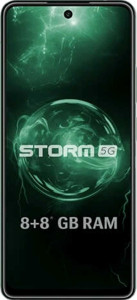
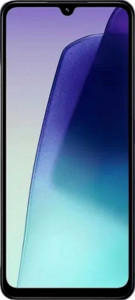
Connectivity is another split category, and the dividing lines are meaningful. The Storm Lite 5G leads on cellular throughput with a maximum download speed of 3300 Mbits/s versus the Poco M7's 2500 Mbits/s, a 32% advantage that benefits users in areas with congested or high-bandwidth 5G networks. It also carries Bluetooth 5.2 against the Poco M7's 5.0, which brings modest improvements in connection stability and energy efficiency — relevant for users who keep wireless earbuds or peripherals paired throughout the day.
The Poco M7 counters with one feature that carries outsized real-world utility: NFC. The Storm Lite 5G lacks it entirely. NFC enables contactless payments, quick device pairing, and transit card emulation — for many users in urban environments, this alone is a daily-use capability. The Storm Lite 5G also includes a gyroscope, which the Poco M7 omits. A gyroscope is essential for accurate motion-based gaming, augmented reality apps, and stable image orientation detection — its absence on the Poco M7 is a quiet but real limitation for those use cases. Both phones share dual SIM support, expandable storage, USB-C 2.0, the same Wi-Fi standards, and a fingerprint scanner.
Weighing these trade-offs, this group comes down to user priorities. The Storm Lite 5G has a functional edge for mobile gamers and power connectivity users thanks to its gyroscope and faster 5G speeds, while the Poco M7's NFC support is the more broadly impactful advantage for everyday urban users relying on contactless payments and transit. Neither phone dominates outright, but NFC's day-to-day relevance gives the Poco M7 a slight overall edge in this category for the average consumer.