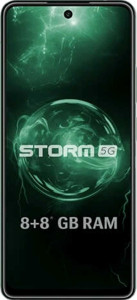
Lava Storm Lite 5G
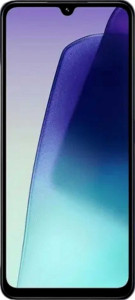
Xiaomi Poco M7 6GB RAM

Lava Storm Lite 5G Xiaomi Poco M7 6GB RAM

Common Features

  • Both products are water resistant.
  • Neither product has a rugged build.
  • Neither product can be folded.
  • Both products have an LCD, IPS display.
  • Both products have a pixel density of 260 ppi.
  • Both products have a refresh rate of 120Hz.
  • Neither product has branded damage-resistant glass.
  • Neither product supports HDR10.
  • Neither product supports HDR10+.
  • Neither product has an Always-On Display.
  • Neither product supports Dolby Vision.
  • Both products support Dolby Vision.
  • Both products have 128GB of internal storage.
  • Both products have integrated LTE support.
  • Both products support 64-bit architecture.
  • Both products use big.LITTLE technology.
  • Both products have a CMOS sensor in their cameras.
  • Both products have continuous autofocus when recording movies.
  • Both products have phase-detection autofocus for photos.
  • Both products support slow-motion video recording.

Main Differences

  • Lava Storm Lite 5G weighs 196 g while Xiaomi Poco M7 6GB RAM weighs 205.4 g.
  • Lava Storm Lite 5G is 8.3 mm thick while Xiaomi Poco M7 6GB RAM is 8.2 mm thick.
  • Lava Storm Lite 5G has a width of 78.1 mm while Xiaomi Poco M7 6GB RAM has a width of 77.8 mm.
  • Lava Storm Lite 5G has a height of 168.8 mm while Xiaomi Poco M7 6GB RAM has a height of 171.9 mm.
  • Lava Storm Lite 5G has a volume of 109.42 cm³ while Xiaomi Poco M7 6GB RAM has a volume of 109.67 cm³.
  • Lava Storm Lite 5G has a screen size of 6.75″ while Xiaomi Poco M7 6GB RAM has a screen size of 6.88″.
  • Lava Storm Lite 5G has a resolution of 720 x 1600 px while Xiaomi Poco M7 6GB RAM has a resolution of 720 x 1640 px.
  • Lava Storm Lite 5G has 4GB of RAM while Xiaomi Poco M7 6GB RAM has 6GB of RAM.
  • Lava Storm Lite 5G is powered by a MediaTek Dimensity 6400 chipset while Xiaomi Poco M7 6GB RAM is powered by a Qualcomm Snapdragon 4 Gen 2 chipset.
  • Lava Storm Lite 5G uses an Arm Mali-G57 MC2 GPU while Xiaomi Poco M7 6GB RAM uses an Adreno 613 GPU.
  • Lava Storm Lite 5G has a CPU speed of 2 x 2.5 & 6 x 2 GHz while Xiaomi Poco M7 6GB RAM has a CPU speed of 2 x 2.3 & 6 x 2 GHz.
  • Lava Storm Lite 5G has a GPU clock speed of 950 MHz while Xiaomi Poco M7 6GB RAM has a GPU clock speed of 955 MHz.
  • Lava Storm Lite 5G has RAM speed of 2133 MHz while Xiaomi Poco M7 6GB RAM has RAM speed of 3200 MHz.
  • Lava Storm Lite 5G has a 6 nm semiconductor size while Xiaomi Poco M7 6GB RAM has a 4 nm semiconductor size.
  • Lava Storm Lite 5G uses DDR4 memory while Xiaomi Poco M7 6GB RAM uses DDR5 memory.
  • Lava Storm Lite 5G supports 1 display while Xiaomi Poco M7 6GB RAM supports 2 displays.
  • Lava Storm Lite 5G has a main camera with 50 MP while Xiaomi Poco M7 6GB RAM has a dual-lens main camera with 50 & 2 MP.
  • Lava Storm Lite 5G has a 5MP front camera while Xiaomi Poco M7 6GB RAM has an 8MP front camera.
  • Lava Storm Lite 5G records video at 1440 x 30 fps with its main camera while Xiaomi Poco M7 6GB RAM records video at 1080 x 30 fps.
  • Lava Storm Lite 5G runs Android 15 while Xiaomi Poco M7 6GB RAM runs Android 14.
  • Lava Storm Lite 5G can offload apps while Xiaomi Poco M7 6GB RAM cannot offload apps.
  • Lava Storm Lite 5G has a 5000 mAh battery while Xiaomi Poco M7 6GB RAM has a 7000 mAh battery.
  • Lava Storm Lite 5G supports 15W fast charging while Xiaomi Poco M7 6GB RAM supports 18W fast charging.
  • Lava Storm Lite 5G comes with a charger while Xiaomi Poco M7 6GB RAM does not come with a charger.
  • Lava Storm Lite 5G has Bluetooth version 5.2 while Xiaomi Poco M7 6GB RAM has Bluetooth version 5.
  • Lava Storm Lite 5G has no NFC support while Xiaomi Poco M7 6GB RAM has NFC support.
  • Lava Storm Lite 5G has a gyroscope while Xiaomi Poco M7 6GB RAM does not have a gyroscope.
  • Lava Storm Lite 5G has a download speed of 3300 MBits/s while Xiaomi Poco M7 6GB RAM has a download speed of 2500 MBits/s.
Specs Comparison
Lava Storm Lite 5G

Lava Storm Lite 5G

Xiaomi Poco M7 6GB RAM

Xiaomi Poco M7 6GB RAM

Design:
water resistance Water resistant Water resistant
weight 196 g 205.4 g
thickness 8.3 mm 8.2 mm
width 78.1 mm 77.8 mm
height 168.8 mm 171.9 mm
volume 109.421224 cm³ 109.665324 cm³
has a rugged build
can be folded

In terms of overall design, the Lava Storm Lite 5G and the Xiaomi Poco M7 are remarkably close across the board. Both are water resistant and neither offers a rugged build or foldable form factor, meaning they occupy the same practical tier for durability and portability. The most noticeable real-world difference comes down to weight: at 196 g, the Lava is about 9.4 g lighter than the Poco M7's 205.4 g. While that gap sounds small on paper, it becomes perceptible during extended one-handed use or long calls, giving the Lava a slight ergonomic edge.

Dimensionally, the Poco M7 is marginally taller (171.9 mm vs 168.8 mm) and fractionally thinner (8.2 mm vs 8.3 mm), while both share nearly identical widths. Their computed volumes are almost identical — 109.42 cm³ vs 109.67 cm³ — confirming that neither device is meaningfully more compact than the other. The extra height of the Poco M7 may slightly affect one-handed reachability on smaller hands, but this is a minor consideration.

Overall, these two phones are essentially tied in design. The Lava Storm Lite 5G holds a marginal edge due to its lower weight, which translates to slightly better day-to-day comfort in the hand. All other design attributes — water resistance, build type, folding capability, thickness, and volume — are either identical or negligibly different.

Display:
Display type LCD, IPS LCD, IPS
screen size 6.75" 6.88"
pixel density 260 ppi 260 ppi
resolution 720 x 1600 px 720 x 1640 px
refresh rate 120Hz 120Hz
has branded damage-resistant glass
supports HDR10
supports HDR10+
Always-On Display
supports Dolby Vision
Has a secondary screen
has a touch screen

Both phones feature an LCD IPS panel with a 120Hz refresh rate and identical 260 ppi pixel density — meaning scrolling feels equally smooth on both, and sharpness is indistinguishable in everyday use. Neither display supports HDR10, Dolby Vision, or any branded damage-resistant glass, so they are evenly matched on premium display features, or rather, equally lacking them.

The primary differentiator here is screen size. The Poco M7 offers a slightly larger 6.88″ panel compared to the Lava's 6.75″, which, combined with its marginally taller resolution of 720 x 1640 px, gives it a touch more screen real estate for media consumption, reading, and multitasking. That said, because pixel density remains the same at 260 ppi, the larger screen does not deliver a sharper image — it simply renders content at the same clarity across a bigger canvas.

The display category is nearly a tie, but the Xiaomi Poco M7 holds a slim edge purely due to its larger screen size. For users who prioritize immersive viewing, that extra diagonal space matters. Those who prefer a slightly more manageable display will find the Lava's 6.75″ screen a reasonable trade-off with no loss in sharpness or smoothness.

Performance:
internal storage 128GB 128GB
RAM 4GB 6GB
Chipset (SoC) name MediaTek Dimensity 6400 Qualcomm Snapdragon 4 Gen 2
GPU name Arm Mali-G57 MC2 Adreno 613
CPU speed 2 x 2.5 & 6 x 2 GHz 2 x 2.3 & 6 x 2 GHz
GPU clock speed 950 MHz 955 MHz
Has integrated LTE
RAM speed 2133 MHz 3200 MHz
semiconductor size 6 nm 4 nm
Supports 64-bit
DirectX version DirectX 12 DirectX 12
Has integrated graphics
Uses big.LITTLE technology
DDR memory version 4 5
supported displays 1 2

The chipset gap here is meaningful. The Poco M7 runs on the Snapdragon 4 Gen 2 built on a 4nm process, compared to the Lava's Dimensity 6400 on 6nm. A smaller semiconductor node generally translates to better power efficiency and thermal management — meaning the Poco M7 is likely to sustain performance longer under load without throttling, while also being kinder to the battery. The Lava's peak CPU cores clock slightly higher at 2.5 GHz versus 2.3 GHz, but this narrow advantage is largely offset by the architectural and efficiency gains of the newer node.

The memory story further widens the gap. The Poco M7 packs 6GB of DDR5 RAM running at 3200 MHz, against the Lava's 4GB of DDR4 at 2133 MHz. More RAM means more apps can stay active in the background without being reloaded, and the faster DDR5 bandwidth accelerates data-intensive tasks like gaming and multitasking. Both ship with 128GB of internal storage, so that side is equal. GPU clock speeds are virtually identical — 955 MHz vs 950 MHz — making gaming performance differences more dependent on driver optimization than raw clock figures.

The Xiaomi Poco M7 holds a clear performance advantage in this category. Its more efficient chipset, meaningfully larger and faster RAM, and support for two displays (versus one on the Lava) make it the stronger choice for users who push their phone harder — whether through multitasking, gaming, or future-proofing their investment.

Cameras:
megapixels (main camera) 50 MP 50 & 2 MP
Has a dual-lens (or multi-lens) main camera
megapixels (front camera) 5MP 8MP
has built-in optical image stabilization
video recording (main camera) 1440 x 30 fps 1080 x 30 fps
Has a dual-tone LED flash
number of flash LEDs 1 1
has a BSI sensor
has a CMOS sensor
has continuous autofocus when recording movies
Has phase-detection autofocus for photos
supports slow-motion video recording
has a built-in HDR mode
has manual exposure
has a flash
optical zoom 0x 0x
has manual ISO
has manual focus
has a front camera
Has laser autofocus
Shoots 360° panorama
has manual white balance
shoots raw
has touch autofocus
has manual shutter speed
can create panoramas in-camera
Has timelapse function
Has a front-facing LED flash
has a dual-lens (or multi-lens) front camera
supports HDR10 recording
supports Dolby Vision recording
has a front-facing camera under the display
Has a RGB LED flash
has 3D photo/video recording capabilities

At first glance the main cameras look identical — both shoot at 50 MP — but the Poco M7 adds a secondary 2 MP lens, giving it a dual-camera system that the Lava lacks entirely. In practice, a 2 MP depth sensor primarily assists with portrait-mode background separation, so while it is not a transformative upgrade, it does offer slightly more computational flexibility for bokeh-style shots. The front camera gap is more straightforward: the Poco M7's 8 MP selfie shooter outresolves the Lava's 5 MP, which translates to more detail in selfies and clearer video calls.

Where the Lava reclaims ground is in video recording. Despite having a single rear lens, it tops out at 1440p at 30fps, while the Poco M7 is capped at 1080p at 30fps. For users who prioritize video quality over photo versatility, this is a meaningful advantage — 1440p delivers noticeably sharper footage, particularly when cropping or viewing on larger screens. Both cameras share the same manual control set, autofocus capabilities, and feature parity across modes like slow-motion, timelapse, and panorama.

This category ends in a split decision. The Poco M7 has the edge in photography thanks to its dual-lens system and higher-resolution front camera, making it the stronger pick for stills and selfies. The Lava Storm Lite 5G counters with superior video resolution, appealing to users for whom recording quality is a priority. Which product wins here depends entirely on how the user intends to use the camera.

Operating system:
Android version Android 15 Android 14
has clipboard warnings
has location privacy options
has camera/microphone privacy options
has Mail Privacy Protection
has theme customization
can block app tracking
blocks cross-site tracking
has on-device machine learning
has notification permissions
has media picker
Can play games while they download
has dark mode
has Wi-Fi password sharing
has battery health check
has an extra dim mode
has focus modes
has dynamic theming
can offload apps
Has customizable notifications
has Live Text
has full-page screenshots
supports split screen
gets direct OS updates
has PiP
Can be used as a PC
Has sharing intents
has a child lock
Supports widgets
Is free and open source
Has offline voice recognition
has voice commands
Tracks the current position of a mobile device
is a multi-user system
has Quick Start

The most consequential difference in this category is the Android version. The Lava Storm Lite 5G ships with Android 15, while the Poco M7 launches on Android 14. A newer Android version means access to the latest security patches, privacy enhancements, and system-level features from day one — without waiting for an OEM update that may or may not arrive. For users who care about staying current, this is a tangible out-of-the-box advantage for the Lava.

Beyond the OS version, the two phones are nearly identical in software features. Both support the full modern Android toolkit — dark mode, dynamic theming, split screen, Picture-in-Picture, widgets, customizable notifications, and on-device machine learning. One smaller but practical distinction: the Lava supports app offloading, which frees up storage by removing an app's code while preserving its data, a useful feature on a 128GB device. The Poco M7 lacks this capability.

The Lava Storm Lite 5G takes this category. Running a newer OS version and supporting app offloading — however minor the latter — means it offers a more current and slightly more flexible software experience. Neither phone receives direct OS updates, so the version each ships with carries extra weight; starting on Android 15 gives the Lava a meaningful head start in longevity.

Battery:
battery power 5000 mAh 7000 mAh
has wireless charging
Supports fast charging
charging speed 15W 18W
comes with a charger
has a removable battery
has a battery level indicator
has a rechargeable battery

Battery capacity is where the Poco M7 pulls ahead decisively. Its 7000 mAh cell is a full 40% larger than the Lava's 5000 mAh battery — a difference that is hard to overlook. In real-world terms, a 5000 mAh battery is already considered solid for a full day of moderate use; a 7000 mAh cell pushes comfortably into two-day territory for average users, and offers a meaningful buffer for heavy users who stream, game, or navigate frequently.

Charging speed is close but not equal. The Poco M7 supports 18W fast charging versus the Lava's 15W, which helps partially compensate for the larger battery — though filling a 7000 mAh cell will still take longer in absolute terms. A more practical consideration is that the Poco M7 does not include a charger in the box, while the Lava Storm Lite 5G does. For buyers who don't already own a compatible fast charger, this is a real added cost to factor in.

Despite the charger omission, the Xiaomi Poco M7 wins this category clearly. A 7000 mAh battery represents a fundamentally different endurance proposition — the kind of gap that is felt daily, not just in benchmarks. The Lava's bundled charger is a nice inclusion, but it does not offset the Poco M7's substantial capacity advantage for users who prioritize staying unplugged longer.

Audio:
has a socket for a 3.5 mm audio jack
has stereo speakers
has aptX
has LDAC
has aptX HD
has aptX Adaptive
has aptX Lossless

Audio is a straight tie. Both the Lava Storm Lite 5G and the Poco M7 include a 3.5mm headphone jack — a feature increasingly absent in mid-range phones — which is a genuine win for wired audio users who want reliable, zero-latency listening without dongles or adapters. Neither device, however, supports stereo speakers, meaning sound output from the built-in speaker is mono on both.

On the wireless audio side, neither phone implements any high-quality Bluetooth codec — no aptX, LDAC, aptX HD, or any variant. This means users pairing wireless headphones will be limited to standard SBC or AAC transmission, which is adequate for casual listening but falls short for audiophiles seeking lossless or high-resolution Bluetooth audio. Again, both phones are identically positioned here.

With every audio specification matching exactly, this category is a complete draw. The shared 3.5mm jack is the most user-friendly highlight for both, while the absence of stereo speakers and advanced Bluetooth codecs represents an equal limitation on each. Neither phone offers any audio advantage over the other.

Connectivity & Features:
release date June 2025 March 2025
has 5G support
Wi-Fi version Wi-Fi 4 (802.11n), Wi-Fi 5 (802.11ac) Wi-Fi 4 (802.11n), Wi-Fi 5 (802.11ac)
SIM cards 2 SIM 2 SIM
Bluetooth version 5.2 5
has an external memory slot
Has USB Type-C
USB version 2 2
has NFC
download speed 3300 MBits/s 2500 MBits/s
Has a fingerprint scanner
has emergency SOS via satellite
has crash detection
is DLNA-certified
has a gyroscope
supports ANT+
Has a heart rate monitor
has GPS
has a compass
supports Wi-Fi
Has an infrared sensor
has an accelerometer
has a cellular module
Has a barometer
has an HDMI output
Uses 3D facial recognition
Has an iris scanner
Stylus included
supports Galileo
Has motion tracking
Has optical tracking
Has a built-in projector

Three meaningful differentiators emerge here despite the two phones sharing a long list of common connectivity features. First, the Lava Storm Lite 5G supports Bluetooth 5.2 versus the Poco M7's Bluetooth 5.0, which offers incremental improvements in connection stability and efficiency — relevant for users who rely heavily on wireless peripherals. Second, the Lava posts a notably higher peak download speed of 3300 Mbps compared to the Poco M7's 2500 Mbps, a difference that reflects the modem capabilities of their respective chipsets and could matter in congested 5G environments. Third, the Lava includes a gyroscope while the Poco M7 does not — a sensor used in gaming, AR applications, and image stabilization algorithms, making its absence on the Poco M7 a genuine functional gap.

Swinging in the other direction, the Poco M7 has NFC while the Lava does not. NFC enables contactless payments, quick Bluetooth pairing, and transit card functionality — everyday conveniences that are hard to replicate through any other means. For users who regularly use mobile payments or public transport apps, this is a practical and frequently used feature. Both phones otherwise share identical Wi-Fi (Wi-Fi 5), USB Type-C (2.0), dual SIM, expandable storage, GPS with Galileo, fingerprint scanner, and accelerometer support.

This category ends in a nuanced split. The Lava Storm Lite 5G leads on modem speed, Bluetooth version, and the presence of a gyroscope. The Poco M7 counters with NFC, which for many users is a daily-use feature that outweighs the Lava's more technical advantages. Which phone comes out ahead depends on the user's priorities — mobile payments versus gaming and wireless performance.
Miscellaneous:
has a video light
Has sapphire glass display
Has a curved display
Has an e-paper display

The miscellaneous specs for these two phones are identical across every data point provided. Both feature a video light, and neither carries a sapphire glass display, curved screen, or e-paper panel — all of which are features typically reserved for flagship or niche devices well above this price tier.

This category is a complete tie. There is no differentiator between the Lava Storm Lite 5G and the Poco M7 in any of the provided miscellaneous specifications, and neither phone holds any advantage here.

Comparison Summary & Verdict

This is a specification comparison between the Lava Storm Lite 5G and the Xiaomi Poco M7 6GB RAM. Both devices are water resistant, feature an LCD, IPS display with 120Hz refresh rate, and have 128GB of internal storage. Key differences include the Lava Storm Lite 5G weighing 196 g, while the Xiaomi Poco M7 6GB RAM weighs 205.4 g, and the Lava Storm Lite 5G having 4GB of RAM compared to 6GB in the Xiaomi Poco M7 6GB RAM. The Lava Storm Lite 5G has a 5000 mAh battery, while the Xiaomi Poco M7 6GB RAM features a larger 7000 mAh battery. Additionally, the Lava Storm Lite 5G supports 15W fast charging, while the Xiaomi Poco M7 6GB RAM supports 18W fast charging.