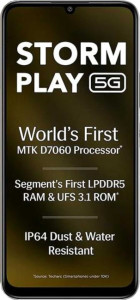
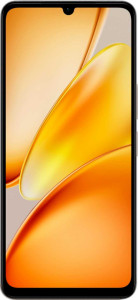
On the surface, these phones look evenly matched — same 8GB of RAM, same 256GB storage, same 6nm fabrication, and the same 8-core CPU thread count. But dig into the silicon and a clear hierarchy emerges. The Lava Storm Play 5G runs on the Dimensity 7060, a notably higher-tier chip than the Vivo T4 Lite 5G's Dimensity 6300. This translates directly to the performance ceiling: the Lava's big cores clock at 2.6 GHz versus the Vivo's 2.4 GHz, giving it a tangible edge in sustained workloads like gaming, video rendering, and running multiple apps simultaneously.
The memory architecture gap is arguably even more decisive. The Lava uses LPDDR5 RAM running at 3200 MHz, while the Vivo relies on the older LPDDR4 standard at 2133 MHz. The downstream effect is dramatic: the Lava's maximum memory bandwidth reaches 51.2 GB/s compared to just 17.07 GB/s on the Vivo — a nearly 3x difference. This matters most when the CPU and GPU are pulling large amounts of data quickly, such as during gaming or heavy multitasking, where memory bottlenecks can cause stutters even if raw clock speeds seem adequate. The Lava also supports up to 16GB of maximum memory versus 12GB on the Vivo, offering more headroom for future configurations.
The GPU picture is closer — the Vivo's Mali-G57 MC2 edges out on clock speed at 950 MHz versus 900 MHz, but this narrow advantage is unlikely to overcome the Lava's broader system-level performance lead. Overall, the Lava Storm Play 5G holds a convincing performance advantage, driven by its superior chipset, faster memory standard, and substantially higher memory bandwidth.