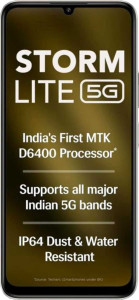
Lava Storm Play Lite 5G
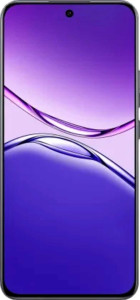
Oppo F29 Pro 5G (128GB / 8GB RAM)

Lava Storm Play Lite 5G Oppo F29 Pro 5G (128GB / 8GB RAM)

Overview

Welcome to our in-depth comparison of the Lava Storm Play Lite 5G and the Oppo F29 Pro 5G (128GB / 8GB RAM). Both phones share a 120Hz refresh rate, Android 15, stereo speakers, and 5G connectivity, yet they take notably different paths when it comes to display technology, battery and charging, build protection, and camera performance. Read on to see how these two mid-range contenders stack up across every key specification.

Common Features

  • Neither product has a rugged build.
  • Neither product can be folded.
  • Both products have a 120Hz refresh rate.
  • HDR10 support is not available on either product.
  • HDR10+ support is not available on either product.
  • Dolby Vision support is not available on either product.
  • Neither product has a secondary screen.
  • Both products have a touchscreen.
  • Both products have 128GB of internal storage.
  • Both products have integrated LTE.
  • Both products support 64-bit processing.
  • Both products use DirectX 12.
  • Both products have integrated graphics.
  • Both products use big.LITTLE technology.
  • Both products support one display.
  • Both products have a dual-lens or multi-lens main camera.
  • Neither product has a dual-tone LED flash.
  • Both products have one flash LED.
  • Neither product has a BSI sensor.
  • Both products have a CMOS sensor.
  • Both products support continuous autofocus when recording movies.
  • Both products have phase-detection autofocus for photos.
  • Both products support slow-motion video recording.
  • Both products run Android 15.
  • Both products have clipboard warnings.
  • Both products have location privacy options.
  • Both products have camera and microphone privacy options.
  • Mail Privacy Protection is not available on either product.
  • Both products support theme customization.
  • Both products can block app tracking.
  • Cross-site tracking blocking is not available on either product.
  • Neither product supports wireless charging.
  • Both products support fast charging.
  • Neither product has a removable battery.
  • Both products have a battery level indicator.
  • Both products have a rechargeable battery.
  • Both products have stereo speakers.
  • aptX Adaptive support is not available on either product.
  • aptX Lossless support is not available on either product.
  • Neither product has a radio.
  • Both products have 5G support.
  • Both products support dual SIM cards.
  • Both products have USB Type-C.
  • Both products use USB version 2.
  • Both products have a fingerprint scanner.
  • Emergency SOS via satellite is not available on either product.
  • Crash detection is not available on either product.
  • Neither product is DLNA-certified.
  • Both products have a video light.
  • Neither product has a sapphire glass display.
  • Neither product has a curved display.
  • Neither product has an e-paper display.

Main Differences

  • Water resistance is rated as water resistant on Lava Storm Play Lite 5G and waterproof on Oppo F29 Pro 5G (128GB / 8GB RAM).
  • Weight is 196 g on Lava Storm Play Lite 5G and 180 g on Oppo F29 Pro 5G (128GB / 8GB RAM).
  • Thickness is 8.3 mm on Lava Storm Play Lite 5G and 7.6 mm on Oppo F29 Pro 5G (128GB / 8GB RAM).
  • Width is 78.1 mm on Lava Storm Play Lite 5G and 74.9 mm on Oppo F29 Pro 5G (128GB / 8GB RAM).
  • Height is 168.8 mm on Lava Storm Play Lite 5G and 161.5 mm on Oppo F29 Pro 5G (128GB / 8GB RAM).
  • Volume is 109.421224 cm³ on Lava Storm Play Lite 5G and 91.93226 cm³ on Oppo F29 Pro 5G (128GB / 8GB RAM).
  • IP rating is IP64 on Lava Storm Play Lite 5G and IP68 on Oppo F29 Pro 5G (128GB / 8GB RAM).
  • Display type is LCD IPS on Lava Storm Play Lite 5G and OLED/AMOLED on Oppo F29 Pro 5G (128GB / 8GB RAM).
  • Screen size is 6.75″ on Lava Storm Play Lite 5G and 6.7″ on Oppo F29 Pro 5G (128GB / 8GB RAM).
  • Pixel density is 260 ppi on Lava Storm Play Lite 5G and 394 ppi on Oppo F29 Pro 5G (128GB / 8GB RAM).
  • Resolution is 720 x 1600 px on Lava Storm Play Lite 5G and 1080 x 2412 px on Oppo F29 Pro 5G (128GB / 8GB RAM).
  • Damage-resistant glass is present on Oppo F29 Pro 5G (128GB / 8GB RAM) but not available on Lava Storm Play Lite 5G.
  • Always-On Display is available on Oppo F29 Pro 5G (128GB / 8GB RAM) but not on Lava Storm Play Lite 5G.
  • RAM is 4GB on Lava Storm Play Lite 5G and 8GB on Oppo F29 Pro 5G (128GB / 8GB RAM).
  • Chipset is Mediatek Dimensity 7060 on Lava Storm Play Lite 5G and MediaTek Dimensity 7300 on Oppo F29 Pro 5G (128GB / 8GB RAM).
  • GPU is Arm Mali-G57 MC2 on Lava Storm Play Lite 5G and Mali G615 MC2 on Oppo F29 Pro 5G (128GB / 8GB RAM).
  • CPU speed is 2 x 2.5 & 6 x 2 GHz on Lava Storm Play Lite 5G and 4 x 2.5 & 4 x 2 GHz on Oppo F29 Pro 5G (128GB / 8GB RAM).
  • GPU clock speed is 950 MHz on Lava Storm Play Lite 5G and 1047 MHz on Oppo F29 Pro 5G (128GB / 8GB RAM).
  • RAM speed is 2133 MHz on Lava Storm Play Lite 5G and 6400 MHz on Oppo F29 Pro 5G (128GB / 8GB RAM).
  • Semiconductor size is 6 nm on Lava Storm Play Lite 5G and 4 nm on Oppo F29 Pro 5G (128GB / 8GB RAM).
  • DDR memory version is DDR4 on Lava Storm Play Lite 5G and DDR5 on Oppo F29 Pro 5G (128GB / 8GB RAM).
  • Main camera resolution is 50 MP on Lava Storm Play Lite 5G and 50 & 2 MP on Oppo F29 Pro 5G (128GB / 8GB RAM).
  • Front camera resolution is 5 MP on Lava Storm Play Lite 5G and 16 MP on Oppo F29 Pro 5G (128GB / 8GB RAM).
  • Optical image stabilization is present on Oppo F29 Pro 5G (128GB / 8GB RAM) but not available on Lava Storm Play Lite 5G.
  • Main camera video recording is 1440 x 30 fps on Lava Storm Play Lite 5G and 2160 x 30 fps on Oppo F29 Pro 5G (128GB / 8GB RAM).
  • Battery capacity is 5000 mAh on Lava Storm Play Lite 5G and 6000 mAh on Oppo F29 Pro 5G (128GB / 8GB RAM).
  • Charging speed is 18W on Lava Storm Play Lite 5G and 80W on Oppo F29 Pro 5G (128GB / 8GB RAM).
  • A 3.5 mm audio jack is present on Lava Storm Play Lite 5G but not available on Oppo F29 Pro 5G (128GB / 8GB RAM).
  • aptX support is present on Oppo F29 Pro 5G (128GB / 8GB RAM) but not available on Lava Storm Play Lite 5G.
  • aptX HD support is present on Oppo F29 Pro 5G (128GB / 8GB RAM) but not available on Lava Storm Play Lite 5G.
  • Wi-Fi versions supported are Wi-Fi 4 and Wi-Fi 5 on Lava Storm Play Lite 5G, and Wi-Fi 4, Wi-Fi 5, and Wi-Fi 6 on Oppo F29 Pro 5G (128GB / 8GB RAM).
  • Bluetooth version is 5.2 on Lava Storm Play Lite 5G and 5.4 on Oppo F29 Pro 5G (128GB / 8GB RAM).
  • An external memory slot is available on Lava Storm Play Lite 5G but not on Oppo F29 Pro 5G (128GB / 8GB RAM).
  • NFC is present on Oppo F29 Pro 5G (128GB / 8GB RAM) but not available on Lava Storm Play Lite 5G.
  • Download speed is 3300 MBits/s on Lava Storm Play Lite 5G and 3270 MBits/s on Oppo F29 Pro 5G (128GB / 8GB RAM).
  • A gyroscope is present on Oppo F29 Pro 5G (128GB / 8GB RAM) but not available on Lava Storm Play Lite 5G.
  • An infrared sensor is present on Oppo F29 Pro 5G (128GB / 8GB RAM) but not available on Lava Storm Play Lite 5G.
Specs Comparison
Lava Storm Play Lite 5G

Lava Storm Play Lite 5G

Oppo F29 Pro 5G (128GB / 8GB RAM)

Oppo F29 Pro 5G (128GB / 8GB RAM)

Design:
water resistance Water resistant Waterproof
weight 196 g 180 g
thickness 8.3 mm 7.6 mm
width 78.1 mm 74.9 mm
height 168.8 mm 161.5 mm
volume 109.421224 cm³ 91.93226 cm³
Ingress Protection (IP) rating IP64 IP68
has a rugged build
can be folded

In terms of physical form, the Oppo F29 Pro 5G is the more compact and lighter device on every measurable dimension. It is 16 g lighter (180 g vs 196 g), 0.7 mm thinner (7.6 mm vs 8.3 mm), and occupies a noticeably smaller volume (91.9 cm³ vs 109.4 cm³). In real-world use, this translates to a handset that feels less imposing in the hand and in a pocket, and the slimmer profile in particular tends to make one-handed use more comfortable over extended periods.

The more consequential difference, however, lies in water protection. The Lava Storm Play Lite 5G carries an IP64 rating, which means it is shielded against dust and water splashes from any direction — adequate for everyday accidents like rain or a spilled drink. The Oppo F29 Pro, by contrast, holds an IP68 rating, a meaningfully higher standard that certifies full dust-tightness and the ability to withstand submersion in water. This is a practical advantage for users who work outdoors, near water, or simply want a greater safety margin against accidental drops in wet environments.

Both phones share a standard non-folding, non-rugged slab form factor, so neither targets extreme-use scenarios. Overall, the Oppo F29 Pro 5G holds a clear design edge: it is lighter, slimmer, and offers substantially stronger water protection — a combination that benefits both ergonomics and durability in daily use.

Display:
Display type LCD, IPS OLED/AMOLED
screen size 6.75" 6.7"
pixel density 260 ppi 394 ppi
resolution 720 x 1600 px 1080 x 2412 px
refresh rate 120Hz 120Hz
has branded damage-resistant glass
supports HDR10
supports HDR10+
Always-On Display
supports Dolby Vision
Has a secondary screen
has a touch screen

The display is where these two phones diverge most sharply. The Oppo F29 Pro 5G uses an OLED/AMOLED panel, while the Lava Storm Play Lite 5G relies on an LCD IPS screen. This single difference cascades into several real-world gaps: OLED delivers true blacks and higher contrast by switching pixels off entirely, produces more vibrant colors, and typically achieves better outdoor visibility. The Lava's LCD, while perfectly functional, cannot match that visual depth.

The resolution gap compounds this further. The Oppo's 1080 x 2412 px resolution on a 6.7″ screen yields a pixel density of 394 ppi — sharp enough that individual pixels are essentially invisible to the naked eye. The Lava's 720 x 1600 px panel on a marginally larger 6.75″ screen produces only 260 ppi, a noticeable step down when reading fine text or viewing detailed images. Both phones share a 120 Hz refresh rate, so scrolling smoothness is equally fluid on either device. The Oppo also includes branded damage-resistant glass and an Always-On Display — the former adding scratch and drop protection the Lava lacks, the latter allowing at-a-glance time and notification checks without waking the screen.

The display verdict firmly favors the Oppo F29 Pro 5G. Its OLED technology, substantially higher pixel density, screen protection, and Always-On Display collectively represent a meaningful real-world upgrade over the Lava's entry-level LCD panel.

Performance:
internal storage 128GB 128GB
RAM 4GB 8GB
Chipset (SoC) name Mediatek Dimensity 7060 MediaTek Dimensity 7300
GPU name Arm Mali-G57 MC2 Mali G615 MC2
CPU speed 2 x 2.5 & 6 x 2 GHz 4 x 2.5 & 4 x 2 GHz
GPU clock speed 950 MHz 1047 MHz
Has integrated LTE
RAM speed 2133 MHz 6400 MHz
semiconductor size 6 nm 4 nm
Supports 64-bit
DirectX version DirectX 12 DirectX 12
Has integrated graphics
Uses big.LITTLE technology
DDR memory version 4 5
supported displays 1 1

Under the hood, the Oppo F29 Pro 5G holds a structural advantage at nearly every level. Its MediaTek Dimensity 7300 is built on a 4 nm process versus the Lava's Dimensity 7060 at 6 nm — a smaller node generally means greater power efficiency and thermal headroom, allowing the chip to sustain higher performance for longer before throttling. The Oppo also redistributes its CPU cores more aggressively, with 4 high-performance cores at 2.5 GHz compared to the Lava's 2, giving it a meaningful edge in multi-threaded workloads like gaming, video processing, and running multiple apps simultaneously.

RAM tells a similar story. The Oppo ships with 8 GB of DDR5 RAM running at 6400 MHz, while the Lava offers 4 GB of DDR4 at 2133 MHz. The doubled capacity directly impacts how many apps stay resident in memory — on the Lava, switching between several apps will more frequently trigger reloads. The DDR5 bandwidth gap is even more consequential: the Oppo's memory can feed the CPU and GPU data far faster, reducing bottlenecks during demanding tasks. The GPU clock speed also edges in the Oppo's favor (1047 MHz vs 950 MHz), which translates to slightly smoother frame rates in graphics-intensive scenarios.

Storage capacity is identical at 128 GB on both, and shared features like big.LITTLE architecture and DirectX 12 support mean neither has a categorical platform disadvantage. Still, the Oppo F29 Pro 5G has a clear performance edge — its newer chip architecture, doubled RAM with faster DDR5 bandwidth, and more balanced core layout make it the stronger choice for users who push their phone hard.

Cameras:
megapixels (main camera) 50 MP 50 & 2 MP
Has a dual-lens (or multi-lens) main camera
megapixels (front camera) 5MP 16MP
has built-in optical image stabilization
video recording (main camera) 1440 x 30 fps 2160 x 30 fps
Has a dual-tone LED flash
number of flash LEDs 1 1
has a BSI sensor
has a CMOS sensor
has continuous autofocus when recording movies
Has phase-detection autofocus for photos
supports slow-motion video recording
has a built-in HDR mode
has manual exposure
has a flash
optical zoom 0x 0x
has manual ISO
has a serial shot mode
has manual focus
has a front camera
Has laser autofocus
Shoots 360° panorama
has manual white balance
shoots raw
has touch autofocus
has manual shutter speed
can create panoramas in-camera
Has a front-facing LED flash
has a dual-lens (or multi-lens) front camera
supports HDR10 recording
supports Dolby Vision recording
has a front-facing camera under the display
Has a RGB LED flash
has 3D photo/video recording capabilities

Both phones lead with a 50 MP main sensor and share a remarkably similar feature set — phase-detection autofocus, continuous autofocus during recording, slow-motion, HDR, and a full suite of manual controls. For most everyday shooting scenarios, the baseline capability is comparable. The meaningful separators, however, are OIS and video resolution. The Oppo F29 Pro 5G includes optical image stabilization (OIS), which physically compensates for hand movement during shots — a genuine advantage for low-light photography and video where shake is most damaging. The Lava Storm Play Lite 5G has no OIS, meaning it relies entirely on software stabilization, which is generally less effective.

On video, the gap is equally clear. The Oppo records at 4K (2160p) at 30 fps, while the Lava tops out at 1440p at 30 fps. For users who shoot video to watch on modern high-resolution screens or edit with any cropping headroom, 4K capture preserves significantly more detail. The front camera follows the same pattern: the Oppo's 16 MP selfie sensor nearly triples the Lava's 5 MP, which will produce noticeably sharper selfies and clearer video calls.

The shared specs are extensive enough that the Lava is no pushover for still photography in good lighting, but the Oppo F29 Pro 5G holds a clear camera advantage — OIS, 4K video, and a far superior front camera collectively make it the stronger imaging device across a wider range of shooting conditions.

Operating system:
Android version Android 15 Android 15
has clipboard warnings
has location privacy options
has camera/microphone privacy options
has Mail Privacy Protection
has theme customization
can block app tracking
blocks cross-site tracking
has on-device machine learning
has notification permissions
has media picker
Can play games while they download
has dark mode
has Wi-Fi password sharing
has battery health check
has an extra dim mode
has focus modes
has dynamic theming
can offload apps
Has customizable notifications
has Live Text
has full-page screenshots
supports split screen
gets direct OS updates
has PiP
Can be used as a PC
Has sharing intents
has a child lock
Supports widgets
Is free and open source
Has offline voice recognition
has voice commands
Tracks the current position of a mobile device
is a multi-user system
has Quick Start

This is a rare category where the two phones are in complete lockstep. Both run Android 15 and share an identical feature set across every single tracked specification — from privacy controls like location and camera/microphone permissions, to usability features like dark mode, dynamic theming, split-screen multitasking, Picture-in-Picture, and offline voice recognition. There are no gaps to analyze here.

The practical takeaway is that neither phone offers a software experience advantage over the other based on this data. A user switching between the two would find the same core Android 15 feature set, the same privacy toolset, and the same set of productivity and customization options. Notably, neither device receives direct OS updates — both rely on manufacturer-mediated update pipelines, which is a shared consideration for long-term software support.

For this specification group, the verdict is a complete tie. Software experience will ultimately be shaped by each manufacturer's Android skin and update cadence, but based strictly on the provided specs, no advantage exists for either the Lava Storm Play Lite 5G or the Oppo F29 Pro 5G.

Battery:
battery power 5000 mAh 6000 mAh
has wireless charging
Supports fast charging
charging speed 18W 80W
has a removable battery
has a battery level indicator
has a rechargeable battery

Battery is another category where the Oppo F29 Pro 5G pulls decisively ahead. Its 6000 mAh cell outpaces the Lava Storm Play Lite 5G's 5000 mAh by a full 20% — a gap large enough to translate into a tangible real-world difference in screen-on time, particularly during heavy usage like streaming, gaming, or navigation. For users who frequently end the day with an empty phone, that extra capacity can be the difference between reaching for a charger and not.

The charging speed gap is even more striking. The Oppo supports 80W fast charging against the Lava's 18W — a more than fourfold difference. In practical terms, 80W charging can bring a large battery from near-empty to a usable level in a matter of minutes, whereas 18W on a 5000 mAh cell is a slow, hour-plus process. For anyone with an unpredictable schedule or limited time near a outlet, this is a meaningful quality-of-life advantage. Neither phone supports wireless charging, so that particular convenience is off the table for both.

The Oppo F29 Pro 5G wins the battery category outright — it carries more energy and replenishes it dramatically faster, making it the stronger choice for endurance-focused users and those who need quick top-ups throughout the day.

Audio:
has a socket for a 3.5 mm audio jack
has stereo speakers
has aptX
has aptX HD
has aptX Adaptive
has aptX Lossless
Has a radio

Audio is a genuinely split category, with each phone holding a distinct advantage depending on how you listen. The Lava Storm Play Lite 5G retains a 3.5 mm headphone jack, which the Oppo F29 Pro 5G omits entirely. For users who own wired headphones or earphones — or who prefer the reliability and zero-latency nature of a wired connection — this is a real, practical differentiator that cannot be bridged without a dongle on the Oppo.

Flip to wireless audio, however, and the Oppo takes the lead. It supports both aptX and aptX HD, Qualcomm's codecs for higher-quality Bluetooth audio transmission. aptX HD in particular enables near-CD-quality wireless audio when paired with compatible headphones, reducing the compression artifacts common in standard Bluetooth audio. The Lava supports neither, meaning wireless listeners are limited to standard SBC or AAC quality. Both phones feature stereo speakers for hands-free listening, so neither has an edge in that regard.

The audio verdict depends entirely on user preference: the Lava Storm Play Lite 5G is the better fit for wired headphone users, while the Oppo F29 Pro 5G serves wireless audio enthusiasts more capably. Neither phone has a universal advantage — this is a user-dependent draw shaped by listening habits rather than objective superiority.

Connectivity & Features:
release date June 2025 March 2025
has 5G support
Wi-Fi version Wi-Fi 4 (802.11n), Wi-Fi 5 (802.11ac) Wi-Fi 4 (802.11n), Wi-Fi 6 (802.11ax), Wi-Fi 5 (802.11ac)
SIM cards 2 SIM 2 SIM
Bluetooth version 5.2 5.4
has an external memory slot
Has USB Type-C
USB version 2 2
has NFC
download speed 3300 MBits/s 3270 MBits/s
Has a fingerprint scanner
has emergency SOS via satellite
has crash detection
is DLNA-certified
has a gyroscope
supports ANT+
Has a heart rate monitor
has GPS
has a compass
supports Wi-Fi
Has an infrared sensor
has an accelerometer
has a cellular module
Has a barometer
has an HDMI output
Uses 3D facial recognition
Has an iris scanner
Stylus included
supports Galileo
Has motion tracking
Has optical tracking
Has a built-in projector

Wireless connectivity is one area where the two phones diverge in meaningful ways. The Oppo F29 Pro 5G supports Wi-Fi 6 (802.11ax) in addition to Wi-Fi 5 and Wi-Fi 4, while the Lava Storm Play Lite 5G tops out at Wi-Fi 5. On a Wi-Fi 6 router, the Oppo benefits from lower latency, better performance in congested environments with many connected devices, and improved power efficiency during wireless transfers. The Oppo also carries a newer Bluetooth 5.4 versus the Lava's 5.2, a modest but incremental improvement in connection stability and efficiency. Download speeds over cellular are effectively identical, so neither holds a mobile network edge.

Feature-by-feature, the Oppo again accumulates advantages. It includes NFC — essential for contactless payments and tap-to-pair interactions — which the Lava entirely lacks. The Oppo also adds a gyroscope and an infrared sensor: the gyroscope enables more accurate motion-based gaming and augmented reality apps, while the IR blaster allows the phone to control televisions and other home appliances. The Lava counters with one notable exclusive: an external memory slot for expandable storage, a practical advantage for users who need more space without upgrading the device.

On balance, the Oppo F29 Pro 5G holds a clear connectivity advantage — Wi-Fi 6, NFC, a gyroscope, and an IR sensor collectively represent a richer feature set. The Lava's expandable storage is a worthwhile perk, but it does not offset the broader gap in wireless capability and sensor hardware.

Miscellaneous:
has a video light
Has sapphire glass display
Has a curved display
Has an e-paper display

The miscellaneous specifications for these two phones are identical across every tracked data point. Both feature a video light, and neither carries a sapphire glass display, a curved display, or an e-paper display. There is simply nothing in this group to differentiate one device from the other.

This is a complete tie — the Lava Storm Play Lite 5G and the Oppo F29 Pro 5G are evenly matched on every specification provided in this category, and no advantage exists for either device based on this data alone.

Comparison Summary & Verdict

After a thorough look at every spec, both devices serve meaningfully different audiences. The Oppo F29 Pro 5G pulls ahead in almost every performance and quality metric: its OLED display with 394 ppi, IP68 waterproofing, 8GB of DDR5 RAM, 80W fast charging on a 6000 mAh battery, OIS-equipped cameras capable of 4K recording, NFC, Wi-Fi 6, and a gyroscope make it the stronger all-round package for users who want a feature-rich, future-proof daily driver. The Lava Storm Play Lite 5G, on the other hand, carves out a niche for those who value a 3.5 mm headphone jack, an expandable memory slot, and a slightly larger screen, all at what is likely a friendlier price point. If you prioritize raw specs and premium features, the Oppo is the clear choice; if affordability, a headphone jack, and storage flexibility matter most to you, the Lava deserves a serious look.

Lava Storm Play Lite 5G
Buy Lava Storm Play Lite 5G if...

Buy the Lava Storm Play Lite 5G if you need a 3.5 mm headphone jack and expandable storage, and prefer a slightly larger screen at a budget-friendly price.

Oppo F29 Pro 5G (128GB / 8GB RAM)
Buy Oppo F29 Pro 5G (128GB / 8GB RAM) if...

Buy the Oppo F29 Pro 5G (128GB / 8GB RAM) if you want a sharper OLED display, IP68 waterproofing, significantly faster 80W charging, a larger 6000 mAh battery, and a more powerful overall performance package.