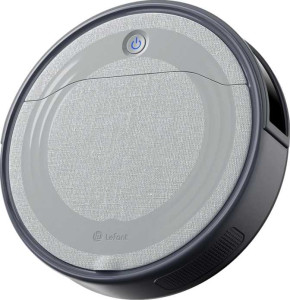
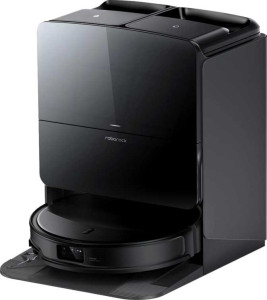
On the shared foundation, both robots are genuinely capable: mapping, no-go zones, obstacle and anti-fall sensors, carpet detection, auto-docking, scheduling, and problem-area cleaning are all present on both. Either unit will handle a modern smart-home cleaning routine competently at this baseline level.
The divergence, however, is substantial. The Roborock Saros 10R adds self-emptying, virtual barriers, Wi-Fi connectivity, and a full mopping suite — including mop raising and mop drying — none of which the Lefant M310 Ultra offers. Self-emptying alone is a major quality-of-life feature, reducing how often the user must manually handle the dustbin. The mopping trio (cleaning, raising, drying) signals a genuinely integrated wet-cleaning system rather than a passive pad attachment; mop raising over carpets prevents cross-contamination, and mop drying reduces odor and bacteria buildup between cycles. The M310 Ultra, by contrast, offsets its lack of Wi-Fi with a physical remote control — a minor convenience for users who prefer tactile input — but this does not come close to compensating for the missing features.
The Roborock Saros 10R wins this category decisively. Its feature set is considerably broader and addresses higher-effort pain points — bin emptying, floor washing, and smarter zone control — that meaningfully reduce the user's cleaning workload. The M310 Ultra covers the essentials but falls well short of the Saros 10R's automation depth.