Lefant M310 Ultra
Xiaomi Robot Vacuum H40

Lefant M310 Ultra Xiaomi Robot Vacuum H40

Overview

Welcome to our detailed spec comparison between the Lefant M310 Ultra and the Xiaomi Robot Vacuum H40. These two robot vacuums take notably different approaches to home cleaning, with key battlegrounds including suction power and self-emptying capability, battery performance, physical design, and smart-home connectivity. Whether you prioritize a compact footprint or a feature-rich autonomous experience, this side-by-side breakdown will help you find the right fit for your home.

Common Features

  • Both products include a HEPA filter.
  • Both products include an allergy filter.
  • Both products are compatible with Google Assistant.
  • Both products work with Amazon Alexa.
  • Both products feature mapping functionality.
  • Both products support no-go zones.
  • Both products can be controlled via a remote smartphone.
  • Both products have an obstacle sensor.
  • Both products support problem area cleaning.
  • Both products have carpet detection.
  • Both products are designed to avoid getting stuck.
  • Both products support route mapping.
  • Neither product has a display.
  • Both products clean all floor types.
  • Both products have mopping capability.
  • Neither product has a dirt sensor.
  • Neither product has an electrostatic filtration system.
  • Both products require 4 hours to fully charge.
  • Neither product has a removable battery.

Main Differences

  • Audible noise is 60 dB on Lefant M310 Ultra and 50 dB on Xiaomi Robot Vacuum H40.
  • Weight is 3020 g on Lefant M310 Ultra and 3640 g on Xiaomi Robot Vacuum H40.
  • Width is 280 mm on Lefant M310 Ultra and 340 mm on Xiaomi Robot Vacuum H40.
  • Height is 79 mm on Lefant M310 Ultra and 97 mm on Xiaomi Robot Vacuum H40.
  • Volume is 6193.6 cm³ on Lefant M310 Ultra and 11213.2 cm³ on Xiaomi Robot Vacuum H40.
  • Warranty period is 1 year on Lefant M310 Ultra and 2 years on Xiaomi Robot Vacuum H40.
  • Self-emptying capability is present on Xiaomi Robot Vacuum H40 but not available on Lefant M310 Ultra.
  • Virtual barriers support is present on Xiaomi Robot Vacuum H40 but not available on Lefant M310 Ultra.
  • Voice prompts are available on Lefant M310 Ultra but not present on Xiaomi Robot Vacuum H40.
  • Water level adjustment is supported on Xiaomi Robot Vacuum H40 but not on Lefant M310 Ultra.
  • Wi-Fi connectivity is supported on Xiaomi Robot Vacuum H40 but not on Lefant M310 Ultra.
  • Dustbin capacity is 0.5 l on Lefant M310 Ultra and 0.35 l on Xiaomi Robot Vacuum H40.
  • Twin side brushes are present on Lefant M310 Ultra but not on Xiaomi Robot Vacuum H40.
  • Automatic height adjustment is available on Xiaomi Robot Vacuum H40 but not on Lefant M310 Ultra.
  • Xiaomi Robot Vacuum H40 uses bags, while Lefant M310 Ultra does not.
  • Suction power is 6000 Pa on Lefant M310 Ultra and 10000 Pa on Xiaomi Robot Vacuum H40.
  • Number of cleaning modes is 5 on Lefant M310 Ultra and 4 on Xiaomi Robot Vacuum H40.
  • Battery power is 2600 mAh on Lefant M310 Ultra and 5200 mAh on Xiaomi Robot Vacuum H40.
  • Runtime is 170 minutes on Lefant M310 Ultra and 180 minutes on Xiaomi Robot Vacuum H40.
Specs Comparison
Lefant M310 Ultra

Lefant M310 Ultra

Xiaomi Robot Vacuum H40

Xiaomi Robot Vacuum H40

General info:
has HEPA filter
audible noise 60 dB 50 dB
has an allergy filter
compatible with Google Assistant
works with Alexa
release date August 2025 July 2025
weight 3020 g 3640 g
width 280 mm 340 mm
height 79 mm 97 mm
thickness 280 mm 340 mm
volume 6193.6 cm³ 11213.2 cm³
warranty period 1 years 2 years

Both the Lefant M310 Ultra and the Xiaomi Robot Vacuum H40 share a solid common foundation: they each include a HEPA allergy filter and offer full voice assistant integration via Google Assistant and Alexa, so neither product has an edge on filtration quality or smart home compatibility. These are table-stakes features at this tier, and users with allergies or existing smart home setups will be equally well-served by either model.

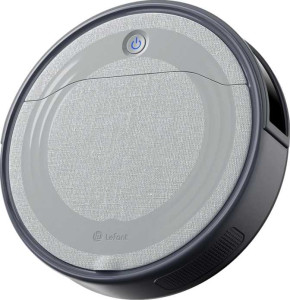
Where the two diverge meaningfully is in physical footprint and acoustics. The M310 Ultra is notably more compact — 280 mm wide and 79 mm tall versus the H40's 340 mm width and 97 mm height — resulting in a volume that is nearly half that of the Xiaomi (6,193 cm³ vs 11,213 cm³). This makes the Lefant better suited for homes with low furniture clearance or tighter spaces. The H40 is also heavier at 3,640 g compared to the M310 Ultra's 3,020 g, though since both are self-navigating robots, weight rarely affects day-to-day use directly. On noise, however, the gap is significant: the H40 operates at 50 dB versus the M310 Ultra's 60 dB — a 10 dB difference that is perceptually about twice as loud, making the Xiaomi noticeably quieter during operation, especially in open-plan living spaces.

On balance, the Xiaomi H40 holds a clear edge in two practical areas: it is substantially quieter and comes with a 2-year warranty versus the M310 Ultra's 1-year warranty, offering better long-term coverage. The Lefant counters with a significantly smaller and lighter body, which can matter in cluttered or furniture-dense environments. If quiet operation and after-sales confidence are priorities, the H40 wins this group; if compactness is the deciding factor, the M310 Ultra has the advantage.

Features:
has mapping
supports no-go zones
supports a remote smartphone
has an obstacle sensor
has problem area cleaning
is self-emptying
has carpet detection
doesn't get stuck
supports virtual barriers
has route mapping
Has voice prompts
auto docking
has anti-fall sensor
can be scheduled
has a remote control
has water level adjustment
supports Wi-Fi
Wi-Fi version Wi-Fi 4 (802.11n) Wi-Fi 4 (802.11n)
has mop cleaning
has mop raising
has mop drying

The shared feature set between these two robots is extensive: both support mapping, no-go zones, route mapping, obstacle and anti-fall sensors, carpet detection, problem area cleaning, auto docking, scheduling, and remote smartphone control. For the vast majority of daily autonomous vacuuming tasks, either robot delivers a comparable, well-rounded experience. Neither supports mopping in any form, so both are strictly dry-vacuum solutions.

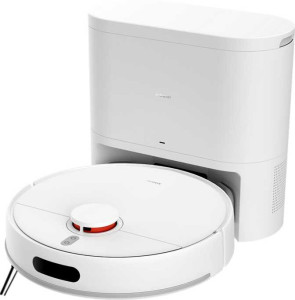
The real separation comes down to three features that have an outsized impact on convenience and usability. The Xiaomi H40 is self-emptying, meaning the dustbin is automatically offloaded to a base station after each run — a meaningful quality-of-life upgrade that can reduce manual intervention to once every few weeks. It also supports virtual barriers and water level adjustment, and crucially, it has Wi-Fi connectivity enabled, which is what makes smartphone-based remote control and app features actually functional over a network. The M310 Ultra, despite listing a Wi-Fi 4 spec, explicitly does not support Wi-Fi — a significant inconsistency that calls into question the depth of its app-based features. The M310 Ultra's counterpoint is its voice prompts, which the H40 lacks, offering audible status feedback without needing to check an app.

The Xiaomi H40 holds a decisive advantage in this group. Self-emptying alone is a premium convenience feature, but combined with working Wi-Fi connectivity, virtual barrier support, and water level adjustment, the H40 is simply a more fully realized smart home appliance. The M310 Ultra's voice prompts are a minor convenience gain that does not offset the gap in automation and connectivity depth.
Design:
dustbin capacity 0.5 l 0.35 l
Has a display
has twin side brushes
automatically adjusts its height
uses bags

Neither robot includes a display, so that spec is a non-factor. The more interesting trade-offs lie in how each machine handles dirt collection and floor coverage. The Lefant M310 Ultra carries a 0.5 l dustbin — 43% larger than the Xiaomi H40's 0.35 l bin — and operates bagless, meaning no recurring consumable costs. The H40, by contrast, uses bags, which add ongoing expense but tend to contain allergens more hygienically during disposal and are the standard pairing for self-emptying base stations.

On cleaning mechanics, the two robots take opposite approaches. The M310 Ultra features twin side brushes, which improves debris funneling from edges and corners into the suction path — a practical advantage in rooms with lots of baseboards or tight angles. The H40 instead offers automatic height adjustment, allowing it to adapt its undercarriage to different floor surfaces, which can improve suction seal and cleaning consistency when transitioning between hard floors and rugs. These are genuinely different design philosophies rather than one being strictly superior.

This group ends without a clear overall winner — each robot has a meaningful design advantage the other lacks. The M310 Ultra is better suited for users who prioritize edge cleaning performance and want to avoid bag purchases. The H40's automatic height adjustment makes it more adaptive across mixed flooring, and its bag-based system, while a recurring cost, pairs logically with its self-emptying capability noted in the features group.

Cleaning power:
suction power 6000 Pa 10000 Pa
cleans all floor types
cleaning modes 5 4
mops
has a dirt sensor
Has an electrostatic filtration system

Suction power is the headline differentiator here, and the gap is substantial. The Xiaomi H40 delivers 10,000 Pa of suction versus the Lefant M310 Ultra's 6,000 Pa — a 67% increase that translates directly to more effective lifting of embedded dirt, pet hair, and fine debris from carpets and textured surfaces. Both robots clean all floor types and include mopping, but at this suction gap, the H40 will perform more reliably on high-pile rugs and in homes with heavy soiling or shedding pets.

The M310 Ultra counters with 5 cleaning modes compared to the H40's 4, offering marginally more operational flexibility for the user to dial in behavior for different scenarios. In practice, however, the real-world benefit of one additional mode is minor and unlikely to offset the raw suction advantage in most households. Worth noting: neither robot includes a dirt sensor or electrostatic filtration, so both are on equal footing when it comes to adaptive cleaning intelligence and fine-particle capture beyond the HEPA filter.

The Xiaomi H40 wins this group clearly, driven almost entirely by its commanding suction advantage. For users dealing with carpets, pet hair, or higher debris loads, 10,000 Pa versus 6,000 Pa is a meaningful real-world difference. The M310 Ultra's extra cleaning mode is a thin consolation that does not change the outcome in this category.

Power:
battery power 2600 mAh 5200 mAh
runtime 170 min 180 min
charge time 4 hours 4 hours
has a removable battery

The battery story here is paradoxical in an instructive way. The Xiaomi H40 packs a 5,200 mAh battery — exactly double the Lefant M310 Ultra's 2,600 mAh — yet both robots deliver nearly identical runtimes: 180 minutes for the H40 versus 170 minutes for the M310 Ultra. The reason is almost certainly the H40's significantly higher suction power (as seen in the Cleaning Power group), which draws considerably more current and consumes the larger battery at a proportionally faster rate. The M310 Ultra, running at lower wattage, can squeeze comparable runtime from half the capacity.

Charge time is identical at 4 hours for both, and neither offers a removable battery, so swapping packs for extended sessions is not an option on either model. From a pure daily-use standpoint — one or two cleaning runs per day — the runtime difference of 10 minutes is negligible for most homes. Where the H40's larger battery could matter is in longevity: larger capacity batteries typically degrade more gracefully over hundreds of charge cycles, potentially maintaining usable runtime for longer over the product's lifespan.

This group is essentially a functional tie for day-to-day use, with a slight long-term edge leaning toward the H40 due to its larger battery capacity and expected slower degradation. Users should not factor runtime into their decision between these two models — the 10-minute gap is unlikely to be meaningful in practice.

Comparison Summary & Verdict

After examining every specification, it is clear that these two robots target distinct types of users. The Lefant M310 Ultra appeals to those who want a lighter, more compact machine with a larger 0.5 l dustbin, twin side brushes, voice prompts, and five cleaning modes, all at a quieter-than-average 60 dB — without relying on Wi-Fi. The Xiaomi Robot Vacuum H40, on the other hand, is built for hands-off convenience: its 10,000 Pa suction power, self-emptying station, Wi-Fi connectivity, virtual barriers, water level adjustment, automatic height adjustment, and a generous 2-year warranty make it a compelling choice for larger homes or users who want maximum automation. Both share strong fundamentals like mapping, obstacle avoidance, mopping, and smart-speaker compatibility, so your decision ultimately comes down to budget, home size, and how much autonomy you expect from your robot vacuum.

Lefant M310 Ultra
Buy Lefant M310 Ultra if...

Buy the Lefant M310 Ultra if you prefer a lighter, more compact robot vacuum with a larger dustbin, twin side brushes, and voice prompts, and you do not need Wi-Fi or self-emptying functionality.

Xiaomi Robot Vacuum H40
Buy Xiaomi Robot Vacuum H40 if...

Buy the Xiaomi Robot Vacuum H40 if you want powerful 10,000 Pa suction, a self-emptying station, Wi-Fi control, virtual barriers, and a longer 2-year warranty for a more automated, hands-free cleaning experience.