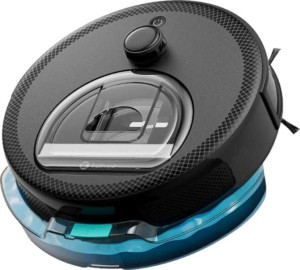
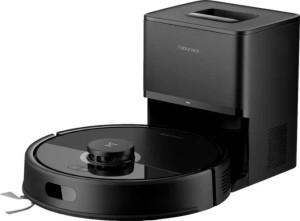
At their core, the Lefant M330 Pro and the Roborock Q7 L5 Plus share a strong and nearly identical automation toolkit: mapping, no-go zones, route planning, obstacle and anti-fall sensors, carpet detection, auto-docking, scheduling, and voice prompts are all present on both. For day-to-day autonomous cleaning, this common ground means neither robot will feel stripped-down in the fundamentals.
The divergence, however, is significant when you look at the features that reduce hands-on intervention. The Q7 L5 Plus supports self-emptying, virtual barriers, water level adjustment, and mop raising — a combination that positions it as a much more autonomous, set-and-forget system. Self-emptying alone is a major quality-of-life upgrade, as it can go weeks without the user needing to empty the dustbin manually. Virtual barriers (absent on the M330 Pro) add flexible room-restriction without physical accessories. Meanwhile, the M330 Pro counters with a physical remote control — useful for users who prefer direct, on-the-fly control without reaching for a smartphone — but notably lacks Wi-Fi connectivity in practice despite listing a Wi-Fi version, which limits its app-based control potential.
The Roborock Q7 L5 Plus holds a clear advantage in this group. Its self-emptying capability, virtual barrier support, and additional mop management features represent a meaningfully higher level of automation and user convenience — differences that matter considerably in everyday use, not just on a spec sheet.