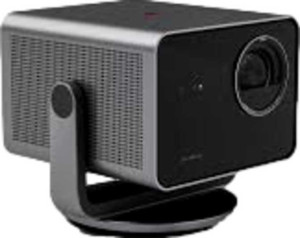
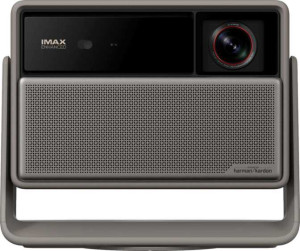
Leica Cine Play 1 Plus
XGIMI Horizon 20 Max

Leica Cine Play 1 Plus XGIMI Horizon 20 Max

Common Features

  • Both products have a laser light source.
  • Both products have a dedicated smartphone app.
  • Both products support HDR10+.
  • Both products support Dolby Vision.
  • Both products support HDR10.
  • Both products have 4K output resolution.
  • Both products support a maximum projection size of 300″.
  • Both products have two HDMI ports.
  • Both products support AirPlay.
  • Both products have Bluetooth.
  • Both products support Wi-Fi.
  • Both products have two USB ports.
  • Both products have Chromecast built-in.
  • Both products have a socket for a 3.5 mm audio jack.
  • Both products have stereo speakers.
  • Both products have a remote control.
  • Both products have built-in smart TV functionality.
  • Both products have a built-in speaker.
  • Both products support voice commands.

Main Differences

  • Leica Cine Play 1 Plus has a width of 261 mm, while XGIMI Horizon 20 Max has a width of 218 mm.
  • Leica Cine Play 1 Plus has a height of 229 mm, while XGIMI Horizon 20 Max has a height of 208 mm.
  • Leica Cine Play 1 Plus has a thickness of 242 mm, while XGIMI Horizon 20 Max has a thickness of 136 mm.
  • Leica Cine Play 1 Plus weighs 6700 g, while XGIMI Horizon 20 Max weighs 4900 g.
  • Leica Cine Play 1 Plus has a volume of 14464.098 cm³, while XGIMI Horizon 20 Max has a volume of 6166.784 cm³.
  • Leica Cine Play 1 Plus has a warranty period of 3 years, while XGIMI Horizon 20 Max has a warranty period of 2 years.
  • Leica Cine Play 1 Plus has a response time of 12 ms, while XGIMI Horizon 20 Max has a response time of 1 ms.
  • Leica Cine Play 1 Plus has a minimum throw distance of 2.2 m, while XGIMI Horizon 20 Max has a minimum throw distance of 2.1 m.
  • Leica Cine Play 1 Plus has a refresh rate of 120Hz, while XGIMI Horizon 20 Max has a refresh rate of 240Hz.
  • Leica Cine Play 1 Plus uses Bluetooth version 5.3, while XGIMI Horizon 20 Max uses Bluetooth version 5.2.
  • Leica Cine Play 1 Plus has no DVI connector, while XGIMI Horizon 20 Max has a DVI connector.
  • Leica Cine Play 1 Plus has one RJ45 port, while XGIMI Horizon 20 Max has no RJ45 ports.
  • Leica Cine Play 1 Plus has an S/PDIF Out port, while XGIMI Horizon 20 Max does not have an S/PDIF Out port.
  • Leica Cine Play 1 Plus does not have lens shift (vertical), while XGIMI Horizon 20 Max has lens shift (vertical).
  • Leica Cine Play 1 Plus does not have lens shift (horizontal), while XGIMI Horizon 20 Max has lens shift (horizontal).
  • Leica Cine Play 1 Plus has an audio output power of 2 x 10W, while XGIMI Horizon 20 Max has an audio output power of 2 x 12W.
Specs Comparison
Leica Cine Play 1 Plus

Leica Cine Play 1 Plus

XGIMI Horizon 20 Max

XGIMI Horizon 20 Max

General info:
has laser light source
release date November 2025 September 2025
width 261 mm 218 mm
height 229 mm 208 mm
thickness 242 mm 136 mm
weight 6700 g 4900 g
Has a dedicated smartphone app
volume 14464.098 cm³ 6166.784 cm³
warranty period 3 years 2 years

The Leica Cine Play 1 Plus and XGIMI Horizon 20 Max both feature laser light sources, ensuring bright and sharp visuals. However, in terms of size, the Leica Cine Play 1 Plus is larger with a width of 261 mm, height of 229 mm, and thickness of 242 mm, compared to the more compact XGIMI Horizon 20 Max, which measures 218 mm in width, 208 mm in height, and 136 mm in thickness.

Weight is another point of distinction: the Leica Cine Play 1 Plus is significantly heavier at 6700 g, while the XGIMI Horizon 20 Max weighs 4900 g, making it lighter and easier to handle. In terms of volume, the Leica Cine Play 1 Plus also has a larger overall size, with a volume of 14464.098 cm³, versus the XGIMI Horizon 20 Max's 6166.784 cm³.

Both products offer a dedicated smartphone app for control, and the Leica Cine Play 1 Plus comes with a 3-year warranty, whereas the XGIMI Horizon 20 Max offers a 2-year warranty.

Projection quality:
output resolution 4K 4K
response time 12 ms 1 ms
maximum projection size 300" 300"
supports HDR10+
minimum throw distance 2.2 m 2.1 m
refresh rate 120Hz 240Hz
supports Dolby Vision
supports HDR10

Both the Leica Cine Play 1 Plus and XGIMI Horizon 20 Max offer 4K output resolution, ensuring sharp and detailed images. The response time, however, differs significantly, with the XGIMI Horizon 20 Max having an impressive 1 ms response time, while the Leica Cine Play 1 Plus has a slower 12 ms response time.

In terms of maximum projection size, both projectors support up to 300″, providing large and immersive viewing experiences. Both models also support HDR10+ and Dolby Vision, delivering enhanced color and contrast. Additionally, both support HDR10, ensuring compatibility with a wide range of content.

The minimum throw distance is slightly shorter on the XGIMI Horizon 20 Max, which requires just 2.1 m compared to the Leica Cine Play 1 Plus, which needs 2.2 m. When it comes to refresh rate, the XGIMI Horizon 20 Max offers a higher 240Hz, compared to the Leica Cine Play 1 Plus’s 120Hz, which could provide smoother motion for high-speed content.

Connectivity:
HDMI ports 2 2
has AirPlay
Has Bluetooth
supports Wi-Fi
Wi-Fi version Wi-Fi 6 (802.11ax), Wi-Fi 5 (802.11ac), Wi-Fi 4 (802.11n) Wi-Fi 6 (802.11ax), Wi-Fi 5 (802.11ac), Wi-Fi 4 (802.11n)
USB ports 2 2
has Chromecast built-in
has a VGA connector
Bluetooth version 5.3 5.2
has a DVI connector
supports Miracast
RJ45 ports 1 0
Has S/PDIF Out port

Both the Leica Cine Play 1 Plus and XGIMI Horizon 20 Max offer a similar set of connectivity options, including 2 HDMI ports, AirPlay, Bluetooth, Wi-Fi support, USB ports, and Chromecast built-in. Both projectors support Wi-Fi versions Wi-Fi 6 (802.11ax), Wi-Fi 5 (802.11ac), and Wi-Fi 4 (802.11n), ensuring compatibility with modern wireless networks.

The Bluetooth versions differ slightly, with the Leica Cine Play 1 Plus featuring Bluetooth 5.3, while the XGIMI Horizon 20 Max uses Bluetooth 5.2. The Leica model also has an RJ45 port for wired Ethernet connections, while the XGIMI projector lacks this port. On the other hand, the XGIMI Horizon 20 Max includes a DVI connector, which the Leica Cine Play 1 Plus does not.

Additionally, the Leica Cine Play 1 Plus has an S/PDIF Out port, whereas the XGIMI Horizon 20 Max does not include this feature. Neither projector has a VGA connector, and both support Miracast for wireless screen mirroring.

Features:
has stereo speakers
has lens shift (vertical)
has lens shift (horizontal)
has a remote control
has built-in smart TV
has a built-in speaker
audio output power 2 x 10W 2 x 12W
has a socket for a 3.5 mm audio jack
has voice commands

Both the Leica Cine Play 1 Plus and XGIMI Horizon 20 Max come with stereo speakers, built-in smart TV capabilities, and a built-in speaker. They also feature a remote control and support voice commands for added convenience. The audio output power differs slightly, with the Leica Cine Play 1 Plus providing 2 x 10W, while the XGIMI Horizon 20 Max offers a slightly more powerful 2 x 12W.

One significant difference between the two is the lens shift feature. The Leica Cine Play 1 Plus does not support any lens shift (vertical or horizontal), while the XGIMI Horizon 20 Max offers both vertical and horizontal lens shift, providing more flexibility for positioning the projector.

Both projectors include a socket for a 3.5 mm audio jack, allowing for easy external audio connections. Overall, the Leica Cine Play 1 Plus and XGIMI Horizon 20 Max share many core features but differ in lens shift functionality and audio output power.

Comparison Summary

This is a specification comparison between Leica Cine Play 1 Plus and XGIMI Horizon 20 Max. Both models share features like 4K output resolution, HDR10+ support, and stereo speakers. However, there are notable differences, including the response time of 12 ms on Leica and 1 ms on XGIMI, and the weight of 6700 g on Leica versus 4900 g on XGIMI. The Leica Cine Play 1 Plus has a warranty period of 3 years, while the XGIMI Horizon 20 Max has a 2-year warranty. Additionally, the XGIMI model supports lens shift (horizontal and vertical), unlike the Leica model.