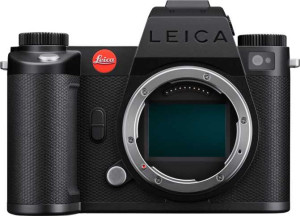
Leica SL3-S
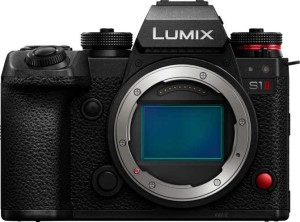
Panasonic Lumix DC-S1 II

Leica SL3-S Panasonic Lumix DC-S1 II

Overview

When two premium full-frame mirrorless cameras share the same Leica L mount and a near-identical feature set, the differences that remain become critically important. In this head-to-head between the Leica SL3-S and the Panasonic Lumix DC-S1 II, we examine how they diverge across key battlegrounds including image stabilization, high-ISO capability, video performance, and battery endurance to help you decide which camera truly fits your shooting style.

Common Features

  • Both cameras are mirrorless type cameras.
  • Both cameras feature an electronic viewfinder (EVF) with 100% coverage.
  • Both cameras are weather-sealed and splashproof.
  • Both cameras have a flip-out screen.
  • Both cameras have a 3.2″ touchscreen.
  • Both cameras have a hot shoe.
  • Both cameras use a full-frame sensor.
  • Both cameras use the Leica L lens mount.
  • Both cameras have 779 focus points.
  • Both cameras feature sensor shift image stabilization.
  • Both cameras support AF tracking.
  • Both cameras have phase-detection autofocus for photos and videos.
  • Both cameras share a fastest shutter speed of 0.000125 s.
  • Both cameras support manual focus.
  • Both cameras have continuous autofocus when recording movies.
  • Both cameras have a microphone input with a 3.5 mm audio jack and a built-in stereo microphone with 2 microphones.
  • Both cameras support a 24p cinema mode and slow-motion video recording.
  • Both cameras have a removable and rechargeable battery with a battery level indicator.
  • Both cameras support Wi-Fi 5 (802.11ac) and Wi-Fi 4 (802.11n), Bluetooth, and remote smartphone control.
  • Both cameras have dual card slots, shoot RAW, and do not support pixel shift.
  • Both cameras have an HDMI output and USB version 3.2.
  • Pixel shift shooting is not available on either camera.

Main Differences

  • Screen resolution is 2333k dots on the Leica SL3-S and 1840k dots on the Panasonic Lumix DC-S1 II.
  • Weight is 768 g on the Leica SL3-S and 800 g on the Panasonic Lumix DC-S1 II.
  • Volume is 1261.14 cm³ on the Leica SL3-S and 1261.23 cm³ on the Panasonic Lumix DC-S1 II.
  • Width is 141.2 mm on the Leica SL3-S and 134.3 mm on the Panasonic Lumix DC-S1 II.
  • Height is 108 mm on the Leica SL3-S and 102.3 mm on the Panasonic Lumix DC-S1 II.
  • Thickness is 82.7 mm on the Leica SL3-S and 91.8 mm on the Panasonic Lumix DC-S1 II.
  • Megapixels are 25.3 MP on the Leica SL3-S and 24.1 MP on the Panasonic Lumix DC-S1 II.
  • Maximum ISO is 200000 on the Leica SL3-S and 51200 on the Panasonic Lumix DC-S1 II.
  • Continuous shooting speed (mechanical) is 7 fps on the Leica SL3-S and 10 fps on the Panasonic Lumix DC-S1 II.
  • Flash sync speed is 0.005 s on the Leica SL3-S and 0.004 s on the Panasonic Lumix DC-S1 II.
  • Maximum exposure time is 30 s on the Leica SL3-S and 60 s on the Panasonic Lumix DC-S1 II.
  • Image stabilization rating (CIPA) is 5 stops on the Leica SL3-S and 8 stops on the Panasonic Lumix DC-S1 II.
  • Video recording resolution and frame rate is 3968 x 30 fps on the Leica SL3-S and 3312 x 60 fps on the Panasonic Lumix DC-S1 II.
  • Movie bitrate is 800 Mbps on the Leica SL3-S and 1900 Mbps on the Panasonic Lumix DC-S1 II.
  • Battery life (CIPA) is 315 shots on the Leica SL3-S and 350 shots on the Panasonic Lumix DC-S1 II.
  • Battery power is 2200 mAh on the Leica SL3-S and 2400 mAh on the Panasonic Lumix DC-S1 II.
Specs Comparison
Leica SL3-S

Leica SL3-S

Panasonic Lumix DC-S1 II

Panasonic Lumix DC-S1 II

Design:
Type Mirrorless Mirrorless
viewfinder Electronic viewfinder (EVF) Electronic viewfinder (EVF)
is weather-sealed (splashproof)
screen resolution 2333k dots 1840k dots
Has a flip-out screen
viewfinder coverage 100% 100%
screen size 3.2" 3.2"
weight 768 g 800 g
has a touch screen
Has a hot shoe
volume 1261.14192 cm³ 1261.230102 cm³
is a system camera
has a flash
lowest potential operating temperature -10 °C -10 °C
maximum operating temperature 40 °C 40 °C
Has a tilting viewfinder
width 141.2 mm 134.3 mm
height 108 mm 102.3 mm
thickness 82.7 mm 91.8 mm

Both the Leica SL3-S and the Panasonic Lumix S1 II share the same fundamental design DNA: full-featured mirrorless system cameras with electronic viewfinders offering 100% coverage, articulating flip-out touchscreens, hot shoes, and identical weather-sealing rated down to -10 °C. For working photographers, this means neither camera compromises on core usability — both are built for serious, all-conditions use.

Where differences emerge is in the details of form and finish. The SL3-S carries a 768 g body versus the S1 II's 800 g, a 32 g advantage that is modest in isolation but can add up over a long shoot. More meaningfully, the two cameras distribute their nearly identical total volume (~1261 cm³) differently: the SL3-S is wider and taller (141.2 × 108 mm) while the S1 II is narrower and shorter (134.3 × 102.3 mm) but considerably deeper at 91.8 mm versus 82.7 mm. In practice, the S1 II will protrude more from a bag or coat pocket, while the SL3-S occupies more lateral space — a grip-feel difference that comes down to personal preference and hand size. The SL3-S also edges ahead on rear screen quality, with a noticeably sharper 2333k-dot resolution compared to the S1 II's 1840k dots, which translates to crisper menu navigation and more accurate manual-focus assist in the field.

Overall, the two cameras are closely matched in design, but the SL3-S holds a marginal edge: it is lighter, offers a higher-resolution rear display, and presents a slimmer profile. The S1 II counters with a more compact width and height, which some shooters will prefer for ergonomics. Neither camera has a clear dominant advantage, but photographers who prioritize screen sharpness and a thinner body will lean toward the SL3-S.
Optics:
sensor size Full frame Full frame
lens mount Leica L Leica L
focus points 779 779
megapixels (main camera) 25.3 MP 24.1 MP
maximum ISO 200000 ISO 51200 ISO
has sensor shift stabilization
continuous shooting (mechanical) 7 fps 10 fps
has AF tracking
Has phase-detection autofocus for photos
fastest shutter speed 0.000125 s 0.000125 s
has manual focus
has touch autofocus
has manual shutter speed
has a BSI sensor
has manual exposure
has a two-stage shutter
has a serial shot mode
has a CMOS sensor
has manual ISO
flash sync speed 0.005 s 0.004 s
has manual white balance
exposure time 30 s 60 s
Maximum electronic shutter speed 6.25E-5 s 6.25E-5 s
has a stacked CMOS sensor
image stabilization rating (CIPA) 5 stops 8 stops
can combine image stabilization

At the sensor level, these two cameras share more than they differ: both use full-frame, BSI stacked CMOS sensors with the Leica L mount, identical 779 phase-detection focus points, and the same peak electronic shutter speed. Resolution is virtually a non-issue — 25.3 MP on the SL3-S versus 24.1 MP on the S1 II is a difference that will never be visible in a final image. For most shooting scenarios, the two cameras start from an essentially equivalent optical foundation.

The meaningful divergences lie in three areas. First, image stabilization: the S1 II's IBIS is rated at a substantial 8 stops (CIPA) compared to the SL3-S's 5 stops — and both support combined optical + sensor stabilization. In practical terms, that 3-stop gap can be the difference between a sharp handheld frame and a blurred one in low light or with long telephoto lenses. Second, burst shooting: the S1 II delivers 10 fps mechanically versus 7 fps on the SL3-S, a real advantage for sports, wildlife, or any fast-action work. Third, the S1 II supports a longer native exposure time of 60 s versus 30 s, which matters for certain astrophotography and long-exposure scenarios without requiring external intervalometers. The SL3-S counters with a dramatically higher native maximum ISO of 200,000 compared to the S1 II's 51,200 — a near two-stop advantage on paper in the dimmest possible conditions.

On balance, the Panasonic Lumix S1 II holds a clear edge in this group. Its superior 8-stop IBIS and faster 10 fps burst rate address everyday shooting demands far more broadly than the SL3-S's ISO ceiling advantage, which applies only in extreme low-light edge cases. Photographers who shoot action or rely heavily on handheld stability will find the S1 II's optical specs materially more capable.

Videography:
video recording (main camera) 3968 x 30 fps 3312 x 60 fps
Has phase-detection autofocus for videos
has continuous autofocus when recording movies
has a microphone input
has a socket for a 3.5 mm audio jack
has a stereo microphone
movie bitrate 800 Mbps 1900 Mbps
number of microphones 2 2
has a 24p cinema mode
supports slow-motion video recording

The audio foundation here is identical — both cameras offer a 3.5mm microphone input, built-in dual stereo microphones, phase-detection autofocus during recording, and a 24p cinema mode. For videographers evaluating these two on core workflow compatibility, either camera will slot into a professional audio and monitoring setup without compromise.

The real tension is in how each camera prioritizes resolution versus frame rate. The SL3-S tops out at 3968px wide at 30 fps, while the S1 II reaches 3312px wide but at 60 fps. The SL3-S captures more spatial detail per frame — useful for cinematic delivery or cropping in post — but cannot shoot high-resolution footage at smoother or slower-motion frame rates. The S1 II trades some resolution for the flexibility of 60 fps at its peak, enabling smooth motion rendition and usable slow-motion at a broadcast-friendly resolution. For documentary, event, or action-oriented work, that higher frame rate is a practical asset. Crucially, the S1 II also records at a strikingly higher bitrate of 1900 Mbps versus the SL3-S's 800 Mbps — more than double — which means significantly more data retained per frame, richer color grading latitude in post, and less compression artifacting in high-motion scenes.

The Panasonic Lumix S1 II takes a clear lead in videography. While the SL3-S edges ahead on peak resolution, the S1 II's combination of 60 fps capture and a massive 1900 Mbps bitrate makes it the more versatile and technically capable video tool, particularly for shooters who need slow-motion options or plan to do extensive color work in post-production.

Battery:
Battery life (CIPA) 315 shots 350 shots
has a removable battery
has a rechargeable battery
has a battery level indicator
battery power 2200 mAh 2400 mAh

Battery specs rarely generate excitement, but they directly determine how much you can shoot before reaching for a spare. Both cameras share the same practical conveniences — removable, rechargeable packs with a battery level indicator — so the comparison narrows entirely to capacity and endurance.

The S1 II carries a 2400 mAh battery rated at 350 shots (CIPA), while the SL3-S packs 2200 mAh for a rated 315 shots. The gap is modest — roughly 10% more capacity and 11% more shots per charge on the S1 II — but in real-world terms, that translates to approximately an extra 35 frames before a battery swap becomes necessary. For a studio or controlled shoot where charging is easy, this difference is negligible. On a full-day event or travel assignment with limited access to power, those extra shots can matter at the margins.

The Panasonic Lumix S1 II holds a narrow edge here, simply by virtue of its larger battery and higher CIPA rating. It is not a decisive advantage — both cameras will benefit equally from carrying a second battery — but all else being equal, the S1 II will last slightly longer on a single charge.

Features:
release date January 2025 June 2025
supports Wi-Fi
Has Bluetooth
Has dual card slots
has pixel shift shot
shoots raw
Wi-Fi version Wi-Fi 5 (802.11ac), Wi-Fi 4 (802.11n) Wi-Fi 5 (802.11ac), Wi-Fi 4 (802.11n)
supports a remote smartphone
has an HDMI output
has GPS
has NFC
has an external memory slot
Has USB Type-C
Bluetooth version 5 5

Some spec groups reveal a clear winner — this is not one of them. Across every connectivity and features data point provided, the Leica SL3-S and Panasonic Lumix S1 II are in complete lockstep: both offer Wi-Fi 5, Bluetooth 5, dual card slots, USB Type-C, HDMI output, smartphone remote control, and RAW shooting. Neither has GPS or NFC, and neither supports pixel shift.

For working photographers, the shared feature set means no workflow trade-offs when choosing between these two. Dual card slots provide redundancy or overflow backup in the field. Wi-Fi 5 and Bluetooth 5 together enable reasonably fast image transfer and reliable remote triggering from a smartphone. The absence of GPS on both means those who geotag images will need to rely on a phone-based solution in either case.

This group is an unambiguous tie. There is not a single differentiating data point in the provided specs, and neither camera holds any connectivity or feature advantage over the other.

Miscellaneous:
USB version 3.2 3.2

The only data point in this group is USB version, and both the Leica SL3-S and Panasonic Lumix S1 II share identical USB 3.2 connectivity. In practical terms, this means both cameras support fast wired data transfers — offloading large RAW files or high-bitrate video footage to a computer at speeds well beyond what older USB standards could offer.

This group is a complete tie. With only a single shared spec to evaluate, there is no differentiator to analyze and no advantage to assign to either camera.

Comparison Summary & Verdict

Both cameras share an impressive common foundation: full-frame sensors, Leica L mount, weather sealing, phase-detection autofocus, and dual card slots. However, their differences reveal distinct personalities. The Leica SL3-S stands out with a significantly higher maximum ISO of 200000, a sharper EVF display, a lighter 768 g body, and a higher video resolution ceiling, making it the stronger choice for low-light photographers and those prioritizing image quality. The Panasonic Lumix DC-S1 II counters with a superior 8-stop IBIS rating, a much higher movie bitrate of 1900 Mbps, faster 10 fps continuous shooting, 60 fps video capability, a longer 60-second exposure time, and better battery life at 350 shots. It is clearly the more capable tool for professional videographers and fast-action photographers who demand stability and smoother motion capture.

Leica SL3-S
Buy Leica SL3-S if...

Buy the Leica SL3-S if you prioritize a higher maximum ISO for low-light photography, a sharper viewfinder resolution, and a lighter, slightly more compact body.

Panasonic Lumix DC-S1 II
Buy Panasonic Lumix DC-S1 II if...

Buy the Panasonic Lumix DC-S1 II if you need superior 8-stop image stabilization, a significantly higher video bitrate of 1900 Mbps, faster 10 fps continuous shooting, and longer battery life.