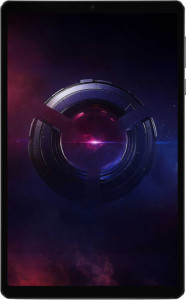
Connectivity is the main battleground in this category, and the Legion Tab Gen 3 holds a forward-looking advantage in wireless standards. It supports Wi-Fi 7 (802.11be), the latest generation, while the Idea Tab Pro tops out at Wi-Fi 6E. Wi-Fi 7 delivers higher theoretical throughput, lower latency, and better multi-device performance — particularly relevant for online gaming and large file transfers. The download speed figures reinforce this: the Legion Tab Gen 3 reaches 10,000 Mbits/s versus the Idea Tab Pro's 7,900 Mbits/s. Interestingly, the Idea Tab Pro edges ahead on upload speed at 4,200 Mbits/s vs 3,500 Mbits/s, though download throughput is typically the more impactful metric for most users. Bluetooth similarly favors the Legion Tab Gen 3 at version 5.4 versus 5.3, a minor but marginal improvement in connection stability and efficiency.
The Legion Tab Gen 3 also uniquely supports Galileo satellite navigation, broadening its GPS accuracy by drawing on the European positioning system in addition to standard GPS. The Idea Tab Pro lacks this. For a Wi-Fi-only tablet used mostly indoors, this difference is largely academic — but it reflects the Legion Tab Gen 3's more comprehensive hardware specification overall.
Beyond these distinctions, the two tablets are essentially identical across this entire category — same USB Type-C with USB 3.2, no NFC, no cellular, no fingerprint scanner, and a near-identical software feature set covering split-screen, widgets, privacy controls, and on-device machine learning. The Legion Tab Gen 3 takes a clear but not dramatic edge in connectivity, driven primarily by its Wi-Fi 7 support and higher download ceiling.