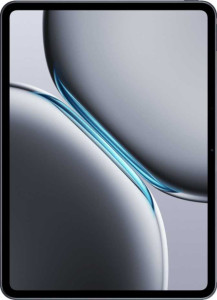
Lenovo Idea Tab Pro
OnePlus Pad 2 Pro

Lenovo Idea Tab Pro OnePlus Pad 2 Pro

Overview

Welcome to our in-depth spec comparison between the Lenovo Idea Tab Pro and the OnePlus Pad 2 Pro — two compelling large-screen Android tablets aimed at demanding users. These devices share a surprising amount of common ground, yet differ sharply in areas like raw processing power, display quality, and battery capacity. Whether you care most about portability, productivity, or multimedia performance, this breakdown will help you decide which tablet truly fits your needs.

Common Features

  • Neither product has a detachable keyboard.
  • Neither product has a backlit keyboard.
  • Neither product offers water resistance.
  • Neither product has tilt sensitivity.
  • Both products use an LCD IPS display type.
  • Both products have a 144Hz refresh rate.
  • Neither product has branded damage-resistant glass.
  • Both products support HDR10.
  • Both products have a touchscreen.
  • Neither product has a sapphire glass display.
  • Neither product has an e-paper display.
  • Both products support 64-bit processing.
  • Both products use big.LITTLE technology.
  • Both products support DirectX 12.
  • Both products have integrated graphics.
  • Both products have 8 CPU threads.
  • Both products have TrustZone support.
  • Both products support a maximum of 24GB of memory.
  • Both products use HMP.
  • Both products use DDR5 memory.
  • Both products have a 13 MP main camera.
  • Both products have an 8 MP front camera.
  • Both products have a flash.
  • Both products have a front camera.
  • Both products have a built-in HDR mode.
  • Neither product can create panoramas in-camera.
  • Both products support slow-motion video recording.
  • Both products have touch autofocus.
  • Neither product supports aptX.
  • Neither product supports aptX HD.
  • Neither product supports LDAC.
  • Neither product supports aptX Low Latency.
  • Neither product supports aptX Adaptive.
  • Neither product supports aptX Lossless.
  • Both products have stereo speakers.
  • Neither product has a 3.5mm audio jack.
  • Both products support fast charging.
  • Neither product has wireless charging.
  • Both products have a battery level indicator.
  • Both products have a rechargeable battery.
  • Neither product has a removable battery.
  • Neither product has Mail Privacy Protection.
  • Both products have on-device machine learning.
  • Both products have clipboard warnings.
  • Both products have location privacy options.
  • Both products have camera and microphone privacy options.
  • Both products can block app tracking.
  • Neither product blocks cross-site tracking.
  • Both products support split screen.

Main Differences

  • Weight is 620g on Lenovo Idea Tab Pro and 675g on OnePlus Pad 2 Pro.
  • Thickness is 6.9mm on Lenovo Idea Tab Pro and 6mm on OnePlus Pad 2 Pro.
  • Width is 291.18mm on Lenovo Idea Tab Pro and 289.6mm on OnePlus Pad 2 Pro.
  • Height is 189.1mm on Lenovo Idea Tab Pro and 209.7mm on OnePlus Pad 2 Pro.
  • Volume is 379.93 cm³ on Lenovo Idea Tab Pro and 364.37 cm³ on OnePlus Pad 2 Pro.
  • A stylus is included with Lenovo Idea Tab Pro but not with OnePlus Pad 2 Pro.
  • Screen size is 12.7″ on Lenovo Idea Tab Pro and 13.2″ on OnePlus Pad 2 Pro.
  • Resolution is 2944 x 1840 px on Lenovo Idea Tab Pro and 3392 x 2400 px on OnePlus Pad 2 Pro.
  • Pixel density is 273 ppi on Lenovo Idea Tab Pro and 315 ppi on OnePlus Pad 2 Pro.
  • Typical brightness is 400 nits on Lenovo Idea Tab Pro and 600 nits on OnePlus Pad 2 Pro.
  • HDR10+ support is present on OnePlus Pad 2 Pro but not available on Lenovo Idea Tab Pro.
  • Dolby Vision support is present on OnePlus Pad 2 Pro but not available on Lenovo Idea Tab Pro.
  • Internal storage is 256GB on Lenovo Idea Tab Pro and 512GB on OnePlus Pad 2 Pro.
  • RAM is 8GB on Lenovo Idea Tab Pro and 16GB on OnePlus Pad 2 Pro.
  • The chipset is MediaTek Dimensity 8300 on Lenovo Idea Tab Pro and Qualcomm Snapdragon 8 Elite on OnePlus Pad 2 Pro.
  • The GPU is Mali G615 MP6 on Lenovo Idea Tab Pro and Adreno 830 on OnePlus Pad 2 Pro.
  • CPU speed is 1 x 3.35 & 3 x 3 & 4 x 2.2 GHz on Lenovo Idea Tab Pro and 2 x 4.32 & 6 x 3.53 GHz on OnePlus Pad 2 Pro.
  • Geekbench 6 multi-core score is 4610 on Lenovo Idea Tab Pro and 10059 on OnePlus Pad 2 Pro.
  • Geekbench 6 single-core score is 1485 on Lenovo Idea Tab Pro and 3234 on OnePlus Pad 2 Pro.
  • An external memory slot is available on Lenovo Idea Tab Pro but not on OnePlus Pad 2 Pro.
  • Semiconductor size is 4nm on Lenovo Idea Tab Pro and 3nm on OnePlus Pad 2 Pro.
  • GPU clock speed is 1400 MHz on Lenovo Idea Tab Pro and 1100 MHz on OnePlus Pad 2 Pro.
  • L2 cache is 1MB on Lenovo Idea Tab Pro and 12MB on OnePlus Pad 2 Pro.
  • RAM speed is 8533 MHz on Lenovo Idea Tab Pro and 5300 MHz on OnePlus Pad 2 Pro.
  • Battery capacity is 10200 mAh on Lenovo Idea Tab Pro and 12140 mAh on OnePlus Pad 2 Pro.
  • Lenovo Idea Tab Pro supports Wi-Fi 6E (802.11ax) while OnePlus Pad 2 Pro supports Wi-Fi 7 (802.11be) instead.
  • App offloading is supported on OnePlus Pad 2 Pro but not on Lenovo Idea Tab Pro.
  • GPS is available on Lenovo Idea Tab Pro but not on OnePlus Pad 2 Pro.
  • Bluetooth version is 5.3 on Lenovo Idea Tab Pro and 5.4 on OnePlus Pad 2 Pro.
  • Download speed is 7900 Mbits/s on Lenovo Idea Tab Pro and 10000 Mbits/s on OnePlus Pad 2 Pro.
  • Upload speed is 4200 Mbits/s on Lenovo Idea Tab Pro and 3500 Mbits/s on OnePlus Pad 2 Pro.
Specs Comparison
Lenovo Idea Tab Pro

Lenovo Idea Tab Pro

OnePlus Pad 2 Pro

OnePlus Pad 2 Pro

Design:
weight 620 g 675 g
thickness 6.9 mm 6 mm
width 291.18 mm 289.6 mm
height 189.1 mm 209.7 mm
volume 379.9287522 cm³ 364.37472 cm³
Stylus included
Has a detachable keyboard
Has a backlit keyboard
water resistance None None
Has tilt sensitivity

The two tablets take noticeably different approaches to physical form. The Lenovo Idea Tab Pro is shorter and wider (189.1 × 291.18 mm) giving it a more landscape-native profile, while the OnePlus Pad 2 Pro is taller and narrower (209.7 × 289.6 mm), making it feel more at home in portrait orientation for reading or browsing. Despite its larger overall footprint, the OnePlus achieves a smaller total volume (364.4 cm³ vs 379.9 cm³) by being meaningfully thinner at 6 mm versus the Lenovo's 6.9 mm — a gap that is genuinely perceptible when sliding the device into a bag or holding it at the edge.

Where the Lenovo reclaims ground is in weight: at 620 g it is 55 g lighter than the OnePlus Pad 2 Pro's 675 g. Over a long reading or video session held in one hand, that difference translates to noticeably less fatigue. Neither tablet offers any water resistance, and both lack a detachable keyboard or tilt-sensitive stylus input, so those features are a wash.

The single most decisive differentiator in this category is that the Lenovo ships with a stylus included, while the OnePlus does not. Getting a stylus out of the box adds immediate note-taking and sketching capability without an extra purchase. That bundled accessory, combined with its lighter chassis, gives the Lenovo Idea Tab Pro a clear design edge for users who value everyday portability and pen input — though buyers who prioritize a slimmer profile and a taller screen may still find the OnePlus Pad 2 Pro's svelte 6 mm build the more elegant solution.

Display:
screen size 12.7" 13.2"
resolution 2944 x 1840 px 3392 x 2400 px
pixel density 273 ppi 315 ppi
Display type LCD, IPS LCD, IPS
refresh rate 144Hz 144Hz
has branded damage-resistant glass
supports HDR10
brightness (typical) 400 nits 600 nits
has a touch screen
Has sapphire glass display
supports HDR10+
supports Dolby Vision
Has an e-paper display

Both tablets share the same LCD IPS panel technology and a smooth 144Hz refresh rate, so motion clarity and color viewing angles are broadly comparable. The meaningful separation begins with raw screen real estate and sharpness: the OnePlus Pad 2 Pro packs a 13.2″ display at 3392 × 2400 px and 315 ppi, versus the Lenovo's 12.7″ at 2944 × 1840 px and 273 ppi. That 42-ppi gap is visible to the naked eye at typical tablet viewing distances — text edges look crisper and fine detail in images is more defined on the OnePlus.

The brightness delta is equally consequential. The OnePlus delivers 600 nits typical brightness against the Lenovo's 400 nits — a 50% advantage that makes a tangible difference when working near a window or under office lighting, where reflections on a glossy panel can easily wash out a dimmer screen. For HDR content, the OnePlus adds support for HDR10+ and Dolby Vision on top of the HDR10 both tablets share, enabling dynamic tone-mapping on compatible streaming platforms and a wider range of highlight and shadow detail in supported video.

Across every meaningful display metric — size, pixel density, brightness, and HDR format support — the OnePlus Pad 2 Pro holds a clear advantage. The Lenovo Idea Tab Pro's panel is perfectly serviceable, but users who prioritize media consumption, digital art, or extended reading sessions will find the OnePlus display the materially stronger choice.

Performance:
internal storage 256GB 512GB
RAM 8GB 16GB
Chipset (SoC) name MediaTek Dimensity 8300 Qualcomm Snapdragon 8 Elite
GPU name Mali G615 MP6 Adreno 830
CPU speed 1 x 3.35 & 3 x 3 & 4 x 2.2 GHz 2 x 4.32 & 6 x 3.53 GHz
Geekbench 6 result (multi) 4610 10059
Geekbench 6 result (single) 1485 3234
has an external memory slot
semiconductor size 4 nm 3 nm
Supports 64-bit
Uses big.LITTLE technology
DirectX version DirectX 12 DirectX 12
Has integrated graphics
GPU clock speed 1400 MHz 1100 MHz
L2 cache 1 MB 12 MB
CPU threads 8 threads 8 threads
RAM speed 8533 MHz 5300 MHz
Has TrustZone
maximum memory amount 24GB 24GB
Android version Android 14 Android 15
Thermal Design Power (TDP) 6W 8.2W
Uses HMP
L3 cache 4 MB 8 MB
maximum memory bandwidth 68.2 GB/s 85.1 GB/s
memory channels 4 2
OpenCL version 2 3

The chipset gap here is substantial. The Lenovo Idea Tab Pro runs on a MediaTek Dimensity 8300 (4 nm), a capable mid-to-upper-range SoC, while the OnePlus Pad 2 Pro deploys the flagship Qualcomm Snapdragon 8 Elite (3 nm) — a generational step above. Geekbench 6 scores make the delta concrete: the OnePlus posts a multi-core score of 10059 versus the Lenovo's 4610, and a single-core score of 3234 against 1485. In practice, the OnePlus handles demanding workloads — video editing, large productivity files, intensive multitasking — with significantly more headroom before it shows any strain.

Memory configuration reinforces this picture. The OnePlus ships with 16 GB of RAM and 512 GB of storage, doubling the Lenovo's 8 GB / 256 GB baseline. More RAM means more apps stay resident in the background without reloading, and a larger L2 cache (12 MB vs 1 MB) and L3 cache (8 MB vs 4 MB) on the Snapdragon further reduce latency on repeated tasks. The Lenovo partially offsets its lower base storage with a microSD expansion slot — a feature the OnePlus entirely omits — which is a meaningful practical advantage for users who need flexible, affordable storage growth.

One nuance worth noting: the Lenovo's RAM runs at 8533 MHz versus the OnePlus's 5300 MHz, though the Snapdragon's superior architecture and broader memory bandwidth (85.1 GB/s vs 68.2 GB/s) more than compensate in real-world throughput. Overall, the OnePlus Pad 2 Pro holds a commanding performance advantage in every compute metric that matters — the Lenovo's expandable storage is a useful concession, but it cannot close a gap of this magnitude.

Cameras:
megapixels (main camera) 13 MP 13 MP
megapixels (front camera) 8MP 8MP
has a flash
has a front camera
has a built-in HDR mode
can create panoramas in-camera
supports slow-motion video recording
has touch autofocus
optical zoom 0x 0x
has a BSI sensor
has manual white balance
has a CMOS sensor
supports HDR10 recording
has continuous autofocus when recording movies
supports Dolby Vision recording
Has a front-facing LED flash
number of flash LEDs 1 1
has manual ISO
has a video light
Shoots 360° panorama
has a serial shot mode
has built-in optical image stabilization
has 3D photo/video recording capabilities
Has a dual-tone LED flash
has manual focus
Has a RGB LED flash
has manual exposure
has manual shutter speed

Rarely in a tablet comparison do two products match so completely in a given category — but that is exactly the case here. Every single camera specification provided for the Lenovo Idea Tab Pro and the OnePlus Pad 2 Pro is identical: both carry a 13 MP rear camera and an 8 MP front camera, share the same autofocus capabilities, manual controls (ISO, white balance, focus, exposure), flash configuration, and video feature set.

Notable shared limitations are worth flagging for prospective buyers. Neither tablet includes optical image stabilization, which means handheld video footage is more prone to shake. Neither supports HDR10 or Dolby Vision recording, and neither can shoot panoramas — capabilities that some competing tablets in this tier do offer. The manual controls that are present (ISO, white balance, focus, exposure) give enthusiast users reasonable creative flexibility, but the absence of manual shutter speed keeps the camera system from being truly pro-grade.

Based strictly on the provided specifications, this category is a complete tie. There is no data here that would give either tablet a camera advantage over the other — a user choosing between these two devices should weight their decision entirely on the other specification groups.

Audio:
has aptX
has aptX HD
has LDAC
has aptX Low Latency
has aptX Adaptive
has aptX Lossless
has stereo speakers
has a socket for a 3.5 mm audio jack
Has a radio

Audio is another category where the two tablets arrive at exactly the same destination. Both the Lenovo Idea Tab Pro and the OnePlus Pad 2 Pro feature stereo speakers and omit a 3.5 mm headphone jack, meaning wired audio requires a USB-C adapter on either device. Neither tablet supports any high-resolution Bluetooth codec — no aptX, aptX HD, LDAC, or any of the aptX variants — which is a shared limitation worth noting for users who rely on wireless headphones and care about audio fidelity beyond standard SBC or AAC.

The absence of high-res wireless codecs is a meaningful gap for audiophiles. LDAC in particular, which is natively supported by Android, can transmit audio at up to three times the bitrate of standard Bluetooth — its omission on both devices means Bluetooth audio quality is capped at a lower ceiling regardless of how capable the headphones themselves are. That said, for casual media consumption through the built-in stereo speakers, both tablets are equally equipped.

With every audio specification matching perfectly, this category is a complete tie. Neither device holds any advantage, and the shared limitations — no headphone jack, no high-res codecs — apply equally to both.

Battery:
battery power 10200 mAh 12140 mAh
Supports fast charging
has wireless charging
has a battery level indicator
has a rechargeable battery
has a removable battery

Battery capacity is where the OnePlus Pad 2 Pro pulls ahead in a straightforward way. Its 12140 mAh cell outpaces the Lenovo Idea Tab Pro's 10200 mAh by nearly 2000 mAh — roughly a 19% larger reservoir. On a large-screen tablet running a power-hungry display at high refresh rates, that margin translates to a meaningfully longer stretch between charges, whether that means an extra hour of video streaming, more sustained use during travel, or simply fewer charging cycles over the course of a week.

The qualifying factor is that the OnePlus also drives a bigger, higher-resolution screen with a more powerful chipset — both of which draw more power. The net real-world endurance advantage may therefore be somewhat narrower than the raw mAh gap implies. That said, the provided specs give no efficiency data to quantify this, so on the numbers alone, the OnePlus holds the capacity edge. Both tablets support fast charging and neither offers wireless charging, keeping that aspect of the comparison even.

On battery specs as provided, the OnePlus Pad 2 Pro has a clear advantage in capacity. Users who prioritize all-day or multi-day unplugged use will find the larger cell a genuine benefit, even accounting for the more demanding hardware it powers.

Connectivity & Features:
release date March 2025 May 2025
Wi-Fi version Wi-Fi 4 (802.11n), Wi-Fi 5 (802.11ac), Wi-Fi 6 (802.11ax), Wi-Fi 6E (802.11ax) Wi-Fi 4 (802.11n), Wi-Fi 5 (802.11ac), Wi-Fi 6 (802.11ax), Wi-Fi 7 (802.11be)
has Mail Privacy Protection
has on-device machine learning
has clipboard warnings
has location privacy options
has camera/microphone privacy options
can block app tracking
blocks cross-site tracking
supports split screen
has Live Text
has notification permissions
has full-page screenshots
has Quick Start
has theme customization
has Wi-Fi password sharing
has PiP
Can play games while they download
has an extra dim mode
can offload apps
has focus modes
has media picker
has dynamic theming
has dark mode
has battery health check
Has USB Type-C
has a cellular module
has 5G support
is a multi-user system
gets direct OS updates
has GPS
has a child lock
has an HDMI output
has NFC
Has a fingerprint scanner
USB version 3.2 3.2
Supports widgets
Bluetooth version 5.3 5.4
download speed 7900 MBits/s 10000 MBits/s
has a gyroscope
Is free and open source
Has offline voice recognition
has a compass
upload speed 4200 MBits/s 3500 MBits/s
supports Wi-Fi
Has sharing intents
Has customizable notifications
Uses 3D facial recognition
supports Galileo
Has a barometer
has an accelerometer
has voice commands
Has an iris scanner
Has a built-in projector
supports Ethernet
Has an infrared sensor
Tracks the current position of a mobile device

The most consequential connectivity difference is wireless networking. The Lenovo Idea Tab Pro tops out at Wi-Fi 6E, while the OnePlus Pad 2 Pro steps up to Wi-Fi 7 (802.11be). Wi-Fi 7 introduces multi-link operation and significantly higher theoretical throughput — reflected in the spec sheet download speeds of 10000 Mbits/s versus the Lenovo's 7900 Mbits/s. For most home networks today the real-world gap will be modest, but as Wi-Fi 7 routers become more common, the OnePlus will be better positioned to take full advantage of next-generation infrastructure. The Lenovo does edge ahead on upload speed (4200 Mbits/s vs 3500 Mbits/s), though this is a secondary metric for typical tablet use. Bluetooth is nearly matched, with the OnePlus carrying the marginally newer 5.4 versus the Lenovo's 5.3.

A notable functional divergence appears in location services: the Lenovo includes GPS, while the OnePlus does not. For a Wi-Fi-only tablet this is a genuinely useful differentiator — GPS enables accurate navigation, location-aware apps, and geotagging without relying solely on Wi-Fi positioning. Users who plan to use their tablet for maps or outdoor activities will find the Lenovo's GPS a practical advantage the OnePlus cannot replicate. Beyond this, the two devices are broadly aligned across sensors (accelerometer, gyroscope, compass) and software features.

This category produces a split verdict. The OnePlus Pad 2 Pro leads on wireless networking with its Wi-Fi 7 support and higher peak download throughput, while the Lenovo Idea Tab Pro counters with GPS — a capability that matters disproportionately depending on the user's specific needs. Buyers who prioritize future-proof networking lean toward the OnePlus; those who need reliable location services without a cellular module will find the Lenovo's GPS the more immediately useful edge.

Miscellaneous:
DDR memory version 5 5

The only data point available for this group is the RAM generation, and both the Lenovo Idea Tab Pro and the OnePlus Pad 2 Pro use DDR5 memory. DDR5 brings higher bandwidth and improved power efficiency compared to DDR4, and its presence in both devices confirms that neither is cut short by an older memory standard.

With a single shared specification and no differentiating data to analyze, this category is a complete tie. The available specs provide no basis for distinguishing one product from the other here, and any further judgment on memory performance belongs to the Performance group where bandwidth, speed, and capacity figures give a far more complete picture.

Comparison Summary & Verdict

After examining every specification, the two tablets serve distinct audiences. The Lenovo Idea Tab Pro stands out for users who value flexibility: it includes a stylus in the box, offers an external memory slot for expandable storage, and features built-in GPS — making it a strong productivity companion. It is also slightly lighter at 620g. The OnePlus Pad 2 Pro, however, pulls ahead in almost every performance metric, delivering a significantly sharper 315 ppi display with Dolby Vision and HDR10+ support, a much brighter 600-nit screen, a larger 12140 mAh battery, and the far more powerful Snapdragon 8 Elite chipset backed by 16GB of RAM and a Geekbench 6 multi-core score of 10059 versus 4610. Buyers focused on peak performance and media quality will find the OnePlus Pad 2 Pro the superior choice, while those needing a bundled stylus, GPS, and expandable storage will appreciate what the Lenovo Idea Tab Pro brings to the table.

Lenovo Idea Tab Pro
Buy Lenovo Idea Tab Pro if...

Buy the Lenovo Idea Tab Pro if you want a stylus included out of the box, need built-in GPS, or require expandable storage via a microSD card slot.

OnePlus Pad 2 Pro
Buy OnePlus Pad 2 Pro if...

Buy the OnePlus Pad 2 Pro if you demand top-tier performance, a brighter and sharper display with Dolby Vision support, and a larger battery for all-day use.