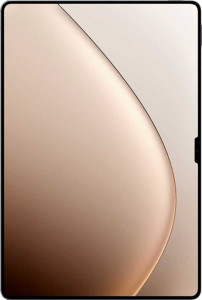
The most consequential difference here is panel technology. The Lenovo Idea Tab Pro uses an LCD IPS display, while the Xiaomi Pad 7 Ultra deploys an OLED/AMOLED panel — a distinction that goes far beyond a spec sheet checkbox. OLED delivers true blacks, vastly superior contrast, and more vibrant color reproduction by lighting pixels individually, making it the preferred technology for media consumption, photo editing, and any content viewed in varied lighting conditions. The Lenovo's IPS panel is competent, but it simply cannot match OLED's visual depth.
Screen size favors the Xiaomi at 14″ versus 12.7″, yet both panels land at nearly identical pixel density — 275 ppi vs. 273 ppi — meaning sharpness is a wash in practice. The Lenovo counters with a higher 144Hz refresh rate against the Xiaomi's 120Hz, which can result in slightly smoother scrolling and stylus response, though the real-world difference at this range is subtle for most users. On HDR, the Xiaomi gains an additional edge with Dolby Vision support on top of HDR10, unlocking a richer tone-mapping pipeline for compatible streaming content — the Lenovo is limited to HDR10 only. The Xiaomi also includes branded damage-resistant glass, adding a layer of durability the Lenovo lacks.
The Xiaomi Pad 7 Ultra holds a clear Display advantage. Its OLED panel alone would be sufficient to tip the scales, but when combined with a larger screen, Dolby Vision support, and protected glass, it represents a meaningfully superior visual experience for anyone who prioritizes display quality.