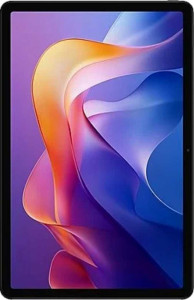
Wireless connectivity is where the gap between these two tablets is most striking on paper. The Lenovo Idea Tab Pro supports Wi-Fi 6E (802.11ax), while the Xiaomi Redmi Pad 2 tops out at Wi-Fi 5 (802.11ac). Wi-Fi 6E unlocks access to the less congested 6 GHz band, delivering lower latency and more stable throughput in busy environments like offices or apartments with many competing devices. This is reflected directly in the theoretical transfer speeds: the Idea Tab Pro lists 7,900 Mbits/s down and 4,200 Mbits/s up, versus a far more modest 650 Mbits/s down and 150 Mbits/s up on the Redmi Pad 2. In practice, real-world speeds depend heavily on router and network conditions, but the Idea Tab Pro is architecturally capable of extracting far more from a capable Wi-Fi 6E network.
The Redmi Pad 2 counters with two exclusive features. It includes a cellular module, meaning it can connect to mobile data networks — a significant flexibility advantage for users who need connectivity away from Wi-Fi, something the Idea Tab Pro cannot offer at all. It also supports Galileo satellite navigation in addition to GPS, slightly broadening its positioning accuracy in regions where Galileo coverage is strong. For users who travel frequently or want an always-connected tablet experience without relying on a phone hotspot, the Redmi Pad 2's cellular capability is a compelling differentiator.
Both tablets share the same Bluetooth 5.3, a broadly identical software feature set — split screen, dark mode, widgets, picture-in-picture, and robust privacy controls — and an identical sensor suite including gyroscope, compass, and accelerometer. This category ultimately presents a trade-off rather than a clear overall winner: the Idea Tab Pro dominates on raw Wi-Fi performance, while the Redmi Pad 2 wins on connectivity versatility through its cellular module. The right choice depends on whether fast local networking or untethered mobile data access matters more to the user.