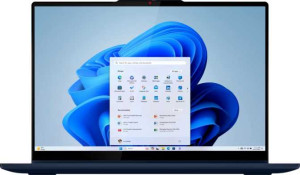
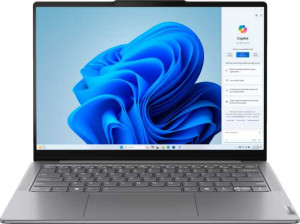
Panel technology is where these two laptops diverge most significantly. The Yoga Slim 7 14″ uses an OLED/AMOLED display, which delivers per-pixel illumination, true blacks, and a contrast ratio that no LCD can match. The IdeaPad 5 2-in-1 16″ relies on an IPS LCD panel — respectable technology, but one that inherently produces shallower blacks and less vibrant color saturation by comparison. For users who consume media, edit photos, or simply value visual richness, the Slim 7's OLED panel is a meaningful real-world advantage.
Despite their different screen sizes, both laptops share an identical 1920 x 1200 resolution. Because the Slim 7 fits that same pixel count into a smaller 14″ panel, it achieves a sharper 161 ppi pixel density versus 141 ppi on the IdeaPad's 16″ screen. The difference is noticeable in fine text and detail rendering, with the Slim 7 producing a crisper image. The IdeaPad's larger canvas does offer more comfortable screen real estate for multitasking or document work, so the trade-off depends on the user's priorities. Both are capped at a 60 Hz refresh rate, meaning neither has an edge in motion smoothness.
One significant functional distinction: the IdeaPad 5 2-in-1 includes a touch screen, which pairs logically with its 2-in-1 form factor, while the Yoga Slim 7 offers no touch input. On shared attributes, both lack anti-reflection coating and support up to 4 external displays, so neither holds an edge there. Overall, the Yoga Slim 7 14″ wins on display quality thanks to its OLED panel and higher pixel density, while the IdeaPad 5 2-in-1 counters with a larger screen and touch capability — making the better choice a function of whether image quality or versatile interaction matters more to the buyer.