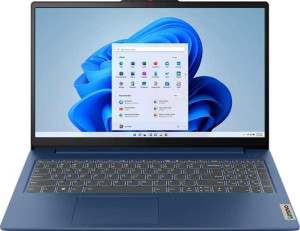
Lenovo IdeaPad Slim 3 Gen 8 15.6" (Core i5-13420H / 8GB RAM / 512GB)
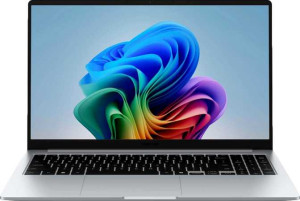
Samsung Galaxy Book5 15.6"

Lenovo IdeaPad Slim 3 Gen 8 15.6" (Core i5-13420H / 8GB RAM / 512GB) Samsung Galaxy Book5 15.6"

Common Features

  • Both products have a 15.6″ display.
  • Both products have a 60Hz refresh rate.
  • Both products support 4 supported displays.
  • Both products have anti-reflection coating on the display.
  • Both products use flash storage.
  • Both products have 512GB of internal storage.
  • Both products are equipped with an NVMe SSD.
  • Both products use multithreading.
  • Both products have a maximum memory capacity of 16GB.
  • Both products use DDR5 memory.
  • Both products have 0 memory slots.
  • Both products use PCIe version 4.
  • Both products support Wi-Fi connectivity.
  • Both products have an HDMI output.
  • Both products have a USB Type-C port.
  • Both products have a front camera.
  • Both products have stereo speakers.
  • Both products have two microphones.
  • Both products have a 3.5mm audio jack.

Main Differences

  • The resolution is 1080 x 1920 px on Lenovo IdeaPad Slim 3 Gen 8 15.6″ (Core i5-13420H / 8GB RAM / 512GB) and 1920 x 1080 px on Samsung Galaxy Book5 15.6″.
  • Lenovo IdeaPad Slim 3 Gen 8 15.6″ (Core i5-13420H / 8GB RAM / 512GB) has 8GB of RAM, while Samsung Galaxy Book5 15.6″ has 16GB of RAM.
  • The CPU speed is 4 x 2.1 & 4 x 1.5 GHz on Lenovo IdeaPad Slim 3 Gen 8 15.6″ (Core i5-13420H / 8GB RAM / 512GB) and 2 x 2 & 8 x 1.7 GHz on Samsung Galaxy Book5 15.6″.
  • Lenovo IdeaPad Slim 3 Gen 8 15.6″ (Core i5-13420H / 8GB RAM / 512GB) has 12 CPU threads, while Samsung Galaxy Book5 15.6″ has 14 CPU threads.
  • Lenovo IdeaPad Slim 3 Gen 8 15.6″ (Core i5-13420H / 8GB RAM / 512GB) has a turbo clock speed of 4.6GHz, while Samsung Galaxy Book5 15.6″ has a turbo clock speed of 5.2GHz.
  • The GPU turbo speed is 1400 MHz on Lenovo IdeaPad Slim 3 Gen 8 15.6″ (Core i5-13420H / 8GB RAM / 512GB) and 2100 MHz on Samsung Galaxy Book5 15.6″.
  • Lenovo IdeaPad Slim 3 Gen 8 15.6″ (Core i5-13420H / 8GB RAM / 512GB) uses a 10 nm semiconductor size, while Samsung Galaxy Book5 15.6″ uses a 3 nm semiconductor size.
  • The PassMark result is 17409 on Lenovo IdeaPad Slim 3 Gen 8 15.6″ (Core i5-13420H / 8GB RAM / 512GB) and 18555 on Samsung Galaxy Book5 15.6″.
  • The PassMark single result is 3396 on Lenovo IdeaPad Slim 3 Gen 8 15.6″ (Core i5-13420H / 8GB RAM / 512GB) and 3732 on Samsung Galaxy Book5 15.6″.
  • Lenovo IdeaPad Slim 3 Gen 8 15.6″ (Core i5-13420H / 8GB RAM / 512GB) does not have an RJ45 port, while Samsung Galaxy Book5 15.6″ has one.
  • Lenovo IdeaPad Slim 3 Gen 8 15.6″ (Core i5-13420H / 8GB RAM / 512GB) has a VGA connector, while Samsung Galaxy Book5 15.6″ does not.
  • Lenovo IdeaPad Slim 3 Gen 8 15.6″ (Core i5-13420H / 8GB RAM / 512GB) has a 47 Wh battery, while Samsung Galaxy Book5 15.6″ has a 61.2 Wh battery.
  • Lenovo IdeaPad Slim 3 Gen 8 15.6″ (Core i5-13420H / 8GB RAM / 512GB) has sleep-and-charge USB ports, while Samsung Galaxy Book5 15.6″ does not.
  • Lenovo IdeaPad Slim 3 Gen 8 15.6″ (Core i5-13420H / 8GB RAM / 512GB) does not have Dolby Atmos, while Samsung Galaxy Book5 15.6″ does.
  • Lenovo IdeaPad Slim 3 Gen 8 15.6″ (Core i5-13420H / 8GB RAM / 512GB) does not have a fingerprint scanner, while Samsung Galaxy Book5 15.6″ has one.
  • Lenovo IdeaPad Slim 3 Gen 8 15.6″ (Core i5-13420H / 8GB RAM / 512GB) has a clock multiplier of 21, while Samsung Galaxy Book5 15.6″ has a clock multiplier of 20.
  • Lenovo IdeaPad Slim 3 Gen 8 15.6″ (Core i5-13420H / 8GB RAM / 512GB) has a thermal design power (TDP) of 45W, while Samsung Galaxy Book5 15.6″ has a TDP of 15W.
  • Lenovo IdeaPad Slim 3 Gen 8 15.6″ (Core i5-13420H / 8GB RAM / 512GB) supports a maximum RAM speed of 5200 MHz, while Samsung Galaxy Book5 15.6″ supports a maximum RAM speed of 8400 MHz.
Specs Comparison
Lenovo IdeaPad Slim 3 Gen 8 15.6" (Core i5-13420H / 8GB RAM / 512GB)

Lenovo IdeaPad Slim 3 Gen 8 15.6" (Core i5-13420H / 8GB RAM / 512GB)

Samsung Galaxy Book5 15.6"

Samsung Galaxy Book5 15.6"

Design:
Uses a fanless design
Has a backlit keyboard
is weather-sealed (splashproof)
has a rugged build

Both the Lenovo IdeaPad Slim 3 Gen 8 and Samsung Galaxy Book5 are similar in terms of their design features. Neither product uses a fanless design, with both relying on traditional cooling systems. Both devices also lack a backlit keyboard, meaning users will not have illuminated keys for typing in low-light environments. Additionally, neither product is weather-sealed (splashproof), so both would need to be kept away from moisture to avoid damage. Lastly, neither model features a rugged build, meaning they may not withstand harsh physical impacts as well as some other devices with reinforced designs.

In summary, the design aspects of the Lenovo IdeaPad Slim 3 Gen 8 and Samsung Galaxy Book5 are quite similar, with both lacking advanced features like fanless designs, backlit keyboards, weather sealing, or rugged construction. Users seeking these specific features may need to look elsewhere.

Overall, if you're considering either model, the design specifications for both laptops are practically identical in terms of functionality and durability.

Display:
screen size 15.6" 15.6"
resolution 1080 x 1920 px 1920 x 1080 px
has a touch screen
refresh rate 60Hz 60Hz
has anti-reflection coating
supported displays 4 4

The Lenovo IdeaPad Slim 3 Gen 8 and Samsung Galaxy Book5 both feature a 15.6″ screen size, offering a similar display experience in terms of size. The screen resolution is also nearly identical, with the Lenovo model at 1080 x 1920 px and the Samsung model at 1920 x 1080 px. This difference in pixel arrangement doesn’t lead to any noticeable difference in display sharpness, as both are Full HD screens.

Both models are non-touchscreen, so users won't benefit from touch interactions. They also share a 60Hz refresh rate, which is standard for most everyday computing tasks but may not be as smooth for fast-paced gaming or high-end video work. Additionally, both laptops are equipped with anti-reflection coatings, which can help reduce glare in well-lit environments, and they support up to 4 external displays.

In conclusion, the display specifications for both the Lenovo IdeaPad Slim 3 Gen 8 and Samsung Galaxy Book5 are virtually identical, offering the same size, resolution, refresh rate, and features like anti-reflection coating and multi-display support. There’s no significant difference between the two in this category.

Performance:
RAM 8GB 16GB
Uses flash storage
internal storage 512GB 512GB
CPU speed 4 x 2.1 & 4 x 1.5 GHz 2 x 2 & 8 x 1.7 GHz
CPU threads 12 threads 14 threads
Is an NVMe SSD
DirectX version DirectX 12 DirectX 12 Ultimate
uses multithreading
maximum memory amount 16GB 16GB
DDR memory version 5 5
turbo clock speed 4.6GHz 5.2GHz
GPU turbo 1400 MHz 2100 MHz
memory slots 0 0
PCI Express (PCIe) version 4 4
semiconductor size 10 nm 3 nm
Supports 64-bit

The Lenovo IdeaPad Slim 3 Gen 8 and Samsung Galaxy Book5 have some key differences in performance-related specifications. Starting with RAM, the Lenovo model comes with 8GB of RAM, while the Samsung model offers 16GB. Both devices use flash storage, with 512GB of internal storage in each, and both feature NVMe SSDs for fast data access. In terms of CPU, the Lenovo has a 12-thread processor with speeds of 4 x 2.1 GHz and 4 x 1.5 GHz, and a turbo clock speed of 4.6GHz. The Samsung, on the other hand, has 14 threads, with a CPU speed of 2 x 2.0 GHz and 8 x 1.7 GHz, and a turbo clock speed of 5.2GHz. This suggests the Samsung has a higher thread count and slightly better turbo performance.

Both devices use multithreading and support DirectX 12 (with the Samsung supporting DirectX 12 Ultimate), and they each have a maximum memory capacity of 16GB and DDR5 memory. The Lenovo's GPU turbo is set at 1400 MHz, while the Samsung’s GPU turbo is higher at 2100 MHz. In terms of storage and memory slots, both devices have no memory slots for expansion. The Lenovo uses a 10 nm semiconductor, whereas the Samsung uses a more advanced 3 nm semiconductor, which could indicate more power efficiency or potential performance gains.

To summarize, while both laptops share several similarities in terms of memory, storage, and SSD type, the Samsung Galaxy Book5 has advantages in RAM, CPU threads, turbo clock speed, GPU performance, and semiconductor size, which could translate to better overall performance, particularly for multitasking and processing power.

Benchmarks:
PassMark result 17409 18555
PassMark result (single) 3396 3732

The Lenovo IdeaPad Slim 3 Gen 8 and Samsung Galaxy Book5 differ slightly in their benchmark performance scores. The Lenovo model achieves a PassMark result of 17409, while the Samsung model scores slightly higher with a PassMark result of 18555. This indicates that the Samsung device has a higher overall performance in synthetic tests.

Looking at single-core performance, the Lenovo has a score of 3396, while the Samsung reaches 3732. This also shows that the Samsung has a stronger single-threaded performance, which could be beneficial in tasks that rely heavily on single-core processing power, like certain applications or games.

In summary, the Samsung Galaxy Book5 outperforms the Lenovo IdeaPad Slim 3 Gen 8 in both overall and single-core benchmark results, making it the stronger choice for users looking for higher processing power based on these tests.

Connectivity:
USB 4 20Gbps ports 0 0
USB 4 40Gbps ports 0 0
Thunderbolt 4 ports 0 0
Thunderbolt 3 ports 0 0
has an HDMI output
Has USB Type-C
supports Wi-Fi
has an external memory slot
RJ45 ports 0 1
HDMI ports 1 1
DisplayPort outputs 0 0
has AirPlay
mini DisplayPort outputs 0 0
has a VGA connector

The Lenovo IdeaPad Slim 3 Gen 8 and Samsung Galaxy Book5 offer similar connectivity options, but there are some key differences. Both laptops lack USB 4.0 20Gbps and 40Gbps ports, as well as Thunderbolt 3 and Thunderbolt 4 ports. They both do feature HDMI outputs (1 on each) and USB Type-C ports, allowing for versatile connectivity with external displays and devices. Additionally, both support Wi-Fi and have external memory slots for added storage.

One difference between the two is that the Lenovo model has no RJ45 Ethernet port, while the Samsung does include one, providing wired network connectivity for users who prefer or require a stable, high-speed connection. The Lenovo also includes a VGA connector, which the Samsung does not support. Both models support AirPlay for wireless streaming, but the Lenovo offers a VGA connector, which could be helpful for connecting to older display equipment.

In summary, while both laptops share many common connectivity features like HDMI, USB Type-C, and Wi-Fi support, the Samsung Galaxy Book5 offers the advantage of an RJ45 Ethernet port, while the Lenovo IdeaPad Slim 3 Gen 8 includes the added benefit of a VGA connector. Depending on your specific connectivity needs, this difference could be significant.

Battery:
battery size 47 Wh 61.2 Wh
Has sleep-and-charge USB ports
Has a MagSafe power adapter

The Lenovo IdeaPad Slim 3 Gen 8 and Samsung Galaxy Book5 differ in their battery specifications. The Lenovo model is equipped with a 47 Wh battery, while the Samsung has a larger 61.2 Wh battery, suggesting that the Samsung may have a longer battery life, though actual performance will depend on usage.

In terms of features, the Lenovo IdeaPad Slim 3 Gen 8 includes sleep-and-charge USB ports, allowing you to charge other devices even when the laptop is in sleep mode. The Samsung Galaxy Book5 does not have this feature, which could be a consideration for users who value this added convenience.

Neither laptop includes a MagSafe power adapter, so neither benefits from the magnetic connection that some other devices use to prevent accidental disconnections. Overall, the Lenovo offers the sleep-and-charge functionality, while the Samsung provides a larger battery, offering different advantages depending on user needs.

Features:
release date August 2025 January 2025
has stereo speakers
has a socket for a 3.5 mm audio jack
supports ray tracing
supports DLSS
has Dolby Atmos
Has a fingerprint scanner
number of microphones 2 2
Uses 3D facial recognition
has voice commands
has a front camera
Has S/PDIF Out port
has a gyroscope
has GPS
has an accelerometer
has a compass
Has an optical disc drive

The Lenovo IdeaPad Slim 3 Gen 8 and Samsung Galaxy Book5 share some common features but differ in a few key areas. Both models come with stereo speakers and a 3.5 mm audio jack, providing standard audio connectivity. Neither supports ray tracing or DLSS, indicating they are not optimized for high-end gaming features. Both have front cameras and two microphones for audio input, but only the Samsung features Dolby Atmos for enhanced audio experience. The Lenovo lacks this feature, but both devices offer similar basic audio capabilities.

Another notable difference is the fingerprint scanner: the Samsung Galaxy Book5 includes one, providing an added layer of security, while the Lenovo IdeaPad Slim 3 Gen 8 does not. Both devices do not use 3D facial recognition or support voice commands, and neither has an S/PDIF Out port. Additionally, both models lack physical sensors like a gyroscope, GPS, accelerometer, and compass.

In summary, the Lenovo and Samsung models are quite similar in terms of their features, but the Samsung has a few extras like Dolby Atmos and a fingerprint scanner, which could appeal to users looking for slightly enhanced audio and security features.

Miscellaneous:
clock multiplier 21 20
Type Laptop Laptop
Has an unlocked multiplier
Has NX bit
CPU temperature 100 °C 110 °C
OpenCL version 3 3
OpenGL version 4.6 4.6
Has integrated graphics
Supports ECC memory
memory channels 2 2
Thermal Design Power (TDP) 45W 15W
Uses big.LITTLE technology
instruction sets SSE 4.2, SSE 4.1, AVX, AES, FMA3, F16C, MMX F16C, MMX, FMA3, AES, AVX, AVX2, SSE 4.1, SSE 4.2
RAM speed (max) 5200 MHz 8400 MHz

The Lenovo IdeaPad Slim 3 Gen 8 and Samsung Galaxy Book5 both share several core specifications, but they differ in some key areas related to performance and thermal characteristics. Both are laptops, and neither has an unlocked CPU multiplier. The Lenovo has a clock multiplier of 21, while the Samsung is slightly lower at 20. Both systems support the NX bit, but the Lenovo runs at a higher CPU temperature of 100 °C compared to the Samsung’s 110 °C.

Both models support OpenCL 3 and OpenGL 4.6, and both come with integrated graphics. They also have two memory channels, though the Lenovo supports a maximum RAM speed of 5200 MHz, while the Samsung supports a faster maximum RAM speed of 8400 MHz.

Another difference is in the Thermal Design Power (TDP): the Lenovo’s TDP is higher at 45W, indicating it might consume more power or produce more heat under load, compared to the Samsung’s 15W TDP, which suggests it may be more power-efficient. Additionally, both laptops use big.LITTLE technology, and while the Lenovo includes a wider range of instruction sets, the Samsung includes AVX2 in its instruction set, which is not present in the Lenovo.

Comparison Summary

This is a specification comparison between Lenovo IdeaPad Slim 3 Gen 8 15.6″ (Core i5-13420H / 8GB RAM / 512GB) and Samsung Galaxy Book5 15.6″. Both laptops feature a 15.6″ display, 60Hz refresh rate, and stereo speakers. However, they differ in several areas: Lenovo has 8GB of RAM while Samsung offers 16GB of RAM; Lenovo's turbo clock speed reaches 4.6GHz, while Samsung's goes up to 5.2GHz; the battery size is 47 Wh on Lenovo, compared to 61.2 Wh on Samsung; and Lenovo has a VGA connector, which Samsung lacks.