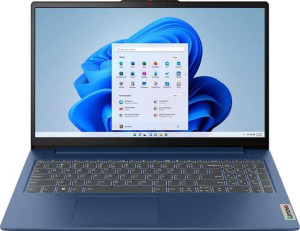
Lenovo IdeaPad Slim 3 Gen 8 15.6" (Core i7-13620H / 16GB RAM / 256GB)
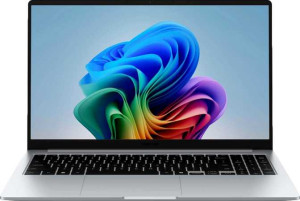
Samsung Galaxy Book5 15.6"

Lenovo IdeaPad Slim 3 Gen 8 15.6" (Core i7-13620H / 16GB RAM / 256GB) Samsung Galaxy Book5 15.6"

Common Features

  • Both products have a 15.6″ screen size.
  • Neither product has a touchscreen.
  • Both products have a 60Hz refresh rate.
  • Both products have anti-reflection coating on their displays.
  • Both products support up to 4 displays.
  • Both products have 16GB of RAM.
  • Both products use flash storage.
  • Both products have NVMe SSDs.
  • Both products support multithreading.
  • Both products have a maximum memory amount of 16GB.
  • Both products use DDR5 memory.
  • Both products have 0 memory slots.
  • Both products support PCI Express version 4.
  • Both products have an HDMI output.
  • Both products have a USB Type-C port.
  • Both products support Wi-Fi.
  • Both products have an external memory slot.
  • Both products have stereo speakers.
  • Both products have a 3.5 mm audio jack.
  • Both products have 2 microphones.

Main Differences

  • The Lenovo IdeaPad Slim 3 Gen 8 15.6″ (Core i7-13620H / 16GB RAM / 256GB) has a resolution of 1080 x 1920 px, while the Samsung Galaxy Book5 15.6″ has a resolution of 1920 x 1080 px.
  • The Lenovo IdeaPad Slim 3 Gen 8 15.6″ (Core i7-13620H / 16GB RAM / 256GB) has 256GB of internal storage, while the Samsung Galaxy Book5 15.6″ has 512GB.
  • The Lenovo IdeaPad Slim 3 Gen 8 15.6″ (Core i7-13620H / 16GB RAM / 256GB) has a CPU speed of 6 x 2.4 & 4 x 1.8 GHz, while the Samsung Galaxy Book5 15.6″ has a CPU speed of 2 x 2 & 8 x 1.7 GHz.
  • The Lenovo IdeaPad Slim 3 Gen 8 15.6″ (Core i7-13620H / 16GB RAM / 256GB) has 16 CPU threads, while the Samsung Galaxy Book5 15.6″ has 14 CPU threads.
  • The Lenovo IdeaPad Slim 3 Gen 8 15.6″ (Core i7-13620H / 16GB RAM / 256GB) supports DirectX 12, while the Samsung Galaxy Book5 15.6″ supports DirectX 12 Ultimate.
  • The Lenovo IdeaPad Slim 3 Gen 8 15.6″ (Core i7-13620H / 16GB RAM / 256GB) has a turbo clock speed of 4.9GHz, while the Samsung Galaxy Book5 15.6″ has a turbo clock speed of 5.2GHz.
  • The Lenovo IdeaPad Slim 3 Gen 8 15.6″ (Core i7-13620H / 16GB RAM / 256GB) has a GPU turbo of 1500 MHz, while the Samsung Galaxy Book5 15.6″ has a GPU turbo of 2100 MHz.
  • The Lenovo IdeaPad Slim 3 Gen 8 15.6″ (Core i7-13620H / 16GB RAM / 256GB) is built with a 10 nm semiconductor size, while the Samsung Galaxy Book5 15.6″ is built with a 3 nm semiconductor size.
  • The Lenovo IdeaPad Slim 3 Gen 8 15.6″ (Core i7-13620H / 16GB RAM / 256GB) has a PassMark result of 23805, while the Samsung Galaxy Book5 15.6″ has a PassMark result of 18555.
  • The Lenovo IdeaPad Slim 3 Gen 8 15.6″ (Core i7-13620H / 16GB RAM / 256GB) has a PassMark result (single) of 3569, while the Samsung Galaxy Book5 15.6″ has a PassMark result (single) of 3732.
  • The Lenovo IdeaPad Slim 3 Gen 8 15.6″ (Core i7-13620H / 16GB RAM / 256GB) lacks an RJ45 port, while the Samsung Galaxy Book5 15.6″ has an RJ45 port.
  • The Lenovo IdeaPad Slim 3 Gen 8 15.6″ (Core i7-13620H / 16GB RAM / 256GB) has a VGA connector, while the Samsung Galaxy Book5 15.6″ lacks a VGA connector.
  • The Lenovo IdeaPad Slim 3 Gen 8 15.6″ (Core i7-13620H / 16GB RAM / 256GB) has a battery size of 47 Wh, while the Samsung Galaxy Book5 15.6″ has a battery size of 61.2 Wh.
  • The Lenovo IdeaPad Slim 3 Gen 8 15.6″ (Core i7-13620H / 16GB RAM / 256GB) has sleep-and-charge USB ports, while the Samsung Galaxy Book5 15.6″ lacks sleep-and-charge USB ports.
  • The Lenovo IdeaPad Slim 3 Gen 8 15.6″ (Core i7-13620H / 16GB RAM / 256GB) lacks Dolby Atmos support, while the Samsung Galaxy Book5 15.6″ has Dolby Atmos support.
  • The Lenovo IdeaPad Slim 3 Gen 8 15.6″ (Core i7-13620H / 16GB RAM / 256GB) lacks a fingerprint scanner, while the Samsung Galaxy Book5 15.6″ has a fingerprint scanner.
  • The Lenovo IdeaPad Slim 3 Gen 8 15.6″ (Core i7-13620H / 16GB RAM / 256GB) has a clock multiplier of 24, while the Samsung Galaxy Book5 15.6″ has a clock multiplier of 20.
  • The Lenovo IdeaPad Slim 3 Gen 8 15.6″ (Core i7-13620H / 16GB RAM / 256GB) has a CPU temperature of 100 °C, while the Samsung Galaxy Book5 15.6″ has a CPU temperature of 110 °C.
  • The Lenovo IdeaPad Slim 3 Gen 8 15.6″ (Core i7-13620H / 16GB RAM / 256GB) has a Thermal Design Power (TDP) of 45W, while the Samsung Galaxy Book5 15.6″ has a TDP of 15W.
  • The Lenovo IdeaPad Slim 3 Gen 8 15.6″ (Core i7-13620H / 16GB RAM / 256GB) has a RAM speed (max) of 5200 MHz, while the Samsung Galaxy Book5 15.6″ has a RAM speed (max) of 8400 MHz.
Specs Comparison
Lenovo IdeaPad Slim 3 Gen 8 15.6" (Core i7-13620H / 16GB RAM / 256GB)

Lenovo IdeaPad Slim 3 Gen 8 15.6" (Core i7-13620H / 16GB RAM / 256GB)

Samsung Galaxy Book5 15.6"

Samsung Galaxy Book5 15.6"

Design:
Uses a fanless design
Has a backlit keyboard
is weather-sealed (splashproof)
has a rugged build

Both the Lenovo IdeaPad Slim 3 Gen 8 and the Samsung Galaxy Book5 share several design similarities. Neither product uses a fanless design, with both incorporating traditional cooling methods. Additionally, neither laptop includes a backlit keyboard, which could be a downside for users who prefer to type in low-light environments.

When it comes to durability features, both laptops are not weather-sealed (splashproof) and do not have a rugged build. This means that while they may be suitable for everyday use, they might not withstand extreme conditions like some more durable models on the market.

In summary, both laptops are quite similar in terms of design, offering standard features without the additional durability or specialized enhancements found in some higher-end models.

Display:
screen size 15.6" 15.6"
resolution 1080 x 1920 px 1920 x 1080 px
has a touch screen
refresh rate 60Hz 60Hz
has anti-reflection coating
supported displays 4 4

The display specifications for the Lenovo IdeaPad Slim 3 Gen 8 and the Samsung Galaxy Book5 are very similar. Both laptops feature a 15.6″ screen with a resolution of 1080 x 1920 px (also described as 1920 x 1080 px for the Galaxy Book5). The resolution is the same for both products, providing Full HD quality for clear visuals.

Neither laptop includes a touch screen, so users will need to rely on the standard keyboard and trackpad for navigation. Both displays also feature an anti-reflection coating, which helps reduce glare and improves visibility in well-lit environments. Furthermore, both laptops support up to four external displays, allowing for multi-monitor setups.

In conclusion, both devices offer nearly identical display specifications, with no notable differences in resolution, touch functionality, or additional display features.

Performance:
RAM 16GB 16GB
Uses flash storage
internal storage 256GB 512GB
CPU speed 6 x 2.4 & 4 x 1.8 GHz 2 x 2 & 8 x 1.7 GHz
CPU threads 16 threads 14 threads
Is an NVMe SSD
DirectX version DirectX 12 DirectX 12 Ultimate
uses multithreading
maximum memory amount 16GB 16GB
DDR memory version 5 5
turbo clock speed 4.9GHz 5.2GHz
GPU turbo 1500 MHz 2100 MHz
memory slots 0 0
PCI Express (PCIe) version 4 4
semiconductor size 10 nm 3 nm
Supports 64-bit

The Lenovo IdeaPad Slim 3 Gen 8 and the Samsung Galaxy Book5 both offer 16GB of RAM and use flash storage, but there are key differences in their other performance specifications. The Lenovo IdeaPad Slim 3 Gen 8 features a 256GB internal storage capacity, while the Samsung Galaxy Book5 has a larger 512GB of internal storage. Both devices use NVMe SSDs for fast storage performance.

In terms of CPU, the Lenovo model has a configuration of 6 cores running at 2.4 GHz and 4 cores at 1.8 GHz, totaling 16 threads. It also has a turbo clock speed of 4.9 GHz and a GPU turbo of 1500 MHz. On the other hand, the Galaxy Book5’s processor features 2 high-performance cores at 2.0 GHz and 8 efficiency cores at 1.7 GHz, for a total of 14 threads. Its turbo clock speed is slightly higher at 5.2 GHz, and the GPU turbo reaches 2100 MHz.

Both laptops support multithreading and have DDR5 memory, with the Lenovo model supporting a semiconductor size of 10 nm and the Galaxy Book5 using a more advanced 3 nm semiconductor. Both laptops also support DirectX 12, but the Galaxy Book5 is capable of DirectX 12 Ultimate, which may offer some future-proofing for high-end gaming and graphics workloads. Neither laptop has memory slots, meaning the RAM is fixed, and both devices support 64-bit computing and PCIe 4.0.

Benchmarks:
PassMark result 23805 18555
PassMark result (single) 3569 3732

When comparing the PassMark benchmark results, the Lenovo IdeaPad Slim 3 Gen 8 outperforms the Samsung Galaxy Book5 in overall performance. The Lenovo model scores 23,805, while the Galaxy Book5 scores 18,555, showing a notable difference in favor of the IdeaPad.

However, in terms of single-threaded performance, the Samsung Galaxy Book5 slightly edges out the Lenovo IdeaPad Slim 3 Gen 8. The Galaxy Book5 has a single-thread PassMark result of 3,732, compared to 3,569 for the Lenovo model. This indicates a minor advantage for the Galaxy Book5 in workloads that rely more on single-core processing.

Overall, while the Lenovo IdeaPad Slim 3 Gen 8 leads in multi-threaded performance, the Galaxy Book5 offers a slight advantage in single-thread performance, reflecting the strengths of both devices in different types of computing tasks.

Connectivity:
USB 4 20Gbps ports 0 0
USB 4 40Gbps ports 0 0
Thunderbolt 4 ports 0 0
Thunderbolt 3 ports 0 0
has an HDMI output
Has USB Type-C
supports Wi-Fi
has an external memory slot
RJ45 ports 0 1
HDMI ports 1 1
DisplayPort outputs 0 0
has AirPlay
mini DisplayPort outputs 0 0
has a VGA connector

The Lenovo IdeaPad Slim 3 Gen 8 and the Samsung Galaxy Book5 have similar connectivity options but differ in a few key areas. Both laptops include an HDMI output, USB Type-C ports, Wi-Fi support, and an external memory slot. Additionally, both support AirPlay, which allows for wireless streaming to compatible devices. Neither laptop offers USB 4 20Gbps or 40Gbps ports, nor Thunderbolt 3 or 4 ports, which limits high-speed data transfer capabilities.

One notable difference is the inclusion of an RJ45 port. The Samsung Galaxy Book5 has one RJ45 port for wired network connections, while the Lenovo IdeaPad Slim 3 Gen 8 lacks this port. This makes the Lenovo laptop reliant on Wi-Fi for network connectivity, whereas the Galaxy Book5 offers more flexibility with wired connections. Additionally, the Lenovo model has a VGA connector, which the Galaxy Book5 does not support, providing an advantage for users needing compatibility with older displays.

Overall, both laptops offer standard connectivity features, with the Samsung Galaxy Book5 standing out slightly due to the inclusion of the RJ45 port, while the Lenovo IdeaPad Slim 3 Gen 8 offers the older VGA connector for legacy support.

Battery:
battery size 47 Wh 61.2 Wh
Has sleep-and-charge USB ports
Has a MagSafe power adapter

The Lenovo IdeaPad Slim 3 Gen 8 and the Samsung Galaxy Book5 differ in battery size and charging features. The Lenovo IdeaPad Slim 3 Gen 8 is equipped with a 47 Wh battery, while the Samsung Galaxy Book5 has a larger 61.2 Wh battery, providing potentially longer usage time for the Galaxy Book5.

In terms of charging capabilities, the Lenovo model includes sleep-and-charge USB ports, allowing users to charge devices even when the laptop is in sleep mode. The Samsung Galaxy Book5, on the other hand, does not offer this feature. Both laptops lack a MagSafe power adapter, meaning they rely on standard charging methods.

Overall, while the Samsung Galaxy Book5 has a larger battery, the Lenovo IdeaPad Slim 3 Gen 8 provides the added convenience of sleep-and-charge USB ports, though both models have similar charging adapter setups.

Features:
release date July 2025 January 2025
has stereo speakers
has a socket for a 3.5 mm audio jack
supports ray tracing
supports DLSS
has Dolby Atmos
Has a fingerprint scanner
number of microphones 2 2
Uses 3D facial recognition
has voice commands
has a front camera
Has S/PDIF Out port
has a gyroscope
has GPS
has an accelerometer
has a compass
Has an optical disc drive

Both the Lenovo IdeaPad Slim 3 Gen 8 and the Samsung Galaxy Book5 feature stereo speakers and a 3.5 mm audio jack socket, ensuring similar audio connectivity options. Both laptops also include a front camera and two microphones for basic video and voice capture. Neither product supports ray tracing or DLSS, which are typically features found in gaming-focused devices.

The Samsung Galaxy Book5 stands out with Dolby Atmos support, providing a potentially richer audio experience compared to the Lenovo IdeaPad Slim 3 Gen 8, which does not include this feature. Additionally, the Galaxy Book5 includes a fingerprint scanner for biometric security, while the Lenovo model lacks this feature. Both models do not feature 3D facial recognition or voice command functionality.

Other than these differences, both laptops are similar in terms of features, including the absence of advanced sensors like a gyroscope, accelerometer, or GPS, and the lack of an optical disc drive. Overall, the Samsung Galaxy Book5 offers a slight edge in audio quality and security features, while both laptops share common functionalities like stereo speakers and front cameras.

Miscellaneous:
clock multiplier 24 20
Type Laptop Laptop
Has an unlocked multiplier
Uses big.LITTLE technology
Has NX bit
CPU temperature 100 °C 110 °C
OpenCL version 3 3
OpenGL version 4.6 4.6
Has integrated graphics
Supports ECC memory
memory channels 2 2
Thermal Design Power (TDP) 45W 15W
instruction sets SSE 4.2, SSE 4.1, AVX, AES, FMA3, F16C, MMX F16C, MMX, FMA3, AES, AVX, AVX2, SSE 4.1, SSE 4.2
RAM speed (max) 5200 MHz 8400 MHz

Both the Lenovo IdeaPad Slim 3 Gen 8 and the Samsung Galaxy Book5 are laptops equipped with integrated graphics and share some common features, such as supporting big.LITTLE technology, having the NX bit enabled for security, and including the OpenCL and OpenGL versions 3 and 4.6, respectively. They also both support the same instruction sets, with minor variations in the exact list of supported instructions.

In terms of performance-related specs, the Lenovo IdeaPad Slim 3 Gen 8 has a higher clock multiplier of 24, compared to the Galaxy Book5′s 20. This indicates that the Lenovo model has a higher potential for processing power, although the Galaxy Book5 compensates with a much higher RAM speed of 8400 MHz, compared to the Lenovo’s 5200 MHz. However, both laptops have two memory channels and do not support ECC memory.

When it comes to thermal performance, the Lenovo IdeaPad Slim 3 Gen 8 has a lower CPU temperature of 100°C compared to the Samsung Galaxy Book5′s 110°C, which suggests that the Lenovo model may maintain a slightly cooler operation under load. Additionally, the thermal design power (TDP) of the Lenovo model is 45W, significantly higher than the Galaxy Book5′s 15W, indicating that the Lenovo laptop is designed to handle more power and potentially higher performance levels.

Comparison Summary

This is a specification comparison between the Lenovo IdeaPad Slim 3 Gen 8 15.6″ (Core i7-13620H / 16GB RAM / 256GB) and Samsung Galaxy Book5 15.6″. Both products feature a 15.6″ screen size, have a 60Hz refresh rate, and include stereo speakers and a 3.5 mm audio jack. The Lenovo IdeaPad Slim 3 Gen 8 offers 256GB of internal storage, while the Samsung Galaxy Book5 provides 512GB. The Lenovo model has a turbo clock speed of 4.9GHz, compared to the Samsung’s 5.2GHz. Additionally, the Lenovo model supports DirectX 12, whereas the Samsung supports DirectX 12 Ultimate. The Lenovo has a passmark score of 23805, while the Samsung scores 18555.