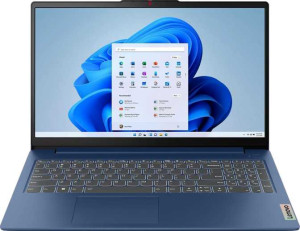
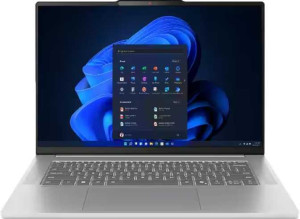
Memory is one of the sharpest dividing lines here. The Slim 5 Gen 10 comes with 32GB of RAM running at 5600 MHz, versus 16GB at 4800 MHz in the Slim 3. Double the RAM means the Slim 5 handles heavy multitasking, large browser sessions, and memory-intensive applications with significantly more headroom before slowdowns occur. The faster memory speed also feeds data to the processor more efficiently. Equally important, the Slim 5 has 2 user-accessible memory slots, meaning future upgrades are possible — the Slim 3 has none, making its 16GB a hard ceiling for its entire lifespan.
The GPU performance gap is equally striking. The Slim 5's integrated graphics reach a turbo clock of 3000 MHz, compared to 1500 MHz on the Slim 3 — a full doubling of peak GPU speed. Combined with a higher base clock (400 MHz vs 300 MHz), the Slim 5 is meaningfully more capable for light creative workloads, video playback, and any task that leans on integrated graphics. On the CPU side, both chips offer 16 threads and similar turbo peaks (5 GHz vs 4.9 GHz), so raw single-core and threaded compute are broadly comparable — but the Slim 5's 4 nm semiconductor process versus the Slim 3's 10 nm indicates a more modern, power-efficient architecture, which typically yields better performance-per-watt in sustained workloads.
Both machines use NVMe SSDs with identical 1024GB of storage over PCIe 4, so day-to-day storage speed and capacity are evenly matched. Taken as a whole, though, the Slim 5 Gen 10 wins this category decisively — more RAM, faster memory, a newer chip architecture, double the GPU headroom, and the flexibility to upgrade all point firmly in its favor.