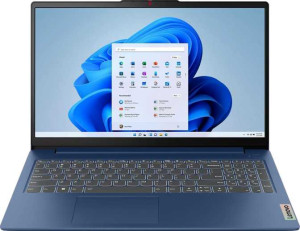
Lenovo IdeaPad Slim 3 Gen 8 15.6"
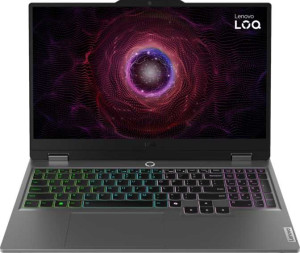
Lenovo LOQ 15ARP9 15.6" AMD Ryzen 7 7435HS 3.1GHz / Nvidia GeForce RTX 3050 A Laptop / 24GB RAM / 512GB SSD

Lenovo IdeaPad Slim 3 Gen 8 15.6" Lenovo LOQ 15ARP9 15.6" AMD Ryzen 7 7435HS 3.1GHz / Nvidia GeForce RTX 3050 A Laptop / 24GB RAM / 512GB SSD

Overview

Welcome to our in-depth specification comparison between the Lenovo IdeaPad Slim 3 Gen 8 15.6″ and the Lenovo LOQ 15ARP9 15.6″. Both laptops share the same screen size and several core features, yet they take very different approaches to portability, display performance, and graphics capability. Whether you prioritize a lightweight everyday companion or a more powerful multimedia machine, this comparison will help you find the right fit.

Common Features

  • Both products share the same 15.6″ screen size.
  • Neither product uses a fanless design.
  • Both products have the same width of 359 mm.
  • Neither product is weather-sealed or splashproof.
  • Both products have a pixel density of 141 ppi.
  • Neither product has a touch screen.
  • Both products feature an anti-reflection coating on the display.
  • Both products have a RAM speed of 4800 MHz.
  • Both products use flash storage.
  • Both products have 16 CPU threads.
  • Both products use NVMe SSDs.
  • Both products support multithreading.
  • Both products use DDR5 memory.
  • Both products support PCI Express version 4.
  • Both products support 64-bit processing.
  • Both products have zero USB 3.2 Gen 2 Type-A ports, USB 4 ports, Thunderbolt 3 ports, and Thunderbolt 4 ports.
  • Both products include an HDMI output.
  • Both products have a USB Type-C port.
  • Both products support Wi-Fi.
  • Both products include sleep-and-charge USB ports.
  • Neither product uses a MagSafe power adapter.
  • Both products feature stereo speakers.
  • Both products include a 3.5 mm audio jack.
  • Neither product supports Dolby Atmos.
  • Neither product has a fingerprint scanner.
  • Both products have 2 microphones.
  • Neither product uses 3D facial recognition.
  • Neither product supports voice commands.
  • Both products include a front camera.
  • Neither product has an unlocked CPU multiplier.
  • Both products have the NX bit feature.
  • Both products support OpenCL version 3.
  • Both products support OpenGL version 4.6.
  • Both products have 2 memory channels.
  • Both products have a Thermal Design Power of 45W.

Main Differences

  • Weight is 1620 g on Lenovo IdeaPad Slim 3 Gen 8 15.6″ and 2380 g on Lenovo LOQ 15ARP9 15.6″ AMD Ryzen 7 7435HS 3.1GHz / Nvidia GeForce RTX 3050 A Laptop / 24GB RAM / 512GB SSD.
  • A backlit keyboard is present on Lenovo LOQ 15ARP9 15.6″ AMD Ryzen 7 7435HS 3.1GHz / Nvidia GeForce RTX 3050 A Laptop / 24GB RAM / 512GB SSD but not available on Lenovo IdeaPad Slim 3 Gen 8 15.6″.
  • Warranty period is 2 years on Lenovo IdeaPad Slim 3 Gen 8 15.6″ and 1 year on Lenovo LOQ 15ARP9 15.6″ AMD Ryzen 7 7435HS 3.1GHz / Nvidia GeForce RTX 3050 A Laptop / 24GB RAM / 512GB SSD.
  • Volume is 1434.205 cm³ on Lenovo IdeaPad Slim 3 Gen 8 15.6″ and 1945.062 cm³ on Lenovo LOQ 15ARP9 15.6″ AMD Ryzen 7 7435HS 3.1GHz / Nvidia GeForce RTX 3050 A Laptop / 24GB RAM / 512GB SSD.
  • Height is 235 mm on Lenovo IdeaPad Slim 3 Gen 8 15.6″ and 258 mm on Lenovo LOQ 15ARP9 15.6″ AMD Ryzen 7 7435HS 3.1GHz / Nvidia GeForce RTX 3050 A Laptop / 24GB RAM / 512GB SSD.
  • Thickness is 17 mm on Lenovo IdeaPad Slim 3 Gen 8 15.6″ and 21 mm on Lenovo LOQ 15ARP9 15.6″ AMD Ryzen 7 7435HS 3.1GHz / Nvidia GeForce RTX 3050 A Laptop / 24GB RAM / 512GB SSD.
  • Display brightness is 250 nits on Lenovo IdeaPad Slim 3 Gen 8 15.6″ and 300 nits on Lenovo LOQ 15ARP9 15.6″ AMD Ryzen 7 7435HS 3.1GHz / Nvidia GeForce RTX 3050 A Laptop / 24GB RAM / 512GB SSD.
  • Refresh rate is 60Hz on Lenovo IdeaPad Slim 3 Gen 8 15.6″ and 144Hz on Lenovo LOQ 15ARP9 15.6″ AMD Ryzen 7 7435HS 3.1GHz / Nvidia GeForce RTX 3050 A Laptop / 24GB RAM / 512GB SSD.
  • RAM is 16GB on Lenovo IdeaPad Slim 3 Gen 8 15.6″ and 24GB on Lenovo LOQ 15ARP9 15.6″ AMD Ryzen 7 7435HS 3.1GHz / Nvidia GeForce RTX 3050 A Laptop / 24GB RAM / 512GB SSD.
  • Internal storage is 1024GB on Lenovo IdeaPad Slim 3 Gen 8 15.6″ and 512GB on Lenovo LOQ 15ARP9 15.6″ AMD Ryzen 7 7435HS 3.1GHz / Nvidia GeForce RTX 3050 A Laptop / 24GB RAM / 512GB SSD.
  • CPU speed is 6 x 2.4 & 4 x 1.8 GHz on Lenovo IdeaPad Slim 3 Gen 8 15.6″ and 8 x 3.1 GHz on Lenovo LOQ 15ARP9 15.6″ AMD Ryzen 7 7435HS 3.1GHz / Nvidia GeForce RTX 3050 A Laptop / 24GB RAM / 512GB SSD.
  • DirectX version is DirectX 12 on Lenovo IdeaPad Slim 3 Gen 8 15.6″ and DirectX 12 Ultimate on Lenovo LOQ 15ARP9 15.6″ AMD Ryzen 7 7435HS 3.1GHz / Nvidia GeForce RTX 3050 A Laptop / 24GB RAM / 512GB SSD.
  • GPU clock speed is 300 MHz on Lenovo IdeaPad Slim 3 Gen 8 15.6″ and 1065 MHz on Lenovo LOQ 15ARP9 15.6″ AMD Ryzen 7 7435HS 3.1GHz / Nvidia GeForce RTX 3050 A Laptop / 24GB RAM / 512GB SSD.
  • Maximum supported memory is 16GB on Lenovo IdeaPad Slim 3 Gen 8 15.6″ and 32GB on Lenovo LOQ 15ARP9 15.6″ AMD Ryzen 7 7435HS 3.1GHz / Nvidia GeForce RTX 3050 A Laptop / 24GB RAM / 512GB SSD.
  • Turbo clock speed is 4.9GHz on Lenovo IdeaPad Slim 3 Gen 8 15.6″ and 4.5GHz on Lenovo LOQ 15ARP9 15.6″ AMD Ryzen 7 7435HS 3.1GHz / Nvidia GeForce RTX 3050 A Laptop / 24GB RAM / 512GB SSD.
  • GPU turbo speed is 1500 MHz on Lenovo IdeaPad Slim 3 Gen 8 15.6″ and 1343 MHz on Lenovo LOQ 15ARP9 15.6″ AMD Ryzen 7 7435HS 3.1GHz / Nvidia GeForce RTX 3050 A Laptop / 24GB RAM / 512GB SSD.
  • Memory slots number 0 on Lenovo IdeaPad Slim 3 Gen 8 15.6″ and 2 on Lenovo LOQ 15ARP9 15.6″ AMD Ryzen 7 7435HS 3.1GHz / Nvidia GeForce RTX 3050 A Laptop / 24GB RAM / 512GB SSD.
  • Semiconductor size is 10 nm on Lenovo IdeaPad Slim 3 Gen 8 15.6″ and 8 nm on Lenovo LOQ 15ARP9 15.6″ AMD Ryzen 7 7435HS 3.1GHz / Nvidia GeForce RTX 3050 A Laptop / 24GB RAM / 512GB SSD.
  • PassMark result is 23805 on Lenovo IdeaPad Slim 3 Gen 8 15.6″ and 23380 on Lenovo LOQ 15ARP9 15.6″ AMD Ryzen 7 7435HS 3.1GHz / Nvidia GeForce RTX 3050 A Laptop / 24GB RAM / 512GB SSD.
  • PassMark single-core result is 3569 on Lenovo IdeaPad Slim 3 Gen 8 15.6″ and 3168 on Lenovo LOQ 15ARP9 15.6″ AMD Ryzen 7 7435HS 3.1GHz / Nvidia GeForce RTX 3050 A Laptop / 24GB RAM / 512GB SSD.
  • A USB 3.2 Gen 2 Type-C port is present on Lenovo LOQ 15ARP9 15.6″ AMD Ryzen 7 7435HS 3.1GHz / Nvidia GeForce RTX 3050 A Laptop / 24GB RAM / 512GB SSD but not on Lenovo IdeaPad Slim 3 Gen 8 15.6″.
  • A USB 3.2 Gen 1 Type-C port is present on Lenovo IdeaPad Slim 3 Gen 8 15.6″ but not on Lenovo LOQ 15ARP9 15.6″ AMD Ryzen 7 7435HS 3.1GHz / Nvidia GeForce RTX 3050 A Laptop / 24GB RAM / 512GB SSD.
  • USB 3.2 Gen 1 Type-A ports number 2 on Lenovo IdeaPad Slim 3 Gen 8 15.6″ and 3 on Lenovo LOQ 15ARP9 15.6″ AMD Ryzen 7 7435HS 3.1GHz / Nvidia GeForce RTX 3050 A Laptop / 24GB RAM / 512GB SSD.
  • An external memory card slot is present on Lenovo IdeaPad Slim 3 Gen 8 15.6″ but not available on Lenovo LOQ 15ARP9 15.6″ AMD Ryzen 7 7435HS 3.1GHz / Nvidia GeForce RTX 3050 A Laptop / 24GB RAM / 512GB SSD.
  • An RJ45 ethernet port is present on Lenovo LOQ 15ARP9 15.6″ AMD Ryzen 7 7435HS 3.1GHz / Nvidia GeForce RTX 3050 A Laptop / 24GB RAM / 512GB SSD but not on Lenovo IdeaPad Slim 3 Gen 8 15.6″.
  • HDMI version is 1.4 on Lenovo IdeaPad Slim 3 Gen 8 15.6″ and 2.1 on Lenovo LOQ 15ARP9 15.6″ AMD Ryzen 7 7435HS 3.1GHz / Nvidia GeForce RTX 3050 A Laptop / 24GB RAM / 512GB SSD.
  • A VGA connector is present on Lenovo IdeaPad Slim 3 Gen 8 15.6″ but not available on Lenovo LOQ 15ARP9 15.6″ AMD Ryzen 7 7435HS 3.1GHz / Nvidia GeForce RTX 3050 A Laptop / 24GB RAM / 512GB SSD.
  • Battery size is 47 Wh on Lenovo IdeaPad Slim 3 Gen 8 15.6″ and 60 Wh on Lenovo LOQ 15ARP9 15.6″ AMD Ryzen 7 7435HS 3.1GHz / Nvidia GeForce RTX 3050 A Laptop / 24GB RAM / 512GB SSD.
  • Ray tracing support is present on Lenovo LOQ 15ARP9 15.6″ AMD Ryzen 7 7435HS 3.1GHz / Nvidia GeForce RTX 3050 A Laptop / 24GB RAM / 512GB SSD but not available on Lenovo IdeaPad Slim 3 Gen 8 15.6″.
  • DLSS support is present on Lenovo LOQ 15ARP9 15.6″ AMD Ryzen 7 7435HS 3.1GHz / Nvidia GeForce RTX 3050 A Laptop / 24GB RAM / 512GB SSD but not available on Lenovo IdeaPad Slim 3 Gen 8 15.6″.
  • Clock multiplier is 24 on Lenovo IdeaPad Slim 3 Gen 8 15.6″ and 31 on Lenovo LOQ 15ARP9 15.6″ AMD Ryzen 7 7435HS 3.1GHz / Nvidia GeForce RTX 3050 A Laptop / 24GB RAM / 512GB SSD.
  • L2 cache is 9.5 MB on Lenovo IdeaPad Slim 3 Gen 8 15.6″ and 4 MB on Lenovo LOQ 15ARP9 15.6″ AMD Ryzen 7 7435HS 3.1GHz / Nvidia GeForce RTX 3050 A Laptop / 24GB RAM / 512GB SSD.
  • L3 cache is 24 MB on Lenovo IdeaPad Slim 3 Gen 8 15.6″ and 16 MB on Lenovo LOQ 15ARP9 15.6″ AMD Ryzen 7 7435HS 3.1GHz / Nvidia GeForce RTX 3050 A Laptop / 24GB RAM / 512GB SSD.
  • big.LITTLE technology is used on Lenovo IdeaPad Slim 3 Gen 8 15.6″ but not on Lenovo LOQ 15ARP9 15.6″ AMD Ryzen 7 7435HS 3.1GHz / Nvidia GeForce RTX 3050 A Laptop / 24GB RAM / 512GB SSD.
  • Maximum CPU temperature is 100 °C on Lenovo IdeaPad Slim 3 Gen 8 15.6″ and 95 °C on Lenovo LOQ 15ARP9 15.6″ AMD Ryzen 7 7435HS 3.1GHz / Nvidia GeForce RTX 3050 A Laptop / 24GB RAM / 512GB SSD.
  • Integrated graphics are present on Lenovo IdeaPad Slim 3 Gen 8 15.6″ but not on Lenovo LOQ 15ARP9 15.6″ AMD Ryzen 7 7435HS 3.1GHz / Nvidia GeForce RTX 3050 A Laptop / 24GB RAM / 512GB SSD.
  • ECC memory support is available on Lenovo LOQ 15ARP9 15.6″ AMD Ryzen 7 7435HS 3.1GHz / Nvidia GeForce RTX 3050 A Laptop / 24GB RAM / 512GB SSD but not on Lenovo IdeaPad Slim 3 Gen 8 15.6″.
  • Maximum RAM speed is 5200 MHz on Lenovo IdeaPad Slim 3 Gen 8 15.6″ and 4800 MHz on Lenovo LOQ 15ARP9 15.6″ AMD Ryzen 7 7435HS 3.1GHz / Nvidia GeForce RTX 3050 A Laptop / 24GB RAM / 512GB SSD.
  • AVX2 instruction set support is present on Lenovo LOQ 15ARP9 15.6″ AMD Ryzen 7 7435HS 3.1GHz / Nvidia GeForce RTX 3050 A Laptop / 24GB RAM / 512GB SSD but not listed for Lenovo IdeaPad Slim 3 Gen 8 15.6″.
Specs Comparison
Lenovo IdeaPad Slim 3 Gen 8 15.6"

Lenovo IdeaPad Slim 3 Gen 8 15.6"

Lenovo LOQ 15ARP9 15.6" AMD Ryzen 7 7435HS 3.1GHz / Nvidia GeForce RTX 3050 A Laptop / 24GB RAM / 512GB SSD

Lenovo LOQ 15ARP9 15.6" AMD Ryzen 7 7435HS 3.1GHz / Nvidia GeForce RTX 3050 A Laptop / 24GB RAM / 512GB SSD

Design:
weight 1620 g 2380 g
Uses a fanless design
Has a backlit keyboard
warranty period 2 years 1 years
volume 1434.205 cm³ 1945.062 cm³
width 359 mm 359 mm
height 235 mm 258 mm
thickness 17 mm 21 mm
is weather-sealed (splashproof)

The most striking design difference between these two Lenovo laptops is their weight and physical footprint. The IdeaPad Slim 3 weighs just 1620 g and measures 17 mm thick, while the LOQ 15ARP9 comes in at 2380 g and 21 mm thick — that is a 760 g difference, roughly the weight of a full water bottle. For users who commute, travel, or carry their laptop in a bag daily, this gap is genuinely felt. The slimmer chassis of the IdeaPad also translates to a noticeably smaller internal volume (1434 cm³ vs 1945 cm³), meaning it will occupy less space in a bag and sit more discreetly on a desk.

On usability features, the LOQ 15ARP9 gains a meaningful edge with its backlit keyboard, which the IdeaPad Slim 3 lacks entirely. This matters in low-light environments — evening work sessions, dimly lit offices, or flights — where hunting for keys without illumination becomes a real friction point. Conversely, the IdeaPad Slim 3 offers a 2-year warranty compared to the LOQ's 1-year coverage, which is a tangible long-term ownership advantage and signals a lower expected cost of repairs in the second year of use.

Both laptops share the same 359 mm width, neither is weather-sealed, and neither uses a fanless design, so those dimensions are a wash. Overall, the IdeaPad Slim 3 holds a clear design advantage for portability and long-term peace of mind, while the LOQ 15ARP9 counters with a practical backlit keyboard — a trade-off that ultimately favors whoever prioritizes mobility versus low-light usability.
Display:
screen size 15.6" 15.6"
resolution 1080 x 1920 px 1920 x 1080 px
pixel density 141 ppi 141 ppi
has a touch screen
brightness (typical) 250 nits 300 nits
refresh rate 60Hz 144Hz
has anti-reflection coating

Both laptops share a 15.6″ 1080p panel with identical 141 ppi pixel density and anti-reflection coatings, so sharpness and glare resistance are equally matched. Where they diverge meaningfully is in refresh rate and brightness. The LOQ 15ARP9 sports a 144Hz display versus the IdeaPad Slim 3's 60Hz — a difference that is immediately perceptible in motion-heavy content. Smoother scrolling, more fluid animations, and sharper fast-moving visuals are tangible benefits at 144Hz, not just for gaming but for everyday use as well.

Brightness tells a similar story. The LOQ's 300 nits versus the IdeaPad's 250 nits may look modest on paper, but that 20% increase makes a real difference in brighter environments — near a window or under office lighting — where the IdeaPad's panel can appear washed out while the LOQ holds contrast better. Neither panel is exceptional for outdoor use at these brightness levels, but the LOQ is the more comfortable of the two in challenging lighting.

The LOQ 15ARP9 holds a clear and decisive display advantage. With a higher refresh rate and greater brightness — while matching the IdeaPad on every other display specification — it delivers a noticeably better visual experience across virtually every use case, from productivity to media consumption to gaming.

Performance:
RAM 16GB 24GB
RAM speed 4800 MHz 4800 MHz
Uses flash storage
internal storage 1024GB 512GB
CPU speed 6 x 2.4 & 4 x 1.8 GHz 8 x 3.1 GHz
CPU threads 16 threads 16 threads
Is an NVMe SSD
DirectX version DirectX 12 DirectX 12 Ultimate
GPU clock speed 300 MHz 1065 MHz
uses multithreading
maximum memory amount 16GB 32GB
DDR memory version 5 5
turbo clock speed 4.9GHz 4.5GHz
GPU turbo 1500 MHz 1343 MHz
memory slots 0 2
PCI Express (PCIe) version 4 4
semiconductor size 10 nm 8 nm
Supports 64-bit

The GPU specs reveal the sharpest performance divide between these two machines. The IdeaPad Slim 3's graphics solution idles at a 300 MHz base clock — characteristic of integrated graphics — while the LOQ 15ARP9's GPU runs at 1065 MHz base, consistent with a dedicated discrete chip. Even accounting for turbo speeds, the LOQ's GPU architecture is in a fundamentally different tier for graphically intensive workloads like gaming, video editing, or 3D rendering. The LOQ also supports DirectX 12 Ultimate versus the IdeaPad's standard DirectX 12, unlocking hardware ray tracing and other advanced rendering features the IdeaPad cannot access at all.

On the memory and CPU side, the LOQ again holds structural advantages. Its 24GB of RAM versus the IdeaPad's 16GB gives it more headroom for multitasking and memory-hungry applications, and critically, the LOQ's 2 upgradeable memory slots allow expansion up to 32GB — the IdeaPad has zero accessible slots, meaning its RAM is permanently fixed. The LOQ's CPU also runs 8 uniform cores at 3.1 GHz base, whereas the IdeaPad uses a mixed-core configuration with lower base clocks, though the IdeaPad does edge ahead in single-core burst with a 4.9 GHz turbo versus the LOQ's 4.5 GHz. The IdeaPad's one concrete win here is storage: 1024 GB versus the LOQ's 512 GB.

For performance, the LOQ 15ARP9 holds a commanding overall advantage — dedicated GPU capability, more and upgradeable RAM, a finer 8 nm process node versus 10 nm, and a more capable DirectX tier. The IdeaPad's larger storage and slightly higher CPU turbo clock are real but secondary factors that do not offset the gap in raw compute and graphics capability.

Benchmarks:
PassMark result 23805 23380
PassMark result (single) 3569 3168

The PassMark results here deliver a genuinely surprising finding. In multi-core performance, the two laptops are essentially neck-and-neck — the IdeaPad Slim 3 scores 23805 against the LOQ 15ARP9's 23380, a gap of under 2% that is statistically negligible in real-world use. For tasks that scale across all cores — video exports, compression, batch processing — users would be unlikely to notice any difference between the two machines based on CPU alone.

The single-core scores follow the same pattern, but with the IdeaPad maintaining a modest lead: 3569 versus 3168 for the LOQ. Single-core performance governs the responsiveness of everyday tasks — launching apps, browser performance, and general snappiness — so the IdeaPad's roughly 13% advantage here is more perceptible than the multi-core gap, even if it remains a modest margin in absolute terms. This aligns with the IdeaPad's higher CPU turbo clock noted in the specs.

On CPU benchmarks alone, the IdeaPad Slim 3 holds a narrow but real edge in both metrics. However, the margins are tight enough that this group is best read as a near-tie in processor throughput — the broader performance story between these two laptops is far more decisively shaped by GPU capability than by what these CPU scores reveal.

Connectivity:
USB 3.2 Gen 2 ports (USB-C) 0 1
USB 3.2 Gen 2 ports (USB-A) 0 0
USB 4 20Gbps ports 0 0
USB 4 40Gbps ports 0 0
Thunderbolt 4 ports 0 0
USB 3.2 Gen 1 ports (USB-C) 1 0
USB 3.2 Gen 1 ports (USB-A) 2 3
Thunderbolt 3 ports 0 0
has an HDMI output
Has USB Type-C
supports Wi-Fi
Wi-Fi version Wi-Fi 6 (802.11ax), Wi-Fi 5 (802.11ac), Wi-Fi 4 (802.11n) Wi-Fi 6 (802.11ax), Wi-Fi 5 (802.11ac), Wi-Fi 4 (802.11n)
has an external memory slot
Bluetooth version 5.2 5.2
RJ45 ports 0 1
HDMI ports 1 1
HDMI version HDMI 1.4 HDMI 2.1
DisplayPort outputs 0 0
has AirPlay
mini DisplayPort outputs 0 0
has a VGA connector

Wireless connectivity is a dead heat — both machines offer Wi-Fi 6 and Bluetooth 5.2, so there is nothing to separate them in that regard. The wired and video output picture, however, tells a more interesting story. The LOQ 15ARP9 includes a dedicated RJ45 ethernet port that the IdeaPad Slim 3 entirely lacks, which matters for gaming, video calls, or any situation where a stable wired connection is preferable to Wi-Fi. Paired with that, the LOQ's single USB-C port operates at USB 3.2 Gen 2 speeds (10 Gbps), double the 5 Gbps ceiling of the IdeaPad's USB-C — relevant when transferring large files to an external SSD or connecting a high-bandwidth dock.

The HDMI version gap is arguably the most consequential difference in this group. The IdeaPad is limited to HDMI 1.4, which caps external display output at 4K@30Hz — functional, but sluggish for modern monitors. The LOQ's HDMI 2.1 port can drive displays at 4K and well beyond 60Hz, which pairs logically with its higher-refresh internal panel and gaming-oriented positioning. The IdeaPad counters with a VGA port and an external memory card slot — the former useful in legacy office or projector environments, the latter convenient for photographers or anyone offloading camera media without a dongle.

Overall, the LOQ 15ARP9 has the connectivity edge for most modern use cases — more USB-A ports, faster USB-C, wired ethernet, and a substantially more capable HDMI output. The IdeaPad's VGA and memory slot are genuine niche advantages, but they serve a narrower set of users and do not offset the LOQ's broader connectivity reach.

Battery:
battery size 47 Wh 60 Wh
Has sleep-and-charge USB ports
Has a MagSafe power adapter

Battery capacity is the one meaningful differentiator here. The LOQ 15ARP9 packs a 60 Wh cell against the IdeaPad Slim 3's 47 Wh — a 28% larger reservoir of energy on paper. That said, raw capacity only tells part of the story: a larger battery feeding a power-hungry discrete GPU and a brighter 144Hz display may not translate into proportionally longer runtime compared to a smaller battery in a leaner, more efficient system. The IdeaPad's lower-power profile could partially offset its capacity deficit in everyday unplugged use.

Both laptops share sleep-and-charge USB ports, meaning either can top up a phone or peripheral even when the lid is closed — a small but convenient feature that neither machine has an advantage on. Neither includes a MagSafe-style magnetic connector, so both are equally vulnerable to cable-trip accidents.

On the data provided, the LOQ 15ARP9 holds the nominal battery edge by virtue of its larger 60 Wh cell. Whether that capacity advantage survives real-world use under the LOQ's more demanding hardware is a question the specs alone cannot fully answer — but in a like-for-like scenario, more capacity is always the safer starting point.

Features:
release date July 2025 January 2025
has stereo speakers
has a socket for a 3.5 mm audio jack
supports ray tracing
supports DLSS
has Dolby Atmos
Has a fingerprint scanner
number of microphones 2 2
Uses 3D facial recognition
has voice commands
has a front camera
Has S/PDIF Out port
has a gyroscope
has GPS
has an accelerometer
has a compass
Has an optical disc drive

Across the vast majority of features in this group, these two laptops are identical — stereo speakers, a 3.5 mm jack, dual microphones, a front camera, and no biometric security on either side. The one area where they genuinely split is in GPU-accelerated rendering capabilities. The LOQ 15ARP9 supports both ray tracing and DLSS, while the IdeaPad Slim 3 supports neither. Ray tracing enables physically accurate lighting and shadow rendering in compatible games and applications, and DLSS uses AI-based upscaling to recover frame rates lost to that added workload — the two technologies are designed to work in tandem.

For the IdeaPad, the absence of these features is a direct consequence of its graphics hardware rather than a software limitation, so it is not a gap that can be patched or unlocked. For users outside of gaming or GPU-accelerated creative workflows, however, neither feature has any practical relevance — ray tracing and DLSS simply do not factor into productivity, communication, or general computing tasks.

The LOQ 15ARP9 takes a clear and exclusive lead in this group, but the advantage is entirely confined to graphics-intensive use cases. For anyone not gaming or working in ray-trace-capable applications, the feature set of both laptops is effectively identical, and this group ends in a functional tie for that audience.

Miscellaneous:
clock multiplier 24 31
Type Laptop Laptop, Desktop
L2 cache 9.5 MB 4 MB
L3 cache 24 MB 16 MB
Has an unlocked multiplier
Uses big.LITTLE technology
Has NX bit
CPU temperature 100 °C 95 °C
OpenCL version 3 3
OpenGL version 4.6 4.6
Has integrated graphics
Supports ECC memory
memory channels 2 2
Thermal Design Power (TDP) 45W 45W
instruction sets SSE 4.2, SSE 4.1, AVX, AES, FMA3, F16C, MMX MMX, F16C, FMA3, AES, AVX, AVX2, SSE 4.1, SSE 4.2
RAM speed (max) 5200 MHz 4800 MHz

A few architectural details here are worth unpacking for technically minded buyers. The IdeaPad Slim 3's CPU uses big.LITTLE technology — a hybrid core design that mixes performance and efficiency cores to balance throughput with power draw — while the LOQ 15ARP9's processor uses a uniform core architecture without this approach. Neither is inherently superior; the hybrid design can be more power-efficient in mixed workloads, while uniform cores offer more predictable per-core behavior. The IdeaPad also carries significantly more cache: 9.5 MB L2 and 24 MB L3 versus the LOQ's 4 MB and 16 MB respectively, which can reduce memory latency in cache-sensitive workloads like certain simulations or compilers.

The LOQ 15ARP9 picks up a niche but notable advantage in its support for ECC memory — error-correcting memory that detects and fixes single-bit data corruption in real time. This is largely irrelevant for gaming or general use, but meaningful for users running scientific computations, financial modeling, or any workload where data integrity is critical. The LOQ also adds AVX2 to its instruction set, an extension absent from the IdeaPad, which accelerates certain vectorized mathematical operations used in machine learning inference, media encoding, and some scientific software.

This group is largely a wash for mainstream users, with technical trade-offs pointing in different directions. The IdeaPad holds an edge in cache size and hybrid efficiency architecture; the LOQ counters with ECC support and the AVX2 instruction set. Neither advantage is decisive for typical consumer use cases, making this group an effective tie outside of specialized workloads where one specific capability becomes the deciding factor.

Comparison Summary & Verdict

After reviewing all the evidence, these two laptops clearly target different audiences. The Lenovo IdeaPad Slim 3 Gen 8 15.6″ stands out with its significantly lighter build at just 1620 g, a longer 2-year warranty, double the internal storage at 1024GB, and a more compact form factor — making it an excellent choice for everyday productivity and on-the-go use. The Lenovo LOQ 15ARP9, on the other hand, dominates in performance-oriented categories: it features a 144Hz display, a dedicated Nvidia GeForce RTX 3050 GPU with ray tracing and DLSS support, 24GB of RAM, a larger 60Wh battery, and better connectivity including an RJ45 port and HDMI 2.1. If your priority is portability and value storage, the IdeaPad Slim 3 is the smarter pick. If you need a capable machine for gaming or content creation with a smoother display experience, the LOQ 15ARP9 is the clear choice.

Lenovo IdeaPad Slim 3 Gen 8 15.6
Buy Lenovo IdeaPad Slim 3 Gen 8 15.6" if...

Buy the Lenovo IdeaPad Slim 3 Gen 8 15.6″ if you want a lighter, more portable laptop with a longer warranty, larger onboard storage, and a compact design suited for everyday productivity tasks.

Lenovo LOQ 15ARP9 15.6
Buy Lenovo LOQ 15ARP9 15.6" AMD Ryzen 7 7435HS 3.1GHz / Nvidia GeForce RTX 3050 A Laptop / 24GB RAM / 512GB SSD if...

Buy the Lenovo LOQ 15ARP9 15.6″ AMD Ryzen 7 7435HS / Nvidia GeForce RTX 3050 A Laptop / 24GB RAM / 512GB SSD if you need stronger gaming and multimedia performance, with a 144Hz display, dedicated GPU with ray tracing support, more RAM, and superior connectivity options.