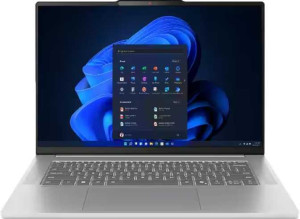
Lenovo IdeaPad Slim 5 Gen 10 16"
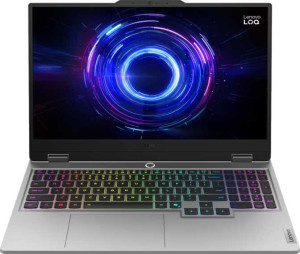
Lenovo LOQ 15i Gen 10 15"

Lenovo IdeaPad Slim 5 Gen 10 16" Lenovo LOQ 15i Gen 10 15"

Overview

Welcome to our in-depth comparison of the Lenovo IdeaPad Slim 5 Gen 10 16″ and the Lenovo LOQ 15i Gen 10 15″. These two laptops from Lenovo take very different approaches to everyday computing, with key battlegrounds spanning display technology, raw performance, portability, and connectivity. Whether you prioritize a premium visual experience or maximum processing power, this head-to-head breakdown will help you find the right fit.

Common Features

  • Both products have a backlit keyboard.
  • Neither product uses a fanless design.
  • Neither product is weather-sealed or splashproof.
  • Neither product has a rugged build.
  • Neither product has a touch screen.
  • Both products support up to 4 external displays.
  • Both products come with 32GB of RAM.
  • Both products have RAM running at 5600 MHz.
  • Both products use flash storage in the form of an NVMe SSD with 1024GB of internal storage.
  • Both products support DirectX 12.
  • Both products support multithreading.
  • Both products have a maximum memory amount of 32GB.
  • Neither product has any USB 4 20Gbps, USB 4 40Gbps, Thunderbolt 3, Thunderbolt 4, or USB 3.2 Gen 1 USB-C ports.
  • Both products include an HDMI output.
  • Both products have at least one USB Type-C port.
  • Both products have sleep-and-charge USB ports.
  • Neither product uses a MagSafe power adapter.
  • Both products have stereo speakers and a 3.5mm audio jack.
  • Both products are equipped with 2 microphones and a front camera.
  • Neither product includes a stylus, fingerprint scanner, Dolby Atmos support, or voice command support.

Main Differences

  • Weight is 1760g on Lenovo IdeaPad Slim 5 Gen 10 16″ and 2400g on Lenovo LOQ 15i Gen 10 15″.
  • Warranty period is 2 years on Lenovo IdeaPad Slim 5 Gen 10 16″ and 1 year on Lenovo LOQ 15i Gen 10 15″.
  • Volume is 1460 cm³ on Lenovo IdeaPad Slim 5 Gen 10 16″ and 1945.062 cm³ on Lenovo LOQ 15i Gen 10 15″.
  • Thickness is 16mm on Lenovo IdeaPad Slim 5 Gen 10 16″ and 21mm on Lenovo LOQ 15i Gen 10 15″.
  • Screen size is 16″ on Lenovo IdeaPad Slim 5 Gen 10 16″ and 15.6″ on Lenovo LOQ 15i Gen 10 15″.
  • Resolution is 2880 x 1800 px on Lenovo IdeaPad Slim 5 Gen 10 16″ and 2560 x 1440 px on Lenovo LOQ 15i Gen 10 15″.
  • Pixel density is 212 ppi on Lenovo IdeaPad Slim 5 Gen 10 16″ and 188 ppi on Lenovo LOQ 15i Gen 10 15″.
  • Display type is OLED/AMOLED on Lenovo IdeaPad Slim 5 Gen 10 16″ and LCD LED-backlit IPS on Lenovo LOQ 15i Gen 10 15″.
  • Typical brightness is 500 nits on Lenovo IdeaPad Slim 5 Gen 10 16″ and 350 nits on Lenovo LOQ 15i Gen 10 15″.
  • Refresh rate is 120Hz on Lenovo IdeaPad Slim 5 Gen 10 16″ and 165Hz on Lenovo LOQ 15i Gen 10 15″.
  • Anti-reflection coating is present on Lenovo LOQ 15i Gen 10 15″ but not available on Lenovo IdeaPad Slim 5 Gen 10 16″.
  • CPU thread count is 16 on Lenovo IdeaPad Slim 5 Gen 10 16″ and 28 on Lenovo LOQ 15i Gen 10 15″.
  • Geekbench 6 multi-core result is 11247 on Lenovo IdeaPad Slim 5 Gen 10 16″ and 13529 on Lenovo LOQ 15i Gen 10 15″.
  • PassMark result is 34459 on Lenovo IdeaPad Slim 5 Gen 10 16″ and 37155 on Lenovo LOQ 15i Gen 10 15″.
  • USB 3.2 Gen 2 USB-C ports count is 2 on Lenovo IdeaPad Slim 5 Gen 10 16″ and 1 on Lenovo LOQ 15i Gen 10 15″.
  • Wi-Fi 7 support is present on Lenovo IdeaPad Slim 5 Gen 10 16″ but not available on Lenovo LOQ 15i Gen 10 15″.
  • An external memory slot is present on Lenovo IdeaPad Slim 5 Gen 10 16″ but not available on Lenovo LOQ 15i Gen 10 15″.
  • A wired Ethernet RJ45 port is present on Lenovo LOQ 15i Gen 10 15″ but not available on Lenovo IdeaPad Slim 5 Gen 10 16″.
  • Battery size is 80 Wh on Lenovo IdeaPad Slim 5 Gen 10 16″ and 60 Wh on Lenovo LOQ 15i Gen 10 15″.
  • Ray tracing and DLSS support are present on Lenovo LOQ 15i Gen 10 15″ but not available on Lenovo IdeaPad Slim 5 Gen 10 16″.
  • 3D facial recognition is available on Lenovo IdeaPad Slim 5 Gen 10 16″ but not present on Lenovo LOQ 15i Gen 10 15″.
  • Shading units number 512 on Lenovo IdeaPad Slim 5 Gen 10 16″ and 3328 on Lenovo LOQ 15i Gen 10 15″.
Specs Comparison
Lenovo IdeaPad Slim 5 Gen 10 16"

Lenovo IdeaPad Slim 5 Gen 10 16"

Lenovo LOQ 15i Gen 10 15"

Lenovo LOQ 15i Gen 10 15"

Design:
weight 1760 g 2400 g
Uses a fanless design
Has a backlit keyboard
warranty period 2 years 1 years
volume 1460 cm³ 1945.062 cm³
width 365 mm 359 mm
height 250 mm 258 mm
thickness 16 mm 21 mm
is weather-sealed (splashproof)
has a rugged build

The most defining physical difference between these two Lenovo laptops is weight. The IdeaPad Slim 5 comes in at 1760 g, while the LOQ 15i tips the scales at 2400 g — a difference of 640 g, or roughly the weight of a large water bottle. For anyone commuting or carrying their laptop through airports or campus, that gap is genuinely noticeable over the course of a day.

The thickness figures reinforce the same story: the Slim 5 measures just 16 mm thin compared to the LOQ's 21 mm, and its overall volume is 1460 cm³ versus 1945 cm³. The LOQ is a physically bulkier machine, which typically reflects the additional thermal headroom needed for more demanding internals. Both share a backlit keyboard and neither offers a fanless design, weather sealing, or a rugged build, so those aspects are evenly matched.

One often-overlooked differentiator here is the warranty period: the Slim 5 includes 2 years of coverage versus the LOQ's 1 year, offering meaningfully longer peace of mind at no stated extra cost. Overall, the IdeaPad Slim 5 holds a clear design advantage for users who prioritize portability and a slimmer footprint, while the LOQ's larger chassis is an expected trade-off for a machine built around higher performance demands.

Display:
screen size 16" 15.6"
resolution 2880 x 1800 px 2560 x 1440 px
pixel density 212 ppi 188 ppi
Display type OLED/AMOLED LCD, LED-backlit, IPS
has a touch screen
brightness (typical) 500 nits 350 nits
refresh rate 120Hz 165Hz
has anti-reflection coating
supported displays 4 4

Panel technology is where these two laptops diverge most dramatically. The IdeaPad Slim 5 uses an OLED/AMOLED display, which delivers per-pixel lighting, true blacks, and vastly more vibrant color rendering than the LOQ 15i's IPS LCD panel. For photo editing, video consumption, or any color-sensitive work, OLED is a fundamentally different visual experience — not just a marginal upgrade.

Resolution and sharpness also favor the Slim 5: its 2880 x 1800 panel at 212 ppi produces noticeably crisper text and detail than the LOQ's 2560 x 1440 at 188 ppi. Where the LOQ fights back is refresh rate — 165Hz versus 120Hz — a meaningful edge for fast-paced gaming where motion clarity matters. The LOQ also includes an anti-reflection coating, which can reduce eye strain in brightly lit environments, partially compensating for its lower brightness ceiling of 350 nits versus the Slim 5's 500 nits.

Ultimately, the right choice depends on use case. The IdeaPad Slim 5 holds a clear advantage for media consumption and creative work, combining a superior panel type with higher brightness and sharper resolution. The LOQ 15i edges ahead specifically for gaming, where its higher refresh rate and glare-reducing coating are practical assets. Both support the same number of external displays, so neither has an advantage on connectivity from a display-output standpoint.

Performance:
RAM 32GB 32GB
RAM speed 5600 MHz 5600 MHz
Uses flash storage
internal storage 1024GB 1024GB
CPU speed 4 x 2 & 4 x 2 GHz 8 x 2.1 & 12 x 1.5 GHz
CPU threads 16 threads 28 threads
Is an NVMe SSD
DirectX version DirectX 12 DirectX 12
GPU clock speed 400 MHz 952 MHz
uses multithreading
maximum memory amount 32GB 32GB
DDR memory version 5 5
turbo clock speed 5GHz 5.5GHz
GPU turbo 3000 MHz 1455 MHz
memory slots 2 2
PCI Express (PCIe) version 4 4
semiconductor size 4 nm 5 nm
Supports 64-bit

At first glance, both laptops match on RAM (32GB DDR5 at 5600 MHz), storage (1TB NVMe SSD, PCIe 4), and DirectX 12 support — a solid, evenly matched foundation. The real divergence lies in the CPU. The LOQ 15i packs significantly more compute muscle with 28 threads across a larger core configuration, compared to the Slim 5's 16 threads. Combined with a higher turbo frequency of 5.5 GHz versus 5 GHz, the LOQ is better equipped for heavily threaded workloads like video rendering, compilation, or running multiple demanding applications simultaneously.

The GPU clock figures present an interesting contrast. The Slim 5 shows a much higher GPU turbo of 3000 MHz against a low base of 400 MHz, while the LOQ reports a 952 MHz base with a 1455 MHz turbo. These patterns suggest architecturally different GPU implementations, and raw clock speed alone does not determine real-world graphics throughput — but based strictly on the provided data, the LOQ's more balanced GPU clock range implies steadier sustained graphics performance. One counterpoint for the Slim 5: its 4 nm semiconductor process is a generation ahead of the LOQ's 5 nm, which typically translates to better performance-per-watt and thermal efficiency under load.

For overall processing power, the LOQ 15i holds a clear edge — more threads, a higher turbo ceiling, and a broader core layout make it the stronger performer for CPU-intensive tasks. The Slim 5's efficiency advantage from its smaller node is real, but it does not close the gap in raw throughput. Users who prioritize sustained multi-core performance will find the LOQ more capable, while those who value efficiency may appreciate the Slim 5's architectural refinement.

Benchmarks:
Geekbench 6 result (multi) 11247 13529
Geekbench 6 result (single) 2467 2504
PassMark result 34459 37155
PassMark result (single) 3878 3987

Benchmark results here confirm and quantify what the spec sheet suggested. Across both Geekbench 6 and PassMark, the LOQ 15i leads consistently — but the margin tells a nuanced story. In multi-core Geekbench 6, the LOQ scores 13,529 versus the Slim 5's 11,247, a gap of roughly 20%. That difference is meaningful for workloads that scale across cores, such as video exports, large dataset processing, or complex compilation tasks, where the LOQ will finish jobs noticeably faster.

Single-core performance, however, is nearly identical: 2,504 versus 2,467 on Geekbench 6, and 3,987 versus 3,878 on PassMark single-thread. Since most everyday tasks — browsing, word processing, light coding — rely primarily on single-core speed, the two laptops will feel essentially equivalent in day-to-day responsiveness. The LOQ's advantage only materializes when the workload is heavy enough to engage all available cores simultaneously.

Taken together, the LOQ 15i holds a clear but targeted edge in benchmark performance, driven by its higher core and thread count. For users whose workflows are consistently CPU-intensive, that 20% multi-core lead is a real productivity gain. For everyone else, the IdeaPad Slim 5 trails by a margin that is unlikely to be felt in typical use.

Connectivity:
USB 3.2 Gen 2 ports (USB-C) 2 1
USB 3.2 Gen 2 ports (USB-A) 0 0
USB 4 20Gbps ports 0 0
USB 4 40Gbps ports 0 0
Thunderbolt 4 ports 0 0
USB 3.2 Gen 1 ports (USB-C) 0 0
USB 3.2 Gen 1 ports (USB-A) 2 3
Thunderbolt 3 ports 0 0
has an HDMI output
Has USB Type-C
supports Wi-Fi
Wi-Fi version Wi-Fi 7 (802.11be), Wi-Fi 6E (802.11ax), Wi-Fi 6 (802.11ax), Wi-Fi 5 (802.11ac), Wi-Fi 4 (802.11n) Wi-Fi 6 (802.11ax), Wi-Fi 5 (802.11ac), Wi-Fi 4 (802.11n)
has an external memory slot
Bluetooth version 5.4 5.2
RJ45 ports 0 1
HDMI ports 1 1
HDMI version HDMI 2.1 HDMI 2.1
DisplayPort outputs 0 0
has AirPlay
mini DisplayPort outputs 0 0
has a VGA connector

Wireless connectivity is where the IdeaPad Slim 5 pulls decisively ahead. It supports Wi-Fi 7 (802.11be) and Bluetooth 5.4, versus the LOQ 15i's Wi-Fi 6 and Bluetooth 5.2. Wi-Fi 7 offers substantially higher theoretical throughput and lower latency on compatible routers, while the newer Bluetooth standard brings improved connection stability and efficiency. For users already on or planning to upgrade to modern networking hardware, the Slim 5 is more future-proof.

Wired connectivity tells a different story. The LOQ counters with a dedicated RJ45 Ethernet port — absent on the Slim 5 — which is a tangible advantage for gamers or professionals who prefer a stable, low-latency wired connection. The LOQ also offers 3 USB-A Gen 1 ports against the Slim 5's 2, useful for plugging in multiple peripherals without a hub. The Slim 5 responds with 2 USB-C Gen 2 ports (versus 1 on the LOQ) and an external memory card slot that the LOQ lacks entirely — a practical plus for photographers or content creators who regularly transfer files from cameras. Both share HDMI 2.1 output and AirPlay support.

Neither laptop dominates outright — the advantage depends on how you work. The IdeaPad Slim 5 is the stronger choice for wireless-first, content-creation workflows, while the LOQ 15i is better suited to desk-bound setups where a wired Ethernet connection and more USB-A ports are everyday priorities.

Battery:
battery size 80 Wh 60 Wh
Has sleep-and-charge USB ports
Has a MagSafe power adapter

Battery capacity is a straightforward win for the IdeaPad Slim 5: its 80 Wh cell is a full 33% larger than the LOQ 15i's 60 Wh pack. In practical terms, a larger battery directly translates to more time away from a wall outlet, assuming comparable power draw. That said, the Slim 5's OLED display and overall system demands will consume more power than a typical LCD setup, so real-world battery life gains may be more modest than the raw capacity gap implies — but the Slim 5 still enters with a meaningful structural advantage.

Both laptops share sleep-and-charge USB ports, meaning you can top up a phone or accessory even with the lid closed — a convenient but evenly matched feature. Neither includes a MagSafe-style magnetic power connector, so that parity requires no further analysis. The IdeaPad Slim 5 holds a clear edge in this category purely on the strength of its larger battery, making it the more suitable option for users who regularly work untethered.

Features:
release date July 2025 October 2025
has stereo speakers
has a socket for a 3.5 mm audio jack
supports ray tracing
supports DLSS
has Dolby Atmos
Stylus included
Has a fingerprint scanner
number of microphones 2 2
Uses 3D facial recognition
has voice commands
has a front camera
Has S/PDIF Out port
has a gyroscope
has GPS
has an accelerometer
has a compass
Has an optical disc drive

Two features stand out as genuine differentiators here. The LOQ 15i supports ray tracing and DLSS — GPU-level capabilities that enable realistic lighting simulation and AI-driven upscaling respectively. For gamers, these are meaningful technologies: ray tracing elevates visual fidelity in supported titles, while DLSS can recover frame rates lost to that added rendering load. Neither feature has any relevance outside of gaming, but for that audience they represent a real qualitative advantage the Slim 5 simply cannot offer.

On the other side, the IdeaPad Slim 5 includes 3D facial recognition for login authentication, which the LOQ lacks entirely. This is a convenience and security feature — faster, hands-free sign-in that is more spoofing-resistant than a standard 2D camera login. Neither laptop includes a fingerprint scanner, so for the LOQ, standard password or PIN entry remains the primary authentication method.

The remaining features — stereo speakers, dual microphones, a 3.5 mm audio jack, and a front camera — are evenly matched. Overall, this category splits cleanly along use-case lines: the LOQ 15i has the clear edge for gaming-focused users thanks to ray tracing and DLSS support, while the IdeaPad Slim 5 offers a more refined daily-use experience through its 3D facial recognition login.

Miscellaneous:
clock multiplier 20 21
PassMark result (overclocked) 24477 39466
render output units (ROPs) 8 32
texture mapping units (TMUs) 32 104
shading units 512 3328
OpenGL version 4.6 4.6
GPU execution units 8 32
OpenCL version 2.1 3
Type Laptop, Desktop Laptop
instruction sets MMX, F16C, FMA3, AES, AVX, AVX2, SSE 4.1, SSE 4.2 MMX, F16C, FMA3, AES, AVX, AVX2, SSE 4.1, SSE 4.2
Has an unlocked multiplier
Has NX bit
L3 cache 16 MB 33 MB
GPU name Radeon 860M UHD Graphics 770
Has integrated graphics
Supports ECC memory
memory channels 2 2
RAM speed (max) 8000 MHz 5600 MHz
CPU temperature 100 °C 100 °C
Thermal Design Power (TDP) 28W 45W
Uses big.LITTLE technology

The integrated GPU specifications reveal a substantial gap. The LOQ 15i's integrated graphics carries 3328 shading units, 104 TMUs, and 32 ROPs compared to the Slim 5's 512 shading units, 32 TMUs, and 8 ROPs. These figures directly govern how much parallel graphical work the chip can perform at once, and the LOQ's advantage here is not marginal — it is an order of magnitude larger across every rendering metric. The overclocked PassMark score reinforces this: 39,466 for the LOQ versus 24,477 for the Slim 5, a gap of over 60% that reflects real-world graphics headroom even without a discrete GPU in play.

A few other details deserve attention. The LOQ operates at a 45W TDP versus the Slim 5's 28W, which explains much of its performance headroom — it draws and dissipates significantly more power under load. Its 33 MB L3 cache is also notably larger than the Slim 5's 16 MB, reducing how often the CPU must reach out to slower main memory, which benefits latency-sensitive workloads. The LOQ additionally supports ECC memory, a feature relevant to professional or data-integrity-sensitive use cases, though its practical value depends entirely on whether the user's workload demands it.

Across the metrics provided in this group, the LOQ 15i holds a clear and consistent advantage — more GPU compute resources, a larger cache, higher TDP headroom, and a substantially better overclocked benchmark result. The Slim 5 trades raw graphical and compute muscle for efficiency, as its lower TDP indicates, which aligns with its positioning as a portable productivity machine rather than a performance-first system.

Comparison Summary & Verdict

After examining every specification, these two Lenovo laptops clearly serve different audiences. The Lenovo IdeaPad Slim 5 Gen 10 16″ stands out for users who value a lighter, slimmer form factor, a stunning OLED display with higher resolution and brightness, a larger 80 Wh battery, Wi-Fi 7 support, and a 2-year warranty, making it an excellent productivity and multimedia companion for on-the-go users. The Lenovo LOQ 15i Gen 10 15″, on the other hand, wins on raw computing muscle, delivering stronger multi-core CPU performance, a significantly more powerful dedicated GPU with ray tracing and DLSS support, a higher 165Hz refresh rate, and a wired Ethernet port, making it the clear choice for gamers and power users who work primarily at a desk. Neither machine is a one-size-fits-all solution, but each excels firmly within its intended use case.

Lenovo IdeaPad Slim 5 Gen 10 16
Buy Lenovo IdeaPad Slim 5 Gen 10 16" if...

Buy the Lenovo IdeaPad Slim 5 Gen 10 16″ if you prioritize a lightweight and slim design with a vivid OLED display, longer battery life, Wi-Fi 7 connectivity, and a 2-year warranty for everyday productivity and travel.

Lenovo LOQ 15i Gen 10 15
Buy Lenovo LOQ 15i Gen 10 15" if...

Buy the Lenovo LOQ 15i Gen 10 15″ if you need stronger multi-core CPU performance, a dedicated GPU with ray tracing and DLSS support, and a 165Hz refresh rate for gaming or demanding workloads.