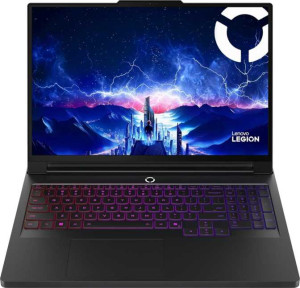
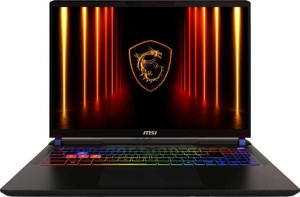
Much of the features list is shared ground — both laptops offer stereo speakers, a 3.5mm audio jack, front cameras, and critically for gaming, both support ray tracing and DLSS. Neither includes Dolby Atmos, a fingerprint scanner, or an optical drive. The meaningful differences come down to how each machine handles security and audio input.
For login security, the two take opposite approaches. The MSI Vector 16 HX AI uses 3D facial recognition, which is a more secure and hands-free biometric method than a standard 2D camera login. The Legion Pro 7i Gen 10 offers neither facial recognition nor a fingerprint scanner, meaning users rely on PIN or password authentication — a step behind in convenience and security for daily use. On the audio side, the Legion counters with a dual-microphone array versus the MSI's single microphone, which generally produces better voice clarity and noise isolation during calls or voice commands — the latter being another feature the Legion supports but the MSI omits entirely.
These trade-offs roughly cancel out depending on user priorities. The MSI's 3D facial recognition is a more impactful daily convenience feature for most users than the Legion's second microphone or voice command support. On balance, the MSI holds a slight edge in this category — secure, passwordless login is a quality-of-life feature that gets used every single session, making it a more consistently valuable differentiator than mic count.