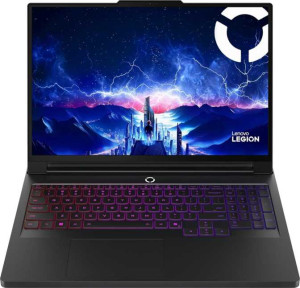
Lenovo Legion Pro 7i Gen 10 16" (RTX 5080 Laptop / 32GB RAM / 1TB)
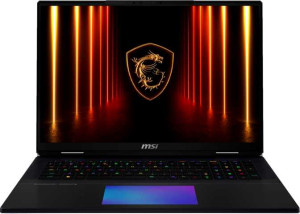
MSI Titan 18 HX AI A2XW (2025) 18"

Lenovo Legion Pro 7i Gen 10 16" (RTX 5080 Laptop / 32GB RAM / 1TB) MSI Titan 18 HX AI A2XW (2025) 18"

Common Features

  • Both products are gaming laptops.
  • Neither product uses a fanless design.
  • Both products have a backlit keyboard.
  • Neither product is weather-sealed or splashproof.
  • Neither product has a rugged build.
  • Both products support four types of displays.
  • Both products use DDR5 memory.
  • Both products have GDDR7 graphics memory.
  • Both products support DirectX 12 Ultimate.
  • Both products use multithreading.
  • Both products have an NVMe SSD.
  • Both products have stereo speakers.
  • Both products have a socket for a 3.5 mm audio jack.
  • Both products support ray tracing.
  • Both products support DLSS.
  • Both products support multi-display technology.
  • Both products support OpenCL version 3.
  • Both products support OpenGL version 4.6.
  • Both products support ECC memory.

Main Differences

  • The Lenovo Legion Pro 7i Gen 10 16″ (RTX 5080 Laptop / 32GB RAM / 1TB) weighs 2720 g, while the MSI Titan 18 HX AI A2XW (2025) 18″ weighs 3600 g.
  • The Lenovo Legion Pro 7i Gen 10 16″ (RTX 5080 Laptop / 32GB RAM / 1TB) has a volume of 2671.37416 cm³, while the MSI Titan 18 HX AI A2XW (2025) 18″ has a volume of 2976.672 cm³.
  • The Lenovo Legion Pro 7i Gen 10 16″ (RTX 5080 Laptop / 32GB RAM / 1TB) is 364 mm wide, while the MSI Titan 18 HX AI A2XW (2025) 18″ is 404 mm wide.
  • The Lenovo Legion Pro 7i Gen 10 16″ (RTX 5080 Laptop / 32GB RAM / 1TB) is 275.9 mm tall, while the MSI Titan 18 HX AI A2XW (2025) 18″ is 307 mm tall.
  • The Lenovo Legion Pro 7i Gen 10 16″ (RTX 5080 Laptop / 32GB RAM / 1TB) has a thickness of 26.6 mm, while the MSI Titan 18 HX AI A2XW (2025) 18″ has a thickness of 24 mm.
  • The Lenovo Legion Pro 7i Gen 10 16″ (RTX 5080 Laptop / 32GB RAM / 1TB) has a 2560 x 1600 px resolution, while the MSI Titan 18 HX AI A2XW (2025) 18″ has a 3840 x 2400 px resolution.
  • The Lenovo Legion Pro 7i Gen 10 16″ (RTX 5080 Laptop / 32GB RAM / 1TB) has a pixel density of 189 ppi, while the MSI Titan 18 HX AI A2XW (2025) 18″ has a pixel density of 251 ppi.
  • The Lenovo Legion Pro 7i Gen 10 16″ (RTX 5080 Laptop / 32GB RAM / 1TB) uses an OLED/AMOLED display, while the MSI Titan 18 HX AI A2XW (2025) 18″ uses an LCD, Mini-LED display.
  • The Lenovo Legion Pro 7i Gen 10 16″ (RTX 5080 Laptop / 32GB RAM / 1TB) has a 240Hz refresh rate, while the MSI Titan 18 HX AI A2XW (2025) 18″ has a 120Hz refresh rate.
  • The Lenovo Legion Pro 7i Gen 10 16″ (RTX 5080 Laptop / 32GB RAM / 1TB) has 32GB of RAM, while the MSI Titan 18 HX AI A2XW (2025) 18″ has 96GB of RAM.
  • The Lenovo Legion Pro 7i Gen 10 16″ (RTX 5080 Laptop / 32GB RAM / 1TB) has 1000GB of internal storage, while the MSI Titan 18 HX AI A2XW (2025) 18″ has 6144GB of internal storage.
  • The Lenovo Legion Pro 7i Gen 10 16″ (RTX 5080 Laptop / 32GB RAM / 1TB) has 16GB of VRAM, while the MSI Titan 18 HX AI A2XW (2025) 18″ has 24GB of VRAM.
  • The Lenovo Legion Pro 7i Gen 10 16″ (RTX 5080 Laptop / 32GB RAM / 1TB) has 23.04 TFLOPS of floating-point performance, while the MSI Titan 18 HX AI A2XW (2025) 18″ has 31.8 TFLOPS.
  • The Lenovo Legion Pro 7i Gen 10 16″ (RTX 5080 Laptop / 32GB RAM / 1TB) has a texture rate of 384 GTexels/s, while the MSI Titan 18 HX AI A2XW (2025) 18″ has a texture rate of 496.9 GTexels/s.
  • The Lenovo Legion Pro 7i Gen 10 16″ (RTX 5080 Laptop / 32GB RAM / 1TB) has a pixel rate of 144 GPixel/s, while the MSI Titan 18 HX AI A2XW (2025) 18″ has a pixel rate of 193.9 GPixel/s.
  • The Lenovo Legion Pro 7i Gen 10 16″ (RTX 5080 Laptop / 32GB RAM / 1TB) has a GPU clock speed of 975 MHz, while the MSI Titan 18 HX AI A2XW (2025) 18″ has a GPU clock speed of 990 MHz.
  • The Lenovo Legion Pro 7i Gen 10 16″ (RTX 5080 Laptop / 32GB RAM / 1TB) has a turbo clock speed of 5.4GHz, while the MSI Titan 18 HX AI A2XW (2025) 18″ has a turbo clock speed of 5.5GHz.
  • The Lenovo Legion Pro 7i Gen 10 16″ (RTX 5080 Laptop / 32GB RAM / 1TB) has a GPU turbo of 1500 MHz, while the MSI Titan 18 HX AI A2XW (2025) 18″ has a GPU turbo of 1515 MHz.
  • The Lenovo Legion Pro 7i Gen 10 16″ (RTX 5080 Laptop / 32GB RAM / 1TB) uses PCI Express version 5, while the MSI Titan 18 HX AI A2XW (2025) 18″ uses PCI Express version 4.
  • The Lenovo Legion Pro 7i Gen 10 16″ (RTX 5080 Laptop / 32GB RAM / 1TB) has a PassMark result of 56426, while the MSI Titan 18 HX AI A2XW (2025) 18″ has a PassMark result of 62297.
  • The Lenovo Legion Pro 7i Gen 10 16″ (RTX 5080 Laptop / 32GB RAM / 1TB) has a PassMark single result of 4723, while the MSI Titan 18 HX AI A2XW (2025) 18″ has a PassMark single result of 4784.
  • The Lenovo Legion Pro 7i Gen 10 16″ (RTX 5080 Laptop / 32GB RAM / 1TB) has 1 USB 3.2 Gen 2 port (USB-A), while the MSI Titan 18 HX AI A2XW (2025) 18″ has 3 USB 3.2 Gen 2 ports (USB-A).
  • The Lenovo Legion Pro 7i Gen 10 16″ (RTX 5080 Laptop / 32GB RAM / 1TB) has 1 USB 4 40Gbps port, while the MSI Titan 18 HX AI A2XW (2025) 18″ has 2 USB 4 40Gbps ports.
  • The Lenovo Legion Pro 7i Gen 10 16″ (RTX 5080 Laptop / 32GB RAM / 1TB) has 1 Thunderbolt 4 port, while the MSI Titan 18 HX AI A2XW (2025) 18″ has no Thunderbolt 4 ports.
  • The Lenovo Legion Pro 7i Gen 10 16″ (RTX 5080 Laptop / 32GB RAM / 1TB) supports Wi-Fi 6E, Wi-Fi 6, Wi-Fi 5, and Wi-Fi 4, while the MSI Titan 18 HX AI A2XW (2025) 18″ supports Wi-Fi 7, Wi-Fi 6E, Wi-Fi 6, Wi-Fi 5, and Wi-Fi 4.
Specs Comparison
Lenovo Legion Pro 7i Gen 10 16" (RTX 5080 Laptop / 32GB RAM / 1TB)

Lenovo Legion Pro 7i Gen 10 16" (RTX 5080 Laptop / 32GB RAM / 1TB)

MSI Titan 18 HX AI A2XW (2025) 18"

MSI Titan 18 HX AI A2XW (2025) 18"

Design:
Type Gaming Gaming
weight 2720 g 3600 g
Uses a fanless design
Has a backlit keyboard
volume 2671.37416 cm³ 2976.672 cm³
width 364 mm 404 mm
height 275.9 mm 307 mm
thickness 26.6 mm 24 mm
is weather-sealed (splashproof)
has a rugged build

The Lenovo Legion Pro 7i Gen 10 16″ (RTX 5080 Laptop / 32GB RAM / 1TB) and the MSI Titan 18 HX AI A2XW (2025) 18″ are both gaming laptops with some notable differences in design. The Legion Pro 7i weighs 2720 g, making it lighter than the MSI Titan, which weighs 3600 g. In terms of size, the Lenovo model has a width of 364 mm, height of 275.9 mm, and thickness of 26.6 mm, while the MSI Titan is larger with a width of 404 mm, height of 307 mm, and a slightly thinner thickness of 24 mm. The MSI Titan’s larger size results in a volume of 2976.672 cm³, compared to the Lenovo Legion Pro 7i’s volume of 2671.37416 cm³.

Both laptops feature backlit keyboards, but neither uses a fanless design. Neither product is weather-sealed (splashproof) or has a rugged build, indicating that both laptops are more focused on performance than durability in extreme environments. The Lenovo Legion Pro 7i does not have the largest size in this comparison, but its more compact build results in a lighter weight. On the other hand, the MSI Titan’s bulkier design offers more screen real estate and potentially more internal space for components.

Overall, while both products share some similarities, such as being gaming-oriented and having backlit keyboards, their physical sizes and weights differ considerably, with the MSI Titan being the larger and heavier option, and the Lenovo Legion Pro 7i offering a more compact alternative.

Display:
screen size 16" 18"
resolution 2560 x 1600 px 3840 x 2400 px
pixel density 189 ppi 251 ppi
Display type OLED/AMOLED LCD, Mini-LED
has a touch screen
refresh rate 240Hz 120Hz
has anti-reflection coating
supported displays 4 4

The Lenovo Legion Pro 7i Gen 10 16″ (RTX 5080 Laptop / 32GB RAM / 1TB) and the MSI Titan 18 HX AI A2XW (2025) 18″ both offer high-quality displays, but they differ significantly in size and other features. The Legion Pro 7i has a 16″ screen with a resolution of 2560 x 1600 px, providing a pixel density of 189 ppi. In contrast, the MSI Titan boasts a larger 18″ screen with a higher resolution of 3840 x 2400 px, resulting in a pixel density of 251 ppi. This means the MSI Titan offers a sharper image, but the Lenovo model has a slightly smaller screen for more portability.

In terms of display technology, the Legion Pro 7i uses an OLED/AMOLED screen, while the MSI Titan employs an LCD, Mini-LED display. Both displays lack a touch screen and anti-reflection coating. The Lenovo model has a higher refresh rate of 240Hz compared to the MSI Titan’s 120Hz, which can be particularly advantageous for fast-paced gaming. Both products support up to 4 external displays, allowing for versatile multi-screen setups.

Ultimately, while both displays are excellent for gaming, the MSI Titan offers a larger, higher-resolution screen with a higher pixel density, while the Lenovo Legion Pro 7i stands out with its faster refresh rate and OLED technology for richer colors and deeper contrasts.

Performance:
RAM 32GB 96GB
RAM speed 6400 MHz 6400 MHz
Uses flash storage
internal storage 1000GB 6144GB
CPU speed 8 x 2.7 & 16 x 2.1 GHz 8 x 2.8 & 16 x 2.1 GHz
CPU threads 24 threads 24 threads
VRAM 16GB 24GB
floating-point performance 23.04 TFLOPS 31.8 TFLOPS
GDDR version GDDR7 GDDR7
texture rate 384 GTexels/s 496.9 GTexels/s
pixel rate 144 GPixel/s 193.9 GPixel/s
Is an NVMe SSD
DirectX version DirectX 12 Ultimate DirectX 12 Ultimate
GPU clock speed 975 MHz 990 MHz
uses multithreading
maximum memory amount 192GB 96GB
DDR memory version 5 5
turbo clock speed 5.4GHz 5.5GHz
GPU turbo 1500 MHz 1515 MHz
PCI Express (PCIe) version 5 4
semiconductor size 4 nm 4 nm
has XeSS (XMX)
Supports 64-bit

The Lenovo Legion Pro 7i Gen 10 16″ (RTX 5080 Laptop / 32GB RAM / 1TB) and the MSI Titan 18 HX AI A2XW (2025) 18″ have a variety of performance specifications, with the MSI Titan generally offering higher capacities in several areas. The Lenovo Legion Pro 7i comes with 32GB of RAM, while the MSI Titan offers a significantly larger 96GB of RAM, though both models feature 6400 MHz RAM speed. Both laptops use flash storage, with the Lenovo having a 1000GB internal storage compared to the MSI Titan's much larger 6144GB. In terms of CPU, both have 24 threads, with the Lenovo featuring an 8-core, 2.7 GHz base speed and 5.4 GHz turbo boost, while the MSI Titan has an 8-core, 2.8 GHz base speed and a slightly faster 5.5 GHz turbo boost.

The GPU specifications also differ, with the Lenovo Legion Pro 7i sporting 16GB of VRAM and a GPU clock speed of 975 MHz, while the MSI Titan has 24GB of VRAM and a slightly higher GPU clock speed of 990 MHz. The floating-point performance of the Lenovo is 23.04 TFLOPS, while the MSI Titan’s is higher at 31.8 TFLOPS. Additionally, the MSI Titan has a higher texture rate of 496.9 GTexels/s and a pixel rate of 193.9 GPixel/s, compared to the Legion Pro 7i's 384 GTexels/s and 144 GPixel/s.

Both laptops use NVMe SSDs and support DirectX 12 Ultimate, but the Lenovo’s PCI Express version is 5, while the MSI Titan supports PCIe version 4. Both products are capable of multithreading and support 64-bit architecture. The Lenovo also has a maximum memory capacity of 192GB, while the MSI Titan has a maximum of 96GB. Overall, the MSI Titan has superior RAM, storage, GPU performance, and floating-point capabilities, while the Lenovo Legion Pro 7i offers impressive performance with a faster PCIe version and slightly higher memory expansion potential.

Benchmarks:
PassMark result 56426 62297
PassMark result (single) 4723 4784

In terms of benchmarks, both the Lenovo Legion Pro 7i Gen 10 16″ (RTX 5080 Laptop / 32GB RAM / 1TB) and the MSI Titan 18 HX AI A2XW (2025) 18″ perform strongly, but the MSI Titan has a higher overall PassMark score. The Lenovo Legion Pro 7i has a PassMark result of 56426, while the MSI Titan achieves a PassMark result of 62297, indicating a notable performance difference. In terms of single-thread performance, the Lenovo scores 4723, while the MSI Titan's score is 4784, which again shows a slight advantage for the MSI Titan in single-thread tasks.

Both laptops show solid performance across the board, but the MSI Titan has a slight edge in both total and single-threaded performance based on the provided benchmark scores. These results reflect the general raw computational power, with the MSI Titan offering a bit more processing capability overall.

Overall, while both laptops perform well, the MSI Titan has higher benchmark results, both in total performance and single-thread performance, which could translate into better handling of more demanding tasks.

Connectivity:
USB 3.2 Gen 2 ports (USB-C) 0 0
USB 3.2 Gen 2 ports (USB-A) 1 3
USB 4 20Gbps ports 0 0
USB 4 40Gbps ports 1 2
Thunderbolt 4 ports 1 0
USB 3.2 Gen 1 ports (USB-C) 0 0
USB 3.2 Gen 1 ports (USB-A) 2 0
Thunderbolt 3 ports 0 0
has an HDMI output
Has USB Type-C
supports Wi-Fi
Wi-Fi version Wi-Fi 6E (802.11ax), Wi-Fi 6 (802.11ax), Wi-Fi 5 (802.11ac), Wi-Fi 4 (802.11n), Wi-Fi 7 (802.11be) Wi-Fi 7 (802.11be), Wi-Fi 6E (802.11ax), Wi-Fi 6 (802.11ax), Wi-Fi 5 (802.11ac), Wi-Fi 4 (802.11n)
has an external memory slot
Bluetooth version 5.4 5.4
RJ45 ports 1 1
HDMI ports 1 1
HDMI version HDMI 2.1 HDMI 2.1
DisplayPort outputs 0 0
has AirPlay
mini DisplayPort outputs 0 0
has a VGA connector

The Lenovo Legion Pro 7i Gen 10 16″ (RTX 5080 Laptop / 32GB RAM / 1TB) and the MSI Titan 18 HX AI A2XW (2025) 18″ offer a range of connectivity options, with both supporting modern standards but differing in specific configurations. The Lenovo Legion Pro 7i includes one USB 3.2 Gen 2 USB-A port, one USB 4 40Gbps port, and one Thunderbolt 4 port. It also features one HDMI 2.1 port, Wi-Fi 6E support, and Bluetooth 5.4. The MSI Titan, on the other hand, has three USB 3.2 Gen 2 USB-A ports and two USB 4 40Gbps ports but lacks the Thunderbolt 4 port seen in the Legion Pro 7i. Both laptops have an HDMI 2.1 port, Wi-Fi 7 support, and Bluetooth 5.4, but the MSI Titan additionally includes support for AirPlay.

Both laptops feature an RJ45 port for wired network connections, and both support Wi-Fi versions ranging from Wi-Fi 4 to Wi-Fi 7. However, the Lenovo model does not have an external memory slot, while the MSI Titan does. Neither laptop includes DisplayPort or mini DisplayPort outputs, and both lack a VGA connector.

In terms of connectivity, both laptops provide solid options for modern peripherals, but the MSI Titan stands out with its additional USB-A ports, support for AirPlay, and external memory slot. The Lenovo Legion Pro 7i offers Thunderbolt 4 and fewer USB-A ports, making it a slightly different option depending on the user's needs for peripheral compatibility.

Battery:
battery size 99 Wh 99 Wh
Has a MagSafe power adapter

Both the Lenovo Legion Pro 7i Gen 10 16″ (RTX 5080 Laptop / 32GB RAM / 1TB) and the MSI Titan 18 HX AI A2XW (2025) 18″ come with identical battery sizes, each featuring a 99 Wh battery. Neither laptop includes a MagSafe power adapter.

With both models offering the same battery size, users can expect similar battery life, depending on other factors like power usage and efficiency. The lack of a MagSafe adapter on either device means both laptops rely on standard power connections for charging.

Overall, the battery specifications are nearly identical for both laptops, with the only notable point being the absence of MagSafe support in both models.

Features:
release date April 2025 February 2025
has stereo speakers
has a socket for a 3.5 mm audio jack
supports ray tracing
supports DLSS
has Dolby Atmos
Stylus included
Has a fingerprint scanner
number of microphones 2 1
Uses 3D facial recognition
has voice commands
has a front camera
Has S/PDIF Out port
has a gyroscope
has GPS
has an accelerometer
has a compass
Has an optical disc drive

The Lenovo Legion Pro 7i Gen 10 16″ (RTX 5080 Laptop / 32GB RAM / 1TB) and the MSI Titan 18 HX AI A2XW (2025) 18″ share many key features, but they differ slightly in certain areas. Both laptops come with stereo speakers and a 3.5 mm audio jack, and both support ray tracing and DLSS. Neither has Dolby Atmos, a stylus, or a fingerprint scanner. However, the Lenovo Legion Pro 7i has two microphones, while the MSI Titan only has one.

Additionally, the Lenovo model supports voice commands, a feature not present on the MSI Titan. Both laptops include a front camera, but the Lenovo Legion Pro 7i offers more sensor functionality with an accelerometer and compass, while the MSI Titan lacks these sensors. Neither product includes an optical disc drive or supports S/PDIF Out, gyroscope, or GPS functionality.

In summary, the Lenovo Legion Pro 7i offers slightly more in terms of microphone count, sensor features, and voice command support, while the MSI Titan has fewer features in these areas but maintains similar core capabilities like stereo sound, ray tracing, and DLSS support.

Miscellaneous:
clock multiplier 27 28
AMD SAM / Intel Resizable BAR Intel Resizable BAR Intel Resizable BAR
GPU architecture Blackwell Blackwell
has LHR
Thermal Design Power (TDP) 80W 95W
Supports 3D
Supports multi-display technology
OpenCL version 3 3
OpenGL version 4.6 4.6
Supports ECC memory
memory bus width 256-bit 256-bit
effective memory speed 25400 MHz 25400 MHz
maximum memory bandwidth 811.5 GB/s 811.5 GB/s
render output units (ROPs) 96 128
texture mapping units (TMUs) 256 328
shading units 7680 10496
Has Double Precision Floating Point (DPFP)
GPU memory speed 2000 MHz 2000 MHz
Type Laptop Laptop
CPU socket BGA 2114 BGA 2114
instruction sets MMX, F16C, FMA3, AES, AVX, AVX2, SSE 4.1, SSE 4.2 MMX, F16C, FMA3, AES, AVX, AVX2, SSE 4.1, SSE 4.2
Has an unlocked multiplier
L3 cache 36 MB 36 MB
L2 cache 40 MB 40 MB
Has NX bit
Turbo Boost version 2 2
CPU temperature 105 °C 105 °C
Has integrated graphics
memory channels 2 2
RAM speed (max) 6400 MHz 6400 MHz
Uses big.LITTLE technology

The Lenovo Legion Pro 7i Gen 10 16″ (RTX 5080 Laptop / 32GB RAM / 1TB) and the MSI Titan 18 HX AI A2XW (2025) 18″ are equipped with similar high-performance components, but there are some key differences in their specifications. Both models use the Blackwell GPU architecture and support 3D and multi-display technology. They both support Intel Resizable BAR and ECC memory. However, the MSI Titan has a higher Thermal Design Power (TDP) of 95W compared to the Lenovo Legion Pro 7i's 80W, which could indicate higher power consumption and potentially greater performance in sustained workloads.

In terms of GPU capabilities, the MSI Titan has more render output units (ROPs) at 128 versus the Lenovo's 96, as well as more texture mapping units (TMUs) at 328 compared to the Lenovo's 256. Additionally, the MSI Titan features more shading units at 10496, while the Lenovo has 7680. These differences suggest that the MSI Titan could offer better GPU performance for certain tasks. Both laptops have the same GPU memory speed of 2000 MHz and the same effective memory speed of 25400 MHz, and they both share a memory bus width of 256-bit, with maximum memory bandwidth of 811.5 GB/s.

Both laptops have a clock multiplier of 27 (Lenovo) and 28 (MSI Titan), which may contribute to the MSI Titan having a slight edge in CPU speed. They both have an unlocked multiplier and use the BGA 2114 CPU socket. The L3 and L2 caches are also identical between both laptops, with 36 MB and 40 MB, respectively. Additionally, both laptops feature the same CPU temperature of 105°C, integrated graphics, and two memory channels. Both products use big.LITTLE technology, and their RAM speed is capped at 6400 MHz. Overall, while the MSI Titan offers superior GPU specs, both models are equipped with powerful, similar processors and memory systems.

Comparison Summary

This is a specification comparison between Lenovo Legion Pro 7i Gen 10 16″ (RTX 5080 Laptop / 32GB RAM / 1TB) and MSI Titan 18 HX AI A2XW (2025) 18″. Both products are gaming laptops with backlit keyboards, stereo speakers, and support for ray tracing and DLSS. The Lenovo Legion Pro 7i Gen 10 16″ has a 16″ OLED/AMOLED display with a resolution of 2560 x 1600 px, while the MSI Titan 18 HX AI A2XW (2025) 18″ features an 18″ LCD, Mini-LED display with a higher resolution of 3840 x 2400 px. The Lenovo model comes with 32GB of RAM and 1000GB of storage, while the MSI Titan has 96GB of RAM and 6144GB of storage. Additionally, the Lenovo Legion Pro 7i Gen 10 16″ uses PCIe version 5, whereas the MSI Titan uses PCIe version 4.