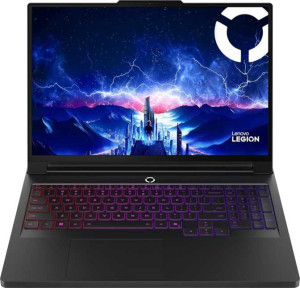
Lenovo Legion Pro 7i Gen 10 16" (RTX 5080 Laptop / 64GB RAM / 1TB)
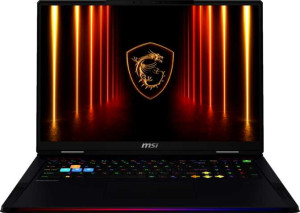
MSI Raider 18 HX AI A2XW (2025) 18"

Lenovo Legion Pro 7i Gen 10 16" (RTX 5080 Laptop / 64GB RAM / 1TB) MSI Raider 18 HX AI A2XW (2025) 18"

Common Features

  • Both products are gaming laptops.
  • Both have a backlit keyboard.
  • Neither product is weather-sealed.
  • Neither product has a rugged build.
  • Both products support up to 4 displays.
  • Both products have 64GB of RAM.
  • Both products use flash storage.
  • Both products use an NVMe SSD.
  • Both products support DirectX 12 Ultimate.
  • Both products use multithreading.
  • Both products have an HDMI output.
  • Both products support Wi-Fi.
  • Both products support Bluetooth 5.4.
  • Both products have stereo speakers.
  • Both products support ray tracing.
  • Both products support DLSS.
  • Both products have a front camera.
  • Both products support multi-display technology.
  • Both products support ECC memory.
Specs Comparison
Lenovo Legion Pro 7i Gen 10 16" (RTX 5080 Laptop / 64GB RAM / 1TB)

Lenovo Legion Pro 7i Gen 10 16" (RTX 5080 Laptop / 64GB RAM / 1TB)

MSI Raider 18 HX AI A2XW (2025) 18"

MSI Raider 18 HX AI A2XW (2025) 18"

Design:
Type Gaming Gaming
weight 2720 g 3600 g
Uses a fanless design
Has a backlit keyboard
volume 2671.37416 cm³ 2976.672 cm³
width 364 mm 404 mm
height 275.9 mm 307 mm
thickness 26.6 mm 24 mm
is weather-sealed (splashproof)
has a rugged build

Both the Lenovo Legion Pro 7i Gen 10 and the MSI Raider 18 HX AI are purpose-built gaming laptops, and their designs reflect that shared identity — neither is weather-sealed, neither uses a fanless cooling approach, and both feature backlit keyboards. The real differentiators here come down to size and weight, which have meaningful real-world consequences for portability and desk presence.

The MSI Raider 18 is notably larger in every footprint dimension: 404 × 307 mm versus the Legion's 364 × 275.9 mm, and its total volume is roughly 305 cm³ greater. That extra bulk is a direct consequence of housing an 18-inch panel, and it translates to a machine that will demand more bag space and more desk real estate. The Legion Pro 7i, meanwhile, is actually 2.6 mm thicker (26.6 mm vs. 24 mm), which is a minor trade-off for its more compact chassis — likely reflecting denser internal component packing in a smaller frame.

The most practically significant difference is weight: the MSI Raider tips the scales at 3600 g compared to the Legion's 2720 g — a gap of 880 g, or nearly a full kilogram. For a machine that moves between a desk, a bag, and a couch, that difference is genuinely felt. The Lenovo Legion Pro 7i holds a clear portability edge in this group, offering a substantially more travel-friendly form factor without compromising its gaming-oriented identity. The MSI Raider's larger build is inherent to its 18-inch class and suits users who prioritize screen size and will mostly use it as a desktop replacement.

Display:
screen size 16" 18"
resolution 2560 x 1600 px 3840 x 2400 px
pixel density 189 ppi 251 ppi
Display type OLED/AMOLED Mini-LED
has a touch screen
refresh rate 240Hz 120Hz
has anti-reflection coating
supported displays 4 4

These two displays represent genuinely different philosophies, and understanding the trade-offs is essential. The Lenovo Legion Pro 7i pairs a 16″ OLED/AMOLED panel with a 240Hz refresh rate, while the MSI Raider 18 counters with an 18″ Mini-LED at 3840 × 2400 resolution and 120Hz. Neither is strictly superior — they are optimized for different use cases.

The Legion's OLED panel brings per-pixel light control, meaning true blacks, exceptional contrast, and vivid color accuracy that Mini-LED cannot fully match despite its local dimming zones. However, the MSI Raider's 251 ppi pixel density — versus the Legion's 189 ppi — makes a tangible difference in sharpness, particularly when working with fine textures, 4K media, or detailed UI elements at native resolution. The Raider's 3840 × 2400 canvas on an 18-inch screen is genuinely crisp; the Legion's 2560 × 1600 on 16 inches is respectable but visibly less dense side by side.

The refresh rate gap cuts in the opposite direction: 240Hz on the Legion is a significant competitive gaming advantage, delivering smoother motion and lower perceived input lag compared to the Raider's 120Hz. For fast-paced titles where frame timing matters, this is a real-world edge. The verdict depends on the user's priority — the Legion wins for esports and motion clarity, while the MSI Raider wins for resolution fidelity and large-format visual work. Shared limitations like the absence of touch and anti-reflection coatings on both mean neither has an ancillary advantage there.

Performance:
RAM 64GB 64GB
RAM speed 6400 MHz 6400 MHz
Uses flash storage
internal storage 1000GB 4096GB
CPU speed 8 x 2.7 & 16 x 2.1 GHz 8 x 2.8 & 16 x 2.1 GHz
CPU threads 24 threads 24 threads
VRAM 16GB 24GB
floating-point performance 23.04 TFLOPS 31.8 TFLOPS
GDDR version GDDR7 GDDR7
texture rate 384 GTexels/s 496.9 GTexels/s
pixel rate 144 GPixel/s 193.9 GPixel/s
Is an NVMe SSD
DirectX version DirectX 12 Ultimate DirectX 12 Ultimate
GPU clock speed 975 MHz 990 MHz
uses multithreading
maximum memory amount 192GB 96GB
DDR memory version 5 5
turbo clock speed 5.4GHz 5.5GHz
GPU turbo 1500 MHz 1515 MHz
PCI Express (PCIe) version 5 4
semiconductor size 4 nm 4 nm
has XeSS (XMX)
Supports 64-bit

On paper, these machines share a convincing amount of common ground — identical 64GB DDR5 RAM at 6400 MHz, the same 24-thread CPU architecture, matching 4 nm fabrication, and both running NVMe SSDs under DirectX 12 Ultimate. The CPU turbo gap (5.5 GHz vs 5.4 GHz on the Legion) is marginal enough to be inconsequential in practice. Where the two machines genuinely diverge is in GPU muscle and storage capacity.

The MSI Raider 18 holds a commanding GPU advantage: 31.8 TFLOPS of floating-point performance versus the Legion's 23.04 TFLOPS — a roughly 38% gap — backed by 24 GB VRAM compared to 16 GB. Its texture and pixel fill rates follow the same pattern. In real-world terms, this translates to a meaningful lead in GPU-heavy workloads: high-resolution gaming, AI-accelerated tasks, 3D rendering, and running large local models that are VRAM-constrained. The Legion counters with PCIe 5.0 versus the Raider's PCIe 4.0, which theoretically doubles bandwidth to the SSD and GPU slot — though in current real-world workloads, saturating PCIe 4.0 remains rare. The Raider also ships with 4TB of internal storage versus the Legion's 1TB, a substantial practical advantage for users managing large game libraries or media assets.

One notable reversal: the Legion supports a maximum of 192 GB of system RAM versus the Raider's 96 GB ceiling — relevant for memory-intensive professional workloads like virtualization or large dataset processing, but unlikely to matter for most gaming use cases. Overall, the MSI Raider 18 holds a clear performance edge in this group, driven by its significantly more powerful GPU and far greater storage capacity. The Legion's PCIe 5.0 and higher RAM ceiling are meaningful advantages in specific scenarios, but they don't close the GPU gap.

Benchmarks:
PassMark result 56426 62297
PassMark result (single) 4723 4784

The PassMark results here reinforce what the raw specs suggested: the MSI Raider 18 leads in multi-threaded CPU performance with a score of 62,297 versus the Legion's 56,426 — a gap of roughly 10%. In practical terms, multi-core PassMark scores correlate well with workloads that can distribute across threads, such as video encoding, compilation, data processing, and heavily threaded games. A 10% margin is noticeable but not transformative; both machines sit firmly in high-performance territory.

The single-core gap is considerably narrower: 4,784 for the Raider against 4,723 for the Legion — a difference of less than 1.3%. Single-core performance governs tasks like lightly threaded applications, certain game engines, and general OS responsiveness. At this margin, the two machines are functionally identical in single-threaded workloads, and real-world experience would be indistinguishable.

The MSI Raider 18 takes the edge in this group, but the story is more nuanced than the headline numbers suggest. Its multi-core advantage is meaningful for sustained parallel workloads, while the single-core parity means neither machine has a day-to-day responsiveness advantage. Users whose workloads are heavily multi-threaded will notice the Raider's lead; for everyone else, the gap is largely academic.

Connectivity:
USB 3.2 Gen 2 ports (USB-C) 0 0
USB 3.2 Gen 2 ports (USB-A) 1 3
USB 4 20Gbps ports 0 0
USB 4 40Gbps ports 1 2
Thunderbolt 4 ports 1 0
USB 3.2 Gen 1 ports (USB-C) 0 0
USB 3.2 Gen 1 ports (USB-A) 2 0
Thunderbolt 3 ports 0 0
has an HDMI output
Has USB Type-C
supports Wi-Fi
Wi-Fi version Wi-Fi 6E (802.11ax), Wi-Fi 6 (802.11ax), Wi-Fi 5 (802.11ac), Wi-Fi 4 (802.11n), Wi-Fi 7 (802.11be) Wi-Fi 7 (802.11be), Wi-Fi 6E (802.11ax), Wi-Fi 6 (802.11ax), Wi-Fi 5 (802.11ac), Wi-Fi 4 (802.11n)
has an external memory slot
Bluetooth version 5.4 5.4
RJ45 ports 1 0
HDMI ports 1 1
HDMI version HDMI 2.1 HDMI 2.1
DisplayPort outputs 0 0
has AirPlay
mini DisplayPort outputs 0 0
has a VGA connector

Connectivity is where these two machines make notably different bets. The Lenovo Legion Pro 7i includes a Thunderbolt 4 port alongside one USB4 40Gbps port, giving it two high-bandwidth Type-C options with Thunderbolt's broader ecosystem support — external GPUs, daisy-chained displays, and certified docks all rely on TB4 compatibility. The MSI Raider 18 skips Thunderbolt entirely but offers two USB4 40Gbps ports, matching raw transfer bandwidth without the Thunderbolt certification overhead. For most users the practical difference is minor, but those invested in Thunderbolt-specific peripherals will find the Legion more accommodating.

Two significant exclusive features split further along practical lines. The Legion includes a dedicated RJ45 ethernet port — a genuine advantage for competitive gaming and stable LAN connections without a dongle — while the MSI Raider omits wired ethernet entirely, a notable omission on an 18-inch desktop-replacement machine. Conversely, the Raider adds an external memory card slot and AirPlay support, the latter being relevant specifically for Apple ecosystem users who want wireless display or audio streaming. The Raider also edges ahead on sheer USB-A count with three Gen 2 ports versus the Legion's one Gen 2 and two Gen 1, meaning faster throughput across more simultaneous peripherals.

Both machines match on wireless fundamentals — Wi-Fi 7, Bluetooth 5.4, and HDMI 2.1 — so neither has an advantage there. Overall, this group is a meaningful trade-off rather than a clean win: the Legion holds the edge for wired-network users and Thunderbolt accessory owners, while the Raider suits those who need more USB-A throughput, memory card access, or Apple wireless integration.

Battery:
battery size 99 Wh 99 Wh
Has a MagSafe power adapter

There is nothing to separate these two machines in this category — both the Lenovo Legion Pro 7i and the MSI Raider 18 carry a 99 Wh battery, which is the practical ceiling for commercial laptops (airlines restrict batteries above 100 Wh without special approval). Neither includes a MagSafe-style magnetic power connector. This is a flat tie by the data provided.

Worth noting for context: 99 Wh is a large cell on paper, but both of these are high-TDP gaming machines with power-hungry displays and GPUs that can draw well in excess of 100W under load. In practice, neither machine is designed for extended unplugged gaming sessions — the battery is primarily sized to maximize light-use runtime and comply with transport regulations, not to sustain peak performance away from an outlet.

Features:
release date April 2025 January 2025
has stereo speakers
has a socket for a 3.5 mm audio jack
supports ray tracing
supports DLSS
has Dolby Atmos
Stylus included
Has a fingerprint scanner
number of microphones 2 1
Uses 3D facial recognition
has voice commands
has a front camera
Has S/PDIF Out port
has a gyroscope
has GPS
has an accelerometer
has a compass
Has an optical disc drive

Gaming-focused features like ray tracing, DLSS, stereo speakers, and a 3.5mm audio jack are shared across both machines, so the meaningful distinctions here fall in the security and input category. The MSI Raider 18 equips users with both a fingerprint scanner and 3D facial recognition — a more complete biometric login suite that makes secure, passwordless authentication faster and more flexible in daily use. The Lenovo Legion Pro 7i offers neither, relying on PIN or password entry, which is a noticeable omission at this price tier.

The Legion counters with two microphones versus the Raider's single microphone, a modest but practical edge for video calls and voice input clarity. It also includes voice command support, an accelerometer, and a compass — features the Raider lacks entirely. The accelerometer and compass are sensor additions that have limited relevance in a desktop-replacement context, but voice commands add a hands-free convenience layer that some users will appreciate. Neither machine includes GPS, a gyroscope, an optical drive, or a stylus, keeping both squarely focused on their core gaming identity.

This group is a genuine split depending on user priorities. The MSI Raider 18 holds the stronger hand for users who value seamless, secure login — its dual biometric system is a tangible daily-use advantage. The Legion edges ahead for communication-centric use cases with its dual-microphone setup and voice command support. Neither machine dominates outright, but for most users the Raider's biometric suite will feel like the more practically impactful advantage.

Miscellaneous:
clock multiplier 27 28
AMD SAM / Intel Resizable BAR Intel Resizable BAR Intel Resizable BAR
GPU architecture Blackwell Blackwell
has LHR
Thermal Design Power (TDP) 80W 95W
Supports 3D
Supports multi-display technology
OpenCL version 3 3
OpenGL version 4.6 4.6
Supports ECC memory
memory bus width 256-bit 256-bit
effective memory speed 25400 MHz 25400 MHz
maximum memory bandwidth 811.5 GB/s 811.5 GB/s
render output units (ROPs) 96 128
texture mapping units (TMUs) 256 328
shading units 7680 10496
Has Double Precision Floating Point (DPFP)
GPU memory speed 2000 MHz 2000 MHz
Type Laptop Laptop
CPU socket BGA 2114 BGA 2114
instruction sets MMX, F16C, FMA3, AES, AVX, AVX2, SSE 4.1, SSE 4.2 MMX, F16C, FMA3, AES, AVX, AVX2, SSE 4.1, SSE 4.2
Has an unlocked multiplier
L3 cache 36 MB 36 MB
L2 cache 40 MB 40 MB
Has NX bit
Turbo Boost version 2 2
CPU temperature 105 °C 105 °C
Has integrated graphics
memory channels 2 2
RAM speed (max) 6400 MHz 6400 MHz
Uses big.LITTLE technology

Digging into the silicon-level details, the most revealing differentiator in this group is Thermal Design Power: the MSI Raider 18 operates at a 95W TDP versus the Legion's 80W. TDP is not just a heat metric — it defines the sustained power envelope the GPU can draw, which directly sets the ceiling for consistent performance under prolonged load. A 15W advantage means the Raider's GPU can maintain higher clock states for longer during extended gaming or rendering sessions, partially explaining the TFLOPS gap seen in the raw specs.

The GPU compute hierarchy is reinforced at the shader level: the Raider's 10,496 shading units, 328 TMUs, and 128 ROPs compare to the Legion's 7,680 shaders, 256 TMUs, and 96 ROPs. More shading units improve parallelism in complex scenes, more TMUs accelerate texture throughput, and more ROPs increase pixel output capacity — all pointing to the same conclusion as the TFLOPS figures. Both machines share identical memory subsystem specs (256-bit bus, 811.5 GB/s bandwidth, 25400 MHz effective speed), meaning the memory pipeline is not a bottleneck differentiator between them.

Everything else in this group is a wash — same Blackwell architecture, same CPU cache configuration, identical instruction set support, shared Resizable BAR, and matching API support levels. The MSI Raider 18 holds a clear and consistent edge here, with its higher TDP and greater shader/TMU/ROP counts forming a coherent picture of a more capable GPU unit. The Legion Pro 7i is not underpowered, but at the architectural detail level, the Raider's GPU is simply the larger implementation of the same generation.
Comparison Summary & Verdict

This is a specification comparison between Lenovo Legion Pro 7i Gen 10 16″ (RTX 5080 Laptop / 64GB RAM / 1TB) and MSI Raider 18 HX AI A2XW (2025) 18″. Both laptops have 64GB of RAM, support DirectX 12 Ultimate, and offer multi-display technology. However, they differ in several areas: the Lenovo Legion Pro 7i Gen 10 has a 16″ display, a resolution of 2560 x 1600 px, and weighs 2720 g, while the MSI Raider 18 HX AI A2XW has an 18″ display, a higher resolution of 3840 x 2400 px, and weighs 3600 g. The Lenovo model has 16GB of VRAM, while the MSI model comes with 24GB of VRAM, and the Lenovo model supports PCI Express version 5, while the MSI supports version 4.