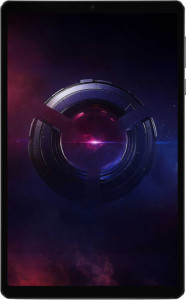
Lenovo Legion Tab Gen 3
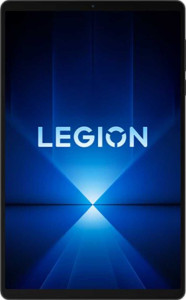
Lenovo Legion Y700 (Gen 4)

Lenovo Legion Tab Gen 3 Lenovo Legion Y700 (Gen 4)

Overview

Welcome to our detailed spec comparison between the Lenovo Legion Tab Gen 3 and the Lenovo Legion Y700 (Gen 4), two compact gaming tablets that share the same 8.8″ 165Hz IPS display size but diverge significantly in key areas. In this head-to-head, we examine their differences in raw processing power, display sharpness, battery capacity, camera hardware, and audio codec support to help you decide which device best fits your gaming and productivity needs.

Common Features

  • Neither product includes a stylus.
  • Neither product has a detachable keyboard.
  • Neither product has a backlit keyboard.
  • Neither product offers water resistance.
  • Neither product has tilt sensitivity.
  • Both products have an 8.8″ screen size.
  • Both products use an LCD IPS display type.
  • Both products have a 165Hz refresh rate.
  • Neither product has branded damage-resistant glass.
  • Neither product supports HDR10.
  • Both products have a touch screen.
  • Neither product has a sapphire glass display.
  • Neither product supports HDR10+.
  • Both products come with 16GB of RAM.
  • Neither product has an external memory slot.
  • Both products support 64-bit processing.
  • Both products have integrated LTE.
  • Both products use big.LITTLE technology.
  • Both products support OpenGL version 3.2.
  • Both products support DirectX 12.
  • Both products have integrated graphics.
  • Both products have an 8MP front camera.
  • Both products have a flash.
  • Both products have a front camera.
  • Both products have a built-in HDR mode.
  • Neither product can create panoramas in-camera.
  • Neither product supports slow-motion video recording.
  • Both products have touch autofocus.
  • Neither product has optical zoom.
  • Neither product supports aptX HD.
  • Neither product supports aptX Low Latency.
  • Neither product supports aptX Adaptive.
  • Neither product supports aptX Lossless.
  • Both products have stereo speakers.
  • Neither product has a 3.5mm audio jack.
  • Neither product has a radio.
  • Neither product supports wireless charging.
  • Both products have a battery level indicator.
  • Both products have a rechargeable battery.
  • Neither product has a removable battery.
  • Neither product has Mail Privacy Protection.
  • Both products have on-device machine learning.
  • Both products have clipboard warnings.
  • Both products have location privacy options.
  • Both products have camera and microphone privacy options.
  • Both products can block app tracking.
  • Neither product blocks cross-site tracking.
  • Both products support split screen.
  • Both products use DDR5 memory.
  • Both products use multithreading.

Main Differences

  • Weight is 350g on Lenovo Legion Tab Gen 3 and 340g on Lenovo Legion Y700 (Gen 4).
  • Thickness is 7.8mm on Lenovo Legion Tab Gen 3 and 7mm on Lenovo Legion Y700 (Gen 4).
  • Resolution is 2560 x 1600 px on Lenovo Legion Tab Gen 3 and 3040 x 1904 px on Lenovo Legion Y700 (Gen 4).
  • Pixel density is 343 ppi on Lenovo Legion Tab Gen 3 and 408 ppi on Lenovo Legion Y700 (Gen 4).
  • Anti-reflection coating is present on Lenovo Legion Tab Gen 3 but not available on Lenovo Legion Y700 (Gen 4).
  • Internal storage is 512GB on Lenovo Legion Tab Gen 3 and 1024GB on Lenovo Legion Y700 (Gen 4).
  • The chipset is Qualcomm Snapdragon 8 Gen 3 on Lenovo Legion Tab Gen 3 and Qualcomm Snapdragon 8 Elite on Lenovo Legion Y700 (Gen 4).
  • The GPU is Adreno 750 on Lenovo Legion Tab Gen 3 and Adreno 830 on Lenovo Legion Y700 (Gen 4).
  • CPU speed is 3 x 3.15 & 2 x 2.96 & 2 x 2.26 & 1 x 3.3 GHz on Lenovo Legion Tab Gen 3 and 2 x 4.32 & 6 x 3.53 GHz on Lenovo Legion Y700 (Gen 4).
  • Geekbench 6 multi-core score is 7325 on Lenovo Legion Tab Gen 3 and 10059 on Lenovo Legion Y700 (Gen 4).
  • Geekbench 6 single-core score is 2213 on Lenovo Legion Tab Gen 3 and 3234 on Lenovo Legion Y700 (Gen 4).
  • Semiconductor size is 4nm on Lenovo Legion Tab Gen 3 and 3nm on Lenovo Legion Y700 (Gen 4).
  • GPU clock speed is 900 MHz on Lenovo Legion Tab Gen 3 and 1100 MHz on Lenovo Legion Y700 (Gen 4).
  • L2 cache is 1MB on Lenovo Legion Tab Gen 3 and 12MB on Lenovo Legion Y700 (Gen 4).
  • RAM speed is 4800 MHz on Lenovo Legion Tab Gen 3 and 5300 MHz on Lenovo Legion Y700 (Gen 4).
  • Supported external displays is 1 on Lenovo Legion Tab Gen 3 and 2 on Lenovo Legion Y700 (Gen 4).
  • Android version is Android 14 on Lenovo Legion Tab Gen 3 and Android 15 on Lenovo Legion Y700 (Gen 4).
  • Main camera resolution is 13 & 2 MP on Lenovo Legion Tab Gen 3 and 50 MP on Lenovo Legion Y700 (Gen 4).
  • A CMOS sensor is present on Lenovo Legion Tab Gen 3 but not on Lenovo Legion Y700 (Gen 4).
  • Serial shot mode is available on Lenovo Legion Tab Gen 3 but not on Lenovo Legion Y700 (Gen 4).
  • aptX support is present on Lenovo Legion Tab Gen 3 but not available on Lenovo Legion Y700 (Gen 4).
  • LDAC support is present on Lenovo Legion Tab Gen 3 but not available on Lenovo Legion Y700 (Gen 4).
  • Battery capacity is 6550 mAh on Lenovo Legion Tab Gen 3 and 7600 mAh on Lenovo Legion Y700 (Gen 4).
  • Fast charging is supported on Lenovo Legion Tab Gen 3 but not on Lenovo Legion Y700 (Gen 4).
  • App offloading is available on Lenovo Legion Y700 (Gen 4) but not on Lenovo Legion Tab Gen 3.
  • GPS is present on Lenovo Legion Tab Gen 3 but not on Lenovo Legion Y700 (Gen 4).
  • Galileo navigation support is present on Lenovo Legion Tab Gen 3 but not on Lenovo Legion Y700 (Gen 4).
Specs Comparison
Lenovo Legion Tab Gen 3

Lenovo Legion Tab Gen 3

Lenovo Legion Y700 (Gen 4)

Lenovo Legion Y700 (Gen 4)

Design:
weight 350 g 340 g
thickness 7.8 mm 7 mm
Stylus included
Has a detachable keyboard
Has a backlit keyboard
water resistance None None
Has tilt sensitivity

In terms of design, the two tablets share the same DNA — neither includes a stylus, detachable keyboard, backlit keyboard, tilt sensitivity, or any form of water resistance. For users hoping for productivity accessories or outdoor durability out of the box, both fall equally short on those fronts.

The meaningful differences come down to physical form factor. The Lenovo Legion Y700 (Gen 4) is both lighter at 340 g versus 350 g and notably slimmer at 7 mm versus 7.8 mm. While a 10 g weight gap is barely perceptible in a static hold, the 0.8 mm reduction in thickness is more tangible — it contributes to a sleeker profile that feels more refined in hand and slides more easily into a bag or case.

The Y700 Gen 4 holds a clear, if modest, design edge. Neither device offers premium physical features like water resistance or stylus support, so the advantage is purely about portability and form — and on both counts, the Y700 Gen 4 is the more refined package.

Display:
screen size 8.8" 8.8"
resolution 2560 x 1600 px 3040 x 1904 px
pixel density 343 ppi 408 ppi
Display type LCD, IPS LCD, IPS
refresh rate 165Hz 165Hz
has branded damage-resistant glass
has anti-reflection coating
supports HDR10
has a touch screen
Has sapphire glass display
supports HDR10+
supports Dolby Vision
Has an e-paper display

Both tablets share the same 8.8-inch IPS LCD panel with an identical 165Hz refresh rate, meaning motion clarity and panel technology are on equal footing. Neither supports HDR10, HDR10+, or Dolby Vision, so color volume and dynamic range are similarly constrained on both devices.

Where the Y700 Gen 4 pulls ahead is resolution. Its 3040 x 1904 panel delivers a pixel density of 408 ppi, compared to the Legion Tab Gen 3's 2560 x 1600 at 343 ppi — a 65 ppi gap that is genuinely visible when reading fine text, viewing detailed images, or using the tablet at close range. At under 9 inches, pixel density matters more than on larger screens, making this a meaningful real-world advantage. The trade-off worth noting is that the Legion Tab Gen 3 includes an anti-reflection coating, which the Y700 Gen 4 lacks — giving the Gen 3 a practical edge in bright or mixed-lighting environments where glare can otherwise wash out the screen.

This group comes down to a direct trade-off: the Y700 Gen 4 wins on sharpness, while the Legion Tab Gen 3 counters with better glare management. For users who primarily work indoors or in controlled lighting, the Y700 Gen 4's higher pixel density is the stronger asset. For those who use their tablet in varied lighting conditions, the Gen 3's anti-reflection coating adds everyday usability that raw resolution cannot compensate for.

Performance:
internal storage 512GB 1024GB
RAM 16GB 16GB
Chipset (SoC) name Qualcomm Snapdragon 8 Gen 3 Qualcomm Snapdragon 8 Elite
GPU name Adreno 750 Adreno 830
CPU speed 3 x 3.15 & 2 x 2.96 & 2 x 2.26 & 1 x 3.3 GHz 2 x 4.32 & 6 x 3.53 GHz
Geekbench 6 result (multi) 7325 10059
Geekbench 6 result (single) 2213 3234
has an external memory slot
semiconductor size 4 nm 3 nm
Supports 64-bit
Has integrated LTE
Uses big.LITTLE technology
OpenGL version 3.2 3.2
DirectX version DirectX 12 DirectX 12
Has integrated graphics
GPU clock speed 900 MHz 1100 MHz
L2 cache 1 MB 12 MB
CPU threads 8 threads 8 threads
RAM speed 4800 MHz 5300 MHz
Has TrustZone
maximum memory amount 24GB 24GB
supported displays 1 2
Android version Android 14 Android 15
Thermal Design Power (TDP) 12.5W 8.2W
Uses HMP
L3 cache 12 MB 8 MB
maximum memory bandwidth 76.6 GB/s 85.1 GB/s
memory channels 2 2
OpenGL ES version 3.2 3.2
OpenCL version 2 3

The generational chip gap here is substantial. The Legion Tab Gen 3 runs on the Snapdragon 8 Gen 3 built on a 4 nm process, while the Y700 Gen 4 steps up to the Snapdragon 8 Elite on a 3 nm node — Qualcomm's most powerful mobile platform at the time of its release. The Geekbench 6 scores tell the story clearly: the Y700 Gen 4 posts a multi-core score of 10,059 versus the Gen 3's 7,325, and a single-core score of 3,234 versus 2,213. That is a roughly 37% and 46% lead respectively — differences that translate directly into faster app launches, snappier UI responsiveness, and more headroom for sustained workloads like gaming or video editing.

The GPU upgrade is equally significant. The Y700 Gen 4's Adreno 830 runs at 1,100 MHz compared to the Gen 3's Adreno 750 at 900 MHz, and its memory bandwidth reaches 85.1 GB/s versus 76.6 GB/s — advantages that matter in graphically intensive gaming scenarios. Compounding this, the Y700 Gen 4 achieves all of this at a lower TDP of 8.2W versus 12.5W, meaning it delivers more performance per watt, which typically correlates with better sustained performance under thermal pressure and less heat buildup during extended sessions. Storage capacity also doubles to 1TB on the Y700 Gen 4, a practical edge for users who store large game libraries or media locally. Both devices share 16GB of RAM, though the Y700 Gen 4's faster 5,300 MHz memory speed versus 4,800 MHz adds a further, if incremental, throughput advantage.

The Y700 Gen 4 wins this category decisively and across every meaningful dimension — raw CPU and GPU performance, efficiency, storage, and memory speed. For performance-focused users, the gap is wide enough to be a defining factor in the purchase decision.
Cameras:
megapixels (main camera) 13 & 2 MP 50 MP
megapixels (front camera) 8MP 8MP
has a flash
has a front camera
has a built-in HDR mode
can create panoramas in-camera
supports slow-motion video recording
has touch autofocus
optical zoom 0x 0x
has a BSI sensor
has manual white balance
has a CMOS sensor
supports HDR10 recording
has continuous autofocus when recording movies
supports Dolby Vision recording
Has a front-facing LED flash
number of flash LEDs 1 1
has manual ISO
has a video light
Has timelapse function
Shoots 360° panorama
has a serial shot mode
has built-in optical image stabilization
has 3D photo/video recording capabilities
Has a dual-tone LED flash
has manual focus
Has a RGB LED flash
has manual exposure
has manual shutter speed

The most striking difference in this category is the rear camera resolution. The Legion Tab Gen 3 sports a dual-camera setup of 13 MP + 2 MP, while the Y700 Gen 4 consolidates to a single but significantly higher-resolution 50 MP main shooter. On paper, 50 MP allows for far more detail capture and greater flexibility when cropping shots — though it is worth noting that megapixels alone do not determine image quality, and neither device includes optical image stabilization or optical zoom, which limits their versatility regardless of resolution.

The shared feature set is extensive: both tablets offer the same 8 MP front camera, HDR mode, touch autofocus, continuous autofocus during video, manual white balance, manual ISO, manual focus, and manual exposure. Neither supports slow-motion recording, panoramas, timelapse, or HDR10 video. One minor trade-off is that the Legion Tab Gen 3 includes a serial shot mode (burst shooting) which the Y700 Gen 4 lacks — a small but practical omission for capturing fast-moving subjects.

Overall, the Y700 Gen 4 holds the camera edge primarily through its 50 MP main sensor, which offers substantially more resolution headroom than the Gen 3's 13 MP primary lens. However, given that cameras are rarely a primary use case for gaming-oriented tablets, and that both devices share identical front cameras and similar feature sets, the practical real-world gap for most users is narrower than the spec sheet suggests.

Audio:
has aptX
has aptX HD
has LDAC
has aptX Low Latency
has aptX Adaptive
has aptX Lossless
has stereo speakers
has a socket for a 3.5 mm audio jack
Has a radio

Audio hardware is largely matched between these two tablets — both feature stereo speakers and neither includes a 3.5 mm headphone jack or radio. For wired audio enthusiasts, that omission on both devices means a Bluetooth or USB-C adapter is the only path to headphones.

Where the Legion Tab Gen 3 carves out a clear advantage is in wireless audio codec support. It offers both aptX and LDAC, while the Y700 Gen 4 supports none of the listed high-quality Bluetooth codecs. This is a meaningful gap: LDAC in particular transmits audio at up to three times the bitrate of standard SBC, which translates to noticeably higher fidelity when paired with compatible wireless headphones. aptX similarly offers lower latency and better quality than the baseline codec. For users who prioritize wireless audio quality — whether for music, gaming audio, or media consumption — the Gen 3's codec support is a tangible, practical advantage the Y700 Gen 4 simply cannot match.

The Legion Tab Gen 3 wins this category. Shared stereo speakers keep speaker output level, but the Gen 3's LDAC and aptX support gives it a decisive edge for anyone using Bluetooth headphones, which is an increasingly common use case on tablets without a headphone jack.

Battery:
battery power 6550 mAh 7600 mAh
Supports fast charging
has wireless charging
has a battery level indicator
has a rechargeable battery
has a removable battery

Battery capacity favors the Y700 Gen 4, which packs a 7,600 mAh cell compared to the Legion Tab Gen 3's 6,550 mAh — a 1,050 mAh difference that represents roughly 16% more stored energy. All else being equal, that translates to meaningfully longer screen-on time between charges, a real advantage for extended gaming or media sessions away from an outlet.

The trade-off, however, is significant: the Legion Tab Gen 3 supports fast charging, while the Y700 Gen 4 does not. In practical terms, this means the Gen 3 can recover battery quickly during short breaks, reducing downtime even if its overall capacity is smaller. The Y700 Gen 4's larger battery takes longer to replenish, which can be a friction point for users who frequently need a quick top-up. Neither device offers wireless charging or a removable battery, so both are equally constrained on those fronts.

This category comes down to a genuine use-case trade-off. The Y700 Gen 4 is the stronger choice for users who prioritize raw longevity and can plan their charging around longer intervals, while the Legion Tab Gen 3 suits those who value the flexibility of fast charging to quickly restore battery on demand. There is no outright winner — the right pick depends entirely on how and where each user charges their device.

Connectivity & Features:
release date January 2025 May 2025
has Mail Privacy Protection
has on-device machine learning
has clipboard warnings
has location privacy options
has camera/microphone privacy options
can block app tracking
blocks cross-site tracking
supports split screen
has Live Text
has notification permissions
has full-page screenshots
has Quick Start
has theme customization
has Wi-Fi password sharing
has PiP
Can play games while they download
has an extra dim mode
can offload apps
has focus modes
has media picker
has dynamic theming
has dark mode
has battery health check
Has USB Type-C
has a cellular module
has 5G support
is a multi-user system
gets direct OS updates
has GPS
has a child lock
has an HDMI output
has NFC
USB version 3.2 3.2
Supports widgets
download speed 10000 MBits/s 10000 MBits/s
Is free and open source
Has offline voice recognition
upload speed 3500 MBits/s 3500 MBits/s
supports Wi-Fi
Has sharing intents
Has customizable notifications
Uses 3D facial recognition
supports Galileo
Has a barometer
has voice commands
Has an iris scanner
Has a built-in projector
supports Ethernet
Has an infrared sensor
Tracks the current position of a mobile device

Across connectivity and software features, these two tablets are remarkably well-matched — identical Wi-Fi speeds, the same USB 3.2 Type-C port, and a near-identical software feature set covering split-screen, Picture-in-Picture, dark mode, dynamic theming, customizable notifications, and privacy controls. Neither includes NFC, cellular, 5G, or HDMI output, so both are equally positioned as Wi-Fi-only tablets with no wired display output.

The differences that do exist are pointed. The Legion Tab Gen 3 includes GPS and Galileo satellite navigation support, while the Y700 Gen 4 has neither — a notable omission given that both devices claim the ability to track current position. Without dedicated GPS hardware, location accuracy on the Y700 Gen 4 relies entirely on Wi-Fi positioning, which is far less precise and non-functional outdoors away from known networks. For any navigation or location-dependent use case, this gives the Gen 3 a meaningful real-world advantage. Conversely, the Y700 Gen 4 gains the ability to offload apps — freeing up storage by removing infrequently used apps while retaining their data — a handy storage management tool the Gen 3 lacks.

On balance, the Legion Tab Gen 3 holds the edge in this category. The addition of GPS and Galileo is a more impactful differentiator than app offloading, particularly given that the Y700 Gen 4 already offers double the internal storage. Losing satellite navigation on a device that otherwise claims location tracking capability is a significant functional gap that app offloading alone does not compensate for.

Miscellaneous:
DDR memory version 5 5
uses multithreading

The Miscellaneous group offers no differentiation between these two tablets. Both use DDR5 memory and support multithreading — and that is the entirety of the data available here. These are shared baselines rather than competitive differentiators, and no advantage can be assigned to either device based solely on these specs.

This is a clear tie, and users should weigh the other specification groups — particularly Performance, Display, and Connectivity — when making their final decision between the two.

Comparison Summary & Verdict

Both tablets occupy the same gaming-focused niche, but they cater to different priorities. The Lenovo Legion Y700 (Gen 4) pulls ahead in pure performance, boasting the newer Snapdragon 8 Elite chipset, a sharper 408 ppi display, double the internal storage at 1TB, a larger 7600 mAh battery, and support for two external displays — making it the stronger choice for enthusiasts who demand top-tier power. The Lenovo Legion Tab Gen 3, on the other hand, offers meaningful advantages of its own: it includes fast charging support, an anti-reflection display coating, GPS and Galileo navigation, LDAC and aptX audio codecs, and a CMOS camera sensor with serial shot mode — making it a more well-rounded option for users who value versatility and everyday usability alongside gaming.

Lenovo Legion Tab Gen 3
Buy Lenovo Legion Tab Gen 3 if...

Buy the Lenovo Legion Tab Gen 3 if you need fast charging, GPS support, and high-quality audio codec options like LDAC and aptX, alongside solid gaming performance.

Lenovo Legion Y700 (Gen 4)
Buy Lenovo Legion Y700 (Gen 4) if...

Buy the Lenovo Legion Y700 (Gen 4) if you want the most powerful chipset, a sharper display, more storage, and a larger battery for intensive gaming sessions.