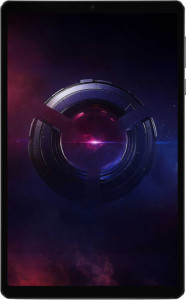
Lenovo Legion Tab Gen 3
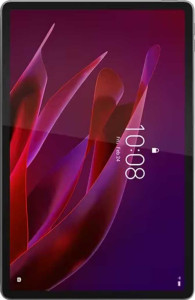
Lenovo Yoga Tab

Lenovo Legion Tab Gen 3 Lenovo Yoga Tab

Overview

Welcome to our in-depth spec comparison between the Lenovo Legion Tab Gen 3 and the Lenovo Yoga Tab. Both tablets share the same powerful Snapdragon chipset and Wi-Fi 7 connectivity, yet they take very different approaches to display size, portability, and everyday versatility. Read on as we break down every key specification to help you decide which of these two Lenovo tablets best fits your needs.

Common Features

  • Both tablets use an LCD IPS display type.
  • HDR10 support is not available on either product.
  • HDR10+ support is not available on either product.
  • Both tablets feature a touchscreen display.
  • Sapphire glass is not present on either product.
  • An e-paper display is not featured on either product.
  • Both tablets share the same GPU, the Adreno 750.
  • Both tablets share the same CPU speed of 3 x 3.15 & 2 x 2.96 & 2 x 2.26 & 1 x 3.3 GHz.
  • Both tablets achieved a Geekbench 6 multi-core score of 7325.
  • Both tablets achieved a Geekbench 6 single-core score of 2213.
  • Neither tablet has an external memory slot.
  • Both tablets are built on a 4 nm semiconductor process.
  • 64-bit support is available on both products.
  • Integrated LTE is present on both tablets.
  • The main camera on both tablets is 13 & 2 MP.
  • A flash is present on both tablets.
  • A front camera is available on both tablets.
  • A built-in HDR mode is available on both tablets.
  • Neither tablet supports slow-motion video recording.
  • Stereo speakers are present on both tablets.
  • A 3.5 mm audio jack is not available on either tablet.
  • Both tablets have 2 microphones.
  • Wireless charging is not available on either tablet.
  • A removable battery is not featured on either tablet.
  • Both tablets support Wi-Fi 4, Wi-Fi 5, Wi-Fi 6, and Wi-Fi 7.
  • On-device machine learning is supported on both tablets.
  • Location privacy options are available on both tablets.
  • Camera and microphone privacy options are present on both tablets.
  • App tracking can be blocked on both tablets.
  • Both tablets use DDR5 memory.
  • Multithreading is supported on both tablets.

Main Differences

  • Weight is 350 g on Lenovo Legion Tab Gen 3 and 458 g on Lenovo Yoga Tab.
  • Thickness is 7.8 mm on Lenovo Legion Tab Gen 3 and 8.3 mm on Lenovo Yoga Tab.
  • Width is 208.54 mm on Lenovo Legion Tab Gen 3 and 255.5 mm on Lenovo Yoga Tab.
  • Height is 129.46 mm on Lenovo Legion Tab Gen 3 and 165.8 mm on Lenovo Yoga Tab.
  • Volume is 210.58 cm³ on Lenovo Legion Tab Gen 3 and 351.60 cm³ on Lenovo Yoga Tab.
  • A stylus is included with Lenovo Yoga Tab but not with Lenovo Legion Tab Gen 3.
  • A detachable keyboard is included with Lenovo Yoga Tab but not with Lenovo Legion Tab Gen 3.
  • Screen size is 8.8″ on Lenovo Legion Tab Gen 3 and 11.1″ on Lenovo Yoga Tab.
  • Resolution is 2560 x 1600 px on Lenovo Legion Tab Gen 3 and 3200 x 2000 px on Lenovo Yoga Tab.
  • Pixel density is 343 ppi on Lenovo Legion Tab Gen 3 and 340 ppi on Lenovo Yoga Tab.
  • Refresh rate is 165 Hz on Lenovo Legion Tab Gen 3 and 144 Hz on Lenovo Yoga Tab.
  • Branded damage-resistant glass is present on Lenovo Yoga Tab but not on Lenovo Legion Tab Gen 3.
  • An anti-reflection coating is present on Lenovo Legion Tab Gen 3 but not on Lenovo Yoga Tab.
  • Typical brightness is 500 nits on Lenovo Legion Tab Gen 3 and 650 nits on Lenovo Yoga Tab.
  • Dolby Vision support is available on Lenovo Yoga Tab but not on Lenovo Legion Tab Gen 3.
  • Internal storage is 512 GB on Lenovo Legion Tab Gen 3 and 256 GB on Lenovo Yoga Tab.
  • RAM is 16 GB on Lenovo Legion Tab Gen 3 and 12 GB on Lenovo Yoga Tab.
  • Android version is Android 14 on Lenovo Legion Tab Gen 3 and Android 15 on Lenovo Yoga Tab.
  • Front camera resolution is 8 MP on Lenovo Legion Tab Gen 3 and 13 MP on Lenovo Yoga Tab.
  • A serial shot mode is available on Lenovo Legion Tab Gen 3 but not on Lenovo Yoga Tab.
  • aptX support is present on Lenovo Legion Tab Gen 3 but not on Lenovo Yoga Tab.
  • LDAC support is present on Lenovo Legion Tab Gen 3 but not on Lenovo Yoga Tab.
  • Battery capacity is 6550 mAh on Lenovo Legion Tab Gen 3 and 8860 mAh on Lenovo Yoga Tab.
  • Fast charging is supported on Lenovo Legion Tab Gen 3 but not on Lenovo Yoga Tab.
  • App offloading is supported on Lenovo Yoga Tab but not on Lenovo Legion Tab Gen 3.
  • GPS is present on Lenovo Legion Tab Gen 3 but not on Lenovo Yoga Tab.
  • A compass is present on Lenovo Legion Tab Gen 3 but not on Lenovo Yoga Tab.
  • Galileo navigation support is available on Lenovo Legion Tab Gen 3 but not on Lenovo Yoga Tab.
Specs Comparison
Lenovo Legion Tab Gen 3

Lenovo Legion Tab Gen 3

Lenovo Yoga Tab

Lenovo Yoga Tab

Design:
weight 350 g 458 g
thickness 7.8 mm 8.3 mm
width 208.54 mm 255.5 mm
height 129.46 mm 165.8 mm
volume 210.58118952 cm³ 351.60377 cm³
Stylus included
Has a detachable keyboard
Has a backlit keyboard
water resistance None None
Has tilt sensitivity

The most immediate physical difference between these two tablets is size and weight. The Legion Tab Gen 3 is a noticeably more compact device — 350 g and a footprint of roughly 208 × 129 mm — while the Yoga Tab is substantially larger at 255 × 165 mm and heavier at 458 g. That 108 g gap is meaningful in daily use: the Legion Tab Gen 3 is far easier to hold one-handed for extended sessions, and its smaller volume (210.6 cm³ vs 351.6 cm³) makes it a more pocketable, travel-friendly device. The Yoga Tab, by contrast, feels closer in footprint to a small laptop and is better suited to a desk or bag.

Where the Yoga Tab reclaims significant ground is in bundled accessories. It ships with an included stylus and supports a detachable keyboard — two features entirely absent on the Legion Tab Gen 3. This positions the Yoga Tab as a genuine productivity tool out of the box, capable of handling note-taking and document work without any additional purchase. The Legion Tab Gen 3 offers none of that ecosystem. Neither tablet includes water resistance or a backlit keyboard, so those are non-factors in differentiating the two.

The winner in this group depends entirely on use case. For portability and one-handed comfort, the Legion Tab Gen 3 has a clear edge. For desk-oriented productivity with pen and keyboard input, the Yoga Tab holds a substantial advantage thanks to its included accessories — though users will need to accept the added bulk and weight that come with that larger, more versatile form factor.

Display:
screen size 8.8" 11.1"
resolution 2560 x 1600 px 3200 x 2000 px
pixel density 343 ppi 340 ppi
Display type LCD, IPS LCD, IPS
refresh rate 165Hz 144Hz
has branded damage-resistant glass
has anti-reflection coating
supports HDR10
brightness (typical) 500 nits 650 nits
has a touch screen
Has sapphire glass display
supports HDR10+
supports Dolby Vision
Has an e-paper display

Both tablets use LCD IPS panels, so neither has the contrast or color depth advantage that an OLED display would bring. Within that shared technology, though, they diverge in meaningful ways. The Yoga Tab offers a larger 11.1″ screen at 3200 x 2000 px, while the Legion Tab Gen 3 packs a 2560 x 1600 px image into a smaller 8.8″ panel. The result is near-identical pixel density — 343 ppi vs 340 ppi — meaning sharpness in everyday use is effectively a wash. The Yoga Tab's real visual advantage is its higher typical brightness of 650 nits versus 500 nits, which translates to noticeably better legibility in well-lit or outdoor environments, and it also adds Dolby Vision support for compatible streaming content.

The Legion Tab Gen 3 counters with a faster 165Hz refresh rate against the Yoga Tab's 144Hz. The practical gap between these two rates is subtle for most users, but for fast-paced gaming — which is squarely this tablet's target audience — that extra headroom can reduce perceived motion blur. The Legion Tab Gen 3 also includes an anti-reflection coating, which partially compensates for its lower brightness by cutting glare rather than overpowering it. The Yoga Tab takes the opposite approach: no anti-reflection coating, but it does feature branded damage-resistant glass, offering better protection against scratches and everyday knocks.

On balance, neither display is dominant across the board — they trade blows depending on priority. Users who care about brightness, screen real estate, and durability lean toward the Yoga Tab. Those who prioritize refresh rate smoothness and glare reduction in a gaming context will find the Legion Tab Gen 3 better suited to their needs. It is a closer call than the raw specs might suggest, but the Yoga Tab holds a slight overall edge for general media consumption thanks to its brighter panel and Dolby Vision certification.

Performance:
internal storage 512GB 256GB
RAM 16GB 12GB
GPU name Adreno 750 Adreno 750
CPU speed 3 x 3.15 & 2 x 2.96 & 2 x 2.26 & 1 x 3.3 GHz 3 x 3.15 & 2 x 2.96 & 2 x 2.26 & 1 x 3.3 GHz
Geekbench 6 result (multi) 7325 7325
Geekbench 6 result (single) 2213 2213
has an external memory slot
semiconductor size 4 nm 4 nm
Supports 64-bit
Has integrated LTE
Uses big.LITTLE technology
OpenGL version 3.2 3.2
DirectX version DirectX 12 DirectX 12
Has integrated graphics
GPU clock speed 900 MHz 900 MHz
L2 cache 1 MB 1 MB
CPU threads 8 threads 8 threads
RAM speed 4800 MHz 4800 MHz
Has TrustZone
maximum memory amount 24GB 24GB
supported displays 1 1
OpenVG version 1.2 1.2
Android version Android 14 Android 15
Thermal Design Power (TDP) 12.5W 12.5W
GPU execution units 3 3
Uses HMP
L3 cache 12 MB 12 MB
maximum memory bandwidth 76.6 GB/s 76.6 GB/s
memory channels 2 2
OpenGL ES version 3.2 3.2
eMMC version 5.1 5.1
OpenCL version 2 2

At the silicon level, these two tablets are identical. Both run the same chipset built on a 4 nm process, with the same 8-thread CPU configuration, the same Adreno 750 GPU clocked at 900 MHz, and — unsurprisingly — the same benchmark results: 7325 multi-core and 2213 single-core on Geekbench 6. Raw processing power, graphics capability, and thermal envelope are all perfectly matched, so neither tablet has any advantage in tasks like gaming, video decoding, or sustained workloads.

The differentiators here are memory and storage. The Legion Tab Gen 3 ships with 16 GB of RAM and 512 GB of internal storage, compared to the Yoga Tab's 12 GB and 256 GB. That 4 GB RAM gap matters most for heavy multitasking and gaming — more RAM allows more apps to stay active in the background without being force-closed, and it gives the system more headroom when running memory-intensive titles. The storage difference is equally significant: 512 GB versus 256 GB is a doubling, and with no external memory slot on either device, that extra capacity cannot be added later. The Yoga Tab counters with Android 15 out of the box, one version ahead of the Legion Tab Gen 3's Android 14, which may mean a longer software support runway — though this depends on Lenovo's update policy, which falls outside the provided data.

The Legion Tab Gen 3 holds a clear performance-tier edge in this group. The chipset parity means the gap will never show up in benchmarks or raw speed, but the advantages in RAM and storage are practical and persistent — especially given the lack of expandable storage on both devices. The Yoga Tab's newer Android version is a meaningful footnote, but it does not offset the memory and capacity lead of the Legion Tab Gen 3.

Cameras:
megapixels (main camera) 13 & 2 MP 13 & 2 MP
megapixels (front camera) 8MP 13MP
has a flash
has a front camera
has a built-in HDR mode
can create panoramas in-camera
supports slow-motion video recording
has touch autofocus
optical zoom 0x 0x
has a BSI sensor
has manual white balance
has a CMOS sensor
supports HDR10 recording
has continuous autofocus when recording movies
supports Dolby Vision recording
Has a front-facing LED flash
number of flash LEDs 1 1
has manual ISO
has a video light
Has timelapse function
Shoots 360° panorama
has a serial shot mode
has built-in optical image stabilization
has 3D photo/video recording capabilities
Has a dual-tone LED flash
has manual focus
Has a RGB LED flash
has manual exposure
has manual shutter speed

Camera systems on tablets are rarely a primary purchase driver, and these two are close enough that the comparison is brief. Both the Legion Tab Gen 3 and the Yoga Tab share an identical rear setup — a 13 MP + 2 MP dual-camera configuration with flash, touch autofocus, continuous autofocus during video, and a solid set of manual controls including ISO, white balance, exposure, and focus. Neither offers optical zoom or optical image stabilization, and both skip slow-motion video and timelapse. For a rear-camera shootout, there is simply nothing to separate them.

The only two differentiators in this group cut one way each. The Yoga Tab sports a 13 MP front camera — a meaningful step up from the Legion Tab Gen 3's 8 MP selfie shooter, and particularly relevant for video calls, which are a common use case on larger tablets. Higher resolution on the front camera translates to a sharper, more detailed image for the person on the other end of the call. Flipping that around, the Legion Tab Gen 3 uniquely offers a serial shot mode (burst photography), which the Yoga Tab lacks — useful for capturing fast-moving subjects, though on a tablet this remains a niche feature.

Taken together, the Yoga Tab has a modest but practical edge in this category. The front camera resolution advantage is the more universally impactful difference given how tablets are actually used, while the Legion Tab Gen 3's burst mode is a minor consolation that few users will rely on regularly. Neither device, however, should be chosen primarily on camera merits — the specs here are functional rather than impressive on either side.

Audio:
has aptX
has aptX HD
has LDAC
has aptX Low Latency
has aptX Adaptive
has aptX Lossless
has stereo speakers
has a socket for a 3.5 mm audio jack
number of microphones 2 2
Has a radio

Wired audio is off the table for both devices — neither includes a 3.5 mm headphone jack, so wireless headphones are the only practical option for private listening. On that front, the Legion Tab Gen 3 pulls ahead clearly: it supports both aptX and LDAC, two high-quality Bluetooth audio codecs that the Yoga Tab lacks entirely. LDAC in particular is significant — developed by Sony, it transmits up to three times more data than standard SBC Bluetooth, which translates to audibly richer sound when paired with compatible headphones. aptX adds broader compatibility with a wide range of wireless audio gear. The Yoga Tab, by contrast, is limited to baseline Bluetooth audio codecs, which means it cannot take advantage of higher-quality wireless audio even if the headphones support it.

Away from headphones, the two tablets are evenly matched. Both deliver stereo speakers and dual microphones, and neither includes a radio. Speaker quality itself is not quantifiable from the provided specs, but the stereo setup on both ensures at least a spatially wider soundstage than a mono configuration — relevant for media consumption and gaming alike.

The Legion Tab Gen 3 has a clear advantage in this category, specifically for users who invest in quality wireless headphones. The inclusion of LDAC alone is a meaningful differentiator — it unlocks a higher tier of Bluetooth audio fidelity that the Yoga Tab simply cannot access. For speaker-only listeners, the two are functionally tied.

Battery:
battery power 6550 mAh 8860 mAh
Supports fast charging
has wireless charging
has a battery level indicator
has a rechargeable battery
has a removable battery

Battery is where these two tablets make a direct trade-off rather than one simply outclassing the other. The Yoga Tab carries a substantially larger 8860 mAh cell versus the Legion Tab Gen 3's 6550 mAh — a gap of over 2300 mAh that, all else being equal, points to meaningfully longer time between charges. Given that the Yoga Tab also has a larger, brighter display to power, the real-world endurance advantage may be somewhat narrower than the raw numbers suggest, but the capacity lead is still considerable.

The Legion Tab Gen 3 answers with fast charging support — a feature the Yoga Tab entirely lacks. In practical terms, this means that while the Yoga Tab takes longer to drain, the Legion Tab Gen 3 can recover from a low battery far more quickly. For a gaming-oriented device where session-based use is common, fast charging is a genuinely useful convenience: a short charge window between sessions can restore a meaningful percentage of battery, whereas the Yoga Tab users must plan their charging around longer, slower refills.

Neither product supports wireless charging, so that is a non-factor. Overall, the winner here depends on usage pattern: the Yoga Tab has the edge for raw endurance, making it more suited to long stretches away from a power source, while the Legion Tab Gen 3 is better suited to users who charge opportunistically and value speed over sheer capacity. Buyers who prioritize all-day battery life without access to a charger will find the Yoga Tab's larger cell the more reassuring option.

Connectivity & Features:
release date January 2025 September 2025
Wi-Fi version Wi-Fi 4 (802.11n), Wi-Fi 6 (802.11ax), Wi-Fi 5 (802.11ac), Wi-Fi 7 (802.11be) Wi-Fi 4 (802.11n), Wi-Fi 6 (802.11ax), Wi-Fi 5 (802.11ac), Wi-Fi 7 (802.11be)
has Mail Privacy Protection
has on-device machine learning
has clipboard warnings
has location privacy options
has camera/microphone privacy options
can block app tracking
blocks cross-site tracking
supports split screen
has Live Text
has notification permissions
has full-page screenshots
has Quick Start
has theme customization
has Wi-Fi password sharing
has PiP
Can play games while they download
has an extra dim mode
can offload apps
has focus modes
has media picker
has dynamic theming
has dark mode
has battery health check
Has USB Type-C
has a cellular module
has 5G support
is a multi-user system
gets direct OS updates
has GPS
has a child lock
has an HDMI output
has NFC
Has a fingerprint scanner
USB version 3.2 3.2
Supports widgets
Bluetooth version 5.4 5.4
download speed 10000 MBits/s 10000 MBits/s
has a gyroscope
Is free and open source
Has offline voice recognition
has a compass
upload speed 3500 MBits/s 3500 MBits/s
supports Wi-Fi
Has sharing intents
Has customizable notifications
Uses 3D facial recognition
supports Galileo
Has a barometer
has an accelerometer
has voice commands
Has an iris scanner
Has a built-in projector
supports Ethernet
Has an infrared sensor
Tracks the current position of a mobile device

Across the broad sweep of connectivity and software features, these two tablets are remarkably well-matched. Both support Wi-Fi 7 and Bluetooth 5.4 — the current top tier for wireless connectivity — alongside identical USB 3.2 Type-C ports, multi-user support, split-screen multitasking, Picture-in-Picture, and a consistent set of Android privacy controls. Neither includes NFC, a cellular module, or a fingerprint scanner, so those omissions apply equally. For the vast majority of connectivity and software use cases, users will find no practical difference between them.

The meaningful differentiators are few but worth noting. The Legion Tab Gen 3 includes GPS, a compass, and Galileo satellite support — the Yoga Tab has none of these. For a Wi-Fi-only tablet, dedicated navigation is an uncommon feature, but it does mean the Legion Tab Gen 3 can function as a standalone mapping device without a phone nearby. The Yoga Tab counters with the ability to offload apps — a storage management tool that removes an app's binary while preserving its data, freeing up space without losing user progress. Given that the Yoga Tab ships with less internal storage, this feature has practical utility for managing space over time.

On balance, the Legion Tab Gen 3 holds a slight edge in this category. Location hardware — GPS, compass, and Galileo — is a more impactful differentiator than app offloading, particularly since the Legion Tab Gen 3 already ships with double the storage, making space management a lesser concern. The Yoga Tab's offload feature is a sensible inclusion given its 256 GB capacity, but it addresses a limitation that the Legion Tab Gen 3 largely avoids by design.
Miscellaneous:
DDR memory version 5 5
uses multithreading

This category offers nothing to separate the two tablets. Both the Lenovo Legion Tab Gen 3 and the Lenovo Yoga Tab use DDR5 memory and support multithreading — and that is the entirety of the provided data. DDR5 is the current generation standard, offering higher bandwidth and improved power efficiency over DDR4, but since both devices share it equally, it confers no advantage to either side. The verdict here is an unambiguous tie, and buyers should weigh the other specification groups to inform their decision.

Comparison Summary & Verdict

After examining every specification, these two Lenovo tablets clearly target different users. The Lenovo Legion Tab Gen 3 stands out for those who value portability, offering a lighter 350 g frame, a blazing 165 Hz refresh rate, fast charging, superior audio with aptX and LDAC, GPS navigation, and a generous 512 GB of storage — making it a strong pick for gaming on the go. The Lenovo Yoga Tab, on the other hand, caters to productivity-focused users who want a larger 11.1-inch display with Dolby Vision, a bundled stylus and detachable keyboard, a massive 8860 mAh battery, a brighter 650-nit screen, and Android 15 out of the box. Choose the Legion Tab Gen 3 for a compact, performance-driven experience; opt for the Yoga Tab if a bigger screen and productivity accessories are your priority.

Lenovo Legion Tab Gen 3
Buy Lenovo Legion Tab Gen 3 if...

Buy the Lenovo Legion Tab Gen 3 if you want a lighter, more portable tablet with a faster 165 Hz display, fast charging, GPS support, and superior Bluetooth audio quality via aptX and LDAC.

Lenovo Yoga Tab
Buy Lenovo Yoga Tab if...

Buy the Lenovo Yoga Tab if you need a larger screen with Dolby Vision, a bundled stylus and detachable keyboard for productivity, and a much bigger battery for all-day use.