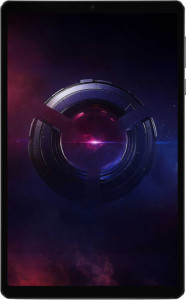
Lenovo Legion Tab Gen 3
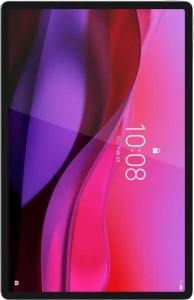
Lenovo Yoga Tab Plus

Lenovo Legion Tab Gen 3 Lenovo Yoga Tab Plus

Overview

Welcome to our in-depth spec comparison between the Lenovo Legion Tab Gen 3 and the Lenovo Yoga Tab Plus. These two tablets share the same powerful Qualcomm Snapdragon 8 Gen 3 chipset and 16GB of RAM, yet they take very different approaches when it comes to form factor and portability, display size, battery capacity, and productivity-oriented features. Whether you prioritize compact gaming performance or a larger, more versatile tablet experience, this comparison will help you find the right fit.

Common Features

  • Neither product has a backlit keyboard.
  • Both products feature an LCD IPS display type.
  • Neither product has branded damage-resistant glass on the display.
  • Both products have an anti-reflection coating on the display.
  • Neither product supports HDR10.
  • Both products have a touch screen.
  • Neither product has a sapphire glass display.
  • Neither product supports HDR10+.
  • Neither product has an e-paper display.
  • Both products come with 512GB of internal storage.
  • Both products include 16GB of RAM.
  • Both products are powered by the Qualcomm Snapdragon 8 Gen 3 chipset.
  • Both products use the Adreno 750 GPU.
  • Both products share the same CPU speed of 3 x 3.15 & 2 x 2.96 & 2 x 2.26 & 1 x 3.3 GHz.
  • Both products achieve a Geekbench 6 multi-core score of 7325.
  • Both products achieve a Geekbench 6 single-core score of 2213.
  • Neither product has an external memory slot.
  • Both products have a 13 & 2 MP main camera configuration.
  • Both products have a flash.
  • Both products have a front camera.
  • Both products have a built-in HDR mode.
  • Neither product can create panoramas in-camera.
  • Both products have touch autofocus.
  • Neither product has optical zoom.
  • Neither product has a BSI sensor.
  • Neither product supports aptX HD.
  • Neither product supports aptX Low Latency.
  • Neither product supports aptX Adaptive.
  • Neither product supports aptX Lossless.
  • Both products have stereo speakers.
  • Neither product has a 3.5mm audio jack.
  • Both products have 2 microphones.
  • Neither product has a radio.
  • Both products support fast charging.
  • Neither product has wireless charging.
  • Both products have a battery level indicator.
  • Both products have a rechargeable battery.
  • Neither product has a removable battery.
  • Neither product has Mail Privacy Protection.
  • Both products have on-device machine learning.
  • Both products have clipboard warnings.
  • Both products have location privacy options.
  • Both products have camera and microphone privacy options.
  • Both products can block app tracking.
  • Neither product blocks cross-site tracking.
  • Both products support split screen.
  • Both products use DDR5 memory.
  • Both products use multithreading.

Main Differences

  • Weight is 350g on Lenovo Legion Tab Gen 3 and 640g on Lenovo Yoga Tab Plus.
  • Thickness is 7.8mm on Lenovo Legion Tab Gen 3 and 8.5mm on Lenovo Yoga Tab Plus.
  • Width is 208.54mm on Lenovo Legion Tab Gen 3 and 290.9mm on Lenovo Yoga Tab Plus.
  • Height is 129.46mm on Lenovo Legion Tab Gen 3 and 188.3mm on Lenovo Yoga Tab Plus.
  • Volume is 210.58 cm³ on Lenovo Legion Tab Gen 3 and 465.60 cm³ on Lenovo Yoga Tab Plus.
  • A stylus is not included with Lenovo Legion Tab Gen 3 but is included with Lenovo Yoga Tab Plus.
  • A detachable keyboard is not available on Lenovo Legion Tab Gen 3 but is available on Lenovo Yoga Tab Plus.
  • Lenovo Legion Tab Gen 3 has no water resistance, while Lenovo Yoga Tab Plus is water resistant.
  • Tilt sensitivity is not present on Lenovo Legion Tab Gen 3 but is present on Lenovo Yoga Tab Plus.
  • Screen size is 8.8″ on Lenovo Legion Tab Gen 3 and 12.7″ on Lenovo Yoga Tab Plus.
  • Resolution is 2560 x 1600 px on Lenovo Legion Tab Gen 3 and 2944 x 1840 px on Lenovo Yoga Tab Plus.
  • Pixel density is 343 ppi on Lenovo Legion Tab Gen 3 and 273 ppi on Lenovo Yoga Tab Plus.
  • Refresh rate is 165Hz on Lenovo Legion Tab Gen 3 and 144Hz on Lenovo Yoga Tab Plus.
  • Touch sampling rate is 165Hz on Lenovo Legion Tab Gen 3 and 144Hz on Lenovo Yoga Tab Plus.
  • Typical brightness is 500 nits on Lenovo Legion Tab Gen 3 and 650 nits on Lenovo Yoga Tab Plus.
  • Dolby Vision support is not present on Lenovo Legion Tab Gen 3 but is present on Lenovo Yoga Tab Plus.
  • Front camera resolution is 8MP on Lenovo Legion Tab Gen 3 and 13MP on Lenovo Yoga Tab Plus.
  • Slow-motion video recording is not supported on Lenovo Legion Tab Gen 3 but is supported on Lenovo Yoga Tab Plus.
  • Serial shot mode is available on Lenovo Legion Tab Gen 3 but not available on Lenovo Yoga Tab Plus.
  • aptX support is present on Lenovo Legion Tab Gen 3 but not available on Lenovo Yoga Tab Plus.
  • LDAC support is present on Lenovo Legion Tab Gen 3 but not available on Lenovo Yoga Tab Plus.
  • Battery capacity is 6550 mAh on Lenovo Legion Tab Gen 3 and 10200 mAh on Lenovo Yoga Tab Plus.
  • Wi-Fi 7 (802.11be) is supported on Lenovo Legion Tab Gen 3, while Lenovo Yoga Tab Plus supports Wi-Fi 6E (802.11ax) instead.
  • GPS is present on Lenovo Legion Tab Gen 3 but not available on Lenovo Yoga Tab Plus.
  • USB version is 3.2 on Lenovo Legion Tab Gen 3 and 3.1 on Lenovo Yoga Tab Plus.
  • A compass is present on Lenovo Legion Tab Gen 3 but not available on Lenovo Yoga Tab Plus.
  • Galileo navigation support is present on Lenovo Legion Tab Gen 3 but not available on Lenovo Yoga Tab Plus.
Specs Comparison
Lenovo Legion Tab Gen 3

Lenovo Legion Tab Gen 3

Lenovo Yoga Tab Plus

Lenovo Yoga Tab Plus

Design:
weight 350 g 640 g
thickness 7.8 mm 8.5 mm
width 208.54 mm 290.9 mm
height 129.46 mm 188.3 mm
volume 210.58118952 cm³ 465.599995 cm³
Stylus included
Has a detachable keyboard
Has a backlit keyboard
water resistance None Water resistant
Has tilt sensitivity

The most immediately striking difference between these two tablets is their physical footprint. The Legion Tab Gen 3 weighs just 350 g and measures 7.8 mm thin, making it a compact, one-hand-friendly device suited for extended gaming or media sessions without fatigue. The Yoga Tab Plus, by contrast, tips the scales at 640 g — nearly double — and spans a significantly larger 290.9 × 188.3 mm frame. That extra mass and surface area are the direct result of accommodating a larger display and an integrated detachable keyboard, so the weight is purposeful rather than a flaw, but it does mean the Yoga Tab Plus is unambiguously a two-hand, desk-oriented device.

Where the Yoga Tab Plus pulls decisively ahead is in its accessory and input ecosystem. It ships with a stylus included and supports tilt sensitivity, making it a credible tool for digital illustration and precise annotation work. The detachable keyboard further pushes it into laptop-replacement territory. The Legion Tab Gen 3 offers none of these — no stylus, no keyboard, no tilt support — which clearly signals its gaming and entertainment focus rather than productivity. Additionally, the Yoga Tab Plus carries water resistance, a meaningful durability advantage the Legion Tab Gen 3 entirely lacks.

In summary, the Legion Tab Gen 3 has a clear edge in portability and handling comfort, while the Yoga Tab Plus dominates on design features and versatility. Neither is objectively superior — they target different use cases — but if raw portability matters most, the Legion wins; if productivity features and input flexibility are the priority, the Yoga Tab Plus is in a different class entirely.

Display:
screen size 8.8" 12.7"
resolution 2560 x 1600 px 2944 x 1840 px
pixel density 343 ppi 273 ppi
Display type LCD, IPS LCD, IPS
refresh rate 165Hz 144Hz
touch sampling rate 165Hz 144Hz
has branded damage-resistant glass
has anti-reflection coating
supports HDR10
brightness (typical) 500 nits 650 nits
has a touch screen
Has sapphire glass display
supports HDR10+
supports Dolby Vision
Has an e-paper display

Screen size is where these two tablets diverge most fundamentally. The Yoga Tab Plus sports a generous 12.7″ IPS LCD panel, while the Legion Tab Gen 3 tops out at 8.8″ — a difference substantial enough to completely reshape how each device is used. The Yoga Tab Plus's larger canvas is a natural fit for document editing, split-screen multitasking, and media consumption, whereas the Legion Tab's smaller panel reinforces its role as a portable, handheld-first device.

Sharpness, however, tilts in the Legion Tab Gen 3's favor. Despite the smaller screen, its 343 ppi pixel density comfortably outpaces the Yoga Tab Plus's 273 ppi, meaning text and fine detail appear noticeably crisper up close — a real advantage for handheld use at typical viewing distances. The Legion Tab also leads on responsiveness, with a 165Hz refresh rate and matching touch sampling rate versus the Yoga Tab Plus's 144Hz, translating to marginally smoother animations and more immediate touch feedback — a meaningful perk for gaming. On the flip side, the Yoga Tab Plus counters with higher 650 nits brightness compared to 500 nits on the Legion Tab, making it the stronger performer in well-lit or outdoor environments. It also uniquely supports Dolby Vision, giving it a tangible edge for streaming HDR content from compatible platforms.

Neither display is a clear sweep. The Legion Tab Gen 3 wins on pixel density and refresh rate — metrics that matter most for gaming and close-range use. The Yoga Tab Plus counters with a bigger, brighter panel and Dolby Vision support, making it the superior choice for media consumption and productivity. The right pick depends entirely on whether raw screen real estate and HDR fidelity or sharpness and responsiveness matter more to the user.

Performance:
internal storage 512GB 512GB
RAM 16GB 16GB
Chipset (SoC) name Qualcomm Snapdragon 8 Gen 3 Qualcomm Snapdragon 8 Gen 3
GPU name Adreno 750 Adreno 750
CPU speed 3 x 3.15 & 2 x 2.96 & 2 x 2.26 & 1 x 3.3 GHz 3 x 3.15 & 2 x 2.96 & 2 x 2.26 & 1 x 3.3 GHz
Geekbench 6 result (multi) 7325 7325
Geekbench 6 result (single) 2213 2213
has an external memory slot
semiconductor size 4 nm 4 nm
Supports 64-bit
Has integrated LTE
Uses big.LITTLE technology
OpenGL version 3.2 3.2
DirectX version DirectX 12 DirectX 12
Has integrated graphics
GPU clock speed 900 MHz 900 MHz
L2 cache 1 MB 1 MB
CPU threads 8 threads 8 threads
RAM speed 4800 MHz 4800 MHz
Has TrustZone
maximum memory amount 24GB 24GB
supported displays 1 1
OpenVG version 1.2 1.2
Android version Android 14 Android 14
Thermal Design Power (TDP) 12.5W 12.5W
GPU execution units 3 3
Uses HMP
L3 cache 12 MB 12 MB
maximum memory bandwidth 76.6 GB/s 76.6 GB/s
memory channels 2 2
OpenGL ES version 3.2 3.2
eMMC version 5.1 5.1
OpenCL version 2 2

Rarely does a side-by-side comparison yield a result this definitive: the Lenovo Legion Tab Gen 3 and the Lenovo Yoga Tab Plus are, by every measurable performance metric provided, identical. Both are powered by the Qualcomm Snapdragon 8 Gen 3 on a 4 nm process, paired with 16GB of 4800 MHz RAM, 512GB of internal storage, and the Adreno 750 GPU clocked at 900 MHz. Their Geekbench 6 scores reflect this — both post 2213 single-core and 7325 multi-core results, leaving no daylight between them.

What those shared numbers mean in practice is that both tablets sit at the very top of the Android tablet performance tier. The Snapdragon 8 Gen 3 is a flagship-class chip capable of handling demanding games, heavy multitasking, video editing, and AI-accelerated workloads without compromise. The 76.6 GB/s memory bandwidth and 12 MB L3 cache ensure data moves to the CPU fast enough to keep up with that processing power, and DirectX 12 and OpenCL 2.0 support future-proof the GPU for a wide range of graphics and compute workloads. Both also run Android 14 out of the box, ensuring software parity at launch.

This category is an unambiguous tie. A buyer hoping to use performance as a differentiator between these two tablets will find none — the decision must rest entirely on design, display, battery, or other feature differences.

Cameras:
megapixels (main camera) 13 & 2 MP 13 & 2 MP
megapixels (front camera) 8MP 13MP
has a flash
has a front camera
has a built-in HDR mode
can create panoramas in-camera
supports slow-motion video recording
has touch autofocus
optical zoom 0x 0x
has a BSI sensor
has manual white balance
has a CMOS sensor
supports HDR10 recording
has continuous autofocus when recording movies
supports Dolby Vision recording
Has a front-facing LED flash
number of flash LEDs 1 1
has manual ISO
has a video light
Shoots 360° panorama
has a serial shot mode
has built-in optical image stabilization
has 3D photo/video recording capabilities
Has a dual-tone LED flash
has manual focus
Has a RGB LED flash
has manual exposure
has manual shutter speed

Camera hardware is another category where these two tablets converge closely, sharing an identical 13 MP + 2 MP rear camera setup along with the same suite of manual controls — ISO, white balance, exposure, and focus — giving both a degree of hands-on photographic flexibility uncommon on tablets. Neither offers optical zoom or optical image stabilization, which is typical for the tablet category, so expectations should be set accordingly for rear camera output.

The meaningful splits emerge in two places. Up front, the Yoga Tab Plus fields a 13 MP selfie camera versus the Legion Tab Gen 3's 8 MP — a gap that matters most for video calls, which are a primary use case on a large-screen productivity-oriented device. The Yoga Tab Plus also supports slow-motion video recording, a feature the Legion Tab entirely lacks, giving it more creative video flexibility. The Legion Tab counters with a serial shot mode (burst shooting) absent on the Yoga Tab Plus, though this is a considerably less impactful differentiator for most users.

On balance, the Yoga Tab Plus holds a modest but clear camera edge, driven by its higher-resolution front camera and slow-motion video support — both practically useful advantages. The Legion Tab Gen 3's burst mode is a minor offset. For users who rely on video calls or casual video shooting, the Yoga Tab Plus is the stronger choice here.

Audio:
has aptX
has aptX HD
has LDAC
has aptX Low Latency
has aptX Adaptive
has aptX Lossless
has stereo speakers
has a socket for a 3.5 mm audio jack
number of microphones 2 2
Has a radio

Both tablets share a common audio foundation — stereo speakers, dual microphones, and no 3.5mm headphone jack — so wired audio listeners are equally pushed toward adapters or Bluetooth on either device. The more telling difference lies in wireless audio codec support. The Legion Tab Gen 3 supports both aptX and LDAC, while the Yoga Tab Plus supports neither.

That distinction carries real weight for headphone users. LDAC in particular is Sony's high-resolution Bluetooth codec capable of transmitting up to three times the data of standard SBC, meaning users pairing the Legion Tab with LDAC-compatible headphones can expect audibly richer wireless audio. aptX similarly delivers better-than-SBC quality and lower latency compared to the baseline codec. The Yoga Tab Plus, lacking both, will fall back to SBC or AAC depending on the headphones used — a meaningful step down for anyone invested in quality wireless audio gear.

The Legion Tab Gen 3 takes a clear win in this category. For gaming and media consumption — the device's primary use cases — LDAC support is a genuinely useful advantage that elevates the wireless audio experience in a way the Yoga Tab Plus simply cannot match given its provided specs.

Battery:
battery power 6550 mAh 10200 mAh
Supports fast charging
has wireless charging
has a battery level indicator
has a rechargeable battery
has a removable battery

Battery capacity is one of the starkest quantitative gaps across this entire comparison. The Yoga Tab Plus packs a 10200 mAh cell — roughly 56% larger than the 6550 mAh battery in the Legion Tab Gen 3. On paper, that translates directly to significantly more time between charges, which matters especially for a larger, desk-oriented device that users may run for extended work or media sessions without easy access to an outlet.

Context tempers the gap somewhat. The Yoga Tab Plus must power a considerably larger 12.7″ display, which draws more current than the Legion Tab's 8.8″ panel, meaning the real-world battery life advantage will be smaller than the raw mAh difference suggests. That said, a 3650 mAh surplus is substantial enough that the Yoga Tab Plus almost certainly still delivers longer absolute runtime under comparable usage patterns. Both tablets support fast charging and share the same non-removable, non-wireless charging configuration, so neither has a structural advantage in how they replenish.

The Yoga Tab Plus wins this category on capacity, and the margin is too wide to dismiss even accounting for its larger screen draw. For users who prioritize all-day or multi-session use without reaching for a charger, it holds a meaningful advantage. The Legion Tab Gen 3's smaller battery is a reasonable trade-off for its more compact, portable form factor, but on battery alone, it cannot match the Yoga Tab Plus.

Connectivity & Features:
release date January 2025 February 2025
Wi-Fi version Wi-Fi 4 (802.11n), Wi-Fi 6 (802.11ax), Wi-Fi 5 (802.11ac), Wi-Fi 7 (802.11be) Wi-Fi 4 (802.11n), Wi-Fi 5 (802.11ac), Wi-Fi 6 (802.11ax), Wi-Fi 6E (802.11ax)
has Mail Privacy Protection
has on-device machine learning
has clipboard warnings
has location privacy options
has camera/microphone privacy options
can block app tracking
blocks cross-site tracking
supports split screen
has Live Text
has notification permissions
has full-page screenshots
has Quick Start
has theme customization
has Wi-Fi password sharing
has PiP
Can play games while they download
has an extra dim mode
can offload apps
has focus modes
has media picker
has dynamic theming
has dark mode
has battery health check
Has USB Type-C
has a cellular module
has 5G support
is a multi-user system
gets direct OS updates
has GPS
has a child lock
has an HDMI output
has NFC
Has a fingerprint scanner
USB version 3.2 3.1
Supports widgets
Bluetooth version 5.4 5.4
download speed 10000 MBits/s 10000 MBits/s
has a gyroscope
Is free and open source
Has offline voice recognition
has a compass
upload speed 3500 MBits/s 3500 MBits/s
supports Wi-Fi
Has sharing intents
Has customizable notifications
Uses 3D facial recognition
supports Galileo
Has a barometer
has an accelerometer
has voice commands
Has an iris scanner
Has a built-in projector
supports Ethernet
Has an infrared sensor
Tracks the current position of a mobile device

Across a long list of shared connectivity and software features, two hardware differences stand out as genuinely consequential. The Legion Tab Gen 3 supports Wi-Fi 7 (802.11be), the latest wireless standard, while the Yoga Tab Plus tops out at Wi-Fi 6E. Wi-Fi 7 delivers lower latency and higher theoretical throughput on compatible routers — a meaningful perk for the Legion Tab's gaming-oriented audience where network responsiveness directly affects experience. The Legion Tab also features a newer USB 3.2 port versus the Yoga Tab Plus's USB 3.1, offering modestly faster data transfer speeds when connected to a PC or external storage.

Location and sensor capabilities also diverge. The Legion Tab Gen 3 includes GPS, a compass, and Galileo satellite support, while the Yoga Tab Plus lacks all three. For a tablet without a cellular module, GPS is admittedly a niche advantage — it enables offline navigation and location-aware apps over Wi-Fi — but its complete absence on the Yoga Tab Plus is a notable omission, particularly given that device's productivity ambitions. Beyond these points, the two tablets are functionally identical in software features: same Bluetooth version, identical privacy controls, split-screen support, widget support, and the same download and upload speed ceilings.

The Legion Tab Gen 3 takes a clear edge in this category, combining a future-proof Wi-Fi 7 radio, faster USB connectivity, and a more complete sensor suite. None of these advantages are dramatic in isolation, but together they represent a meaningful connectivity lead over the Yoga Tab Plus.
Miscellaneous:
DDR memory version 5 5
uses multithreading

The Miscellaneous group offers just two data points, and both tell the same story: the Lenovo Legion Tab Gen 3 and the Lenovo Yoga Tab Plus are identical. Both use DDR5 memory and both leverage multithreading — neither a surprise given that they share the same Snapdragon 8 Gen 3 silicon, as established in the Performance category.

DDR5 is the current-generation memory standard, bringing higher bandwidth and improved power efficiency compared to DDR4, which supports the demanding workloads both tablets are designed to handle. Multithreading, meanwhile, allows the CPU cores to process multiple instruction streams simultaneously, keeping the chip efficient across mixed workloads like background app activity, gaming, and media processing. Again, this is a direct consequence of the shared platform rather than an independent design choice by either manufacturer.

This category is a complete tie with no differentiators to speak of. As with the Performance group, any meaningful distinction between these two tablets must be found elsewhere in their respective spec sheets.

Comparison Summary & Verdict

After examining every specification, these two tablets clearly target different audiences. The Lenovo Legion Tab Gen 3 stands out for users who want a compact, lightweight gaming tablet with a blazing-fast 165Hz display, higher pixel density, GPS, LDAC and aptX audio support, and Wi-Fi 7 connectivity — all in a remarkably slim and portable package. The Lenovo Yoga Tab Plus, on the other hand, is the better choice for those seeking a productivity and multimedia powerhouse, thanks to its larger 12.7″ screen, significantly bigger 10200 mAh battery, included stylus, detachable keyboard, water resistance, higher brightness, Dolby Vision support, and a superior 13MP front camera. In short, choose the Legion Tab Gen 3 for portable gaming and audio, and opt for the Yoga Tab Plus if you need a versatile, work-ready tablet built for longer sessions.

Lenovo Legion Tab Gen 3
Buy Lenovo Legion Tab Gen 3 if...

Buy the Lenovo Legion Tab Gen 3 if you want a lightweight, portable tablet with a high-refresh-rate display, Wi-Fi 7, GPS, and superior audio codec support including LDAC and aptX.

Lenovo Yoga Tab Plus
Buy Lenovo Yoga Tab Plus if...

Buy the Lenovo Yoga Tab Plus if you need a larger-screen productivity tablet with a longer-lasting battery, an included stylus, a detachable keyboard, water resistance, and Dolby Vision support.