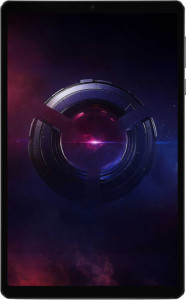
Lenovo Legion Tab Gen 3
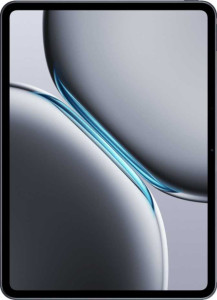
OnePlus Pad 2 Pro

Lenovo Legion Tab Gen 3 OnePlus Pad 2 Pro

Overview

Welcome to our in-depth spec comparison between the Lenovo Legion Tab Gen 3 and the OnePlus Pad 2 Pro. These two Android tablets take very different approaches to the market: one prioritizes compactness and portability, while the other pushes toward a larger, more immersive experience. From display size and refresh rate to chipset generation and battery capacity, there is plenty to unpack before deciding which device best suits your needs. Read on to explore every key specification side by side.

Common Features

  • Neither product includes a stylus in the box.
  • Neither product has a detachable keyboard.
  • Neither product has a backlit keyboard.
  • Neither product offers water resistance.
  • Neither product has tilt sensitivity.
  • Both products use an LCD IPS display type.
  • Neither product has branded damage-resistant glass.
  • Both products have an anti-reflection coating on the display.
  • Both products have a touch screen.
  • Neither product has a sapphire glass display.
  • Neither product has an e-paper display.
  • Both products come with 512GB of internal storage.
  • Both products come with 16GB of RAM.
  • Neither product has an external memory slot.
  • Both products support 64-bit processing.
  • Both products have integrated LTE.
  • Both products use big.LITTLE technology.
  • Both products support OpenGL version 3.2.
  • Both products support DirectX 12.
  • Both products have an 8MP front camera.
  • Both products support 4K video recording at 30fps on the main camera.
  • Both products have a flash.
  • Both products have a front camera.
  • Both products have a built-in HDR mode.
  • Neither product can create panoramas in-camera.
  • Both products have touch autofocus.
  • Neither product offers optical zoom.
  • Neither product supports aptX HD.
  • Neither product supports aptX Low Latency.
  • Neither product supports aptX Adaptive.
  • Neither product supports aptX Lossless.
  • Both products have stereo speakers.
  • Neither product has a 3.5mm audio jack.
  • Neither product has a built-in radio.
  • Both products support fast charging.
  • Neither product supports wireless charging.
  • Both products have a battery level indicator.
  • Both products have a rechargeable battery.
  • Neither product has a removable battery.
  • Neither product has Mail Privacy Protection.
  • Both products have on-device machine learning.
  • Both products have clipboard warnings.
  • Both products have location privacy options.
  • Both products have camera and microphone privacy options.
  • Both products can block app tracking.
  • Neither product blocks cross-site tracking.
  • Both products support split screen.
  • Both products use DDR5 memory.
  • Both products use multithreading.

Main Differences

  • Weight is 350g on Lenovo Legion Tab Gen 3 and 675g on OnePlus Pad 2 Pro.
  • Thickness is 7.8mm on Lenovo Legion Tab Gen 3 and 6mm on OnePlus Pad 2 Pro.
  • Width is 208.54mm on Lenovo Legion Tab Gen 3 and 289.6mm on OnePlus Pad 2 Pro.
  • Height is 129.46mm on Lenovo Legion Tab Gen 3 and 209.7mm on OnePlus Pad 2 Pro.
  • Volume is 210.58 cm³ on Lenovo Legion Tab Gen 3 and 364.37 cm³ on OnePlus Pad 2 Pro.
  • Screen size is 8.8″ on Lenovo Legion Tab Gen 3 and 13.2″ on OnePlus Pad 2 Pro.
  • Resolution is 2560 x 1600px on Lenovo Legion Tab Gen 3 and 3392 x 2400px on OnePlus Pad 2 Pro.
  • Pixel density is 343 ppi on Lenovo Legion Tab Gen 3 and 315 ppi on OnePlus Pad 2 Pro.
  • Refresh rate is 165Hz on Lenovo Legion Tab Gen 3 and 144Hz on OnePlus Pad 2 Pro.
  • HDR10 support is present on OnePlus Pad 2 Pro but not available on Lenovo Legion Tab Gen 3.
  • Typical brightness is 500 nits on Lenovo Legion Tab Gen 3 and 600 nits on OnePlus Pad 2 Pro.
  • HDR10+ support is present on OnePlus Pad 2 Pro but not available on Lenovo Legion Tab Gen 3.
  • Dolby Vision support is present on OnePlus Pad 2 Pro but not available on Lenovo Legion Tab Gen 3.
  • The chipset is Qualcomm Snapdragon 8 Gen 3 on Lenovo Legion Tab Gen 3 and Qualcomm Snapdragon 8 Elite on OnePlus Pad 2 Pro.
  • The GPU is Adreno 750 on Lenovo Legion Tab Gen 3 and Adreno 830 on OnePlus Pad 2 Pro.
  • CPU configuration is 3 x 3.15 & 2 x 2.96 & 2 x 2.26 & 1 x 3.3 GHz on Lenovo Legion Tab Gen 3 and 2 x 4.32 & 6 x 3.53 GHz on OnePlus Pad 2 Pro.
  • Geekbench 6 multi-core score is 7325 on Lenovo Legion Tab Gen 3 and 10059 on OnePlus Pad 2 Pro.
  • Geekbench 6 single-core score is 2213 on Lenovo Legion Tab Gen 3 and 3234 on OnePlus Pad 2 Pro.
  • Semiconductor size is 4nm on Lenovo Legion Tab Gen 3 and 3nm on OnePlus Pad 2 Pro.
  • GPU clock speed is 900MHz on Lenovo Legion Tab Gen 3 and 1100MHz on OnePlus Pad 2 Pro.
  • L2 cache is 1MB on Lenovo Legion Tab Gen 3 and 12MB on OnePlus Pad 2 Pro.
  • RAM speed is 4800MHz on Lenovo Legion Tab Gen 3 and 5300MHz on OnePlus Pad 2 Pro.
  • Supported external displays count is 1 on Lenovo Legion Tab Gen 3 and 2 on OnePlus Pad 2 Pro.
  • The device ships with Android 14 on Lenovo Legion Tab Gen 3 and Android 15 on OnePlus Pad 2 Pro.
  • Thermal Design Power (TDP) is 12.5W on Lenovo Legion Tab Gen 3 and 8.2W on OnePlus Pad 2 Pro.
  • The main camera is 13MP + 2MP on Lenovo Legion Tab Gen 3 and 13MP on OnePlus Pad 2 Pro.
  • Slow-motion video recording is supported on OnePlus Pad 2 Pro but not available on Lenovo Legion Tab Gen 3.
  • Serial shot mode is available on Lenovo Legion Tab Gen 3 but not on OnePlus Pad 2 Pro.
  • aptX support is present on Lenovo Legion Tab Gen 3 but not on OnePlus Pad 2 Pro.
  • LDAC support is present on Lenovo Legion Tab Gen 3 but not on OnePlus Pad 2 Pro.
  • Battery capacity is 6550 mAh on Lenovo Legion Tab Gen 3 and 12140 mAh on OnePlus Pad 2 Pro.
  • App offloading is supported on OnePlus Pad 2 Pro but not on Lenovo Legion Tab Gen 3.
  • GPS is present on Lenovo Legion Tab Gen 3 but not on OnePlus Pad 2 Pro.
  • Galileo satellite navigation is supported on Lenovo Legion Tab Gen 3 but not on OnePlus Pad 2 Pro.
Specs Comparison
Lenovo Legion Tab Gen 3

Lenovo Legion Tab Gen 3

OnePlus Pad 2 Pro

OnePlus Pad 2 Pro

Design:
weight 350 g 675 g
thickness 7.8 mm 6 mm
width 208.54 mm 289.6 mm
height 129.46 mm 209.7 mm
volume 210.58118952 cm³ 364.37472 cm³
Stylus included
Has a detachable keyboard
Has a backlit keyboard
water resistance None None
Has tilt sensitivity

The most defining difference in this group is sheer physical scale. The OnePlus Pad 2 Pro is a substantially larger device — 289.6 × 209.7 mm versus the Legion Tab's 208.54 × 129.46 mm — placing the two tablets in practically different size categories. That footprint difference translates directly into a volume gap of over 150 cm³, meaning the Pad 2 Pro occupies roughly 73% more space. For users who want a desktop-replacement-style experience with more screen real estate, that larger chassis is a feature; for those prioritizing portability or single-hand holding, it is a liability.

Weight amplifies this contrast further. The Legion Tab comes in at 350 g, while the Pad 2 Pro weighs 675 g — nearly double. In practice, a sub-400 g tablet can be held comfortably one-handed for extended reading or gaming sessions, whereas a 675 g device will cause arm fatigue significantly faster and essentially demands two-handed or surface use. The Pad 2 Pro does recover some points on thinness at 6 mm versus the Legion Tab's 7.8 mm, making it feel more premium and sleek in the hand despite its larger body, but that slimmer profile does not compensate for the weight penalty in day-to-day portability.

On accessory support, both tablets share identical limitations: no included stylus, no detachable or backlit keyboard, no tilt sensitivity, and no water resistance rating. Neither product offers any design-level advantage in this regard. Overall, the Legion Tab Gen 3 holds a clear edge for portability and handheld use, while the Pad 2 Pro trades that convenience for a larger, albeit slimmer, form factor suited to stationary, productivity-oriented contexts.

Display:
screen size 8.8" 13.2"
resolution 2560 x 1600 px 3392 x 2400 px
pixel density 343 ppi 315 ppi
Display type LCD, IPS LCD, IPS
refresh rate 165Hz 144Hz
has branded damage-resistant glass
has anti-reflection coating
supports HDR10
brightness (typical) 500 nits 600 nits
has a touch screen
Has sapphire glass display
supports HDR10+
supports Dolby Vision
Has an e-paper display

The Lenovo Legion Tab Gen 3 and the OnePlus Pad 2 Pro both feature LCD IPS displays, but they differ significantly in several key aspects. The Legion Tab Gen 3 has an 8.8″ screen with a resolution of 2560 x 1600 px, providing a pixel density of 343 ppi. In contrast, the OnePlus Pad 2 Pro offers a much larger 13.2″ screen with a higher resolution of 3392 x 2400 px, resulting in a slightly lower pixel density of 315 ppi.

In terms of refresh rate, the Legion Tab Gen 3 supports a smoother 165Hz compared to the 144Hz refresh rate of the OnePlus Pad 2 Pro. Both devices have anti-reflection coatings, but the Legion Tab Gen 3 does not support HDR10, while the OnePlus Pad 2 Pro does, along with HDR10+ and Dolby Vision support. The OnePlus Pad 2 Pro also provides a higher typical brightness of 600 nits compared to the Legion Tab Gen 3’s 500 nits.

Both devices have touch screens, but neither includes branded damage-resistant glass or an e-paper display. The Legion Tab Gen 3 does not support HDR10+ or Dolby Vision, while the OnePlus Pad 2 Pro supports both of these advanced features.

Performance:
internal storage 512GB 512GB
RAM 16GB 16GB
Chipset (SoC) name Qualcomm Snapdragon 8 Gen 3 Qualcomm Snapdragon 8 Elite
GPU name Adreno 750 Adreno 830
CPU speed 3 x 3.15 & 2 x 2.96 & 2 x 2.26 & 1 x 3.3 GHz 2 x 4.32 & 6 x 3.53 GHz
Geekbench 6 result (multi) 7325 10059
Geekbench 6 result (single) 2213 3234
has an external memory slot
semiconductor size 4 nm 3 nm
Supports 64-bit
Has integrated LTE
Uses big.LITTLE technology
OpenGL version 3.2 3.2
DirectX version DirectX 12 DirectX 12
Has integrated graphics
GPU clock speed 900 MHz 1100 MHz
L2 cache 1 MB 12 MB
CPU threads 8 threads 8 threads
RAM speed 4800 MHz 5300 MHz
Has TrustZone
maximum memory amount 24GB 24GB
supported displays 1 2
Android version Android 14 Android 15
Thermal Design Power (TDP) 12.5W 8.2W
Uses HMP
L3 cache 12 MB 8 MB
maximum memory bandwidth 76.6 GB/s 85.1 GB/s
memory channels 2 2
OpenGL ES version 3.2 3.2
OpenCL version 2 3

Both the Lenovo Legion Tab Gen 3 and the OnePlus Pad 2 Pro feature 512GB of internal storage and 16GB of RAM, ensuring a similar level of memory and storage. However, the two devices differ in several performance-related aspects. The Legion Tab Gen 3 is powered by the Qualcomm Snapdragon 8 Gen 3 chipset, while the OnePlus Pad 2 Pro uses the slightly newer Snapdragon 8 Elite. The Legion Tab Gen 3's CPU has a configuration of 3 x 3.15 GHz, 2 x 2.96 GHz, 2 x 2.26 GHz, and 1 x 3.3 GHz, while the OnePlus Pad 2 Pro's CPU operates at 2 x 4.32 GHz and 6 x 3.53 GHz.

The Geekbench 6 results show that the OnePlus Pad 2 Pro achieves a significantly higher multi-core score of 10,059, compared to the Legion Tab Gen 3’s score of 7,325. In single-core performance, the OnePlus Pad 2 Pro again outperforms, with a score of 3,234, while the Legion Tab Gen 3 scores 2,213.

In terms of GPU, the Legion Tab Gen 3 has the Adreno 750, with a GPU clock speed of 900 MHz, while the OnePlus Pad 2 Pro features the Adreno 830, running at a higher GPU clock speed of 1,100 MHz. Both devices have integrated graphics and support OpenGL 3.2, DirectX 12, and OpenGL ES 3.2. They also both support a maximum memory amount of 24GB and operate on two memory channels. The Legion Tab Gen 3 has a slightly lower memory speed of 4,800 MHz compared to the 5,300 MHz on the OnePlus Pad 2 Pro.

Cameras:
megapixels (main camera) 13 & 2 MP 13 MP
megapixels (front camera) 8MP 8MP
video recording (main camera) 2160 x 30 fps 2160 x 30 fps
has a flash
has a front camera
has a built-in HDR mode
can create panoramas in-camera
supports slow-motion video recording
has touch autofocus
optical zoom 0x 0x
has a BSI sensor
has manual white balance
has a CMOS sensor
supports HDR10 recording
has continuous autofocus when recording movies
supports Dolby Vision recording
Has a front-facing LED flash
number of flash LEDs 1 1
has manual ISO
has a video light
Shoots 360° panorama
has a serial shot mode
has built-in optical image stabilization
has 3D photo/video recording capabilities
Has a dual-tone LED flash
has manual focus
Has a RGB LED flash
has manual exposure
has manual shutter speed

The Lenovo Legion Tab Gen 3 and the OnePlus Pad 2 Pro have similar camera setups, both featuring a 13 MP main camera and an 8 MP front camera. Both devices support video recording at 2160 x 30 fps on the main camera, with touch autofocus and continuous autofocus during movie recording. They also both include a built-in HDR mode, manual white balance, and manual ISO adjustments.

Both tablets have a flash with one LED and do not include a front-facing LED flash. However, the OnePlus Pad 2 Pro supports slow-motion video recording, while the Lenovo Legion Tab Gen 3 does not. Additionally, while both devices can create panoramas, they do not have the capability to shoot 360° panoramas. Neither device offers HDR10 or Dolby Vision recording, nor do they support built-in optical image stabilization or 3D photo/video recording.

Other features like manual exposure and manual focus are supported on both devices, though the Legion Tab Gen 3 offers a serial shot mode, which the OnePlus Pad 2 Pro lacks. Neither tablet includes a dual-tone LED flash, RGB LED flash, or built-in optical image stabilization.

Audio:
has aptX
has aptX HD
has LDAC
has aptX Low Latency
has aptX Adaptive
has aptX Lossless
has stereo speakers
has a socket for a 3.5 mm audio jack
Has a radio

The Lenovo Legion Tab Gen 3 and the OnePlus Pad 2 Pro have similar audio features, both equipped with stereo speakers. However, the Lenovo Legion Tab Gen 3 offers more advanced Bluetooth audio support, including aptX and LDAC, but it lacks aptX HD, Low Latency, Adaptive, and Lossless support. The OnePlus Pad 2 Pro, in contrast, does not support any of the aptX or LDAC codecs, limiting its high-quality Bluetooth audio capabilities.

Neither tablet includes a 3.5 mm audio jack, so both rely on wireless audio solutions for wired headset users. Additionally, neither device features a radio.

Battery:
battery power 6550 mAh 12140 mAh
Supports fast charging
has wireless charging
has a battery level indicator
has a rechargeable battery
has a removable battery

The Lenovo Legion Tab Gen 3 and the OnePlus Pad 2 Pro both feature rechargeable batteries, with the Lenovo Legion Tab Gen 3 having a 6550 mAh battery and the OnePlus Pad 2 Pro offering a much larger 12140 mAh battery. Both devices support fast charging and include a battery level indicator, but neither supports wireless charging. Additionally, neither device has a removable battery.

Despite having a smaller battery, the Legion Tab Gen 3 includes all the same core battery features as the OnePlus Pad 2 Pro, such as fast charging support and a rechargeable, non-removable battery.

Connectivity & Features:
release date January 2025 May 2025
Wi-Fi version Wi-Fi 4 (802.11n), Wi-Fi 6 (802.11ax), Wi-Fi 5 (802.11ac), Wi-Fi 7 (802.11be) Wi-Fi 4 (802.11n), Wi-Fi 5 (802.11ac), Wi-Fi 6 (802.11ax), Wi-Fi 7 (802.11be)
has Mail Privacy Protection
has on-device machine learning
has clipboard warnings
has location privacy options
has camera/microphone privacy options
can block app tracking
blocks cross-site tracking
supports split screen
has Live Text
has notification permissions
has full-page screenshots
has Quick Start
has theme customization
has Wi-Fi password sharing
has PiP
Can play games while they download
has an extra dim mode
can offload apps
has focus modes
has media picker
has dynamic theming
has dark mode
has battery health check
Has USB Type-C
has a cellular module
has 5G support
is a multi-user system
gets direct OS updates
has GPS
has a child lock
has an HDMI output
has NFC
Has a fingerprint scanner
USB version 3.2 3.2
Supports widgets
Bluetooth version 5.4 5.4
download speed 10000 MBits/s 10000 MBits/s
has a gyroscope
Is free and open source
Has offline voice recognition
has a compass
upload speed 3500 MBits/s 3500 MBits/s
supports Wi-Fi
Has sharing intents
Has customizable notifications
Uses 3D facial recognition
supports Galileo
Has a barometer
has an accelerometer
has voice commands
Has an iris scanner
Has a built-in projector
supports Ethernet
Has an infrared sensor
Tracks the current position of a mobile device

The Lenovo Legion Tab Gen 3 and the OnePlus Pad 2 Pro share many common connectivity features. Both devices support Wi-Fi 4, Wi-Fi 5, Wi-Fi 6, and Wi-Fi 7, as well as Bluetooth 5.4. They both have USB Type-C ports, with USB version 3.2, and they support widgets, customizable notifications, and sharing intents. Additionally, both tablets have a gyroscope, accelerometer, compass, and support for voice commands.

There are a few differences between the two devices in this category. The Lenovo Legion Tab Gen 3 supports GPS and Galileo, while the OnePlus Pad 2 Pro does not have GPS or Galileo support. However, the OnePlus Pad 2 Pro has the ability to offload apps, which the Lenovo Legion Tab Gen 3 does not offer. Both devices lack a fingerprint scanner, NFC, HDMI output, and a built-in projector.

Privacy and security features are well-supported on both devices, with both offering camera/microphone privacy options, location privacy options, clipboard warnings, and the ability to block app tracking. Neither tablet supports 3D facial recognition or an iris scanner. Both also have a child lock, track the current position of a mobile device, and feature offline voice recognition. Neither tablet has a radio or supports Ethernet.

Miscellaneous:
DDR memory version 5 5
uses multithreading

Both the Lenovo Legion Tab Gen 3 and the OnePlus Pad 2 Pro feature DDR5 memory and utilize multithreading. The specifications for both devices in this group are identical, with both using DDR5 memory and supporting multithreading capabilities.

As there are no differences in these particular specifications, both tablets are expected to provide similar performance in tasks that benefit from these features, such as multitasking and running memory-intensive applications.

Comparison Summary & Verdict

After examining every specification, these two tablets clearly target different types of users. The Lenovo Legion Tab Gen 3 shines as a compact, lightweight companion at just 350g, offering a sharper 343 ppi pixel density, a blazing 165Hz refresh rate, GPS support, aptX and LDAC audio codec compatibility, and a more portable 8.8-inch form factor. It is the smarter pick for users who game or consume media on the go and value portability. The OnePlus Pad 2 Pro, on the other hand, dominates in raw power with the Snapdragon 8 Elite chipset, a massive 13.2-inch display with Dolby Vision and HDR10+ support, a commanding 12140 mAh battery, and significantly higher Geekbench scores. It is purpose-built for productivity enthusiasts, creative professionals, and users who want a desktop-class tablet experience at home or in the office.

Lenovo Legion Tab Gen 3
Buy Lenovo Legion Tab Gen 3 if...

Buy the Lenovo Legion Tab Gen 3 if you want a lightweight, portable tablet with a higher pixel density display, a 165Hz refresh rate, GPS support, and aptX/LDAC audio codec compatibility for on-the-go use.

OnePlus Pad 2 Pro
Buy OnePlus Pad 2 Pro if...

Buy the OnePlus Pad 2 Pro if you need maximum processing power, a large 13.2-inch Dolby Vision display, a much larger 12140 mAh battery, and a higher-performing Snapdragon 8 Elite chipset for demanding productivity or media tasks.