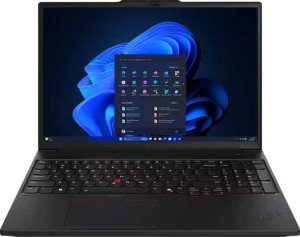
Lenovo ThinkPad P16s Gen 4 16"
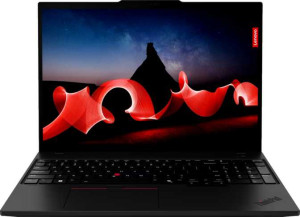
Lenovo ThinkPad T16 Gen 3 16" (Ultra 7 155U / 16GB RAM / 512GB)

Lenovo ThinkPad P16s Gen 4 16" Lenovo ThinkPad T16 Gen 3 16" (Ultra 7 155U / 16GB RAM / 512GB)

Overview

Welcome to our in-depth comparison of the Lenovo ThinkPad P16s Gen 4 16″ and the Lenovo ThinkPad T16 Gen 3 16″ (Ultra 7 155U / 16GB RAM / 512GB). Both laptops share the same 16″ IPS display, identical port selection, and a familiar ThinkPad build — but they diverge sharply when it comes to raw processing power, memory capacity, and overall thermal headroom. Which one fits your workflow better? Read on to find out.

Common Features

  • Neither product uses a fanless design.
  • Both products have a backlit keyboard.
  • Both products come with a 3-year warranty period.
  • Neither product is weather-sealed or splashproof.
  • Neither product has a rugged build.
  • Both products have a 16″ screen size.
  • Both products share a resolution of 1920 x 1200 px.
  • Both products have a pixel density of 141 ppi.
  • Both products feature an LCD, LED-backlit, IPS display type.
  • Neither product has a touch screen.
  • Both products have a 60Hz refresh rate.
  • Both products have an anti-reflection coating on the display.
  • Both products use flash storage.
  • Both products use an NVMe SSD.
  • Both products support multithreading.
  • Both products use DDR5 memory.
  • Both products have 2 memory slots.
  • Both products support 64-bit computing.
  • Both products have 0 USB 3.2 Gen 2 ports (USB-C), 0 USB 3.2 Gen 2 ports (USB-A), 0 USB 4 20Gbps ports, 2 USB 4 40Gbps ports, 2 Thunderbolt 4 ports, 0 USB 3.2 Gen 1 ports (USB-C), 2 USB 3.2 Gen 1 ports (USB-A), and 0 Thunderbolt 3 ports.
  • Both products have sleep-and-charge USB ports.
  • Neither product has a MagSafe power adapter.
  • Both products have stereo speakers.
  • Both products have a 3.5 mm audio jack.
  • Both products have a 5MP front camera.
  • Neither product supports ray tracing.
  • Neither product supports DLSS.
  • Neither product has Dolby Atmos.
  • Both products have a fingerprint scanner.
  • Both products have 2 microphones.
  • Both products are laptops.
  • Both products support the same instruction sets: MMX, F16C, FMA3, AES, AVX, AVX2, SSE 4.1, SSE 4.2.
  • Neither product has an unlocked multiplier.
  • Both products have the NX bit.
  • Both products have a maximum CPU temperature of 110 °C.
  • Both products support OpenCL version 3.
  • Both products support OpenGL version 4.6.
  • Both products have integrated graphics.

Main Differences

  • Weight is 1820 g on Lenovo ThinkPad P16s Gen 4 16″ and 1830 g on Lenovo ThinkPad T16 Gen 3 16″ (Ultra 7 155U / 16GB RAM / 512GB).
  • Volume is 1074.336 cm³ on Lenovo ThinkPad P16s Gen 4 16″ and 1705.25 cm³ on Lenovo ThinkPad T16 Gen 3 16″ (Ultra 7 155U / 16GB RAM / 512GB).
  • Width is 361 mm on Lenovo ThinkPad P16s Gen 4 16″ and 359 mm on Lenovo ThinkPad T16 Gen 3 16″ (Ultra 7 155U / 16GB RAM / 512GB).
  • Height is 248 mm on Lenovo ThinkPad P16s Gen 4 16″ and 250 mm on Lenovo ThinkPad T16 Gen 3 16″ (Ultra 7 155U / 16GB RAM / 512GB).
  • Thickness is 12 mm on Lenovo ThinkPad P16s Gen 4 16″ and 19 mm on Lenovo ThinkPad T16 Gen 3 16″ (Ultra 7 155U / 16GB RAM / 512GB).
  • Typical brightness is 500 nits on Lenovo ThinkPad P16s Gen 4 16″ and 300 nits on Lenovo ThinkPad T16 Gen 3 16″ (Ultra 7 155U / 16GB RAM / 512GB).
  • RAM is 96GB on Lenovo ThinkPad P16s Gen 4 16″ and 16GB on Lenovo ThinkPad T16 Gen 3 16″ (Ultra 7 155U / 16GB RAM / 512GB).
  • RAM speed is 6400 MHz on Lenovo ThinkPad P16s Gen 4 16″ and 5600 MHz on Lenovo ThinkPad T16 Gen 3 16″ (Ultra 7 155U / 16GB RAM / 512GB).
  • Internal storage is 2048GB on Lenovo ThinkPad P16s Gen 4 16″ and 512GB on Lenovo ThinkPad T16 Gen 3 16″ (Ultra 7 155U / 16GB RAM / 512GB).
  • CPU speed is 6 x 2.9 & 8 x 2.7 GHz on Lenovo ThinkPad P16s Gen 4 16″ and 2 x 1.7 & 8 x 1.2 GHz on Lenovo ThinkPad T16 Gen 3 16″ (Ultra 7 155U / 16GB RAM / 512GB).
  • CPU threads count is 16 on Lenovo ThinkPad P16s Gen 4 16″ and 14 on Lenovo ThinkPad T16 Gen 3 16″ (Ultra 7 155U / 16GB RAM / 512GB).
  • Maximum memory amount is 96GB on Lenovo ThinkPad P16s Gen 4 16″ and 64GB on Lenovo ThinkPad T16 Gen 3 16″ (Ultra 7 155U / 16GB RAM / 512GB).
  • Turbo clock speed is 5.4GHz on Lenovo ThinkPad P16s Gen 4 16″ and 4.8GHz on Lenovo ThinkPad T16 Gen 3 16″ (Ultra 7 155U / 16GB RAM / 512GB).
  • GPU turbo speed is 2350 MHz on Lenovo ThinkPad P16s Gen 4 16″ and 1950 MHz on Lenovo ThinkPad T16 Gen 3 16″ (Ultra 7 155U / 16GB RAM / 512GB).
  • PCIe version is 5 on Lenovo ThinkPad P16s Gen 4 16″ and 4 on Lenovo ThinkPad T16 Gen 3 16″ (Ultra 7 155U / 16GB RAM / 512GB).
  • Semiconductor size is 3 nm on Lenovo ThinkPad P16s Gen 4 16″ and 7 nm on Lenovo ThinkPad T16 Gen 3 16″ (Ultra 7 155U / 16GB RAM / 512GB).
  • PassMark result is 33969 on Lenovo ThinkPad P16s Gen 4 16″ and 16382 on Lenovo ThinkPad T16 Gen 3 16″ (Ultra 7 155U / 16GB RAM / 512GB).
  • PassMark single-core result is 4472 on Lenovo ThinkPad P16s Gen 4 16″ and 3373 on Lenovo ThinkPad T16 Gen 3 16″ (Ultra 7 155U / 16GB RAM / 512GB).
  • Wi-Fi 7 (802.11be) support is present on Lenovo ThinkPad P16s Gen 4 16″ but not available on Lenovo ThinkPad T16 Gen 3 16″ (Ultra 7 155U / 16GB RAM / 512GB).
  • Bluetooth version is 5.4 on Lenovo ThinkPad P16s Gen 4 16″ and 5.3 on Lenovo ThinkPad T16 Gen 3 16″ (Ultra 7 155U / 16GB RAM / 512GB).
  • Battery size is 75 Wh on Lenovo ThinkPad P16s Gen 4 16″ and 52.5 Wh on Lenovo ThinkPad T16 Gen 3 16″ (Ultra 7 155U / 16GB RAM / 512GB).
  • Thermal Design Power (TDP) is 45W on Lenovo ThinkPad P16s Gen 4 16″ and 15W on Lenovo ThinkPad T16 Gen 3 16″ (Ultra 7 155U / 16GB RAM / 512GB).
  • L3 cache is 24 MB on Lenovo ThinkPad P16s Gen 4 16″ and 12 MB on Lenovo ThinkPad T16 Gen 3 16″ (Ultra 7 155U / 16GB RAM / 512GB).
  • Maximum RAM speed is 8400 MHz on Lenovo ThinkPad P16s Gen 4 16″ and 5600 MHz on Lenovo ThinkPad T16 Gen 3 16″ (Ultra 7 155U / 16GB RAM / 512GB).
Specs Comparison
Lenovo ThinkPad P16s Gen 4 16"

Lenovo ThinkPad P16s Gen 4 16"

Lenovo ThinkPad T16 Gen 3 16" (Ultra 7 155U / 16GB RAM / 512GB)

Lenovo ThinkPad T16 Gen 3 16" (Ultra 7 155U / 16GB RAM / 512GB)

Design:
weight 1820 g 1830 g
Uses a fanless design
Has a backlit keyboard
warranty period 3 years 3 years
volume 1074.336 cm³ 1705.25 cm³
width 361 mm 359 mm
height 248 mm 250 mm
thickness 12 mm 19 mm
is weather-sealed (splashproof)
has a rugged build

At first glance, the Lenovo ThinkPad P16s Gen 4 and the ThinkPad T16 Gen 3 appear nearly identical in their design footprint — both sit at roughly 360 × 249 mm and weigh within 10 g of each other (1820 g vs. 1830 g). In practice, that weight difference is imperceptible and will never factor into a buying decision. What actually separates these two machines physically is their thickness: the P16s measures just 12 mm slim, while the T16 comes in at a noticeably chunkier 19 mm. That 7 mm gap — nearly a 40% increase in depth — is substantial in a product category where slim profiles are increasingly expected.

The real-world consequence of that thickness gap is captured in the volume figures: the P16s occupies roughly 1,074 cm³ versus the T16's 1,705 cm³. The T16 is about 59% bulkier by volume, which means it will feel meaningfully thicker in a bag and on a desk, and may not slide as easily into slim laptop sleeves or messenger bags. The P16s's slimmer chassis signals a more modern, refined engineering approach, though it also raises reasonable questions about thermal headroom — a point worth keeping in mind depending on the workload.

On every other design dimension, the two laptops are identical: both include a backlit keyboard, both lack a fanless design (so expect active cooling noise under load), neither offers weather sealing or a ruggedized build, and both carry a standard 3-year warranty. The P16s holds a clear design edge purely on the basis of its significantly slimmer and more compact chassis, making it the better choice for users who prioritize portability and a sleeker form factor.

Display:
screen size 16" 16"
resolution 1920 x 1200 px 1920 x 1200 px
pixel density 141 ppi 141 ppi
Display type LCD, LED-backlit, IPS LCD, LED-backlit, IPS
has a touch screen
brightness (typical) 500 nits 300 nits
refresh rate 60Hz 60Hz
has anti-reflection coating

Both the ThinkPad P16s Gen 4 and the ThinkPad T16 Gen 3 share an identical display specification in almost every respect: a 16″ IPS LCD panel running at 1920 × 1200 resolution, 141 ppi pixel density, a 60Hz refresh rate, and an anti-reflection coating. The 16:10 aspect ratio implied by the 1920 × 1200 resolution is a practical advantage shared by both — that extra vertical real estate compared to standard 1080p is genuinely useful for documents, code, and spreadsheets.

The single meaningful differentiator here is brightness. The P16s delivers 500 nits typical brightness, while the T16 Gen 3 comes in at 300 nits. That 200-nit gap carries real consequences: 300 nits is adequate for controlled indoor environments, but can feel limiting near a window or in a brightly lit office. At 500 nits, the P16s can handle moderately bright ambient conditions with noticeably less glare-induced squinting, and it also makes the anti-reflection coating work more effectively — a dimmer panel benefits less from glare reduction if the image itself can't compete with ambient light.

Given that every other display specification is identical, the P16s Gen 4 holds a clear edge in this category, driven entirely by its significantly higher brightness output. For professionals who frequently work in varied lighting conditions, that advantage is tangible. The T16 Gen 3's display is not deficient, but users sensitive to screen visibility outside of dim environments will find the P16s the more versatile option.

Performance:
RAM 96GB 16GB
RAM speed 6400 MHz 5600 MHz
Uses flash storage
internal storage 2048GB 512GB
CPU speed 6 x 2.9 & 8 x 2.7 GHz 2 x 1.7 & 8 x 1.2 GHz
CPU threads 16 threads 14 threads
Is an NVMe SSD
uses multithreading
maximum memory amount 96GB 64GB
DDR memory version 5 5
turbo clock speed 5.4GHz 4.8GHz
GPU turbo 2350 MHz 1950 MHz
memory slots 2 2
PCI Express (PCIe) version 5 4
semiconductor size 3 nm 7 nm
Supports 64-bit

The performance gap between these two ThinkPads is substantial and cuts across every major subsystem. The P16s Gen 4 is built around a processor manufactured on a 3 nm node with base cluster speeds of up to 2.9 GHz and a turbo ceiling of 5.4 GHz, while the T16 Gen 3 runs a 7 nm chip with significantly more modest base clocks — its performance cores top out at just 1.7 GHz base and 4.8 GHz turbo. A smaller semiconductor node generally means better power efficiency and higher transistor density, which translates directly into stronger sustained performance under load. For compute-intensive tasks like compilation, rendering, or data processing, the P16s's CPU architecture has a commanding structural advantage.

Memory tells an equally lopsided story. The P16s ships with 96GB of DDR5 at 6400 MHz — already at its maximum supported capacity — versus the T16's 16GB at 5600 MHz, which, while expandable up to 64GB, ships in a configuration that will feel constrained running multiple heavy applications simultaneously. Faster RAM directly benefits CPU-bound workloads and reduces latency in memory-intensive workflows. On storage, the P16s's 2TB NVMe on PCIe 5 versus the T16's 512GB on PCIe 4 means both faster sequential throughput and four times the raw capacity. PCIe 5 doubles the theoretical bandwidth ceiling of PCIe 4, which matters for large file transfers and demanding storage workloads. The GPU turbo clock advantage — 2350 MHz vs. 1950 MHz — further reinforces the P16s's lead for graphics-adjacent tasks.

The P16s Gen 4 wins this category decisively, and it is not a close contest. It outperforms the T16 Gen 3 in CPU architecture, clock speeds, RAM capacity and speed, storage size and bus generation, and GPU frequency. The T16 is a capable everyday business machine, but the P16s is clearly engineered for professional workloads that demand serious computational headroom.

Benchmarks:
PassMark result 33969 16382
PassMark result (single) 4472 3373

Benchmark numbers put hard figures behind what the spec sheet already suggested. The P16s Gen 4 scores 33,969 on the PassMark multi-threaded test, compared to 16,382 for the T16 Gen 3 — meaning the P16s delivers roughly twice the multi-core throughput. In practical terms, multi-threaded performance governs how fast a machine handles parallelizable workloads: video encoding, 3D rendering, large compilation jobs, scientific simulations, and running multiple demanding applications concurrently. A 2× advantage here is not a marginal improvement; it is a generational leap in capability.

The single-core gap is narrower but still meaningful: 4,472 for the P16s versus 3,373 for the T16, representing roughly a 33% advantage. Single-core performance governs the responsiveness of everyday tasks — launching applications, browser performance, UI interactions, and any workload that cannot be distributed across cores. A 33% lead translates to a noticeably snappier feel in day-to-day use, even outside of heavy workloads.

The P16s Gen 4 wins this category unambiguously. Its multi-threaded score is more than double that of the T16 Gen 3, and its single-core lead adds further daylight between the two. For users whose workloads scale with core count, the P16s is in an entirely different performance tier. Even for lighter users, the single-core advantage means the P16s will feel more responsive across the board.

Connectivity:
USB 3.2 Gen 2 ports (USB-C) 0 0
USB 3.2 Gen 2 ports (USB-A) 0 0
USB 4 20Gbps ports 0 0
USB 4 40Gbps ports 2 2
Thunderbolt 4 ports 2 2
USB 3.2 Gen 1 ports (USB-C) 0 0
USB 3.2 Gen 1 ports (USB-A) 2 2
Thunderbolt 3 ports 0 0
has an HDMI output
Has USB Type-C
supports Wi-Fi
Wi-Fi version Wi-Fi 7 (802.11be), Wi-Fi 6E (802.11ax), Wi-Fi 6 (802.11ax), Wi-Fi 5 (802.11ac), Wi-Fi 4 (802.11n) Wi-Fi 6E (802.11ax), Wi-Fi 6 (802.11ax), Wi-Fi 5 (802.11ac), Wi-Fi 4 (802.11n)
has an external memory slot
Bluetooth version 5.4 5.3
RJ45 ports 1 1
HDMI ports 1 1
HDMI version HDMI 2.1 HDMI 2.1
DisplayPort outputs 0 0
USB 2.0 ports 0 0
has AirPlay
mini DisplayPort outputs 0 0
has a VGA connector

Wired connectivity is a dead heat: both the P16s Gen 4 and the T16 Gen 3 offer an identical port lineup — 2× Thunderbolt 4 (which also function as USB 4 40Gbps), 2× USB 3.2 Gen 1 Type-A, a single HDMI 2.1 output, and an RJ45 Ethernet jack. That is a well-rounded set for business use: Thunderbolt 4 handles high-speed docks, external GPUs, and daisy-chained displays, while HDMI 2.1 supports up to 4K at high refresh rates without an adapter. Neither machine includes a memory card slot, which is a shared limitation worth noting for photographers or content creators.

Where the two diverge is in wireless. The P16s steps up to Wi-Fi 7 (802.11be), while the T16 tops out at Wi-Fi 6E. Wi-Fi 7 introduces Multi-Link Operation, which allows a device to simultaneously transmit across multiple bands — reducing latency and improving throughput stability even in congested environments. For most users today, the practical benefit depends on having a Wi-Fi 7 router, but it is a meaningful piece of future-proofing. The Bluetooth gap — 5.4 on the P16s versus 5.3 on the T16 — is marginal in day-to-day use and unlikely to influence a decision on its own.

Given the identical wired port configurations, the P16s holds a modest but real edge in connectivity, driven by its Wi-Fi 7 support. Users investing in modern networking infrastructure will get more longevity from the P16s, while those operating entirely over Ethernet or in Wi-Fi 6E environments will find the two machines functionally equivalent in this category.

Battery:
battery size 75 Wh 52.5 Wh
Has sleep-and-charge USB ports
Has a MagSafe power adapter

Battery capacity is where the P16s Gen 4 opens up another meaningful lead. Its 75 Wh battery is 43% larger than the 52.5 Wh cell in the T16 Gen 3 — a gap that, all else being equal, translates directly into proportionally longer time between charges. For a 16-inch laptop used through a full workday, that difference can realistically mean several additional hours of unplugged runtime, which matters significantly for users who travel, work in meetings, or spend time away from a desk.

It is worth noting that real-world battery life is also shaped by workload intensity and display brightness — and the P16s carries a more powerful processor and a brighter screen, both of which draw more power. Still, the raw capacity advantage is substantial enough that the P16s is very likely to sustain longer unplugged sessions under comparable usage conditions. The T16's smaller battery is a natural consequence of its thicker but less performance-oriented platform, and users who prioritize battery endurance will feel the difference.

Both laptops share sleep-and-charge USB ports, allowing users to top up peripherals or phones even when the laptop is off — a convenient shared feature that neither differentiates. On balance, the P16s Gen 4 holds a clear battery edge on capacity alone, making it the stronger choice for mobile professionals who need sustained runtime without access to a power outlet.

Features:
release date September 2025 May 2025
has stereo speakers
has a socket for a 3.5 mm audio jack
megapixels (front camera) 5MP 5MP
supports ray tracing
supports DLSS
has Dolby Atmos
Has a fingerprint scanner
number of microphones 2 2
Uses 3D facial recognition
has voice commands
has a front camera
Has S/PDIF Out port
has a gyroscope
has GPS
has an accelerometer
has a compass
Has an optical disc drive

Across every feature captured in this group, the P16s Gen 4 and the T16 Gen 3 are identical — and that is itself a meaningful finding. Both ship with a 5MP front camera, 3D facial recognition, a fingerprint scanner, dual microphones, stereo speakers, and a 3.5mm audio jack. For business laptop buyers, this is a well-considered baseline: the dual biometric login options (face and fingerprint) cover different use-case preferences, and the 5MP webcam is above the 1080p-equivalent threshold that still plagues many competitors, making it suitable for video calls without an external camera.

Neither machine supports ray tracing or DLSS, has Dolby Atmos, or includes motion sensors like a gyroscope or accelerometer — all of which are consistent with the professional productivity positioning of both devices rather than media or gaming use. The absence of GPS is similarly expected in this class of laptop.

With zero differentiators across the entire feature set, this category is a complete tie. Users choosing between these two machines will find no advantage on either side here — the decision ultimately rests on the performance, display, and design differences analyzed in other categories.

Miscellaneous:
Thermal Design Power (TDP) 45W 15W
Type Laptop Laptop
L3 cache 24 MB 12 MB
instruction sets MMX, F16C, FMA3, AES, AVX, AVX2, SSE 4.1, SSE 4.2 MMX, F16C, FMA3, AES, AVX, AVX2, SSE 4.1, SSE 4.2
Has an unlocked multiplier
Has NX bit
CPU temperature 110 °C 110 °C
OpenCL version 3 3
OpenGL version 4.6 4.6
Has integrated graphics
Supports ECC memory
memory channels 2 2
RAM speed (max) 8400 MHz 5600 MHz
Uses big.LITTLE technology

Two specs in this group cut to the heart of the architectural difference between these machines: TDP and L3 cache. The P16s Gen 4 runs a 45W TDP processor — three times the 15W TDP of the T16 Gen 3. TDP is a proxy for how much sustained power a chip is designed to consume and dissipate, and a higher envelope directly enables higher sustained performance. The T16's 15W chip is engineered for efficiency and thermal restraint, which suits thin-and-light designs but places a firm ceiling on prolonged heavy workloads. The P16s's 45W chip is built to maintain peak output under sustained load — critical for professional tasks like rendering or simulation that run for extended periods rather than short bursts.

The L3 cache gap reinforces this picture: 24 MB on the P16s versus 12 MB on the T16. A larger L3 cache reduces how frequently the CPU must reach out to slower main memory, which improves throughput on data-intensive workloads and reduces latency spikes. Paired with the P16s's higher maximum RAM speed ceiling of 8400 MHz (versus 5600 MHz on the T16), the P16s's memory subsystem is architecturally more capable across the board — even though current installed RAM in both machines operates below these theoretical maxima.

Shared specs — identical instruction set support, OpenCL 3 and OpenGL 4.6 compatibility, dual-channel memory, big.LITTLE hybrid architecture, and the same maximum CPU junction temperature — confirm that both chips belong to the same modern generation of x86 design. But the P16s Gen 4 holds a decisive advantage here: its higher TDP, larger cache, and greater RAM speed ceiling collectively define a platform built for sustained, demanding workloads rather than efficient everyday computing.

Comparison Summary & Verdict

After a thorough review of the specifications, these two ThinkPads clearly target different audiences. The Lenovo ThinkPad P16s Gen 4 16″ stands out as the more capable machine, offering a significantly more powerful CPU, a massive 96GB of RAM, a 2TB SSD, a brighter 500-nit display, Wi-Fi 7, and a larger 75Wh battery — all backed by a 45W TDP and PCIe 5 storage. It is purpose-built for demanding professional workloads. The Lenovo ThinkPad T16 Gen 3, on the other hand, delivers a thinner, lighter-feeling profile with a 15W low-power CPU that prioritises energy efficiency over peak performance, making it well suited for everyday business tasks and extended mobility on a tighter budget. Both share the same port layout, 3-year warranty, and core ThinkPad features, so the choice ultimately comes down to performance needs versus portability and cost.

Lenovo ThinkPad P16s Gen 4 16
Buy Lenovo ThinkPad P16s Gen 4 16" if...

Buy the Lenovo ThinkPad P16s Gen 4 16″ if you need maximum performance with vastly more RAM, faster CPU and GPU speeds, a brighter display, Wi-Fi 7, and a larger battery for demanding professional or creative workloads.

Lenovo ThinkPad T16 Gen 3 16
Buy Lenovo ThinkPad T16 Gen 3 16" (Ultra 7 155U / 16GB RAM / 512GB) if...

Buy the Lenovo ThinkPad T16 Gen 3 16″ (Ultra 7 155U / 16GB RAM / 512GB) if you primarily handle everyday business tasks and prefer a thinner, more compact design with a power-efficient low-TDP processor.