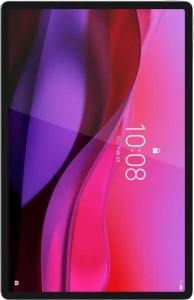
Wireless connectivity is where these two tablets begin to diverge meaningfully. The Samsung Galaxy Tab S11 Ultra supports Wi-Fi 7 (802.11be), a standard the Lenovo Yoga Tab Plus lacks — topping out at Wi-Fi 6E instead. Wi-Fi 7 delivers significantly higher throughput and lower latency on compatible routers, which becomes relevant for users in congested environments or those transferring large files. Curiously, the Yoga Tab Plus lists a higher theoretical download speed of 10000 Mbits/s versus the S11 Ultra's 7300 Mbits/s, though both figures far exceed what real-world networks can currently deliver. Both share Bluetooth 5.4 and USB Type-C, but the S11 Ultra steps up to USB 3.2 versus USB 3.1, offering faster wired data transfers.
The most impactful connectivity gap is mobility. The S11 Ultra includes a cellular module with 5G support, enabling internet access anywhere — the Yoga Tab Plus is Wi-Fi only. Paired with this, Samsung's tablet includes GPS, a compass, and Galileo satellite support, making it a genuinely capable navigation device untethered from a phone. The Yoga Tab Plus offers none of these location features. For users who need their tablet to function independently away from a Wi-Fi network, this is a decisive differentiator.
Security and sensor coverage also tip toward the S11 Ultra, which adds a fingerprint scanner absent on the Yoga Tab Plus. Software feature parity is otherwise high — both support split screen, PiP, dark mode, dynamic theming, on-device machine learning, and privacy controls. The S11 Ultra holds a clear and broad advantage in this category, particularly for users who need cellular connectivity, location independence, or faster wired and wireless data options.