Lenovo Yoga Tab Plus
Xiaomi Pad 7S Pro 12.5

Lenovo Yoga Tab Plus Xiaomi Pad 7S Pro 12.5

Overview

Welcome to our in-depth spec comparison between the Lenovo Yoga Tab Plus and the Xiaomi Pad 7S Pro 12.5. These two premium Android tablets share a 144Hz LCD IPS display and 16GB of RAM, yet they take strikingly different approaches when it comes to design philosophy, display brightness, raw processing power, and productivity features. Read on to see how every key specification stacks up before making your decision.

Common Features

  • Neither product has a backlit keyboard.
  • Both products support 4096 pen pressure levels.
  • Both products feature an LCD IPS display type.
  • Both products have a 144Hz refresh rate.
  • Both products have an anti-reflection coating on the display.
  • Both products have a touch screen.
  • Neither product has a sapphire glass display.
  • Neither product supports HDR10+.
  • Both products support Dolby Vision.
  • Neither product has an e-paper display.
  • Both products come with 16GB of RAM.
  • Neither product has an external memory slot.
  • Both products support 64-bit processing.
  • Both products have integrated LTE.
  • Both products use big.LITTLE technology.
  • Both products support DirectX 12.
  • Both products have integrated graphics.
  • Both products have a RAM speed of 4800 MHz.
  • Both products support fast charging.
  • Neither product supports wireless charging.
  • Both products have a rechargeable, non-removable battery.
  • Both products have a battery level indicator.
  • Both products have stereo speakers.
  • Neither product has a 3.5mm audio jack.
  • Neither product has a radio.
  • Both products have a flash and a front camera.
  • Both products support slow-motion video recording and have a built-in HDR mode.
  • Both products have touch autofocus and a CMOS sensor.
  • Neither product has a BSI sensor.
  • Both products support manual white balance.
  • Both products support on-device machine learning.
  • Both products have clipboard warnings and location privacy options.
  • Both products have camera and microphone privacy options and can block app tracking.
  • Neither product blocks cross-site tracking.
  • Both products support split screen.
  • Neither product has Mail Privacy Protection.
  • Both products use DDR5 memory and support multithreading.

Main Differences

  • Weight is 640g on Lenovo Yoga Tab Plus and 585g on Xiaomi Pad 7S Pro 12.5.
  • Thickness is 8.5mm on Lenovo Yoga Tab Plus and 5.8mm on Xiaomi Pad 7S Pro 12.5.
  • Width is 290.9mm on Lenovo Yoga Tab Plus and 279.1mm on Xiaomi Pad 7S Pro 12.5.
  • Height is 188.3mm on Lenovo Yoga Tab Plus and 192mm on Xiaomi Pad 7S Pro 12.5.
  • Volume is 465.6 cm³ on Lenovo Yoga Tab Plus and 310.8 cm³ on Xiaomi Pad 7S Pro 12.5.
  • A stylus is included with Lenovo Yoga Tab Plus but not with Xiaomi Pad 7S Pro 12.5.
  • A detachable keyboard is included with Lenovo Yoga Tab Plus but not with Xiaomi Pad 7S Pro 12.5.
  • Lenovo Yoga Tab Plus is water resistant, while Xiaomi Pad 7S Pro 12.5 has no water resistance rating.
  • Tilt sensitivity is supported on Lenovo Yoga Tab Plus but not on Xiaomi Pad 7S Pro 12.5.
  • Screen size is 12.7″ on Lenovo Yoga Tab Plus and 12.5″ on Xiaomi Pad 7S Pro 12.5.
  • Resolution is 2944x1840px on Lenovo Yoga Tab Plus and 3200x2136px on Xiaomi Pad 7S Pro 12.5.
  • Pixel density is 273 ppi on Lenovo Yoga Tab Plus and 308 ppi on Xiaomi Pad 7S Pro 12.5.
  • Branded damage-resistant glass is present on Xiaomi Pad 7S Pro 12.5 but not on Lenovo Yoga Tab Plus.
  • HDR10 support is present on Xiaomi Pad 7S Pro 12.5 but not available on Lenovo Yoga Tab Plus.
  • Typical brightness is 650 nits on Lenovo Yoga Tab Plus and 1000 nits on Xiaomi Pad 7S Pro 12.5.
  • Internal storage is 512GB on Lenovo Yoga Tab Plus and 1024GB on Xiaomi Pad 7S Pro 12.5.
  • The chipset is Qualcomm Snapdragon 8 Gen 3 on Lenovo Yoga Tab Plus and Xring O1 on Xiaomi Pad 7S Pro 12.5.
  • The GPU is Adreno 750 on Lenovo Yoga Tab Plus and ARM Immortalis-G925 on Xiaomi Pad 7S Pro 12.5.
  • Geekbench 6 multi-core score is 7325 on Lenovo Yoga Tab Plus and 8125 on Xiaomi Pad 7S Pro 12.5.
  • Geekbench 6 single-core score is 2213 on Lenovo Yoga Tab Plus and 2709 on Xiaomi Pad 7S Pro 12.5.
  • Semiconductor size is 4nm on Lenovo Yoga Tab Plus and 3nm on Xiaomi Pad 7S Pro 12.5.
  • GPU clock speed is 900 MHz on Lenovo Yoga Tab Plus and 1612 MHz on Xiaomi Pad 7S Pro 12.5.
  • CPU thread count is 8 on Lenovo Yoga Tab Plus and 10 on Xiaomi Pad 7S Pro 12.5.
  • Maximum supported memory is 24GB on Lenovo Yoga Tab Plus and 16GB on Xiaomi Pad 7S Pro 12.5.
  • Lenovo Yoga Tab Plus runs Android 14, while Xiaomi Pad 7S Pro 12.5 runs Android 15.
  • Main camera resolution is 13 and 2 MP on Lenovo Yoga Tab Plus and 50 MP on Xiaomi Pad 7S Pro 12.5.
  • Front camera resolution is 13MP on Lenovo Yoga Tab Plus and 32MP on Xiaomi Pad 7S Pro 12.5.
  • In-camera panorama creation is supported on Xiaomi Pad 7S Pro 12.5 but not on Lenovo Yoga Tab Plus.
  • Serial shot mode is available on Xiaomi Pad 7S Pro 12.5 but not on Lenovo Yoga Tab Plus.
  • A dual-tone LED flash is present on Xiaomi Pad 7S Pro 12.5 but not on Lenovo Yoga Tab Plus.
  • LDAC support is present on Xiaomi Pad 7S Pro 12.5 but not on Lenovo Yoga Tab Plus.
  • Number of microphones is 2 on Lenovo Yoga Tab Plus and 4 on Xiaomi Pad 7S Pro 12.5.
  • Battery capacity is 10200 mAh on Lenovo Yoga Tab Plus and 10610 mAh on Xiaomi Pad 7S Pro 12.5.
  • Xiaomi Pad 7S Pro 12.5 supports Wi-Fi 7 (802.11be) in addition to Wi-Fi 4/5/6/6E, while Lenovo Yoga Tab Plus supports up to Wi-Fi 6E only.
  • App offloading is supported on Xiaomi Pad 7S Pro 12.5 but not on Lenovo Yoga Tab Plus.
  • A fingerprint scanner is present on Xiaomi Pad 7S Pro 12.5 but not on Lenovo Yoga Tab Plus.
  • USB version is 3.1 on Lenovo Yoga Tab Plus and 3.2 on Xiaomi Pad 7S Pro 12.5.
  • A compass is present on Xiaomi Pad 7S Pro 12.5 but not on Lenovo Yoga Tab Plus.
  • An infrared sensor is present on Xiaomi Pad 7S Pro 12.5 but not on Lenovo Yoga Tab Plus.
Specs Comparison
Lenovo Yoga Tab Plus

Lenovo Yoga Tab Plus

Xiaomi Pad 7S Pro 12.5

Xiaomi Pad 7S Pro 12.5

Design:
weight 640 g 585 g
thickness 8.5 mm 5.8 mm
width 290.9 mm 279.1 mm
height 188.3 mm 192 mm
volume 465.599995 cm³ 310.80576 cm³
Stylus included
Has a detachable keyboard
Has a backlit keyboard
water resistance Water resistant None
Has tilt sensitivity
pen pressure levels 4096 4096

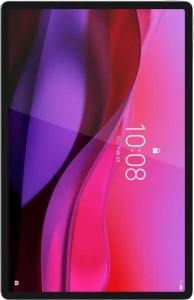
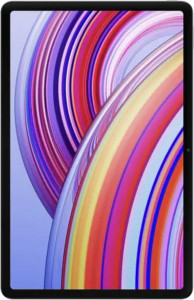
The most immediate physical contrast between these two tablets is portability. The Xiaomi Pad 7S Pro is notably slimmer at 5.8 mm thick and lighter at 585 g, compared to the Lenovo Yoga Tab Plus at 8.5 mm and 640 g. That 2.7 mm thickness gap and 55 g weight difference are both clearly perceptible in daily use — the Xiaomi sits flatter in a bag and feels less fatiguing during extended one-handed sessions. The volume difference reinforces this: the Yoga Tab Plus displaces roughly 50% more physical space than the Pad 7S Pro, which speaks to a fundamentally bulkier chassis design.

Where the Lenovo closes the gap — and then some — is in its bundled ecosystem and input capabilities. It ships with a stylus included and a detachable keyboard, transforming it into a more complete productivity device out of the box. Both tablets support 4096 pressure levels for stylus input, but only the Yoga Tab Plus also offers tilt sensitivity, which matters for artists and note-takers who rely on shading and natural pen-angle detection. Additionally, the Yoga Tab Plus carries water resistance, a meaningful real-world safeguard absent entirely on the Xiaomi.

The conclusion depends on use case. If you prioritize a sleek, lightweight form factor, the Xiaomi Pad 7S Pro has the clear physical edge. But the Lenovo Yoga Tab Plus delivers substantially more value as a standalone productivity and creative tool — bundled accessories, richer stylus input, and water resistance give it a broader feature advantage, at the cost of extra bulk. For most users who want a tablet that does more without buying extras separately, the Yoga Tab Plus holds the stronger overall design package.

Display:
screen size 12.7" 12.5"
resolution 2944 x 1840 px 3200 x 2136 px
pixel density 273 ppi 308 ppi
Display type LCD, IPS LCD, IPS
refresh rate 144Hz 144Hz
has branded damage-resistant glass
has anti-reflection coating
supports HDR10
brightness (typical) 650 nits 1000 nits
has a touch screen
Has sapphire glass display
supports HDR10+
supports Dolby Vision
Has an e-paper display

Both tablets share the same LCD IPS panel technology and a smooth 144Hz refresh rate, so the fundamentals of motion clarity and color rendering are on equal footing. The divergence emerges in raw display quality metrics. The Xiaomi Pad 7S Pro pulls ahead with a 3200 x 2136 resolution at 308 ppi, versus the Yoga Tab Plus at 2944 x 1840 and 273 ppi. That 35 ppi gap is genuinely visible when reading fine text or viewing detailed artwork up close — content on the Xiaomi simply appears crisper at normal viewing distances.

Brightness is where the practical gap widens most significantly. The Xiaomi's 1000 nits typical brightness versus the Yoga Tab Plus's 650 nits is a 54% advantage — enough to make outdoor or brightly lit indoor use considerably more comfortable on the Xiaomi. Paired with branded damage-resistant glass (which the Lenovo lacks), the Xiaomi's screen is also more resilient to everyday scratches and drops. Both panels feature an anti-reflection coating and support Dolby Vision, keeping them competitive for streaming. However, the Xiaomi additionally supports HDR10, broadening compatibility with HDR content sources beyond what Dolby Vision alone covers.

The display category is a clear win for the Xiaomi Pad 7S Pro. Higher pixel density, meaningfully greater brightness, wider HDR format support, and tougher glass together represent a consistent and real-world-relevant advantage over the Lenovo Yoga Tab Plus across reading, media consumption, and outdoor use scenarios.

Performance:
internal storage 512GB 1024GB
RAM 16GB 16GB
Chipset (SoC) name Qualcomm Snapdragon 8 Gen 3 Xring O1
GPU name Adreno 750 ARM Immortalis-G925
CPU speed 3 x 3.15 & 2 x 2.96 & 2 x 2.26 & 1 x 3.3 GHz 4 x 3.4 & 2 x 1.89 & 2 x 1.8 & 2 x 3.9 GHz
Geekbench 6 result (multi) 7325 8125
Geekbench 6 result (single) 2213 2709
has an external memory slot
semiconductor size 4 nm 3 nm
Supports 64-bit
Has integrated LTE
Uses big.LITTLE technology
DirectX version DirectX 12 DirectX 12
Has integrated graphics
GPU clock speed 900 MHz 1612 MHz
CPU threads 8 threads 10 threads
RAM speed 4800 MHz 4800 MHz
Has TrustZone
maximum memory amount 24GB 16GB
Android version Android 14 Android 15
Uses HMP
maximum memory bandwidth 76.6 GB/s 76.8 GB/s
OpenCL version 2 3

Chipset choice is the defining story here. The Lenovo Yoga Tab Plus runs on the Qualcomm Snapdragon 8 Gen 3, a well-established flagship chip, while the Xiaomi Pad 7S Pro deploys Xiaomi's own Xring O1, built on a newer 3 nm process versus the Snapdragon's 4 nm. That process advantage translates directly into the benchmark results: the Xiaomi leads in both Geekbench 6 single-core (2709 vs 2213) and multi-core (8125 vs 7325) scores. The single-core gap is particularly meaningful for everyday responsiveness — app launches, UI snappiness, and typing feel all correlate more with single-core output than raw multi-core throughput.

GPU performance skews the picture even further toward the Xiaomi. The ARM Immortalis-G925 running at 1612 MHz versus the Adreno 750 at 900 MHz is a substantial clock speed differential, and the Xiaomi also supports OpenCL 3 against the Lenovo's OpenCL 2 — relevant for compute-heavy workloads like image processing and certain AI tasks. On storage, the Xiaomi ships with 1 TB of internal space compared to 512 GB on the Lenovo, doubling local capacity for media libraries and large apps. The Lenovo counters with a higher maximum memory ceiling of 24 GB versus 16 GB on the Xiaomi, which could matter for extreme multitasking, though both ship with 16 GB RAM as a baseline. The Xiaomi also runs Android 15 out of the box, one generation ahead of the Lenovo's Android 14.

Across the key performance vectors — CPU throughput, GPU horsepower, storage capacity, and OS recency — the Xiaomi Pad 7S Pro holds a consistent and meaningful edge. The Lenovo's higher memory ceiling is a partial counterpoint, but it does not offset the Xiaomi's broader performance lead for the vast majority of real-world use cases.

Cameras:
megapixels (main camera) 13 & 2 MP 50 MP
megapixels (front camera) 13MP 32MP
has a flash
has a front camera
has a built-in HDR mode
can create panoramas in-camera
supports slow-motion video recording
has touch autofocus
has a BSI sensor
has manual white balance
has a CMOS sensor
has continuous autofocus when recording movies
Has a front-facing LED flash
number of flash LEDs 1 1
has manual ISO
has a video light
Shoots 360° panorama
has a serial shot mode
has built-in optical image stabilization
Has a dual-tone LED flash
has manual focus
Has a RGB LED flash
has manual exposure

Megapixel count is rarely the whole camera story, but the gap here is too large to overlook. The Xiaomi Pad 7S Pro's 50 MP main sensor dwarfs the Lenovo Yoga Tab Plus's 13 MP primary shooter, and the front camera follows the same pattern — 32 MP versus 13 MP. More pixels mean more detail to crop into and greater flexibility when reframing shots after the fact, which matters for video calls and document scanning — two of the most common tablet camera use cases. The Yoga Tab Plus does pair its main lens with a secondary 2 MP sensor, though at that resolution its practical contribution is limited.

Feature parity is strong across the board: both tablets support HDR, slow-motion video, touch autofocus, continuous autofocus during recording, and a full manual control suite covering ISO, white balance, exposure, and focus. Where the Xiaomi quietly pulls further ahead is in the finer details — it adds panorama mode, a serial shot (burst) mode, and a dual-tone LED flash. The dual-tone flash is a small but genuine quality-of-life improvement for mixed-lighting environments, producing more natural color balance in flash photography.

The camera category belongs clearly to the Xiaomi Pad 7S Pro. Its sensor resolution advantage is decisive for both stills and video clarity, and the additional shooting modes give it more versatility without the Lenovo offering any compensating feature. For users who rely on their tablet for document capture, video conferencing, or casual photography, the Xiaomi is the stronger tool.
Audio:
has LDAC
has stereo speakers
has a socket for a 3.5 mm audio jack
number of microphones 2 4
Has a radio

Stereo speakers and the absence of a 3.5 mm headphone jack are shared ground — neither tablet offers wired audio convenience, so wireless listening is the assumed path for both. The meaningful splits emerge in wireless audio quality and voice capture. The Xiaomi Pad 7S Pro supports LDAC, Sony's high-resolution Bluetooth audio codec, while the Lenovo Yoga Tab Plus does not. LDAC transmits up to three times the data of standard Bluetooth audio, which translates to audibly greater detail and dynamic range when paired with compatible LDAC headphones — a significant advantage for users who take wireless audio quality seriously.

Microphone count tells a similar story. The Xiaomi's 4-microphone array versus the Lenovo's 2 microphones means better spatial sound capture, more effective background noise isolation, and cleaner voice pickup for video calls and recordings. For a large-screen tablet frequently used in meetings or content creation, this is a practical day-to-day differentiator rather than a niche spec.

With advantages in both wireless audio transmission quality and voice capture capability, the Xiaomi Pad 7S Pro takes a clear edge in this category. The Lenovo is not deficient in any absolute sense — stereo speakers remain a baseline competency — but it simply offers less on every axis where the two products diverge.

Battery:
battery power 10200 mAh 10610 mAh
Supports fast charging
has wireless charging
has a battery level indicator
has a rechargeable battery
has a removable battery

Battery is the one category in this comparison where the two tablets are functionally identical in all but one minor numerical detail. The Xiaomi Pad 7S Pro edges ahead with 10610 mAh against the Lenovo Yoga Tab Plus's 10200 mAh — a gap of roughly 4%, which in real-world usage translates to minutes rather than hours of additional screen time. Both cells are large by any standard, and either tablet is well-suited for extended sessions without reaching for a charger.

Beyond capacity, the feature set is a complete mirror: both support fast charging, neither offers wireless charging, and both use sealed non-removable batteries. The absence of wireless charging is a shared limitation worth noting for users who rely on charging pads, but it equally affects both devices and does not differentiate them from each other.

This category is effectively a tie. The Xiaomi's marginal capacity lead is too slim to constitute a practical advantage, and every other battery specification is identical. Users should treat battery life as a non-factor when choosing between these two tablets, and focus their decision on the categories where the differences are more consequential.

Connectivity & Features:
release date February 2025 June 2025
Wi-Fi version Wi-Fi 4 (802.11n), Wi-Fi 5 (802.11ac), Wi-Fi 6 (802.11ax), Wi-Fi 6E (802.11ax) Wi-Fi 4 (802.11n), Wi-Fi 5 (802.11ac), Wi-Fi 6 (802.11ax), Wi-Fi 6E (802.11ax), Wi-Fi 7 (802.11be)
has Mail Privacy Protection
has on-device machine learning
has clipboard warnings
has location privacy options
has camera/microphone privacy options
can block app tracking
blocks cross-site tracking
supports split screen
has Live Text
has notification permissions
has full-page screenshots
has Quick Start
has theme customization
has Wi-Fi password sharing
has PiP
Can play games while they download
has an extra dim mode
can offload apps
has focus modes
has media picker
has dynamic theming
has dark mode
has battery health check
Has USB Type-C
has a cellular module
has 5G support
is a multi-user system
gets direct OS updates
has GPS
has a child lock
has an HDMI output
has NFC
Has a fingerprint scanner
USB version 3.1 3.2
Supports widgets
Bluetooth version 5.4 5.4
has a gyroscope
Is free and open source
Has offline voice recognition
has a compass
supports Wi-Fi
Has sharing intents
Has customizable notifications
Uses 3D facial recognition
has an accelerometer
has voice commands
Has an iris scanner
Has a built-in projector
supports Ethernet
Has an infrared sensor
Tracks the current position of a mobile device

Wireless connectivity is one of the cleaner separators in this group. The Xiaomi Pad 7S Pro adds Wi-Fi 7 (802.11be) to the stack that both tablets otherwise share through Wi-Fi 6E. Wi-Fi 7 delivers substantially higher theoretical throughput and lower latency on compatible routers — meaningful today for heavy file transfers and 4K streaming, and increasingly relevant as Wi-Fi 7 infrastructure becomes more common. The Xiaomi also steps up to USB 3.2 versus the Lenovo's USB 3.1, offering roughly double the wired transfer bandwidth — a practical gain when moving large media files or connecting high-speed peripherals.

Hardware features tell a similar story. The Xiaomi includes a fingerprint scanner, a compass, and an infrared sensor — none of which are present on the Lenovo Yoga Tab Plus. The fingerprint scanner is the most impactful of these, enabling fast and convenient biometric unlock. The infrared sensor allows the tablet to function as a universal remote control, a niche but genuinely useful feature. The compass rounds out navigation capabilities. On the software side, the Xiaomi can offload apps to free storage without deleting their data — a handy storage management tool the Lenovo lacks.

Across this category the Xiaomi Pad 7S Pro holds a consistent advantage. The Lenovo matches it on nearly every shared feature, but the Xiaomi adds forward-looking wireless support, faster USB throughput, biometric security, and a richer sensor suite without the Lenovo countering on any unique capability. For users who value connectivity headroom and hardware versatility, the Xiaomi is the stronger choice.

Miscellaneous:
DDR memory version 5 5
uses multithreading

This group offers no basis for differentiation. Both the Lenovo Yoga Tab Plus and the Xiaomi Pad 7S Pro use DDR5 memory and support multithreading — and that is the entirety of the data available here. DDR5 is the current mainstream standard for flagship-tier devices, bringing improved bandwidth and power efficiency over DDR4, but since both tablets share it equally, it confers no advantage to either side.

This is a straightforward tie. The Miscellaneous group, as defined by these specs, does not influence the overall comparison between these two tablets in any meaningful direction.

Comparison Summary & Verdict

After examining every specification, it is clear that both tablets serve distinct audiences. The Lenovo Yoga Tab Plus stands out as the better productivity companion, thanks to its included stylus, detachable keyboard, water resistance, and tilt sensitivity support — making it a strong choice for users who need a versatile, all-in-one creative or work setup. The Xiaomi Pad 7S Pro 12.5, on the other hand, wins decisively on raw performance with its 3nm Xring O1 chipset, higher Geekbench scores, a sharper 308 ppi display with 1000 nits brightness, Wi-Fi 7, a 50MP main camera, and a fingerprint scanner — making it the superior option for users who prioritize speed, media consumption, and cutting-edge connectivity over bundled accessories.

Lenovo Yoga Tab Plus
Buy Lenovo Yoga Tab Plus if...

Buy the Lenovo Yoga Tab Plus if you want a productivity-ready tablet with an included stylus and detachable keyboard, water resistance, and tilt sensitivity support out of the box.

Xiaomi Pad 7S Pro 12.5
Buy Xiaomi Pad 7S Pro 12.5 if...

Buy the Xiaomi Pad 7S Pro 12.5 if you prioritize top-tier performance, a brighter and sharper display, Wi-Fi 7 connectivity, and a superior camera system.