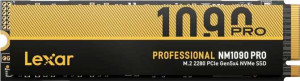
Lexar NM1090 Pro 1TB
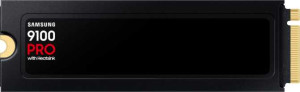
Samsung 9100 Pro 4TB

Lexar NM1090 Pro 1TB Samsung 9100 Pro 4TB

Common Features

  • Both products are M2 type SSDs.
  • Both products have DRAM cache.
  • Both products are NVMe SSDs.
  • Both products use PCI Express version 5.
  • Both products use TLC storage type.
  • Both products have 8 controller channels.
  • Both products have an MTBF of 1.5 million hours.

Main Differences

  • Sequential read speed is 14000 MB/s on Lexar NM1090 Pro 1TB and 14800 MB/s on Samsung 9100 Pro 4TB.
  • Random read speed is 1650000 IOPS on Lexar NM1090 Pro 1TB and 2200000 IOPS on Samsung 9100 Pro 4TB.
  • Sequential write speed is 10000 MB/s on Lexar NM1090 Pro 1TB and 13400 MB/s on Samsung 9100 Pro 4TB.
  • Random write speed is 1800000 IOPS on Lexar NM1090 Pro 1TB and 2600000 IOPS on Samsung 9100 Pro 4TB.
  • PassMark result is 74037 on Lexar NM1090 Pro 1TB and 88718 on Samsung 9100 Pro 4TB.
  • Internal storage is 1000GB on Lexar NM1090 Pro 1TB and 4000GB on Samsung 9100 Pro 4TB.
  • The controller is Silicon Motion SM2508 on Lexar NM1090 Pro 1TB and Samsung Presto (S4LY027) on Samsung 9100 Pro 4TB.
  • Terabytes Written (TBW) is 700 on Lexar NM1090 Pro 1TB and 2400 on Samsung 9100 Pro 4TB.
Specs Comparison
Lexar NM1090 Pro 1TB

Lexar NM1090 Pro 1TB

Samsung 9100 Pro 4TB

Samsung 9100 Pro 4TB

Read speed:
sequential read speed 14000 MB/s 14800 MB/s
random read speed 1650000 IOPS 2200000 IOPS

The Lexar NM1090 Pro 1TB offers a sequential read speed of 14000 MB/s and a random read speed of 1650000 IOPS. In comparison, the Samsung 9100 Pro 4TB has a slightly higher sequential read speed of 14800 MB/s, surpassing the Lexar by 800 MB/s. The Samsung drive also outperforms the Lexar in random read speed, achieving 2200000 IOPS, which is 550000 IOPS faster than the Lexar.

Both drives provide high-speed performance, with the Samsung 9100 Pro showing a clear edge in both sequential and random read speeds. However, the Lexar NM1090 Pro still offers impressive speeds, particularly for users who do not require the absolute top-end performance in these areas.

While the Lexar offers solid performance with its sequential read speed and random IOPS, the Samsung 9100 Pro's superior speeds make it a stronger option for those looking for the fastest read performance in both sequential and random scenarios.

Write speed:
sequential write speed 10000 MB/s 13400 MB/s
random write speed 1800000 IOPS 2600000 IOPS

The Lexar NM1090 Pro 1TB offers a sequential write speed of 10000 MB/s and a random write speed of 1800000 IOPS. In contrast, the Samsung 9100 Pro 4TB delivers a higher sequential write speed of 13400 MB/s, outperforming the Lexar by 3400 MB/s. Additionally, the Samsung drive has a random write speed of 2600000 IOPS, which is 800000 IOPS faster than the Lexar.

Both drives show strong performance in write speeds, with the Samsung 9100 Pro leading in both sequential and random write speeds. The Lexar NM1090 Pro, while offering slightly lower speeds, still provides solid write performance suitable for many use cases.

In summary, the Samsung 9100 Pro stands out with its superior write speeds, making it a better choice for users who prioritize maximum write performance, while the Lexar NM1090 Pro remains a competitive option for those with more moderate needs.

Benchmarks:
PassMark result 74037 88718

The Lexar NM1090 Pro 1TB has a PassMark result of 74037, while the Samsung 9100 Pro 4TB has a higher PassMark result of 88718. This indicates that the Samsung drive achieves better overall benchmark performance compared to the Lexar.

Both drives provide impressive results in terms of performance, with the Samsung 9100 Pro showing a clear advantage in the PassMark score. This score reflects the overall speed and efficiency of each drive under test conditions.

In summary, the Samsung 9100 Pro outperforms the Lexar NM1090 Pro in the benchmark tests, with a noticeable gap in the PassMark results, which may suggest superior overall performance in real-world usage scenarios.

General info:
type M2 M2
SSD cache DRAM cache DRAM cache
Is an NVMe SSD
NVMe version 2 2
internal storage 1000GB 4000GB
release date April 2025 February 2025
controller Silicon Motion SM2508 Samsung Presto (S4LY027)
SSD storage type TLC TLC
PCI Express (PCIe) version 5 5
Controller channels 8 8
Terabytes Written (TBW) 700 2400
MTBF 1.5million hours 1.5million hours
warranty period 5 years 5 years
Has an integrated heatsink
has RGB lighting

Both the Lexar NM1090 Pro 1TB and the Samsung 9100 Pro 4TB are M.2 NVMe SSDs with DRAM cache, supporting NVMe version 2 and PCIe version 5. They both feature 8 controller channels and use TLC NAND storage. The Lexar offers 1000GB of internal storage, while the Samsung provides significantly more at 4000GB.

In terms of endurance, the Lexar has a Terabytes Written (TBW) rating of 700, while the Samsung drives a much higher TBW rating of 2400, which suggests a higher endurance for the Samsung model. Both products have the same MTBF (Mean Time Between Failures) of 1.5 million hours and come with a 5-year warranty. Neither has an integrated heatsink or RGB lighting.

Overall, the primary differences between these two products are the storage capacity and the TBW rating, with the Samsung 9100 Pro offering significantly more capacity and higher endurance, while the Lexar NM1090 Pro provides a more moderate storage size.

Comparison Summary

This is a specification comparison between Lexar NM1090 Pro 1TB and Samsung 9100 Pro 4TB. Both products are M2 type SSDs with DRAM cache and use TLC storage type. They both support PCI Express version 5 and have 8 controller channels. Key differences include sequential read speed of 14000 MB/s on the Lexar NM1090 Pro 1TB and 14800 MB/s on the Samsung 9100 Pro 4TB, random read speed of 1650000 IOPS on the Lexar NM1090 Pro 1TB and 2200000 IOPS on the Samsung 9100 Pro 4TB, and internal storage of 1000GB on the Lexar NM1090 Pro 1TB and 4000GB on the Samsung 9100 Pro 4TB. Additionally, the Terabytes Written (TBW) is 700 on the Lexar NM1090 Pro 1TB and 2400 on the Samsung 9100 Pro 4TB.