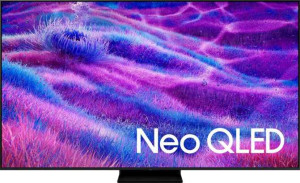
At the foundational level, these two 100-inch giants are remarkably aligned: both deliver 4K (3840 x 2160) resolution at 44 ppi, a 10-bit color pipeline rendering 1.07 billion colors, a 144Hz refresh rate, and a Mini-LED-backlit LCD panel. Both also share 178° horizontal and vertical viewing angles, anti-reflection coatings, and ambient light sensors — meaning neither has a structural edge in panel geometry or motion handling on paper.
The meaningful differences surface in panel technology and HDR ecosystem support. The Samsung QN100QN80FF adds a QLED quantum dot layer on top of its Mini-LED backlight, which typically translates to wider color volume and more saturated, accurate colors at high brightness — an advantage the LG 100QNED85AU lacks. On the HDR side, the Samsung also supports HDR10+ in addition to HDR10 and HLG, enabling scene-by-scene dynamic metadata for compatible content — whereas the LG is limited to the static-metadata HDR10 standard. Neither TV supports Dolby Vision, so that is a non-factor. For gamers, the Samsung extends its adaptive sync support to AMD FreeSync Premium Pro, which adds Low Framerate Compensation and HDR support for gaming — a step above the LG's FreeSync Premium certification.
The Samsung QN100QN80FF holds a clear display advantage. Its QLED layer, HDR10+ compatibility, and FreeSync Premium Pro certification collectively offer better color fidelity for cinephiles and a more capable gaming display pipeline — without any compensating win for the LG in this spec group. The LG's 0.8-inch larger physical screen is negligible at this size and viewing distance. Buyers prioritizing HDR quality and color volume should lean toward the Samsung.