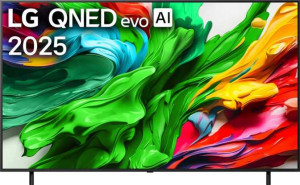
LG 55QNED85AUA 55"
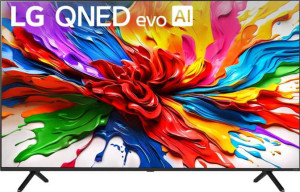
LG 85QNED92AUA 85"

LG 55QNED85AUA 55" LG 85QNED92AUA 85"

Overview

Welcome to our in-depth specification comparison between the LG 55QNED85AUA 55″ and the LG 85QNED92AUA 85″. Both televisions share a strong foundation of 4K UHD resolution, HDMI 2.1 connectivity, and a rich audio suite including Dolby Atmos, yet they diverge in meaningful ways across screen size, refresh rate, and HDR capabilities. Whether you are prioritizing a sharper, faster panel or a more immersive large-format experience, this comparison will help you navigate the key trade-offs.

Common Features

  • Both TVs have a 4K (UHD) display resolution of 3840 x 2160 px.
  • Both TVs display 1070 million colors with a 10-bit bit depth.
  • HDR10 support is available on both products.
  • HDR10+ support is not available on either product.
  • HLG support is available on both products.
  • Both TVs support AMD FreeSync and AMD FreeSync Premium adaptive synchronization.
  • Both TVs have 4 HDMI 2.1 ports.
  • Both TVs have 2 USB ports and 1 RJ45 port.
  • Bluetooth 5.3 is present on both products.
  • Both TVs support Wi-Fi 4, Wi-Fi 5, Wi-Fi 6, and Wi-Fi 6E.
  • Dolby Digital support is available on both products.
  • Dolby Digital Plus support is available on both products.
  • Dolby Atmos support is available on both products.
  • Dolby Audio support is available on both products.
  • Digital Out support is available on both products.
  • Stereo speakers are present on both products.
  • SRS TheaterSound HD is not available on either product.
  • Dolby Virtual support is not available on either product.
  • Both TVs support VESA mounting.
  • AirPlay is available on both products.
  • Both TVs have a built-in smart TV platform.
  • Google Assistant compatibility is present on both products.
  • Alexa compatibility is present on both products.
  • Siri and Apple HomeKit support is not available on either product.
  • Both TVs support remote smartphone control.
  • Neither TV has a rechargeable remote control.
  • USB recording is supported on both products.

Main Differences

  • The screen size is 55.2″ on LG 55QNED85AUA 55″ and 84.5″ on LG 85QNED92AUA 85″.
  • The pixel density is 80 ppi on LG 55QNED85AUA 55″ and 52 ppi on LG 85QNED92AUA 85″.
  • The refresh rate is 144Hz on LG 55QNED85AUA 55″ and 120Hz on LG 85QNED92AUA 85″.
  • Dolby Vision support is present on LG 85QNED92AUA 85″ but not available on LG 55QNED85AUA 55″.
  • The width is 1236.9 mm on LG 55QNED85AUA 55″ and 1889.8 mm on LG 85QNED92AUA 85″.
  • The height is 716.3 mm on LG 55QNED85AUA 55″ and 1082 mm on LG 85QNED92AUA 85″.
  • The thickness is 30.5 mm on LG 55QNED85AUA 55″ and 60.9 mm on LG 85QNED92AUA 85″.
  • The weight is 15286 g on LG 55QNED85AUA 55″ and 35199 g on LG 85QNED92AUA 85″.
  • The volume is 27022.739835 cm³ on LG 55QNED85AUA 55″ and 124526.10324 cm³ on LG 85QNED92AUA 85″.
  • The operating power consumption is 96W on LG 55QNED85AUA 55″ and 368W on LG 85QNED92AUA 85″.
  • The annual power consumption is 178 kWh on LG 55QNED85AUA 55″ and 675 kWh on LG 85QNED92AUA 85″.
Specs Comparison
LG 55QNED85AUA 55"

LG 55QNED85AUA 55"

LG 85QNED92AUA 85"

LG 85QNED92AUA 85"

Display:
display resolution 4K (UHD) 4K (UHD)
Display type LED-backlit, LCD, Mini-LED Mini-LED, LCD, LED-backlit
screen size 55.2" 84.5"
resolution 3840 x 2160 px 3840 x 2160 px
pixel density 80 ppi 52 ppi
display colors 1070 million 1070 million
bit depth 10-bit 10-bit
refresh rate 144Hz 120Hz
supports HDR10
supports HDR10+
supports Dolby Vision
supports HLG
Adaptive synchronization AMD FreeSync, AMD FreeSync Premium AMD FreeSync, AMD FreeSync Premium
has anti-reflection coating
has an ambient light sensor
maximum horizontal viewing angle 178º 178º
maximum vertical viewing angle 178º 178º

Both the LG 55QNED85AUA and LG 85QNED92AUA share the same panel fundamentals: a 4K (3840 x 2160) Mini-LED LCD with 10-bit color depth and 1.07 billion colors, backed by identical wide viewing angles of 178° in both axes, anti-reflection coating, and an ambient light sensor. In practice, this means both sets deliver a visually rich, color-accurate image from virtually any seat in the room.

The most consequential difference beneath the surface is pixel density. Rendering the same 4K resolution across a 55.2″ panel yields a sharp 80 ppi, while spreading it over 84.5″ drops that figure to 52 ppi. At typical living-room viewing distances the 85″ model remains comfortably above the threshold where individual pixels become visible, but close-up viewers or those in smaller rooms may notice slightly softer fine detail. On the other hand, the 85QNED92AUA gains an important HDR advantage: it supports Dolby Vision, a dynamically mastered HDR format absent on the 55-inch, giving it richer tone-mapping on compatible streaming and disc content. The 55QNED85AUA counters with a higher 144Hz refresh rate versus 120Hz on the larger model, translating to smoother motion and a tangible edge for fast gaming or sports.

Overall, neither model is a clear all-around winner — the edge depends on the use case. The 55QNED85AUA is the stronger choice for gaming and pixel-density-sensitive viewing, while the 85QNED92AUA wins for cinematic HDR quality via Dolby Vision and sheer screen presence. Buyers who prioritize a large, immersive image with premium HDR support will favor the 85″; those who value responsiveness and crispness at closer range should lean toward the 55″.

Connectivity:
Has Bluetooth
HDMI version HDMI 2.1 HDMI 2.1
HDMI ports 4 4
supports Wi-Fi
Wi-Fi version Wi-Fi 4 (802.11n), Wi-Fi 5 (802.11ac), Wi-Fi 6 (802.11ax), Wi-Fi 6E (802.11ax) Wi-Fi 4 (802.11n), Wi-Fi 5 (802.11ac), Wi-Fi 6 (802.11ax), Wi-Fi 6E (802.11ax)
Bluetooth version 5.3 5.3
USB ports 2 2
RJ45 ports 1 1
supports Miracast
has a socket for a 3.5 mm audio jack
has an external memory slot
has a VGA connector
has a DVI connector

Connectivity is a dead heat between these two models — every single spec in this group is identical. Both televisions are equipped with four HDMI 2.1 ports, which is the current gold standard for home theater and gaming setups, supporting 4K at high refresh rates and features like eARC for premium audio passthrough. Paired with two USB ports and a dedicated RJ45 ethernet jack, neither set will leave users scrambling for inputs regardless of how many devices they need to connect.

On the wireless side, both models support the full modern Wi-Fi stack up to Wi-Fi 6E (802.11ax), meaning they can take advantage of the less congested 6GHz band for faster, more stable streaming where compatible routers are present. Bluetooth 5.3 on both units ensures reliable, low-latency connections to headphones, soundbars, and peripherals. Miracast support rounds out the wireless picture by enabling direct screen mirroring from compatible mobile devices without a separate dongle.

Since every connectivity spec is shared across both TVs, this group is a complete tie. A buyer's decision here will not be influenced by port selection or wireless capability — those considerations should be settled entirely by the display and feature differences covered in other spec groups.

Audio:
supports Dolby Digital
supports Digital Out
supports Dolby Digital Plus
has SRS TheaterSound HD
has stereo speakers
has Dolby Atmos
has Dolby Audio
supports Dolby Virtual
has a subwoofer
HDMI ARC / eARC HDMI ARC, HDMI eARC HDMI ARC, HDMI eARC

Audio is another category where both televisions arrive at exactly the same specification sheet. Each model includes built-in stereo speakers with a dedicated subwoofer, and both carry support for Dolby Atmos and Dolby Audio — the former being particularly meaningful for users who want object-based, three-dimensional sound from streaming content without an external sound system.

For those who do plan to add an external audio setup, both sets offer HDMI ARC and eARC on the same port, with eARC being the more capable option — it carries enough bandwidth to pass through lossless audio formats from a soundbar or AV receiver. The shared support for Dolby Digital Plus and standard digital output further ensures broad compatibility with virtually any modern audio equipment.

With no differences anywhere in this group, audio is a complete tie. Neither TV holds any advantage over the other on paper, and the choice between them should rest entirely on the display and feature distinctions explored in the other specification groups.

Design:
width 1236.9 mm 1889.8 mm
weight 15286 g 35199 g
thickness 30.5 mm 60.9 mm
height 716.3 mm 1082 mm
volume 27022.739835 cm³ 124526.10324 cm³
Supports VESA mount

As expected from a 55″ versus 85″ pairing, the physical differences here are substantial. The LG 85QNED92AUA is nearly twice as wide (1889.8 mm vs 1236.9 mm) and more than twice as tall (1082 mm vs 716.3 mm), which has direct implications for room sizing and furniture compatibility. Prospective buyers should carefully measure their intended wall or stand space before committing — the 85″ model demands a genuinely large room to avoid feeling overwhelming at typical viewing distances.

Weight is where the practical handling gap becomes most pronounced. At 35.2 kg, the 85QNED92AUA is more than double the 15.3 kg of the 55-inch, meaning installation will realistically require two people and a wall mount rated for that load. The thickness difference is equally notable — 60.9 mm versus 30.5 mm — so the larger model will protrude considerably more from a wall, which may matter for tighter spaces or minimalist setups. The resulting volume difference, roughly 27,023 cm³ for the 55″ against 124,526 cm³ for the 85″, underscores just how different these two units are to live with day-to-day.

Both support VESA mounting, so wall installation is an option for either. That said, the 55QNED85AUA holds a clear practical edge in this group — it is lighter, slimmer, and far easier to position, transport, and install. The 85QNED92AUA is the right choice only when space genuinely accommodates it; for anything short of a dedicated home theater or large open-plan room, the 55″ is the more manageable option.
Features:
release date March 2025 April 2025
has AirPlay
has built-in smart TV
compatible with Google Assistant
works with Alexa
works with Siri/Apple HomeKit
supports a remote smartphone
has a rechargeable remote control
supports USB recording
operating power consumption 96W 368W
standby power consumption 0.5W 0.5W
has a search browser
has a sleep timer
has a child lock
annual power consumption 178 kWh 675 kWh
warranty period 1 years 1 years
has voice commands

From a smart feature standpoint, these two televisions are functionally identical. Both run a built-in smart TV platform with Google Assistant, Amazon Alexa, and AirPlay support, covering the three major voice and casting ecosystems. USB recording, smartphone remote control, and a browser are also shared across both models, meaning day-to-day usability is indistinguishable between them. Neither supports Apple HomeKit or Siri, which is worth noting for users deeply embedded in the Apple ecosystem.

Power consumption is where the two sets diverge sharply — and it is the only meaningful differentiator in this group. The LG 55QNED85AUA draws 96W during operation and consumes an estimated 178 kWh annually, while the 85QNED92AUA requires 368W at peak and racks up approximately 675 kWh per year. That annual gap of nearly 500 kWh translates to a tangible difference in electricity costs over the lifetime of the TV — roughly equivalent to running the 55-inch for nearly four years to match one year of the 85-inch. Standby consumption is negligible and identical at 0.5W for both.

On features alone, this group is a tie in every dimension except energy use, where the 55QNED85AUA holds a clear and quantifiable advantage. For energy-conscious buyers or those in regions with high electricity costs, the smaller model's efficiency profile is a genuine consideration that compounds significantly over years of daily use.

Comparison Summary & Verdict

After examining all the specifications, these two LG QNED televisions clearly target different audiences. The LG 55QNED85AUA 55″ stands out with its higher 144Hz refresh rate and greater pixel density of 80 ppi, making it the stronger choice for gaming and fast-motion content in smaller to mid-sized rooms. It is also significantly lighter at 15,286 g and consumes far less power at just 96W. The LG 85QNED92AUA 85″, on the other hand, dominates with its expansive 84.5-inch screen and adds Dolby Vision support, making it ideal for dedicated home cinema setups where cinematic HDR performance and sheer screen presence matter most. Both share an identical connectivity suite and audio feature set, so your decision ultimately comes down to room size, use case, and budget.

LG 55QNED85AUA 55
Buy LG 55QNED85AUA 55" if...

Buy the LG 55QNED85AUA 55″ if you want a higher 144Hz refresh rate and sharper pixel density for gaming or fast-paced content, while also keeping power consumption and physical footprint low.

LG 85QNED92AUA 85
Buy LG 85QNED92AUA 85" if...

Buy the LG 85QNED92AUA 85″ if you want a large 84.5-inch cinematic screen with Dolby Vision support for a premium home theatre experience.