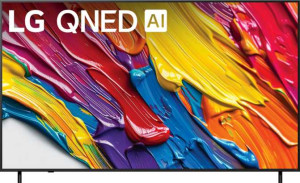
LG 65QNED82AUA 65"
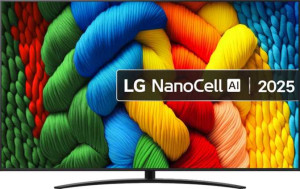
LG 86NANO81A6A 86"

LG 65QNED82AUA 65" LG 86NANO81A6A 86"

Overview

Welcome to our in-depth spec comparison between the LG 65QNED82AUA 65″ and the LG 86NANO81A6A 86″. Both are 4K UHD televisions from LG sharing many core features, yet they take notably different approaches in areas such as display technology, HDR format support, physical dimensions, and connectivity options. Read on to discover which of these two sets best fits your viewing space and entertainment needs.

Common Features

  • Both TVs have a 4K (UHD) display resolution of 3840 x 2160 px.
  • Both TVs display 1070 million colors with a 10-bit bit depth.
  • Both TVs have a native refresh rate of 60Hz.
  • HDR10 support is available on both TVs.
  • HLG support is available on both TVs.
  • An anti-reflection coating is present on both TVs.
  • Bluetooth is available on both TVs.
  • Both TVs have 3 HDMI ports with HDMI 2.1 version.
  • Wi-Fi is supported on both TVs with Wi-Fi 4 (802.11n) and Wi-Fi 5 (802.11ac).
  • Both TVs include 1 RJ45 port.
  • Miracast support is available on both TVs.
  • Neither TV has an external memory slot.
  • Dolby Digital and Dolby Digital Plus support is available on both TVs.
  • Digital Out support is available on both TVs.
  • Stereo speakers are present on both TVs.
  • Dolby Atmos and Dolby Audio are available on both TVs.
  • Dolby Virtual support is not available on either TV.
  • SRS TheaterSound HD is not available on either TV.
  • Both TVs support VESA mounting.
  • AirPlay is available on both TVs, and both have a built-in smart TV platform.
  • Both TVs are compatible with Google Assistant and work with Alexa.
  • Siri and Apple HomeKit compatibility is not available on either TV.
  • Both TVs support remote smartphone control and USB recording.
  • Neither TV has a rechargeable remote control.

Main Differences

  • The LG 65QNED82AUA 65″ uses an LED-backlit, LCD, Mini-LED display type, while the LG 86NANO81A6A 86″ uses an LED-backlit, LCD display without Mini-LED.
  • The screen size is 65.1″ on the LG 65QNED82AUA 65″ and 86″ on the LG 86NANO81A6A 86″.
  • Pixel density is 68 ppi on the LG 65QNED82AUA 65″ and 51 ppi on the LG 86NANO81A6A 86″.
  • HDR10+ support is present on the LG 86NANO81A6A 86″ but not available on the LG 65QNED82AUA 65″.
  • Dolby Vision support is present on the LG 86NANO81A6A 86″ but not available on the LG 65QNED82AUA 65″.
  • Bluetooth version is 5.0 on the LG 65QNED82AUA 65″ and 5.1 on the LG 86NANO81A6A 86″.
  • USB ports number 1 on the LG 65QNED82AUA 65″ and 2 on the LG 86NANO81A6A 86″.
  • A 3.5 mm audio jack socket is present on the LG 86NANO81A6A 86″ but not available on the LG 65QNED82AUA 65″.
  • Width is 1455.4 mm on the LG 65QNED82AUA 65″ and 1927 mm on the LG 86NANO81A6A 86″.
  • Height is 840.7 mm on the LG 65QNED82AUA 65″ and 1104 mm on the LG 86NANO81A6A 86″.
  • Thickness is 50.8 mm on the LG 65QNED82AUA 65″ and 59.9 mm on the LG 86NANO81A6A 86″.
  • Weight is 23179 g on the LG 65QNED82AUA 65″ and 48900 g on the LG 86NANO81A6A 86″.
  • Volume is 62156.58 cm³ on the LG 65QNED82AUA 65″ and 127431.74 cm³ on the LG 86NANO81A6A 86″.
Specs Comparison
LG 65QNED82AUA 65"

LG 65QNED82AUA 65"

LG 86NANO81A6A 86"

LG 86NANO81A6A 86"

Display:
display resolution 4K (UHD) 4K (UHD)
Display type LED-backlit, LCD, Mini-LED LED-backlit, LCD
screen size 65.1" 86"
resolution 3840 x 2160 px 3840 x 2160 px
pixel density 68 ppi 51 ppi
display colors 1070 million 1070 million
bit depth 10-bit 10-bit
refresh rate 60Hz 60Hz
supports HDR10
supports HDR10+
supports Dolby Vision
supports HLG
has anti-reflection coating
has an ambient light sensor
maximum horizontal viewing angle 178º 178º
maximum vertical viewing angle 178º 178º

Both the LG 65QNED82AUA and the LG 86NANO81A6A share the same 4K (3840 x 2160) resolution, 10-bit color depth, 1070 million display colors, and a 60Hz refresh rate — so on paper, the foundational image quality building blocks are identical. Where they immediately diverge is screen size and, critically, pixel density: the 65″ QNED delivers 68 ppi versus the 86″ NanoCell's 51 ppi. In practice, this means the QNED's image will appear noticeably sharper and more detailed at typical viewing distances, since more pixels are packed into each inch of screen.

The panel technology gap is also significant. The 65QNED82AUA uses a Mini-LED backlight, which enables finer local dimming zones compared to the conventional LED-backlit LCD in the 86NANO81A6A. This typically translates to better contrast, deeper blacks, and improved HDR performance in real-world viewing. Speaking of HDR, the 86″ NanoCell has a broader format advantage: it supports HDR10+, Dolby Vision, and HLG, while the 65″ QNED is limited to HDR10 and HLG only — missing both HDR10+ and Dolby Vision. This matters because Dolby Vision in particular is widely used on major streaming platforms, meaning the NanoCell can display that content as the creator intended.

In summary, neither product dominates cleanly. The 65QNED82AUA holds the edge in raw image sharpness and backlighting technology, making it better suited for closer viewing distances and dark-room contrast. The 86NANO81A6A counters with a much larger screen and superior HDR format compatibility, which is a meaningful advantage for streaming-heavy users in bright living rooms. The right choice depends on whether you prioritize picture precision and contrast (65″ QNED) or screen real estate and HDR versatility (86″ NanoCell).
Connectivity:
Has Bluetooth
HDMI version HDMI 2.1 HDMI 2.1
HDMI ports 3 3
supports Wi-Fi
Wi-Fi version Wi-Fi 4 (802.11n), Wi-Fi 5 (802.11ac) Wi-Fi 4 (802.11n), Wi-Fi 5 (802.11ac)
Bluetooth version 5 5.1
USB ports 1 2
RJ45 ports 1 1
supports Miracast
has a socket for a 3.5 mm audio jack
has an external memory slot
has a VGA connector
has a DVI connector

At a glance, these two TVs share a surprisingly similar connectivity foundation: both offer 3 HDMI 2.1 ports, a single RJ45 ethernet port, identical Wi-Fi support (Wi-Fi 4 and Wi-Fi 5), and Miracast screen mirroring. For most users, this means either TV is equally capable of handling modern gaming consoles, streaming devices, and home network setups without compromise.

The differences, while modest, are worth noting. The 86NANO81A6A edges ahead with 2 USB ports versus just 1 on the 65QNED82AUA — a practical advantage for users who want to simultaneously connect a USB storage device and a peripheral like a keyboard or webcam. It also includes a 3.5mm audio jack, which the QNED omits entirely; this is a small but real convenience for anyone using wired headphones or connecting to a basic external speaker without Bluetooth. The NanoCell also carries a marginally newer Bluetooth 5.1 versus Bluetooth 5.0 on the QNED, though the real-world difference between these two versions is negligible for typical TV use cases like connecting a soundbar or remote.

Overall, the 86NANO81A6A holds a slight connectivity edge — not because of any single headline feature, but because its extra USB port and 3.5mm jack offer more everyday flexibility without any trade-offs elsewhere in this category.

Audio:
supports Dolby Digital
supports Digital Out
supports Dolby Digital Plus
has SRS TheaterSound HD
has stereo speakers
has Dolby Atmos
has Dolby Audio
supports Dolby Virtual
has a subwoofer
HDMI ARC / eARC HDMI ARC, HDMI eARC HDMI ARC, HDMI eARC

Audio is the one category where these two TVs are in complete lockstep. Both support Dolby Atmos, Dolby Audio, Dolby Digital, and Dolby Digital Plus, covering the full range of Dolby's mainstream audio ecosystem. Dolby Atmos in particular is worth highlighting — it enables object-based spatial audio from supported streaming content, giving the built-in speakers a more immersive, three-dimensional soundstage than standard stereo processing alone.

On the output side, both models include HDMI ARC and eARC, which is the more important spec for serious listeners. eARC specifically allows high-bandwidth, uncompressed audio formats to pass through to a connected soundbar or AV receiver — meaning neither TV creates a bottleneck if you plan to upgrade your audio setup down the line. Neither unit includes a subwoofer, which is expected at this product tier, but the shared stereo speaker configuration and identical format support mean the out-of-box audio experience should be effectively equivalent.

This group is a clear tie. Every audio specification is identical across both products, so audio capability should play no role in choosing between them.

Design:
width 1455.4 mm 1927 mm
weight 23179 g 48900 g
thickness 50.8 mm 59.9 mm
height 840.7 mm 1104 mm
volume 62156.582824 cm³ 127431.7392 cm³
Supports VESA mount

The physical gulf between these two TVs is substantial, and it goes well beyond the screen size difference. The 86NANO81A6A weighs in at 48,900 g — more than double the 65QNED82AUA's 23,179 g. That near-110 lb mass has real installation implications: the 86″ NanoCell will almost certainly require two people and potentially professional mounting, while the 65″ QNED is far more manageable as a one- or two-person job.

Thickness tells a similar story. The QNED's 50.8 mm depth is meaningfully slimmer than the NanoCell's 59.9 mm, which matters most for wall-mount installations where a low-profile look is the goal. Both TVs support VESA mounting, so neither locks you into a stand-only setup — but the QNED will sit closer to the wall and look more streamlined in a wall-mounted configuration.

There is no subjective winner here — the right choice depends entirely on your space and setup. The 65QNED82AUA has a clear practical advantage in handling, installation ease, and wall-mount aesthetics. The 86NANO81A6A's size is a deliberate trade-off for buyers who need maximum screen real estate and have the room and infrastructure to accommodate it.

Features:
release date April 2025 April 2025
has AirPlay
has built-in smart TV
compatible with Google Assistant
works with Alexa
works with Siri/Apple HomeKit
supports a remote smartphone
has a rechargeable remote control
supports USB recording
standby power consumption 0.5W 0.5W
has a search browser
has a sleep timer
has a child lock
warranty period 1 years 1 years
has voice commands

Feature parity is total here. Both the 65QNED82AUA and the 86NANO81A6A run a built-in smart TV platform, support AirPlay, Google Assistant, and Alexa, and allow smartphone remote control — covering the three dominant smart home ecosystems for most households. Notably, neither supports Siri or Apple HomeKit, which is a shared limitation worth flagging for users deeply embedded in the Apple ecosystem.

A few quality-of-life features are worth calling out as shared strengths. Both support USB recording, enabling users to record live broadcasts directly to a connected USB drive without additional hardware. Standby power consumption is identical at a frugal 0.5W, and both carry a 1-year warranty — so long-term ownership risk is equivalent on paper.

This group is an unambiguous tie. Every feature spec is identical across both products, and the choice between them cannot be informed by anything in this category.

Comparison Summary & Verdict

After reviewing all the specifications, these two LG televisions serve distinctly different audiences. The LG 65QNED82AUA 65″ stands out with its Mini-LED backlighting and higher 68 ppi pixel density, delivering a sharper and more refined picture in a more compact, lighter form factor weighing just 23,179 g. On the other side, the LG 86NANO81A6A 86″ impresses with its commanding 86-inch screen, broader HDR coverage including Dolby Vision and HDR10+, an extra USB port, a 3.5 mm audio jack, and a slightly newer Bluetooth 5.1 radio. If you want a premium picture in a living-room-friendly size, the 65QNED82AUA is compelling. If sheer screen presence and wider HDR format compatibility are your priorities, the 86NANO81A6A is the stronger choice.

LG 65QNED82AUA 65
Buy LG 65QNED82AUA 65" if...

Buy the LG 65QNED82AUA 65″ if you want a sharper image with Mini-LED backlighting and a more compact, lighter TV that fits comfortably in a mid-sized room.

LG 86NANO81A6A 86
Buy LG 86NANO81A6A 86" if...

Buy the LG 86NANO81A6A 86″ if you need a large-screen experience with Dolby Vision and HDR10+ support, extra connectivity options, and a more immersive cinematic presence.