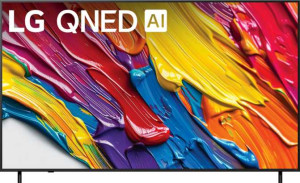
LG 65QNED82AUA 65"
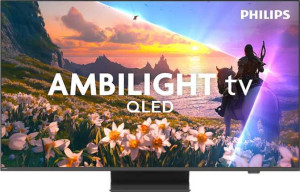
Philips 65PUS8600/12 65"

LG 65QNED82AUA 65" Philips 65PUS8600/12 65"

Overview

When choosing between the LG 65QNED82AUA 65″ and the Philips 65PUS8600/12 65″, two compelling 65-inch 4K televisions face off with distinct approaches to display technology and everyday usability. Both share a strong common foundation — including 4K UHD resolution, 10-bit color depth, Dolby Atmos audio, and full smart TV integration — yet they differ in notable ways across HDR format support, physical design, and connectivity options, making this a genuinely interesting comparison for any home cinema enthusiast.

Common Features

  • Both TVs have a 4K (UHD) display resolution.
  • Both TVs share the same resolution of 3840 x 2160 px.
  • Both TVs have a pixel density of 68 ppi.
  • Both TVs display 1070 million colors.
  • Both TVs have a 10-bit color depth.
  • Both TVs have a refresh rate of 60Hz.
  • HDR10 support is available on both TVs.
  • HLG support is available on both TVs.
  • Bluetooth is available on both TVs.
  • Both TVs have an HDMI version of 2.1.
  • Both TVs have 3 HDMI ports.
  • Wi-Fi is supported on both TVs.
  • Both TVs support Wi-Fi 4 (802.11n) and Wi-Fi 5 (802.11ac).
  • Both TVs have 1 RJ45 port.
  • Miracast is supported on both TVs.
  • Neither TV has an external memory slot.
  • Both TVs support Digital Out.
  • SRS TheaterSound HD is not available on either TV.
  • Both TVs have stereo speakers.
  • Dolby Atmos is available on both TVs.
  • Dolby Audio is available on both TVs.
  • Dolby Virtual is not supported on either TV.
  • Neither TV has a subwoofer.
  • Both TVs support HDMI ARC and HDMI eARC.
  • Both TVs support VESA mounting.
  • Both TVs have a built-in smart TV platform.
  • Google Assistant compatibility is available on both TVs.
  • Alexa compatibility is available on both TVs.
  • Siri and Apple HomeKit compatibility is not available on either TV.
  • Both TVs support remote control via smartphone.
  • Neither TV has a rechargeable remote control.
  • USB recording is supported on both TVs.
  • Both TVs have a standby power consumption of 0.5W.

Main Differences

  • The display type is LED-backlit, LCD, Mini-LED on LG 65QNED82AUA 65″ and QLED, LED-backlit, LCD on Philips 65PUS8600/12 65″.
  • The screen size is 65.1″ on LG 65QNED82AUA 65″ and 64.5″ on Philips 65PUS8600/12 65″.
  • HDR10+ support is present on Philips 65PUS8600/12 65″ but not available on LG 65QNED82AUA 65″.
  • The Bluetooth version is 5 on LG 65QNED82AUA 65″ and 5.2 on Philips 65PUS8600/12 65″.
  • The number of USB ports is 1 on LG 65QNED82AUA 65″ and 2 on Philips 65PUS8600/12 65″.
  • A 3.5 mm audio jack socket is present on Philips 65PUS8600/12 65″ but not available on LG 65QNED82AUA 65″.
  • The width is 1455.4 mm on LG 65QNED82AUA 65″ and 1451 mm on Philips 65PUS8600/12 65″.
  • The weight is 23179 g on LG 65QNED82AUA 65″ and 24240 g on Philips 65PUS8600/12 65″.
  • The thickness is 50.8 mm on LG 65QNED82AUA 65″ and 85 mm on Philips 65PUS8600/12 65″.
  • The height is 840.7 mm on LG 65QNED82AUA 65″ and 847 mm on Philips 65PUS8600/12 65″.
  • The volume is 62156.582824 cm³ on LG 65QNED82AUA 65″ and 104464.745 cm³ on Philips 65PUS8600/12 65″.
  • The operating power consumption is 119W on LG 65QNED82AUA 65″ and 101W on Philips 65PUS8600/12 65″.
Specs Comparison
LG 65QNED82AUA 65"

LG 65QNED82AUA 65"

Philips 65PUS8600/12 65"

Philips 65PUS8600/12 65"

Display:
display resolution 4K (UHD) 4K (UHD)
Display type LED-backlit, LCD, Mini-LED QLED, LED-backlit, LCD
screen size 65.1" 64.5"
resolution 3840 x 2160 px 3840 x 2160 px
pixel density 68 ppi 68 ppi
display colors 1070 million 1070 million
bit depth 10-bit 10-bit
refresh rate 60Hz 60Hz
supports HDR10
supports HDR10+
supports HLG
has anti-reflection coating
has an ambient light sensor
maximum horizontal viewing angle 178º 178º
maximum vertical viewing angle 178º 178º

At the panel fundamentals level, both TVs are remarkably well-matched: identical 4K (3840 x 2160) resolution, the same 68 ppi pixel density, 10-bit color depth capable of rendering over a billion colors, a 60Hz native refresh rate, and symmetrical 178° horizontal and vertical viewing angles. Anti-reflection coatings and ambient light sensors are present on both, meaning neither has a meaningful edge in everyday usability or picture consistency across lighting conditions.

Where the two diverge is in backlight and HDR technology — and that gap matters. The LG 65QNED82AUA uses a Mini-LED backlight, which deploys a much denser array of smaller LEDs to achieve tighter local dimming zones, generally translating to deeper blacks and better contrast control compared to conventional LED-LCD panels. The Philips 65PUS8600/12, on the other hand, relies on a QLED approach — quantum dot enhancement for wider color volume and higher peak brightness — without the Mini-LED dimming precision. On the HDR front, the Philips holds a distinct advantage by supporting HDR10+, the dynamic metadata standard that adjusts tone-mapping on a scene-by-scene basis, in addition to HDR10 and HLG. The LG supports only HDR10 and HLG, missing out on HDR10+ entirely.

The verdict for this group is nuanced. The LG's Mini-LED backlight gives it a structural advantage in contrast and black-level precision, which is critical for dark-room cinematic viewing. However, the Philips gains ground with HDR10+ support, which future-proofs it for an expanding library of dynamically mastered content. If contrast fidelity is the priority, the LG edges ahead; if HDR format breadth and color volume matter more, the Philips has the upper hand. Neither product dominates outright — the right choice depends squarely on the viewer's content ecosystem and viewing environment.
Connectivity:
Has Bluetooth
HDMI version HDMI 2.1 HDMI 2.1
HDMI ports 3 3
supports Wi-Fi
Wi-Fi version Wi-Fi 4 (802.11n), Wi-Fi 5 (802.11ac) Wi-Fi 4 (802.11n), Wi-Fi 5 (802.11ac)
Bluetooth version 5 5.2
USB ports 1 2
RJ45 ports 1 1
supports Miracast
has a socket for a 3.5 mm audio jack
has an external memory slot
has a VGA connector
has a DVI connector

The shared connectivity foundation between these two TVs is solid: both offer 3 HDMI 2.1 ports, a single RJ45 Ethernet jack, dual-band Wi-Fi up to Wi-Fi 5 (802.11ac), Bluetooth 5, and Miracast wireless display mirroring. HDMI 2.1 is particularly valuable here, as it supports higher bandwidth signals relevant for gaming consoles and next-generation sources, even if the panels themselves are capped at 60Hz.

The differentiators, while not dramatic, are practically meaningful. The Philips 65PUS8600/12 pulls ahead in two areas: it ships with 2 USB ports versus the LG's single port — a real convenience advantage when simultaneously connecting a USB drive and a peripheral like a keyboard or dongle — and it includes a 3.5mm audio jack, useful for plugging in headphones directly without needing an adapter or a separate Bluetooth pairing. The Philips also runs Bluetooth 5.2 compared to the LG's Bluetooth 5.0; while the difference in range and stability is marginal in typical living-room use, 5.2 introduces better support for multi-stream audio, which can matter for users pairing wireless headphones alongside a soundbar simultaneously.

Overall, the Philips holds a clear, if modest, edge in connectivity. The extra USB port and headphone jack address everyday practical needs, and the slightly newer Bluetooth version adds a layer of peripheral flexibility. The LG is not poorly equipped by any measure, but for users who value wired and wireless peripheral versatility, the Philips is the more accommodating choice.

Audio:
supports Digital Out
has SRS TheaterSound HD
has stereo speakers
has Dolby Atmos
has Dolby Audio
supports Dolby Virtual
has a subwoofer
HDMI ARC / eARC HDMI ARC, HDMI eARC HDMI ARC, HDMI eARC

Across every audio specification in this group, the LG 65QNED82AUA and the Philips 65PUS8600/12 are a perfect match. Both feature stereo speakers, Dolby Audio and Dolby Atmos decoding, Digital Out, and — critically — both HDMI ARC and eARC. That last point deserves emphasis: eARC supports high-bandwidth audio formats like lossless Dolby TrueHD and DTS:X, meaning users who connect a capable soundbar via HDMI will get the full uncompressed audio signal rather than a downmixed version. It is a meaningful future-proofing feature shared equally by both TVs.

Neither unit includes a subwoofer, which is standard for flat-panel TVs of this class, and neither supports Dolby Virtual surround processing — so out-of-the-box bass depth and simulated spatial audio are limited in both cases. For most buyers, the built-in audio will serve casual viewing adequately, but the presence of eARC on both models is a clear signal that the manufacturers expect users to pair these TVs with an external audio system for a fuller experience.

This group is a complete tie. There is not a single audio specification that separates these two products. The decision between them on audio grounds is effectively irrelevant — prospective buyers should weight other specification groups more heavily when choosing between the two.

Design:
width 1455.4 mm 1451 mm
weight 23179 g 24240 g
thickness 50.8 mm 85 mm
height 840.7 mm 847 mm
volume 62156.582824 cm³ 104464.745 cm³
Supports VESA mount

Footprint-wise, these two TVs are nearly indistinguishable side by side — width and height differ by only a few millimeters. The real physical divergence lies in depth: the LG 65QNED82AUA measures just 50.8mm thick, while the Philips 65PUS8600/12 comes in at 85mm — over 67% deeper. That gap has tangible consequences for wall-mount installations, where a slimmer profile keeps the screen closer to the wall for a cleaner, more flush appearance, and for tight entertainment unit shelves where rear clearance is limited.

The volume difference makes this even starker: the LG's total volume is approximately 62,157 cm³ against the Philips's 104,465 cm³ — meaning the Philips displaces nearly 68% more space overall. Weight follows a similar pattern, with the Philips at 24,240g outweighing the LG's 23,179g by roughly 1kg. While that weight delta is modest and unlikely to affect single-person installation meaningfully, it does add minor consideration for wall-mount bracket load ratings.

Both support VESA mounting, so neither restricts the user to a proprietary stand solution. That said, the LG holds a clear design advantage in this group — its significantly slimmer chassis makes it the more versatile option for space-conscious setups, particularly wall-mounted configurations where depth is at a premium.

Features:
release date April 2025 February 2025
has built-in smart TV
compatible with Google Assistant
works with Alexa
works with Siri/Apple HomeKit
supports a remote smartphone
has a rechargeable remote control
supports USB recording
operating power consumption 119W 101W
standby power consumption 0.5W 0.5W
has a search browser
has a sleep timer
has a child lock
has voice commands

From a smart features standpoint, these two TVs are functionally identical. Both run a built-in smart TV platform, support voice control via Google Assistant and Alexa, allow smartphone remote control, offer USB recording, and include practical utilities like a sleep timer, child lock, and web browser. Neither supports Apple HomeKit or Siri, so users embedded in the Apple ecosystem will find the same limitation on both sets. The feature parity here is essentially complete.

The one meaningful differentiator in this group is power consumption. The Philips 65PUS8600/12 draws 101W during operation, compared to the LG 65QNED82AUA's 119W — a gap of roughly 18%. Over extended daily use, that difference accumulates: assuming six hours of viewing per day, the LG would consume approximately 39 more kilowatt-hours annually than the Philips, which translates to a modest but real difference in electricity costs over the TV's lifespan. Standby consumption is identical at 0.5W on both, so the gap only manifests during active use.

This group tips narrowly in favor of the Philips, strictly on the basis of its lower operating power draw. For users prioritizing energy efficiency, that 18% consumption advantage is a legitimate consideration. On every other feature dimension, however, these TVs are evenly matched and neither offers a functional capability the other lacks.

Comparison Summary & Verdict

Both the LG 65QNED82AUA 65″ and the Philips 65PUS8600/12 65″ are capable 4K TVs that share the same resolution, color depth, audio features, and smart platform essentials. However, their differences reveal two distinct personalities. The LG 65QNED82AUA 65″ impresses with its significantly slimmer 50.8 mm thickness and lighter weight of 23179 g, making it a natural choice for clean, minimalist installations and wall-mount setups. The Philips 65PUS8600/12 65″ fights back with HDR10+ support, a more efficient operating power draw of 101W versus 119W, two USB ports instead of one, a 3.5 mm audio jack, and a slightly newer Bluetooth 5.2 standard. If a sleek, slim profile is your top priority, the LG is the clear pick. If you value broader HDR format compatibility, greater connectivity flexibility, and lower energy consumption, the Philips is the more practical all-rounder.

LG 65QNED82AUA 65
Buy LG 65QNED82AUA 65" if...

Buy the LG 65QNED82AUA 65″ if a slim, lightweight design is your top priority and you want a Mini-LED panel for your wall-mount setup without needing HDR10+ support.

Philips 65PUS8600/12 65
Buy Philips 65PUS8600/12 65" if...

Buy the Philips 65PUS8600/12 65″ if you want HDR10+ support, more USB ports, a 3.5 mm audio jack, and lower operating power consumption for day-to-day use.