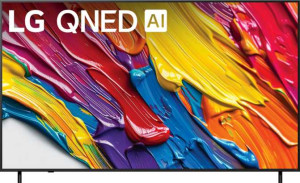
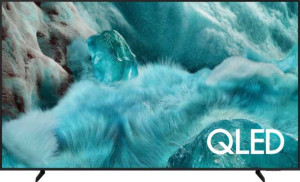
Both the LG 65QNED82 and the Samsung QN65Q7F share the same core panel fundamentals: 4K (3840 x 2160) resolution, 68 ppi pixel density, 10-bit color depth, 1.07 billion colors, a 60Hz refresh rate, and identical 178º horizontal and vertical viewing angles. In practice, this means both TVs will render the same level of fine detail at 65 inches, with no perceptible difference in sharpness or color volume from the panel specs alone. Both also include anti-reflection coatings and ambient light sensors, so neither has an edge in usability under varying room lighting conditions.
The most meaningful divergence lies in panel technology and HDR support. The LG uses Mini-LED backlighting within its QNED architecture, which enables more precise local dimming zones and can translate to better contrast control and brightness uniformity compared to the Samsung's standard QLED LED-backlit LCD approach. On the HDR side, the Samsung supports HDR10+ — the dynamic metadata HDR format backed by Amazon and Samsung — while the LG does not. Both support HDR10 and HLG, so neither is blind to any widely used format, but HDR10+ gives the Samsung an advantage with content specifically mastered for it, as dynamic metadata allows scene-by-scene tone mapping rather than a single static curve.
For adaptive sync, the LG includes AMD FreeSync, which is relevant for PC gamers connecting via DisplayPort or HDMI, while the Samsung lists no adaptive sync support — a clear functional gap for that use case. Overall, neither TV dominates outright: the Samsung edges ahead on HDR format breadth with HDR10+, while the LG counters with Mini-LED backlighting precision and gaming-oriented FreeSync support. Your priority — HDR content variety versus gaming smoothness and contrast control — should drive the decision.