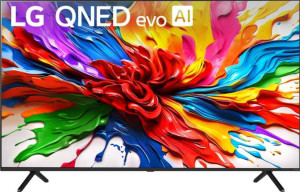
LG 65QNED92AUA 65"
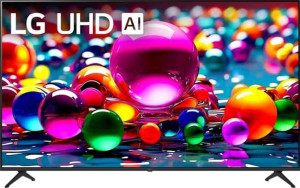
LG 65UA7700AUA 65"

LG 65QNED92AUA 65" LG 65UA7700AUA 65"

Overview

Welcome to our detailed spec comparison of the LG 65QNED92AUA 65″ and the LG 65UA7700AUA 65″ — two 65-inch 4K TVs from LG that share the same screen size but take notably different approaches to picture technology, motion handling, and connectivity. Whether you care most about display technology and refresh rate or are focused on energy efficiency and value, this side-by-side breakdown will help you find the right fit for your living room.

Common Features

  • Both TVs have a 4K (UHD) display resolution.
  • Both TVs have a screen size of 65.1″.
  • Both TVs have a resolution of 3840 x 2160 px.
  • Both TVs have a pixel density of 68 ppi.
  • Both TVs support 1070 million display colors.
  • Both TVs have a 10-bit color bit depth.
  • HDR10 support is available on both products.
  • HDR10+ support is not available on either product.
  • Bluetooth is available on both products.
  • Both TVs have an HDMI version of 2.1.
  • Wi-Fi support is available on both products.
  • Both TVs have 2 USB ports.
  • Both TVs have 1 RJ45 port.
  • Miracast support is available on both products.
  • Neither TV has a 3.5 mm audio jack socket.
  • Neither TV has an external memory slot.
  • Dolby Digital support is available on both products.
  • Digital Out support is available on both products.
  • Dolby Digital Plus support is available on both products.
  • SRS TheaterSound HD is not available on either product.
  • Stereo speakers are present on both products.
  • Dolby Atmos support is available on both products.
  • Dolby Audio support is available on both products.
  • Dolby Virtual support is not available on either product.
  • Both TVs share the same width of 1445.3 mm.
  • VESA mount support is available on both products.
  • AirPlay support is available on both products.
  • Both TVs have a built-in smart TV platform.
  • Google Assistant compatibility is present on both products.
  • Alexa compatibility is present on both products.
  • Siri/Apple HomeKit compatibility is not available on either product.
  • Remote smartphone control is supported on both products.
  • Neither TV has a rechargeable remote control.
  • USB recording support is available on both products.

Main Differences

  • The display type is Mini-LED, LCD, LED-backlit on LG 65QNED92AUA 65″ and LED-backlit, LCD on LG 65UA7700AUA 65″.
  • The refresh rate is 120Hz on LG 65QNED92AUA 65″ and 60Hz on LG 65UA7700AUA 65″.
  • Dolby Vision support is present on LG 65QNED92AUA 65″ but not available on LG 65UA7700AUA 65″.
  • The number of HDMI ports is 4 on LG 65QNED92AUA 65″ and 3 on LG 65UA7700AUA 65″.
  • The Wi-Fi version supports Wi-Fi 4, Wi-Fi 5, Wi-Fi 6, and Wi-Fi 6E on LG 65QNED92AUA 65″, while LG 65UA7700AUA 65″ supports only Wi-Fi 4 and Wi-Fi 5.
  • The Bluetooth version is 5.3 on LG 65QNED92AUA 65″ and 5.1 on LG 65UA7700AUA 65″.
  • A built-in subwoofer is present on LG 65QNED92AUA 65″ but not available on LG 65UA7700AUA 65″.
  • The weight is 19006 g on LG 65QNED92AUA 65″ and 15014 g on LG 65UA7700AUA 65″.
  • The thickness is 58.4 mm on LG 65QNED92AUA 65″ and 68.6 mm on LG 65UA7700AUA 65″.
  • The height is 830.6 mm on LG 65QNED92AUA 65″ and 835.7 mm on LG 65UA7700AUA 65″.
  • The volume is 70107.224912 cm³ on LG 65QNED92AUA 65″ and 82857.632606 cm³ on LG 65UA7700AUA 65″.
  • The operating power consumption is 269W on LG 65QNED92AUA 65″ and 148W on LG 65UA7700AUA 65″.
  • The annual power consumption is 494 kWh on LG 65QNED92AUA 65″ and 273 kWh on LG 65UA7700AUA 65″.
Specs Comparison
LG 65QNED92AUA 65"

LG 65QNED92AUA 65"

LG 65UA7700AUA 65"

LG 65UA7700AUA 65"

Display:
display resolution 4K (UHD) 4K (UHD)
Display type Mini-LED, LCD, LED-backlit LED-backlit, LCD
screen size 65.1" 65.1"
resolution 3840 x 2160 px 3840 x 2160 px
pixel density 68 ppi 68 ppi
display colors 1070 million 1070 million
bit depth 10-bit 10-bit
refresh rate 120Hz 60Hz
supports HDR10
supports HDR10+
supports Dolby Vision
supports HLG
has anti-reflection coating
has an ambient light sensor
maximum horizontal viewing angle 178º 178º
maximum vertical viewing angle 178º 178º

Both the LG 65QNED92AUA and the LG 65UA7700AUA share the same fundamental panel foundations: a 65.1″ 4K (3840 x 2160) screen, 68 ppi pixel density, 10-bit color depth rendering up to 1070 million colors, identical 178º horizontal and vertical viewing angles, anti-reflection coating, and an ambient light sensor. For most baseline image quality metrics, these two TVs start from the same place.

The real divergence comes in three critical areas. First, the QNED92 uses a Mini-LED backlighting architecture rather than conventional LED-backlit LCD — this means significantly more dimming zones, enabling deeper local contrast and better HDR peak brightness control in real-world viewing. Second, its 120Hz refresh rate versus the UA7700's 60Hz panel is a substantial practical difference: motion in fast sports, action films, and gaming appears noticeably smoother and less blurry on the QNED92. Third, the QNED92 adds Dolby Vision support, a dynamic HDR format that delivers scene-by-scene metadata for more precise tone mapping — the UA7700 is limited to HDR10 and HLG only.

The LG 65QNED92AUA holds a clear display advantage across every meaningful differentiator in this group. Mini-LED backlighting, a 120Hz panel, and Dolby Vision compatibility together represent a material upgrade in picture quality and versatility. The 65UA7700AUA matches it only on the commodity specs that virtually all modern 4K TVs share.

Connectivity:
Has Bluetooth
HDMI version HDMI 2.1 HDMI 2.1
HDMI ports 4 3
supports Wi-Fi
Wi-Fi version Wi-Fi 4 (802.11n), Wi-Fi 5 (802.11ac), Wi-Fi 6 (802.11ax), Wi-Fi 6E (802.11ax) Wi-Fi 4 (802.11n), Wi-Fi 5 (802.11ac)
Bluetooth version 5.3 5.1
USB ports 2 2
RJ45 ports 1 1
supports Miracast
has a socket for a 3.5 mm audio jack
has an external memory slot
has a VGA connector
has a DVI connector

Shared across both TVs are HDMI 2.1 ports, dual USB inputs, a single RJ45 ethernet port, Wi-Fi, Bluetooth, and Miracast support — a solid common baseline for a modern 4K TV setup. The legacy connector omissions (no 3.5mm jack, no VGA, no DVI) are equally consistent and expected at this tier.

Where the QNED92 pulls ahead is in the depth of its wireless and physical connectivity. Its Wi-Fi support extends to Wi-Fi 6E (802.11ax), while the UA7700 tops out at Wi-Fi 5 (802.11ac). In practical terms, Wi-Fi 6E operates on the less congested 6GHz band, offering lower latency and more stable throughput in busy home network environments — a meaningful advantage for 4K streaming and any latency-sensitive use. The QNED92 also runs Bluetooth 5.3 versus 5.1 on the UA7700, a modest but real improvement in connection stability and energy efficiency for paired peripherals like soundbars and headphones. Additionally, the QNED92 offers 4 HDMI ports compared to the UA7700's 3, which matters for users juggling a gaming console, streaming device, AV receiver, and set-top box simultaneously without resorting to a switch.

The LG 65QNED92AUA holds the connectivity edge here. The jump to Wi-Fi 6E is the most impactful differentiator for future-proofing and network performance, and the extra HDMI port adds meaningful practical flexibility. The UA7700 covers the essentials competently, but it lags behind on every wireless and port-count metric in this group.
Audio:
supports Dolby Digital
supports Digital Out
supports Dolby Digital Plus
has SRS TheaterSound HD
has stereo speakers
has Dolby Atmos
has Dolby Audio
supports Dolby Virtual
has a subwoofer
HDMI ARC / eARC HDMI ARC, HDMI eARC HDMI ARC, HDMI eARC

On the audio format side, these two TVs are essentially identical: both decode Dolby Digital, Dolby Digital Plus, and Dolby Atmos, support Digital Out, and include both HDMI ARC and eARC for connecting external audio systems. The eARC port in particular is worth noting — it carries enough bandwidth to pass lossless Atmos audio to a compatible soundbar or AV receiver, which is the more important audio upgrade for most serious home theater setups regardless of what the TV's built-in speakers do.

The one hardware distinction that separates them is the QNED92's inclusion of a built-in subwoofer, which the UA7700 lacks. A dedicated subwoofer channel in a TV's internal speaker system adds low-frequency extension — the kind of bass presence that makes action sequences and music feel more grounded without requiring an external soundbar. For users who prefer to rely on the TV's native speakers rather than pairing external audio equipment, this is a tangible advantage.

The LG 65QNED92AUA takes a narrow but clear win here, solely on the strength of its built-in subwoofer. Users planning to connect a dedicated soundbar or AV receiver will find both TVs functionally equivalent in this group, since the audio format support and ARC/eARC capabilities are identical. But for out-of-the-box speaker performance, the QNED92 has the edge.

Design:
width 1445.3 mm 1445.3 mm
weight 19006 g 15014 g
thickness 58.4 mm 68.6 mm
height 830.6 mm 835.7 mm
volume 70107.224912 cm³ 82857.632606 cm³
Supports VESA mount

At 65 inches, both TVs share an identical 1445.3 mm width and nearly the same height, making footprint a non-factor in placement decisions. Both also support VESA mounting, so wall installation is equally viable for either model. The meaningful physical differences lie in thickness and weight.

The QNED92 is notably slimmer at 58.4 mm deep compared to the UA7700's 68.6 mm — a 10mm difference that translates to a cleaner wall-mounted profile and a more premium aesthetic up close. However, this comes with a tradeoff: the QNED92 weighs 19,006 g against the UA7700's 15,014 g, making it nearly 4 kg heavier. That weight difference matters most during installation — wall mounts and furniture must be rated accordingly, and solo mounting becomes more physically demanding. The added mass is consistent with the QNED92's denser Mini-LED internal hardware.

Design in this group is a genuine tradeoff rather than a clear win for either side. The LG 65QNED92AUA offers the sleeker profile, which favors wall-mount aesthetics. The LG 65UA7700AUA is significantly lighter, making handling and installation easier. Which advantage matters more depends entirely on the user's setup priorities.

Features:
release date April 2025 April 2025
has AirPlay
has built-in smart TV
compatible with Google Assistant
works with Alexa
works with Siri/Apple HomeKit
supports a remote smartphone
has a rechargeable remote control
supports USB recording
operating power consumption 269W 148W
standby power consumption 0.5W 0.5W
has a search browser
has a sleep timer
has a child lock
annual power consumption 494 kWh 273 kWh
warranty period 1 years 1 years
has voice commands

From a smart TV and ecosystem standpoint, these two models are functionally identical: both run a built-in smart platform with voice commands, support AirPlay, Google Assistant, and Alexa, allow smartphone remote control and USB recording, and carry the same one-year warranty. Neither supports Siri/Apple HomeKit, and neither ships with a rechargeable remote. For day-to-day usability and smart home integration, the experience will be indistinguishable between them.

The single significant differentiator in this group is power consumption. The QNED92 draws 269W during operation versus 148W for the UA7700 — nearly double the load. That gap compounds over time: the QNED92's estimated annual consumption of 494 kWh is roughly 81% higher than the UA7700's 273 kWh. At average U.S. electricity rates, that difference can amount to a meaningful cost over the TV's lifespan. The higher draw on the QNED92 is consistent with the power demands of its Mini-LED backlighting system.

For features and smart functionality, this group is a tie — the capability sets are identical. On running costs, however, the LG 65UA7700AUA holds a clear practical advantage. Users who watch heavily or are sensitive to energy costs will find the UA7700 considerably more economical to operate over time.

Comparison Summary & Verdict

After reviewing all the specs, these two TVs serve clearly different audiences. The LG 65QNED92AUA 65″ is the stronger performer overall, offering a Mini-LED panel with a 120Hz refresh rate, Dolby Vision support, a built-in subwoofer, Wi-Fi 6E, and four HDMI 2.1 ports — making it an excellent choice for home theater enthusiasts and gamers who demand the best picture and audio experience. By contrast, the LG 65UA7700AUA 65″ is notably lighter, slimmer in volume, and consumes significantly less power at 148W operating and 273 kWh annually, nearly half the energy footprint of its sibling. If power efficiency and a leaner form factor are priorities — or if a 60Hz panel suits your casual viewing habits — the LG 65UA7700AUA 65″ presents a compelling, practical alternative.

LG 65QNED92AUA 65
Buy LG 65QNED92AUA 65" if...

Buy the LG 65QNED92AUA 65″ if you want a premium viewing experience with a 120Hz Mini-LED display, Dolby Vision, Wi-Fi 6E, and a built-in subwoofer for richer sound.

LG 65UA7700AUA 65
Buy LG 65UA7700AUA 65" if...

Buy the LG 65UA7700AUA 65″ if energy efficiency is a priority, as it consumes nearly half the annual power of its sibling and comes in a lighter, lower-volume design.