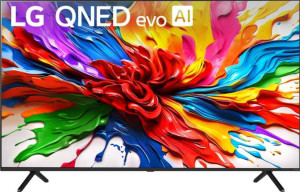
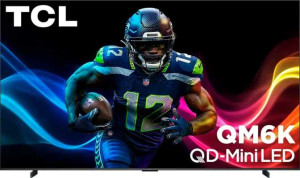
At their core, both the LG 65QNED92AUA and the TCL 65QM6K share a strong display foundation: native 4K (3840 x 2160) resolution, a 68 ppi pixel density, 10-bit color depth rendering 1.07 billion colors, and identical 178° viewing angles in both directions. Both also carry anti-reflection coatings and ambient light sensors, and both support Dolby Vision, HDR10, and HLG — meaning everyday HDR content from streaming services will look strong on either set.
Where the TCL pulls ahead is in a cluster of meaningful differentiators. Its 144Hz refresh rate versus the LG's 120Hz translates to smoother motion in fast-paced gaming and sports — a tangible advantage for gamers especially. The TCL also adds HDR10+ support, which the LG lacks; HDR10+ uses dynamic metadata (similar to Dolby Vision) to optimize brightness and contrast scene-by-scene rather than relying on a static global tone map, so HDR10+ content will look more precisely calibrated on the TCL. On the gaming sync front, the TCL supports AMD FreeSync Premium Pro on top of standard FreeSync and FreeSync Premium, adding low-framerate compensation and HDR support within the variable refresh rate window — a notable step up from the LG's FreeSync Premium ceiling.
The LG's only physical edge here is a marginally larger panel — 65.1″ versus the TCL's 64.5″ — a difference so small it is imperceptible in practice. Overall, the TCL 65QM6K has a clear display advantage for users who prioritize gaming fluidity, broader HDR format compatibility, and more refined adaptive sync — while the LG offers no display-spec reason to choose it over the TCL at this tier.