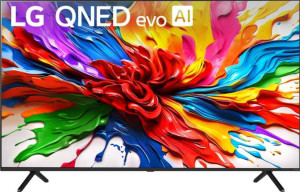
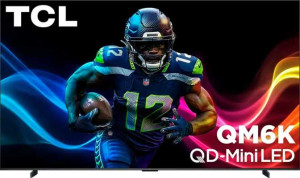
Both the LG 65QNED92AUA and the TCL 98QM6K share the same 4K (3840 x 2160) resolution, 10-bit depth, and 1070 million colors, meaning neither has a raw resolution advantage over the other. However, because the LG operates that pixel count across a 65.1″ panel versus the TCL's 97.5″ panel, the LG delivers a noticeably sharper image at 68 ppi compared to the TCL's 45 ppi. In practice, this matters most at close seating distances — the LG will look crisper up close, while the TCL's lower pixel density becomes less perceptible the further back you sit, which is the natural viewing distance for a screen that large.
On motion and HDR, the TCL holds meaningful advantages. Its 144Hz refresh rate edges out the LG's 120Hz, which translates to smoother motion in fast-paced content and gaming. For variable refresh rate gaming specifically, the TCL also supports AMD FreeSync Premium Pro — a tier above the LG's FreeSync Premium — adding low-latency HDR support in VRR mode. On the HDR front, the TCL supports HDR10+ (dynamic metadata), while the LG does not, giving the TCL a broader compatibility range across HDR-mastered content. Both support Dolby Vision and HLG, so this gap only surfaces with HDR10+ encoded material.
For shared traits, both TVs feature Mini-LED backlighting, anti-reflection coatings, ambient light sensors, and identical 178° horizontal and vertical viewing angles, so neither distinguishes itself there. Overall, the TCL 98QM6K has the display edge on paper — higher refresh rate, wider HDR format support, and a more advanced VRR tier — though buyers prioritizing pixel sharpness at a closer seating distance will find the LG's higher pixel density more relevant to their experience.