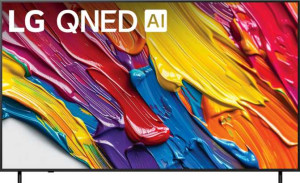
LG 75QNED82AUA 75"
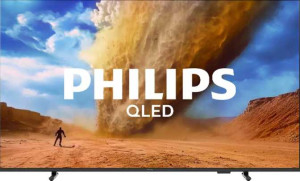
Philips 75PUS7800/12 75"

LG 75QNED82AUA 75" Philips 75PUS7800/12 75"

Overview

When it comes to choosing between the LG 75QNED82AUA 75″ and the Philips 75PUS7800/12 75″, both TVs share a strong foundation of 4K UHD resolution, Dolby Atmos audio, and smart platform capabilities — but their differences tell a compelling story. From display technology and HDR format support to physical design and power consumption, this comparison digs into exactly where these two large-screen televisions diverge and what that means for your viewing experience.

Common Features

  • Both TVs have a 4K (UHD) display resolution of 3840 x 2160 px.
  • Both TVs have a pixel density of 59 ppi.
  • Both TVs support 1070 million display colors with a 10-bit bit depth.
  • Both TVs have a native refresh rate of 60Hz.
  • HDR10 support is available on both TVs.
  • Dolby Vision support is not available on either TV.
  • Both TVs use LED-backlit LCD panel technology.
  • Bluetooth connectivity is available on both TVs.
  • Both TVs feature HDMI 2.1 ports, with 3 ports each.
  • Wi-Fi support is available on both TVs, covering Wi-Fi 4 (802.11n) and Wi-Fi 5 (802.11ac).
  • Both TVs include one RJ45 Ethernet port.
  • Miracast support is available on both TVs.
  • Neither TV has an external memory slot.
  • Dolby Digital support is available on both TVs.
  • Digital Out support is available on both TVs.
  • Both TVs feature stereo speakers.
  • Dolby Atmos support is available on both TVs.
  • Dolby Audio support is available on both TVs.
  • Dolby Virtual support is not available on either TV.
  • A subwoofer is not present on either TV.
  • VESA mount support is available on both TVs.
  • Both TVs have a built-in smart TV platform.
  • Google Assistant compatibility is present on both TVs.
  • Alexa compatibility is present on both TVs.
  • Siri and Apple HomeKit compatibility is not available on either TV.
  • Remote smartphone control is supported on both TVs.
  • Neither TV has a rechargeable remote control.
  • USB recording is supported on both TVs.
  • Both TVs have a standby power consumption of 0.5W.

Main Differences

  • The display technology is Mini-LED on LG 75QNED82AUA 75″ and QLED on Philips 75PUS7800/12 75″.
  • The screen size is 75.1″ on LG 75QNED82AUA 75″ and 74.5″ on Philips 75PUS7800/12 75″.
  • HDR10+ support is present on Philips 75PUS7800/12 75″ but not available on LG 75QNED82AUA 75″.
  • The Bluetooth version is 5 on LG 75QNED82AUA 75″ and 5.2 on Philips 75PUS7800/12 75″.
  • There is 1 USB port on LG 75QNED82AUA 75″ and 2 USB ports on Philips 75PUS7800/12 75″.
  • A 3.5 mm audio jack is available on Philips 75PUS7800/12 75″ but not on LG 75QNED82AUA 75″.
  • Dolby Digital Plus support is available on LG 75QNED82AUA 75″ but not on Philips 75PUS7800/12 75″.
  • The width is 1676.4 mm on LG 75QNED82AUA 75″ and 1669 mm on Philips 75PUS7800/12 75″.
  • The weight is 32387 g on LG 75QNED82AUA 75″ and 23070 g on Philips 75PUS7800/12 75″.
  • The thickness is 50.8 mm on LG 75QNED82AUA 75″ and 93 mm on Philips 75PUS7800/12 75″.
  • The height is 965.2 mm on LG 75QNED82AUA 75″ and 968 mm on Philips 75PUS7800/12 75″.
  • The volume is 82197.513024 cm³ on LG 75QNED82AUA 75″ and 150250.056 cm³ on Philips 75PUS7800/12 75″.
  • AirPlay support is available on LG 75QNED82AUA 75″ but not on Philips 75PUS7800/12 75″.
  • The operating power consumption is 151W on LG 75QNED82AUA 75″ and 80W on Philips 75PUS7800/12 75″.
Specs Comparison
LG 75QNED82AUA 75"

LG 75QNED82AUA 75"

Philips 75PUS7800/12 75"

Philips 75PUS7800/12 75"

Display:
display resolution 4K (UHD) 4K (UHD)
Display type LED-backlit, LCD, Mini-LED QLED, LED-backlit, LCD
screen size 75.1" 74.5"
resolution 3840 x 2160 px 3840 x 2160 px
pixel density 59 ppi 59 ppi
display colors 1070 million 1070 million
bit depth 10-bit 10-bit
refresh rate 60Hz 60Hz
supports HDR10
supports HDR10+
supports Dolby Vision
supports HLG
has anti-reflection coating
has an ambient light sensor
maximum horizontal viewing angle 178º 178º
maximum vertical viewing angle 178º 178º

At the foundational level, the LG 75QNED82AUA and Philips 75PUS7800/12 are remarkably similar: both deliver a 4K (3840 x 2160) resolution at 59 ppi, share a 10-bit panel capable of rendering 1.07 billion colors, run at a 60Hz refresh rate, and offer identical 178° viewing angles in both axes. Anti-reflection coatings and ambient light sensors are also present on both, meaning neither holds an advantage in everyday ergonomics or glare management.

The most meaningful hardware distinction lies in the backlighting technology. The LG uses a Mini-LED backlight, which employs a much larger number of smaller LEDs to enable finer local dimming zones — this typically translates to deeper blacks, better contrast control, and reduced blooming around bright objects on dark backgrounds. The Philips, by contrast, relies on a QLED approach, which uses quantum dots to enhance color volume and brightness but without the same granular dimming precision of Mini-LED. In practice, the LG has a structural edge in scenes with mixed light and dark content, while the Philips may hold its own in overall color saturation.

On the HDR front, both support HDR10 and HLG, but the Philips adds HDR10+ — a dynamic metadata format that adjusts tone-mapping scene by scene rather than using a single static profile. Neither TV supports Dolby Vision. Since HDR10+ content is increasingly available on platforms like Amazon Prime Video and Samsung's ecosystem, the Philips has a tangible advantage for users who consume that content. Overall, the LG holds an edge in display hardware through its Mini-LED panel, while the Philips counters with broader HDR format coverage via HDR10+ — making the choice dependent on whether contrast performance or HDR compatibility matters more to the buyer.
Connectivity:
Has Bluetooth
HDMI version HDMI 2.1 HDMI 2.1
HDMI ports 3 3
supports Wi-Fi
Wi-Fi version Wi-Fi 4 (802.11n), Wi-Fi 5 (802.11ac) Wi-Fi 4 (802.11n), Wi-Fi 5 (802.11ac)
Bluetooth version 5 5.2
USB ports 1 2
RJ45 ports 1 1
supports Miracast
has a socket for a 3.5 mm audio jack
has an external memory slot
has a VGA connector
has a DVI connector

The wireless and wired backbone of both TVs is largely identical: each offers HDMI 2.1 across all three HDMI ports, a single RJ45 ethernet port, matching Wi-Fi 5 (802.11ac) support, and Miracast for screen mirroring. For most home theater setups, this shared foundation means neither TV will bottleneck modern devices — HDMI 2.1 handles 4K at 60Hz and supports features like eARC without issue.

Where the Philips pulls ahead is in the smaller but practically relevant details. It offers 2 USB ports versus the LG's single port — a meaningful difference when you want to simultaneously connect a USB drive and a device charger or peripheral. The Philips also includes a 3.5mm audio jack, which the LG omits entirely; this matters for users who want to plug in headphones directly for private listening without relying on Bluetooth. Additionally, the Philips features Bluetooth 5.2 compared to the LG's Bluetooth 5.0 — the newer version offers improved connection stability and more efficient handling of multiple simultaneous Bluetooth devices, such as a soundbar and wireless headphones at once.

The LG has no standout connectivity advantage in this group. The Philips edges ahead with a more practical physical port layout and a marginally newer Bluetooth implementation, making it the better-equipped option for users who value peripheral flexibility and direct audio output.

Audio:
supports Dolby Digital
supports Digital Out
supports Dolby Digital Plus
has SRS TheaterSound HD
has stereo speakers
has Dolby Atmos
has Dolby Audio
supports Dolby Virtual
has a subwoofer
HDMI ARC / eARC HDMI ARC, HDMI eARC HDMI ARC, HDMI eARC

Both TVs share a near-identical audio foundation: stereo speakers, Dolby Atmos, Dolby Audio, Dolby Digital, Digital Out, and full HDMI ARC and eARC support. The presence of eARC on both is worth noting — it allows a connected soundbar or AV receiver to receive high-bandwidth audio formats over a single HDMI cable, which is the cleanest way to pass through lossless audio from streaming apps or external sources.

The one meaningful split between them is Dolby Digital Plus support, which the LG carries and the Philips does not. Dolby Digital Plus is an enhanced codec used prominently by streaming platforms — most notably Netflix and Disney+ — to deliver higher-quality compressed audio compared to standard Dolby Digital. Its absence on the Philips means that in certain streaming scenarios, audio may be downgraded to a lower-quality track rather than taking full advantage of what the service offers.

Neither TV includes a subwoofer or any advanced virtual surround processing beyond what Dolby's own suite provides, so the gap between them is narrow but real. The LG holds a modest advantage in this group solely due to its Dolby Digital Plus support, which is directly relevant for streaming-heavy users and requires no additional hardware to benefit from.

Design:
width 1676.4 mm 1669 mm
weight 32387 g 23070 g
thickness 50.8 mm 93 mm
height 965.2 mm 968 mm
volume 82197.513024 cm³ 150250.056 cm³
Supports VESA mount

Footprint-wise, the two TVs are nearly interchangeable — widths of 1676 mm and 1669 mm respectively, and heights within 3mm of each other. For shelf or wall planning purposes, they occupy essentially the same horizontal space. Both support VESA mounting, so neither has an installation advantage on that front.

The divergence becomes significant when looking at depth and weight. The LG is just 50.8 mm thick compared to the Philips's 93 mm — nearly twice as deep. This is a direct consequence of the LG's Mini-LED backlighting assembly, which requires more internal hardware, yet the LG still manages to be the slimmer unit. For wall-mounting, the LG will sit noticeably closer to the wall, which is a real aesthetic advantage in living spaces where flush mounting matters. The LG's computed volume of roughly 82,200 cm³ versus the Philips's 150,250 cm³ further underscores how much more compact it is as a physical object.

Weight tells a different story, however. The LG comes in at 32,387 g (~32.4 kg) against the Philips's considerably lighter 23,070 g (~23.1 kg) — a difference of over 9 kg. That gap is highly relevant during installation: a heavier TV demands sturdier wall mounts, more careful handling, and ideally an extra pair of hands. For stand placement the weight is less critical, but for wall mounting it increases both hardware requirements and installation effort. Overall, the LG has the clear edge in profile and visual presence on a wall, while the Philips is meaningfully easier to physically handle and install.

Features:
release date April 2025 February 2025
has AirPlay
has built-in smart TV
compatible with Google Assistant
works with Alexa
works with Siri/Apple HomeKit
supports a remote smartphone
has a rechargeable remote control
supports USB recording
operating power consumption 151W 80W
standby power consumption 0.5W 0.5W
has a search browser
has a sleep timer
has a child lock
has voice commands

Smart platform capabilities are well-matched across the board: both TVs ship with a built-in smart TV system, Google Assistant, Alexa, smartphone remote support, USB recording, voice commands, and standard utilities like a sleep timer and child lock. Neither supports Apple HomeKit or Siri, so users deep in the Apple ecosystem will find both equally limited on that front.

The clearest feature differentiator is AirPlay, which the LG supports and the Philips does not. For households with iPhones, iPads, or Macs, AirPlay enables seamless wireless screen mirroring and audio streaming without needing a third-party device — its absence on the Philips is a tangible gap for Apple users specifically. On the power consumption side, the contrast is stark: the LG draws 151W during operation versus the Philips's 80W — nearly half. Over hours of daily use, that difference compounds into a meaningful gap in electricity costs over the TV's lifespan, and it also reflects the higher power demands of the LG's Mini-LED backlighting hardware.

The LG holds the advantage in this group for Apple-ecosystem users due to AirPlay support, while the Philips has a notable edge in energy efficiency at 80W operating consumption. For users without Apple devices, the power draw gap becomes the more practically significant differentiator in day-to-day ownership.

Comparison Summary & Verdict

After a thorough comparison, these two 75-inch TVs serve distinctly different buyer profiles. The LG 75QNED82AUA 75″ stands out with its Mini-LED panel, slimmer 50.8 mm profile, AirPlay compatibility, and Dolby Digital Plus support — making it a strong pick for Apple ecosystem users and those who value a sleeker, wall-friendly design. The Philips 75PUS7800/12 75″, on the other hand, counters with HDR10+ support, a significantly lower operating power draw of just 80W, more USB ports, a 3.5 mm audio jack, and a newer Bluetooth 5.2 chip — making it the more practical and energy-efficient choice for everyday home use. Neither TV is an outright winner; your decision should hinge on which feature set aligns best with your setup and priorities.

LG 75QNED82AUA 75
Buy LG 75QNED82AUA 75" if...

Buy the LG 75QNED82AUA 75″ if you want a slimmer TV with Mini-LED technology, AirPlay support for Apple devices, and Dolby Digital Plus audio.

Philips 75PUS7800/12 75
Buy Philips 75PUS7800/12 75" if...

Buy the Philips 75PUS7800/12 75″ if you prioritize HDR10+ support, lower energy consumption, more USB ports, and a 3.5 mm headphone jack.