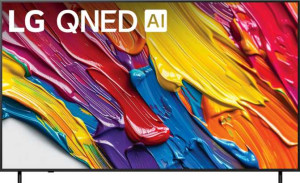
LG 75QNED82AUA 75"
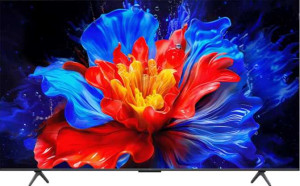
TCL 75P8K 75"

LG 75QNED82AUA 75" TCL 75P8K 75"

Overview

Welcome to our in-depth spec comparison between the LG 75QNED82AUA 75″ and the TCL 75P8K 75″, two compelling 75-inch 4K televisions targeting home theater enthusiasts. While both sets share a strong common foundation, key battlegrounds emerge around refresh rate and HDR support, display technology, audio capabilities, and overall design — making the choice between them far from straightforward.

Common Features

  • Both TVs have a 4K (UHD) display resolution of 3840 x 2160 px.
  • Both TVs share a pixel density of 59 ppi.
  • Both TVs support 1070 million display colors at a 10-bit depth.
  • HDR10 support is available on both products.
  • HLG support is available on both products.
  • Both TVs feature AMD FreeSync adaptive synchronization.
  • Both TVs include Bluetooth connectivity.
  • Both TVs use HDMI 2.1 ports.
  • Both TVs support Wi-Fi 4 (802.11n) and Wi-Fi 5 (802.11ac).
  • Both TVs have 1 USB port and 1 RJ45 port.
  • Miracast support is available on both products.
  • Neither TV has an external memory slot.
  • Both TVs support Dolby Digital, Dolby Digital Plus, and Digital Out.
  • Dolby Atmos and Dolby Audio are present on both products.
  • SRS TheaterSound HD is not available on either product.
  • Dolby Virtual support is not available on either product.
  • Both TVs have stereo speakers.
  • Both TVs support VESA mounting.
  • AirPlay is available on both products.
  • Both TVs have a built-in smart TV platform and are compatible with Google Assistant.
  • Works with Siri/Apple HomeKit is not available on either product.
  • Both TVs support remote smartphone control and USB recording.
  • Neither TV has a rechargeable remote control.
  • Both TVs have a standby power consumption of 0.5W.

Main Differences

  • The display type is LED-backlit LCD Mini-LED on LG 75QNED82AUA 75″ and QLED LED-backlit LCD on TCL 75P8K 75″.
  • The screen size is 75.1″ on LG 75QNED82AUA 75″ and 74.5″ on TCL 75P8K 75″.
  • The refresh rate is 60Hz on LG 75QNED82AUA 75″ and 144Hz on TCL 75P8K 75″.
  • HDR10+ support is present on TCL 75P8K 75″ but not available on LG 75QNED82AUA 75″.
  • Dolby Vision support is present on TCL 75P8K 75″ but not available on LG 75QNED82AUA 75″.
  • The number of HDMI ports is 3 on LG 75QNED82AUA 75″ and 4 on TCL 75P8K 75″.
  • The Bluetooth version is 5 on LG 75QNED82AUA 75″ and 5.4 on TCL 75P8K 75″.
  • A 3.5mm audio jack socket is present on TCL 75P8K 75″ but not available on LG 75QNED82AUA 75″.
  • A built-in subwoofer is present on TCL 75P8K 75″ but not included on LG 75QNED82AUA 75″.
  • The width is 1676.4 mm on LG 75QNED82AUA 75″ and 1666 mm on TCL 75P8K 75″.
  • The weight is 32387 g on LG 75QNED82AUA 75″ and 24600 g on TCL 75P8K 75″.
  • The thickness is 50.8 mm on LG 75QNED82AUA 75″ and 69.5 mm on TCL 75P8K 75″.
  • The height is 965.2 mm on LG 75QNED82AUA 75″ and 958 mm on TCL 75P8K 75″.
  • The volume is 82197.513024 cm³ on LG 75QNED82AUA 75″ and 110923.946 cm³ on TCL 75P8K 75″.
Specs Comparison
LG 75QNED82AUA 75"

LG 75QNED82AUA 75"

TCL 75P8K 75"

TCL 75P8K 75"

Display:
display resolution 4K (UHD) 4K (UHD)
Display type LED-backlit, LCD, Mini-LED QLED, LED-backlit, LCD
screen size 75.1" 74.5"
resolution 3840 x 2160 px 3840 x 2160 px
pixel density 59 ppi 59 ppi
display colors 1070 million 1070 million
bit depth 10-bit 10-bit
refresh rate 60Hz 144Hz
supports HDR10
supports HDR10+
supports Dolby Vision
supports HLG
Adaptive synchronization AMD FreeSync AMD FreeSync
has anti-reflection coating
has an ambient light sensor
maximum horizontal viewing angle 178º 178º
maximum vertical viewing angle 178º 178º

Both the LG 75QNED82AUA and the TCL 75P8K share the same 4K (3840 x 2160) resolution at 59 ppi across nearly identical 75″ screen sizes, and both offer 10-bit color depth with 1.07 billion colors — so on paper, their baseline image quality foundation is equivalent. The more meaningful distinction lies in their panel technologies: the LG uses a Mini-LED-backlit LCD, which typically enables finer local dimming zones and stronger contrast control, while the TCL relies on a QLED approach, using quantum dots to enhance color volume and brightness. These are different engineering paths to picture quality rather than a clear hierarchy, and neither spec alone declares a winner without brightness and contrast measurements.

Where the TCL pulls significantly ahead is in refresh rate and HDR ecosystem support. The TCL 75P8K runs at 144Hz versus the LG's 60Hz — a difference that matters greatly for gaming and fast-motion content, where higher refresh rates reduce motion blur and input lag. On the HDR side, the TCL supports HDR10+ and Dolby Vision in addition to HDR10 and HLG, while the LG is limited to HDR10 and HLG only. Dolby Vision in particular is widely used by Netflix, Disney+, and Apple TV+, so LG owners will receive a downgraded HDR format on a substantial portion of streaming content.

For shared features, both panels offer 178° horizontal and vertical viewing angles, anti-reflection coatings, ambient light sensors, and AMD FreeSync adaptive sync — so neither has an edge in ergonomics or everyday usability. Overall, the TCL 75P8K holds a clear display advantage in this group: its higher refresh rate makes it the stronger choice for gamers and sports viewers, and its broader HDR format support ensures the best possible image is delivered across more streaming platforms. The LG's Mini-LED backlight is a legitimate strength, but it cannot offset the TCL's advantages given only the data provided here.

Connectivity:
Has Bluetooth
HDMI version HDMI 2.1 HDMI 2.1
HDMI ports 3 4
supports Wi-Fi
Wi-Fi version Wi-Fi 4 (802.11n), Wi-Fi 5 (802.11ac) Wi-Fi 4 (802.11n), Wi-Fi 5 (802.11ac)
Bluetooth version 5 5.4
USB ports 1 1
RJ45 ports 1 1
supports Miracast
has a socket for a 3.5 mm audio jack
has an external memory slot
has a VGA connector
has a DVI connector

The wireless foundation of both TVs is identical — Wi-Fi 5 (802.11ac) and Bluetooth 5 are the shared baselines, and both support Miracast for screen mirroring. The meaningful separation comes from the details. The TCL 75P8K steps up to Bluetooth 5.4, a newer revision that improves connection stability, reduces interference in crowded environments, and offers better energy efficiency for connected peripherals like soundbars or headphones. It is not a dramatic leap, but for users who rely heavily on Bluetooth audio, it is a tangible advantage over the LG's Bluetooth 5.0.

On the physical port side, the TCL again pulls ahead. It offers 4 HDMI 2.1 ports compared to the LG's 3 — a practical difference for anyone running a full home theater setup with a console, a streaming box, a soundbar via ARC, and a Blu-ray player simultaneously. Both share HDMI 2.1 as the standard, which supports 4K at high refresh rates and eARC, so the quality per port is equal; it is purely a matter of quantity. The TCL also includes a 3.5mm headphone jack that the LG omits entirely, which may seem minor but is genuinely useful for late-night listening without a wireless setup.

With the same wired Ethernet port, the same single USB port, and equivalent Wi-Fi, neither TV has a structural connectivity disadvantage — but the TCL 75P8K accumulates a series of small, real-world wins. An extra HDMI port, a newer Bluetooth revision, and a headphone jack collectively make it the more versatile option for users with complex setups, giving the TCL a clear edge in this connectivity group.
Audio:
supports Dolby Digital
supports Digital Out
supports Dolby Digital Plus
has SRS TheaterSound HD
has stereo speakers
has Dolby Atmos
has Dolby Audio
supports Dolby Virtual
has a subwoofer
HDMI ARC / eARC HDMI ARC, HDMI eARC HDMI ARC, HDMI eARC

In terms of audio format support, these two TVs are virtually indistinguishable. Both decode Dolby Digital, Dolby Digital Plus, and Dolby Atmos, and both carry full HDMI ARC and eARC support — meaning either TV can pass high-quality audio to an external soundbar or AV receiver without compromise. For users already planning to invest in a dedicated audio system, this common ground makes the built-in speaker comparison less critical.

For those relying on the TV's onboard speakers, however, one spec separates the two: the TCL 75P8K includes a built-in subwoofer, while the LG 75QNED82AUA does not. A dedicated subwoofer handles low-frequency reproduction — the kind of bass that gives explosions weight and music fullness — that stereo drivers alone typically struggle to deliver convincingly at 75 inches. This is not a subtle difference in tuning; it represents a meaningful hardware advantage in raw bass output for standalone listening.

The verdict here goes to the TCL 75P8K, strictly on the basis of its integrated subwoofer. Every other audio specification is identical between the two, so for viewers who watch without an external sound system, the TCL is positioned to deliver a more complete sonic experience out of the box.

Design:
width 1676.4 mm 1666 mm
weight 32387 g 24600 g
thickness 50.8 mm 69.5 mm
height 965.2 mm 958 mm
volume 82197.513024 cm³ 110923.946 cm³
Supports VESA mount

At nearly identical footprints — roughly 1676mm versus 1666mm wide and 965mm versus 958mm tall — these two 75-inch TVs will occupy virtually the same wall or entertainment unit space. The divergence becomes significant in two other dimensions: thickness and weight. The LG 75QNED82AUA is notably slimmer at 50.8mm deep compared to the TCL 75P8K's 69.5mm, a gap of nearly 19mm that is visually noticeable, particularly on a wall mount where the TV's profile against the wall matters aesthetically.

The more practically impactful difference, though, is weight. The LG comes in at 32,387g (approximately 32.4kg), while the TCL is considerably lighter at 24,600g (approximately 24.6kg) — a difference of roughly 7.8kg. At this screen size, that margin is meaningful during installation: fewer people may be needed to safely lift and mount the TCL, and it places less long-term stress on wall mount hardware. Both TVs support VESA mounting, so bracket compatibility is a non-issue for either.

This group does not produce a single clear winner — it presents a trade-off. The LG holds the edge in slimness, making it the more elegant choice for wall-mounted installations where depth profile is a priority. The TCL has a significant weight advantage, making it easier and safer to handle during setup. The right call depends on whether aesthetics or installation practicality matters more to the buyer.

Features:
release date April 2025 March 2025
has AirPlay
has built-in smart TV
compatible with Google Assistant
works with Siri/Apple HomeKit
supports a remote smartphone
has a rechargeable remote control
supports USB recording
standby power consumption 0.5W 0.5W
has a search browser
has a sleep timer
has a child lock
has voice commands

Across every feature listed in this group, the LG 75QNED82AUA and TCL 75P8K are in complete lockstep. Both carry AirPlay and Google Assistant compatibility, built-in smart TV platforms, smartphone remote support, voice commands, USB recording, and a matched standby power draw of 0.5W. Neither supports Apple HomeKit or Siri, and neither ships with a rechargeable remote — so no advantage or gap exists on either side of those specs.

The practical takeaway is that users of either TV will have the same ecosystem access and day-to-day feature set. AirPlay covers Apple device mirroring and casting, Google Assistant handles voice-driven search and smart home control, and USB recording allows live TV capture without an external recorder — all available on both models equally.

This group is a complete tie. There is not a single feature differential between the two TVs in this category, and any buying decision should rest entirely on the distinctions surfaced in other specification groups.

Comparison Summary & Verdict

After reviewing all the specifications, both TVs deliver a solid 4K experience with shared support for HDR10, HLG, Dolby Atmos, AirPlay, and AMD FreeSync. However, their differences reveal two distinct profiles. The LG 75QNED82AUA 75″ stands out with its Mini-LED display technology and notably slimmer, lighter build at just 50.8 mm thick and 32387 g — appealing to those who prioritize a sleek physical footprint. The TCL 75P8K 75″, on the other hand, pulls ahead for entertainment-focused buyers with its 144Hz refresh rate, support for both Dolby Vision and HDR10+, a built-in subwoofer, an extra HDMI port, a 3.5mm audio jack, and Bluetooth 5.4. For gaming and cinematic HDR content, the TCL offers a richer feature set, while the LG may suit those valuing panel slimness and a cleaner aesthetic.

LG 75QNED82AUA 75
Buy LG 75QNED82AUA 75" if...

Buy the LG 75QNED82AUA 75″ if you prioritize a slimmer, lighter design with Mini-LED display technology and a cleaner living room aesthetic.

TCL 75P8K 75
Buy TCL 75P8K 75" if...

Buy the TCL 75P8K 75″ if you want a higher 144Hz refresh rate, Dolby Vision and HDR10+ support, a built-in subwoofer, and more connectivity options including an extra HDMI port and a 3.5mm audio jack.