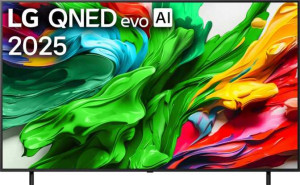
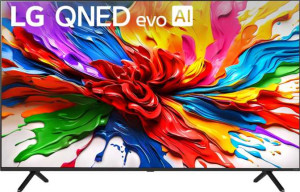
LG 75QNED85AUA 75"
LG 75QNED92AUA 75"

LG 75QNED85AUA 75" LG 75QNED92AUA 75"

Overview

Welcome to our in-depth comparison of the LG 75QNED85AUA 75″ and the LG 75QNED92AUA 75″ — two 75-inch 4K Mini-LED televisions from LG’s QNED lineup that share a strong foundation yet diverge in meaningful ways. Both deliver a 3840 x 2160 resolution and robust connectivity, but key battlegrounds like refresh rate, HDR format support, physical dimensions, and power efficiency set them apart. Read on to find out which one is the right fit for your living room.

Common Features

  • Both TVs have a 4K (UHD) display resolution.
  • Both TVs have a screen size of 75.1″.
  • Both TVs have a resolution of 3840 x 2160 px.
  • Both TVs have a pixel density of 59 ppi.
  • Both TVs support 1070 million display colors.
  • Both TVs have a 10-bit bit depth.
  • HDR10 support is available on both products.
  • HDR10+ support is not available on either product.
  • Both TVs have Bluetooth version 5.3.
  • Both TVs support Wi-Fi 4, Wi-Fi 5, Wi-Fi 6, and Wi-Fi 6E.
  • Both TVs have 4 HDMI 2.1 ports.
  • Both TVs have 2 USB ports and 1 RJ45 port.
  • Dolby Atmos support is available on both products.
  • Dolby Digital Plus support is available on both products.
  • Dolby Audio support is available on both products.
  • Dolby Virtual support is not available on either product.
  • SRS TheaterSound HD is not available on either product.
  • Both TVs support VESA mounting.
  • AirPlay support is available on both products.
  • Both TVs are compatible with Google Assistant and Amazon Alexa.
  • Siri and Apple HomeKit support is not available on either product.
  • Both TVs have a built-in smart TV platform.
  • USB recording support is available on both products.
  • Neither TV has a rechargeable remote control.

Main Differences

  • Refresh rate is 144Hz on LG 75QNED85AUA 75″ and 120Hz on LG 75QNED92AUA 75″.
  • Dolby Vision support is present on LG 75QNED92AUA 75″ but not available on LG 75QNED85AUA 75″.
  • Width is 1676.4 mm on LG 75QNED85AUA 75″ and 1666.2 mm on LG 75QNED92AUA 75″.
  • Height is 965.2 mm on LG 75QNED85AUA 75″ and 955 mm on LG 75QNED92AUA 75″.
  • Thickness is 30.5 mm on LG 75QNED85AUA 75″ and 58.4 mm on LG 75QNED92AUA 75″.
  • Weight is 34019 g on LG 75QNED85AUA 75″ and 26308 g on LG 75QNED92AUA 75″.
  • Volume is 49350.87 cm³ on LG 75QNED85AUA 75″ and 92927.31 cm³ on LG 75QNED92AUA 75″.
  • Operating power consumption is 143W on LG 75QNED85AUA 75″ and 330W on LG 75QNED92AUA 75″.
  • Annual power consumption is 264 kWh on LG 75QNED85AUA 75″ and 606 kWh on LG 75QNED92AUA 75″.
Specs Comparison
LG 75QNED85AUA 75"

LG 75QNED85AUA 75"

LG 75QNED92AUA 75"

LG 75QNED92AUA 75"

Display:
display resolution 4K (UHD) 4K (UHD)
Display type LED-backlit, LCD, Mini-LED Mini-LED, LCD, LED-backlit
screen size 75.1" 75.1"
resolution 3840 x 2160 px 3840 x 2160 px
pixel density 59 ppi 59 ppi
display colors 1070 million 1070 million
bit depth 10-bit 10-bit
refresh rate 144Hz 120Hz
supports HDR10
supports HDR10+
supports Dolby Vision
supports HLG
Adaptive synchronization AMD FreeSync, AMD FreeSync Premium AMD FreeSync, AMD FreeSync Premium
has anti-reflection coating
has an ambient light sensor
maximum horizontal viewing angle 178º 178º
maximum vertical viewing angle 178º 178º

Both the LG 75QNED85AUA and LG 75QNED92AUA share a strong display foundation: a 75.1″ Mini-LED LCD panel running at 4K (3840 x 2160), 59 ppi pixel density, 10-bit color depth capable of rendering 1.07 billion colors, and identical 178°/178° viewing angles. They also share AMD FreeSync Premium adaptive sync, anti-reflection coating, and an ambient light sensor — so on paper, a significant portion of the display spec sheet is a wash.

The two meaningful points of divergence are refresh rate and HDR format support. The QNED85AUA pulls ahead with a 144Hz refresh rate versus the QNED92AUA's 120Hz — a real advantage for gamers and fast-motion content, as the higher ceiling allows smoother frame delivery and lower perceived motion blur when the source can match it. On the other hand, the QNED92AUA counters with Dolby Vision support, which the QNED85AUA lacks entirely. Dolby Vision is a dynamic, scene-by-scene HDR format that typically produces more precise tone mapping than the static HDR10 standard both TVs share — making the QNED92AUA the stronger pick for streaming-heavy users on platforms like Netflix or Disney+.

In summary, there is no outright winner — the advantage depends entirely on use case. The QNED85AUA edges out for gaming thanks to its higher refresh rate, while the QNED92AUA is better suited for cinematic HDR viewing given its Dolby Vision compatibility. Buyers should prioritize accordingly.

Connectivity:
Has Bluetooth
HDMI version HDMI 2.1 HDMI 2.1
HDMI ports 4 4
supports Wi-Fi
Wi-Fi version Wi-Fi 4 (802.11n), Wi-Fi 5 (802.11ac), Wi-Fi 6 (802.11ax), Wi-Fi 6E (802.11ax) Wi-Fi 4 (802.11n), Wi-Fi 5 (802.11ac), Wi-Fi 6 (802.11ax), Wi-Fi 6E (802.11ax)
Bluetooth version 5.3 5.3
USB ports 2 2
RJ45 ports 1 1
supports Miracast
has a socket for a 3.5 mm audio jack
has an external memory slot
has a VGA connector
has a DVI connector

Connectivity is a complete dead heat between these two models — every single spec in this category is identical. Both ship with 4 HDMI 2.1 ports, which is a meaningful strength: HDMI 2.1 supports up to 4K at 120Hz with full bandwidth, making all four ports equally capable for next-gen consoles or high-refresh PC gaming without compromise.

Wireless capability is equally matched, with both TVs supporting Wi-Fi 6E (802.11ax) alongside the older Wi-Fi 4 and 5 standards, plus Bluetooth 5.3 for peripherals and audio devices. Wi-Fi 6E in particular opens access to the less congested 6GHz band, which translates to more stable streaming and lower latency in busy home networks. Wired users get a single RJ45 Ethernet port and two USB ports on each model, rounding out a practical but not extravagant physical I/O layout.

With no differentiators whatsoever across ports, wireless standards, or auxiliary connections, connectivity is a complete tie. Neither the QNED85AUA nor the QNED92AUA holds any advantage here — this category should play no role in deciding between the two.

Audio:
supports Dolby Digital
supports Digital Out
supports Dolby Digital Plus
has SRS TheaterSound HD
has stereo speakers
has Dolby Atmos
has Dolby Audio
supports Dolby Virtual
has a subwoofer
HDMI ARC / eARC HDMI ARC, HDMI eARC HDMI ARC, HDMI eARC

Audio is another category where the QNED85AUA and QNED92AUA are indistinguishable on paper. Both include a built-in subwoofer alongside stereo speakers — a notable hardware inclusion at this tier, as a dedicated subwoofer adds low-frequency body that standard TV speaker arrays typically lack. Combined with Dolby Atmos support, both sets can decode and process object-based surround audio from compatible streaming sources and Blu-ray content natively.

On the output side, both models feature HDMI eARC — the enhanced version of the Audio Return Channel standard — which matters for users pairing their TV with a soundbar or AV receiver. Unlike standard ARC, eARC carries enough bandwidth for lossless Dolby TrueHD and DTS-HD Master Audio passthrough, future-proofing the connection for high-fidelity external audio setups. Dolby Digital Plus support further ensures compatibility across a wide range of broadcast and streaming audio formats.

With every audio specification matching exactly, this category is a complete tie. Neither the QNED85AUA nor the QNED92AUA offers any audio advantage over the other, and this group should carry no weight in the purchasing decision.

Design:
width 1676.4 mm 1666.2 mm
weight 34019 g 26308 g
thickness 30.5 mm 58.4 mm
height 965.2 mm 955 mm
volume 49350.86904 cm³ 92927.3064 cm³
Supports VESA mount

Despite sharing the same screen size, the physical design of these two TVs diverges in a striking and somewhat counterintuitive way. The QNED85AUA is considerably heavier at 34,019 g compared to the QNED92AUA's 26,308 g — a difference of roughly 7.7 kg. That gap is practically significant during installation, particularly for wall-mounting scenarios where a heavier panel requires more robust mounting hardware and ideally a second person to handle safely.

The thickness story flips the dynamic entirely. The QNED85AUA is notably slimmer at 30.5 mm, while the QNED92AUA is nearly twice as thick at 58.4 mm — a difference that directly affects wall-mount aesthetics and how flush the TV sits against a surface. For users prioritizing a low-profile, close-to-wall installation, the QNED85AUA's slimmer chassis is a meaningful practical advantage. The thicker profile of the QNED92AUA also contributes to its significantly larger calculated volume, despite the two panels being nearly identical in width and height.

From a design standpoint, the QNED85AUA holds a clear edge for wall-mounting — it is both lighter and thinner, making installation easier and the result more visually streamlined. The QNED92AUA's added bulk may suit stand placements where depth is less of a concern, but for a clean wall-mounted look, the QNED85AUA is the more practical choice based strictly on these specs.

Features:
release date March 2025 April 2025
has AirPlay
has built-in smart TV
compatible with Google Assistant
works with Alexa
works with Siri/Apple HomeKit
supports a remote smartphone
has a rechargeable remote control
supports USB recording
operating power consumption 143W 330W
standby power consumption 0.5W 0.5W
has a search browser
has a sleep timer
has a child lock
annual power consumption 264 kWh 606 kWh
warranty period 1 years 1 years
has voice commands

Smart platform features are a non-issue between these two models — they are completely identical. Both support AirPlay, Google Assistant, Alexa, and smartphone remote control, while neither offers Apple HomeKit/Siri integration or a rechargeable remote. USB recording and voice commands are present on both. For smart home users, the lack of HomeKit is a shared limitation worth noting, but it affects the two equally.

The single and highly consequential differentiator in this category is power consumption. The QNED85AUA draws 143W during operation, resulting in an estimated 264 kWh annually. The QNED92AUA consumes 330W — more than double — translating to 606 kWh per year. At average U.S. electricity rates, that annual gap represents a meaningful and recurring cost difference over the lifespan of the TV. Standby consumption is negligible and identical at 0.5W for both.

On features, the QNED85AUA has a clear and significant advantage due to its dramatically lower power draw. With identical smart capabilities across the board, the only differentiator here works entirely in the QNED85AUA's favor — it delivers the same feature set at a fraction of the operating cost.

Comparison Summary & Verdict

After a thorough look at the specs, both the LG 75QNED85AUA 75″ and the LG 75QNED92AUA 75″ deliver excellent 4K Mini-LED picture quality with broad smart-TV features and identical connectivity. However, they cater to different priorities. The LG 75QNED85AUA 75″ stands out with its 144Hz refresh rate, significantly slimmer 30.5 mm profile, and much lower annual power consumption of 264 kWh, making it the better pick for gamers and energy-conscious buyers. The LG 75QNED92AUA 75″, on the other hand, earns its place with Dolby Vision support and a lighter weight of 26308 g, appealing to home-cinema enthusiasts who value premium HDR formats and easier installation. Neither is a clear overall winner — your ideal choice depends entirely on whether smooth motion and efficiency or cinematic HDR and lighter handling matter more to you.

LG 75QNED85AUA 75
Buy LG 75QNED85AUA 75" if...

Buy the LG 75QNED85AUA 75″ if you want a faster 144Hz refresh rate for gaming or sports, a slimmer design, and significantly lower power consumption.

LG 75QNED92AUA 75
Buy LG 75QNED92AUA 75" if...

Buy the LG 75QNED92AUA 75″ if Dolby Vision support is essential for your home-cinema setup and you prefer a lighter TV that is easier to mount or reposition.