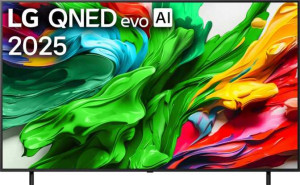
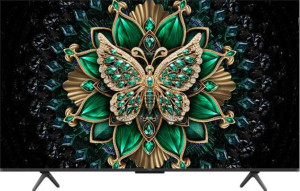
At the foundation, both the LG 75QNED85AUA and the TCL 75C6K share a strong common baseline: native 4K (3840 × 2160) resolution at 59 ppi, a 10-bit panel capable of rendering over a billion colors, a 144Hz refresh rate, and Mini-LED backlighting for improved local dimming and contrast over standard LED-LCD sets. Viewing angles are identical at 178° both horizontally and vertically, and both include an anti-reflection coating and an ambient light sensor — so in everyday use, these two screens will feel very comparable at a surface level.
The meaningful divergence lies in HDR ecosystem support and panel technology. The TCL 75C6K uses a QLED layer on top of its Mini-LED LCD structure, which means quantum dots are boosting color volume and brightness — a tangible upgrade over the LG's standard Mini-LED LCD approach. More critically, the TCL supports Dolby Vision and HDR10+, while the LG covers only HDR10 and HLG. In practice, Dolby Vision and HDR10+ deliver dynamic, scene-by-scene tone mapping rather than a static HDR curve, which results in noticeably more accurate highlights and shadow detail on supported content — and the streaming and Blu-ray library for both formats is substantial. The LG's omission of both is a real-world limitation as premium content increasingly relies on them. On the gaming side, the TCL also adds AMD FreeSync Premium Pro to the shared FreeSync and FreeSync Premium support, which layers in low-framerate compensation and HDR requirements for tear-free, low-latency gaming at variable frame rates.
The TCL 75C6K holds a clear display advantage. Its QLED panel technology, broader HDR format compatibility (Dolby Vision + HDR10+), and expanded adaptive sync support give it a meaningful edge for both cinematic and gaming use cases — all at the same screen size class and resolution. Unless the LG offers compensating advantages elsewhere, the TCL is the stronger display package based strictly on these specs.