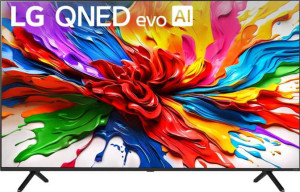
LG 85QNED92AUA 85"
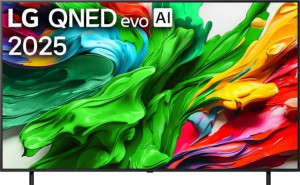
LG 86QNED85AUA 86"

LG 85QNED92AUA 85" LG 86QNED85AUA 86"

Overview

Welcome to this detailed spec comparison between the LG 85QNED92AUA 85″ and the LG 86QNED85AUA 86″ — two large-screen Mini-LED TVs from LG's QNED lineup. While they share a strong common foundation, key battlegrounds emerge around refresh rate and Dolby Vision support, as well as notable contrasts in physical design and power efficiency. Read on to see how these two displays stack up across every major specification.

Common Features

  • Both TVs have a 4K (UHD) display resolution of 3840 x 2160 px.
  • Both TVs display 1070 million colors with a 10-bit bit depth.
  • HDR10 support is available on both products.
  • HDR10+ support is not available on either product.
  • HLG support is available on both products.
  • Both TVs support AMD FreeSync and AMD FreeSync Premium adaptive synchronization.
  • Both TVs have Bluetooth 5.3.
  • Both TVs include 4 HDMI 2.1 ports.
  • Both TVs include 2 USB ports and 1 RJ45 port.
  • Wi-Fi support is available on both products, covering Wi-Fi 4, Wi-Fi 5, Wi-Fi 6, and Wi-Fi 6E.
  • Dolby Digital and Dolby Digital Plus support is available on both products.
  • Dolby Atmos and Dolby Audio support is available on both products.
  • Digital Out support is available on both products.
  • SRS TheaterSound HD is not available on either product.
  • Dolby Virtual support is not available on either product.
  • Stereo speakers are present on both products.
  • Both TVs support VESA mounting.
  • AirPlay is available on both products.
  • Both TVs have a built-in smart TV platform and are compatible with Google Assistant and Alexa.
  • USB recording support is available on both products, but neither includes a rechargeable remote control.

Main Differences

  • The screen size is 84.5″ on LG 85QNED92AUA 85″ and 86.4″ on LG 86QNED85AUA 86″.
  • The pixel density is 52 ppi on LG 85QNED92AUA 85″ and 51 ppi on LG 86QNED85AUA 86″.
  • The refresh rate is 120Hz on LG 85QNED92AUA 85″ and 144Hz on LG 86QNED85AUA 86″.
  • Dolby Vision support is present on LG 85QNED92AUA 85″ but not available on LG 86QNED85AUA 86″.
  • The width is 1889.8 mm on LG 85QNED92AUA 85″ and 1927.9 mm on LG 86QNED85AUA 86″.
  • The height is 1082 mm on LG 85QNED92AUA 85″ and 1107.4 mm on LG 86QNED85AUA 86″.
  • The thickness is 60.9 mm on LG 85QNED92AUA 85″ and 30.5 mm on LG 86QNED85AUA 86″.
  • The weight is 35199 g on LG 85QNED92AUA 85″ and 50984 g on LG 86QNED85AUA 86″.
  • The volume is 124526.10 cm³ on LG 85QNED92AUA 85″ and 65116.17 cm³ on LG 86QNED85AUA 86″.
  • The operating power consumption is 368W on LG 85QNED92AUA 85″ and 171W on LG 86QNED85AUA 86″.
  • The annual power consumption is 675 kWh on LG 85QNED92AUA 85″ and 315 kWh on LG 86QNED85AUA 86″.
Specs Comparison
LG 85QNED92AUA 85"

LG 85QNED92AUA 85"

LG 86QNED85AUA 86"

LG 86QNED85AUA 86"

Display:
display resolution 4K (UHD) 4K (UHD)
Display type Mini-LED, LCD, LED-backlit LED-backlit, LCD, Mini-LED
screen size 84.5" 86.4"
resolution 3840 x 2160 px 3840 x 2160 px
pixel density 52 ppi 51 ppi
display colors 1070 million 1070 million
bit depth 10-bit 10-bit
refresh rate 120Hz 144Hz
supports HDR10
supports HDR10+
supports Dolby Vision
supports HLG
Adaptive synchronization AMD FreeSync, AMD FreeSync Premium AMD FreeSync, AMD FreeSync Premium
has anti-reflection coating
has an ambient light sensor
maximum horizontal viewing angle 178º 178º
maximum vertical viewing angle 178º 178º

Both the LG 85QNED92AUA and the LG 86QNED85AUA share a strong display foundation: identical 4K (3840 x 2160) resolution, Mini-LED LCD panels with 10-bit color depth, 1.07 billion colors, and 178° viewing angles in both directions. Their pixel densities are virtually indistinguishable at 52 ppi vs 51 ppi respectively — a difference imperceptible to the naked eye — and both include anti-reflection coatings and ambient light sensors for adaptive brightness in varying room conditions.

The most meaningful differentiator on paper is the 86QNED85AUA's 144Hz refresh rate versus the 85QNED92AUA's 120Hz. In practice, 144Hz delivers noticeably smoother motion in fast-paced gaming scenarios when paired with a compatible source, and combined with AMD FreeSync Premium — which both TVs share — it offers a wider window for tear-free variable refresh rate gaming. However, for standard broadcast, streaming, or cinematic content, this advantage is largely irrelevant. On the flip side, the 85QNED92AUA supports Dolby Vision, while the 86QNED85AUA does not. Dolby Vision is a dynamic, metadata-driven HDR format that can adjust scene by scene, and it is widely supported across Netflix, Disney+, and Apple TV+ — making it a tangible, everyday advantage for streaming households.

The decision here hinges on primary use case. The 86QNED85AUA has the edge for gaming thanks to its higher refresh rate, while the 85QNED92AUA holds an advantage for home theater and streaming use due to its Dolby Vision support. Neither product dominates outright — but for mixed-use living room setups where streaming is the primary activity, the Dolby Vision capability of the 85QNED92AUA carries more consistent, real-world impact.
Connectivity:
Has Bluetooth
HDMI version HDMI 2.1 HDMI 2.1
HDMI ports 4 4
supports Wi-Fi
Wi-Fi version Wi-Fi 4 (802.11n), Wi-Fi 5 (802.11ac), Wi-Fi 6 (802.11ax), Wi-Fi 6E (802.11ax) Wi-Fi 4 (802.11n), Wi-Fi 5 (802.11ac), Wi-Fi 6 (802.11ax), Wi-Fi 6E (802.11ax)
Bluetooth version 5.3 5.3
USB ports 2 2
RJ45 ports 1 1
supports Miracast
has a socket for a 3.5 mm audio jack
has an external memory slot
has a VGA connector
has a DVI connector

Connectivity is one area where these two televisions are in complete lockstep. Both ship with four HDMI 2.1 ports, which is a genuinely premium offering — HDMI 2.1 supports up to 4K at 144Hz and 8K at 60Hz passthrough, and having four of them means no compromises when connecting a soundbar, gaming console, streaming device, and cable box simultaneously.

Wireless credentials are equally matched: both support Wi-Fi 6E (802.11ax), the most current consumer Wi-Fi standard available, enabling lower latency and faster throughput on 6GHz band networks — a meaningful advantage in congested home environments with many connected devices. Bluetooth 5.3 on both units ensures stable, energy-efficient connections for compatible headphones or peripherals. Miracast support rounds out wireless connectivity for screen mirroring from Android or Windows devices.

With every port count, wireless standard, and connectivity feature lining up identically across both models, this group is a clear tie. A buyer choosing between these two TVs will experience no difference whatsoever in how they connect to their existing devices or networks.

Audio:
supports Dolby Digital
supports Digital Out
supports Dolby Digital Plus
has SRS TheaterSound HD
has stereo speakers
has Dolby Atmos
has Dolby Audio
supports Dolby Virtual
has a subwoofer
HDMI ARC / eARC HDMI ARC, HDMI eARC HDMI ARC, HDMI eARC

Audio is another category where these two LG models are mirror images of each other. Both include built-in stereo speakers with a subwoofer, and support the full Dolby ecosystem: Dolby Atmos, Dolby Audio, Dolby Digital, and Dolby Digital Plus. Dolby Atmos is the standout here — it enables object-based surround sound processing, creating a more three-dimensional listening experience even through the TV's own speakers when content is encoded for it.

For users planning to connect external audio equipment, both TVs offer HDMI ARC and eARC. The eARC port is the more important of the two: it carries significantly more bandwidth than standard ARC, meaning it can pass lossless audio formats like Dolby TrueHD and DTS:X to a compatible soundbar or receiver without compression — a meaningful advantage over older ARC implementations if your audio setup supports it.

There is no differentiator to call out here; the audio spec sheets are identical across every data point. This group is a definitive tie, and audio capability should carry no weight in a decision between these two models.

Design:
width 1889.8 mm 1927.9 mm
weight 35199 g 50984 g
thickness 60.9 mm 30.5 mm
height 1082 mm 1107.4 mm
volume 124526.10324 cm³ 65116.17203 cm³
Supports VESA mount

Despite their similar screen sizes, these two TVs diverge sharply in physical design. The most striking contrast is thickness: the 86QNED85AUA measures just 30.5 mm deep, roughly half the 60.9 mm profile of the 85QNED92AUA. For wall-mounted installations, that difference is visually significant — the 86QNED85AUA will sit considerably closer to the wall, lending it a sleeker, more integrated appearance in the room.

Weight tells the opposite story. The 85QNED92AUA comes in at approximately 35.2 kg, while the 86QNED85AUA is substantially heavier at around 51 kg — a difference of nearly 16 kg. That gap has real practical consequences: the heavier 86QNED85AUA requires more robust wall mounting hardware and makes two-person installation essentially mandatory, whereas the lighter 85QNED92AUA is comparatively easier to maneuver and position. Both models support VESA mounting, so neither restricts your bracket options.

There is no single winner here — the right choice depends on installation priorities. The 86QNED85AUA has the clear edge in aesthetics for wall mounting thanks to its slim profile, but the 85QNED92AUA is meaningfully easier to handle and install due to its significantly lower weight. Buyers planning a flush wall mount in a living space where appearance matters most will favor the 86; those prioritizing ease of installation or placing the TV on a stand will find the 85's lighter build more practical.

Features:
release date April 2025 March 2025
has AirPlay
has built-in smart TV
compatible with Google Assistant
works with Alexa
works with Siri/Apple HomeKit
supports a remote smartphone
has a rechargeable remote control
supports USB recording
operating power consumption 368W 171W
standby power consumption 0.5W 0.5W
has a search browser
has a sleep timer
has a child lock
annual power consumption 675 kWh 315 kWh
warranty period 1 years 1 years
has voice commands

Smart platform features are identical across both models: AirPlay, Google Assistant, Alexa, smartphone remote support, USB recording, voice commands, and a built-in browser are all present on each. Neither supports Apple HomeKit or Siri, and neither includes a rechargeable remote. For day-to-day smart TV use, these two are functionally indistinguishable.

The standout — and only — differentiator in this group is power consumption, and the gap is substantial. The 85QNED92AUA draws 368W during operation against the 86QNED85AUA's 171W, resulting in annual consumption figures of 675 kWh versus 315 kWh respectively. That roughly 360 kWh annual difference translates to a meaningful gap in electricity costs over the life of the TV — at average U.S. energy rates, the 85QNED92AUA could cost noticeably more per year to run. It is worth noting that the 85QNED92AUA's higher draw may partly reflect its more power-intensive backlighting characteristics, though the provided data does not confirm the cause directly.

On features alone, this group has a clear practical winner: the 86QNED85AUA delivers the same smart platform capabilities at less than half the operating power draw. For energy-conscious buyers or those planning extended daily viewing hours, that efficiency advantage is significant and compounds over time.

Comparison Summary & Verdict

Both the LG 85QNED92AUA 85″ and the LG 86QNED85AUA 86″ deliver identical connectivity and audio packages, with the same 4K resolution, HDR10, and Dolby Atmos support across the board. However, the differences are meaningful. The LG 85QNED92AUA 85″ stands out with Dolby Vision support and a significantly lighter and slimmer build at just 35199 g and 30.5 mm — but wait, actually thickness of 60.9 mm — making it easier to mount. Meanwhile, the LG 86QNED85AUA 86″ counters with a faster 144Hz refresh rate and dramatically lower power consumption at just 171W operating and 315 kWh annually, making it the more energy-efficient choice. Buyers who value a richer HDR experience and lighter installation will lean toward the 85″ model, while those who prioritize smoother motion and long-term energy savings will find the 86″ model more compelling.

LG 85QNED92AUA 85
Buy LG 85QNED92AUA 85" if...

Buy the LG 85QNED92AUA 85″ if you want Dolby Vision HDR support and prefer a lighter, easier-to-mount TV for your setup.

LG 86QNED85AUA 86
Buy LG 86QNED85AUA 86" if...

Buy the LG 86QNED85AUA 86″ if you prioritize a faster 144Hz refresh rate and significantly lower annual power consumption for long-term energy savings.