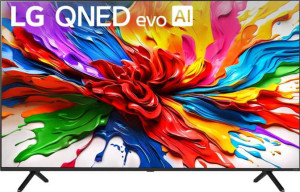
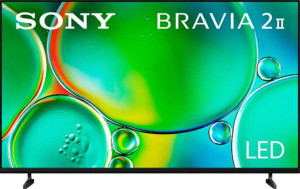
Both TVs share the same 4K (3840 x 2160) resolution, 10-bit panel depth, and a color volume of 1070 million colors, so at the foundational level they are evenly matched in image fidelity. However, the underlying panel technology tells a very different story. The LG 85QNED92AUA uses a Mini-LED backlight system, which employs thousands of smaller, more precisely controlled dimming zones compared to the conventional LED-backlit LCD in the Sony K-75S20M2. In practice, this translates to tighter local dimming, deeper perceived blacks, and significantly better handling of high-contrast scenes — a meaningful real-world advantage for dark-room viewing.
The single largest performance gap between these two displays is the refresh rate: the LG runs at 120Hz while the Sony is capped at 60Hz. For everyday TV watching this may be acceptable, but for sports, action films, or gaming, 120Hz delivers dramatically smoother motion with far less blur. Paired with that, the LG also supports Dolby Vision — a dynamic, frame-by-frame HDR format — while the Sony is limited to HDR10 and HLG only. Dolby Vision content, increasingly common on streaming platforms, will look noticeably more optimized on the LG. Neither TV supports HDR10+, so that is a wash.
The Sony does edge out a slightly higher pixel density (59 ppi vs. 52 ppi) owing to its smaller 74.5″ screen, meaning individual pixels are marginally harder to discern up close — but at living-room viewing distances the difference is largely imperceptible. Both panels offer identical 178° horizontal and vertical viewing angles, anti-reflection coatings, and ambient light sensors, so room placement flexibility and everyday usability are equivalent. Overall, the LG 85QNED92AUA holds a clear display advantage: its Mini-LED backlighting, 120Hz refresh rate, larger screen, and Dolby Vision support collectively represent a substantially more capable panel for both cinematic and interactive use cases.