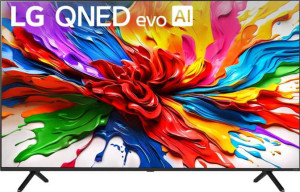
LG 85QNED92AUA 85"
TCL 115C7K 115"

LG 85QNED92AUA 85" TCL 115C7K 115"

Overview

Welcome to our in-depth specification comparison between the LG 85QNED92AUA 85″ and the TCL 115C7K 115″. These two large-format TVs share a 4K UHD resolution and Mini-LED backlighting heritage, yet they take notably different approaches when it comes to screen size and pixel density, refresh rate and adaptive sync, and overall power and connectivity. Read on to see how every spec stacks up before making your decision.

Common Features

  • Both TVs offer 4K (UHD) display resolution at 3840 x 2160 px.
  • Both TVs display 1.07 billion colors at a 10-bit color depth.
  • HDR10 support is available on both products.
  • Dolby Vision support is available on both products.
  • HLG support is available on both products.
  • An anti-reflection coating is present on both products.
  • Bluetooth connectivity is available on both products.
  • Both TVs include 4 HDMI 2.1 ports and 1 RJ45 port.
  • Wi-Fi support is available on both products.
  • Miracast support is available on both products.
  • Neither product includes an external memory slot or a VGA connector.
  • Both TVs support Dolby Digital, Dolby Digital Plus, and Digital Out.
  • Dolby Atmos and Dolby Audio are available on both products.
  • Dolby Virtual support is not available on either product.
  • SRS TheaterSound HD is not available on either product.
  • Stereo speakers are present on both products.
  • Both TVs support VESA mounting.
  • AirPlay is available on both products.
  • A built-in smart TV platform is present on both products.
  • Google Assistant compatibility is available on both products.
  • Apple HomeKit and Siri compatibility is not available on either product.
  • Remote smartphone control is supported on both products.
  • Neither product includes a rechargeable remote control.
  • USB recording is supported on both products.
  • Both TVs have a standby power consumption of 0.5W.

Main Differences

  • The display technology is Mini-LED, LCD, LED-backlit on LG 85QNED92AUA 85″ and QLED, LED-backlit, LCD, Mini-LED on TCL 115C7K 115″.
  • Screen size is 84.5″ on LG 85QNED92AUA 85″ and 114.5″ on TCL 115C7K 115″.
  • Pixel density is 52 ppi on LG 85QNED92AUA 85″ and 38 ppi on TCL 115C7K 115″.
  • Refresh rate is 120Hz on LG 85QNED92AUA 85″ and 144Hz on TCL 115C7K 115″.
  • HDR10+ support is present on TCL 115C7K 115″ but not available on LG 85QNED92AUA 85″.
  • Adaptive sync support covers AMD FreeSync and AMD FreeSync Premium on LG 85QNED92AUA 85″, while TCL 115C7K 115″ also adds AMD FreeSync Premium Pro.
  • Wi-Fi 6E (802.11ax) support is available on LG 85QNED92AUA 85″ but not on TCL 115C7K 115″.
  • Bluetooth version is 5.3 on LG 85QNED92AUA 85″ and 5.4 on TCL 115C7K 115″.
  • USB ports total 2 on LG 85QNED92AUA 85″ and 3 on TCL 115C7K 115″.
  • A 3.5mm audio jack socket is absent on LG 85QNED92AUA 85″ but present on TCL 115C7K 115″.
  • Width is 1889.8 mm on LG 85QNED92AUA 85″ and 2566 mm on TCL 115C7K 115″.
  • Height is 1082 mm on LG 85QNED92AUA 85″ and 1471 mm on TCL 115C7K 115″.
  • Thickness is 60.9 mm on LG 85QNED92AUA 85″ and 57 mm on TCL 115C7K 115″.
  • Weight is 35199 g on LG 85QNED92AUA 85″ and 99800 g on TCL 115C7K 115″.
  • Volume is 124526.10 cm³ on LG 85QNED92AUA 85″ and 215151.40 cm³ on TCL 115C7K 115″.
  • Alexa compatibility is available on LG 85QNED92AUA 85″ but not on TCL 115C7K 115″.
  • Operating power consumption is 368W on LG 85QNED92AUA 85″ and 180W on TCL 115C7K 115″.
Specs Comparison
LG 85QNED92AUA 85"

LG 85QNED92AUA 85"

TCL 115C7K 115"

TCL 115C7K 115"

Display:
display resolution 4K (UHD) 4K (UHD)
Display type Mini-LED, LCD, LED-backlit QLED, LED-backlit, LCD, Mini-LED
screen size 84.5" 114.5"
resolution 3840 x 2160 px 3840 x 2160 px
pixel density 52 ppi 38 ppi
display colors 1070 million 1070 million
bit depth 10-bit 10-bit
refresh rate 120Hz 144Hz
supports HDR10
supports HDR10+
supports Dolby Vision
supports HLG
Adaptive synchronization AMD FreeSync, AMD FreeSync Premium AMD FreeSync, AMD FreeSync Premium, AMD FreeSync Premium Pro
has anti-reflection coating
has an ambient light sensor
maximum horizontal viewing angle 178º 178º
maximum vertical viewing angle 178º 178º

Both the LG 85QNED92AUA and the TCL 115C7K share the same 4K (3840 x 2160) resolution and identical 10-bit color depth capable of rendering 1.07 billion colors, so neither has a raw resolution or color palette advantage. However, the massive size difference — 84.5″ vs. 114.5″ — means the TCL spreads those same pixels across a much larger panel, resulting in a noticeably lower pixel density of 38 ppi versus the LG′s 52 ppi. In practice, on a screen that large, this trade-off is most visible at closer seating distances; at typical living-room viewing distances the difference is far less perceivable.

On refresh rate and adaptive sync, the TCL holds a measurable edge. Its 144Hz panel outpaces the LG′s 120Hz, which matters most for gaming and fast-motion content. The TCL also supports AMD FreeSync Premium Pro — the most advanced tier — while the LG tops out at FreeSync Premium. For HDR, both cover HDR10, Dolby Vision, and HLG, but the TCL adds HDR10+ support, giving it broader format compatibility with Amazon and other HDR10+ sources. Both panels share identical 178° horizontal and vertical viewing angles, anti-reflection coatings, and ambient light sensors, so comfort and room adaptability are evenly matched.

Overall, the TCL 115C7K has a clear display specification advantage: it offers a higher refresh rate, a superior adaptive sync tier, and broader HDR format support. The LG 85QNED92AUA counters with higher pixel density for a sharper image per inch, which is a genuine advantage in smaller rooms or at closer distances. The right choice depends on use case — the TCL is the stronger performer for gaming and multimedia versatility, while the LG delivers a crisper picture for its size.

Connectivity:
Has Bluetooth
HDMI version HDMI 2.1 HDMI 2.1
HDMI ports 4 4
supports Wi-Fi
Wi-Fi version Wi-Fi 4 (802.11n), Wi-Fi 5 (802.11ac), Wi-Fi 6 (802.11ax), Wi-Fi 6E (802.11ax) Wi-Fi 4 (802.11n), Wi-Fi 5 (802.11ac), Wi-Fi 6 (802.11ax)
Bluetooth version 5.3 5.4
USB ports 2 3
RJ45 ports 1 1
supports Miracast
has a socket for a 3.5 mm audio jack
has an external memory slot
has a VGA connector
has a DVI connector

The wired connectivity foundations are nearly identical: both TVs offer 4 HDMI 2.1 ports and a single RJ45 Ethernet port, ensuring full bandwidth for 4K/120Hz gaming and future-proof source compatibility. Where they diverge is in USB — the TCL 115C7K edges ahead with 3 USB ports versus the LG′s 2, a small but practical advantage for users who connect multiple storage drives, keyboards, or other peripherals simultaneously.

On wireless, the LG 85QNED92AUA pulls ahead in Wi-Fi range and congestion handling by supporting Wi-Fi 6E (802.11ax), which the TCL lacks. Wi-Fi 6E opens access to the less-crowded 6GHz band, translating to more stable throughput in dense network environments. The TCL counters with the newer Bluetooth 5.4 versus the LG′s 5.3, a marginal difference that brings slightly improved connection reliability and efficiency — though neither version represents a dramatic real-world gap. Both support Miracast for wireless screen mirroring.

A notable exclusive on the TCL is the presence of a 3.5mm headphone jack, absent on the LG — a genuinely useful port for users who want to connect wired headphones directly to the TV without an adapter or separate audio device. Taken together, the connectivity comparison is close, but the LG′s Wi-Fi 6E support is the most impactful differentiator for households with crowded wireless networks, while the TCL offers slightly more physical port flexibility and the convenience of a headphone jack.

Audio:
supports Dolby Digital
supports Digital Out
supports Dolby Digital Plus
has SRS TheaterSound HD
has stereo speakers
has Dolby Atmos
has Dolby Audio
supports Dolby Virtual
has a subwoofer
HDMI ARC / eARC HDMI ARC, HDMI eARC HDMI ARC, HDMI eARC

Across every audio specification provided, the LG 85QNED92AUA and the TCL 115C7K are a perfect match. Both include built-in stereo speakers with a subwoofer, support the full Dolby audio stack — Dolby Digital, Dolby Digital Plus, Dolby Audio, and Dolby Atmos — and offer both HDMI ARC and eARC for connecting external sound systems. There is no differentiating data point in this group.

The shared Dolby Atmos support is worth highlighting for users who plan to use the TV′s built-in speakers: it enables object-based spatial audio processing, which creates a more dimensional soundstage than standard stereo. Meanwhile, HDMI eARC is the more practically significant port for home theater setups, as it supports lossless and high-bitrate audio formats — like Dolby TrueHD and DTS-HD — passthrough to an AV receiver or soundbar, which plain ARC cannot handle.

Based strictly on the provided specs, this group is a dead tie. Neither TV holds any audio advantage over the other, and the choice between them should rest entirely on the differentiators found in other specification groups.

Design:
width 1889.8 mm 2566 mm
weight 35199 g 99800 g
thickness 60.9 mm 57 mm
height 1082 mm 1471 mm
volume 124526.10324 cm³ 215151.402 cm³
Supports VESA mount

The physical scale difference between these two TVs is dramatic and cannot be overstated. The TCL 115C7K is 2566 mm wide and 1471 mm tall — roughly 2.6 meters across — compared to the LG′s 1890 mm width and 1082 mm height. That makes the TCL over 35% wider and taller, requiring a fundamentally different room and furniture configuration. Wall-mounting the TCL is a serious structural undertaking, and even stand placement demands a surface well over 2.5 meters wide.

Weight tells a similar story. The TCL tips the scales at 99.8 kg — nearly 100 kg, or roughly three times the LG′s 35.2 kg. This has direct implications for installation: the TCL will almost certainly require professional mounting, reinforced wall anchors, or a heavy-duty dedicated stand, and maneuvering it into position is a multi-person job regardless. The LG, while still a large and heavy panel, is far more manageable by comparison. Both support VESA mounting, but the practical burden of executing that mount is vastly different between the two.

On thickness, the TCL is marginally slimmer at 57 mm versus the LG′s 60.9 mm — a negligible real-world difference. In this group, there is no outright winner in terms of quality, but the LG 85QNED92AUA has a decisive practicality advantage: it is dramatically easier to transport, install, and accommodate spatially. The TCL is purpose-built for large dedicated home theater or commercial spaces where its scale is an asset, not a liability.

Features:
release date April 2025 March 2025
has AirPlay
has built-in smart TV
compatible with Google Assistant
works with Alexa
works with Siri/Apple HomeKit
supports a remote smartphone
has a rechargeable remote control
supports USB recording
operating power consumption 368W 180W
standby power consumption 0.5W 0.5W
has a search browser
has a sleep timer
has a child lock
has voice commands

The smart feature sets are largely aligned — both TVs include built-in smart platforms, AirPlay, Google Assistant, voice commands, smartphone remote control, USB recording, and standard convenience features like sleep timer and child lock. The one meaningful ecosystem differentiator is that the LG 85QNED92AUA also supports Amazon Alexa, which the TCL 115C7K lacks. For households already invested in Alexa-based smart home devices, this gives the LG a tangible integration edge — users can control compatible lights, thermostats, and routines directly through the TV.

The most striking gap in this group, however, is power consumption. The LG draws 368W during operation versus the TCL′s 180W — more than double. While larger panels generally consume more power, this is a substantial difference that adds up meaningfully over time. For a TV used several hours daily, the LG′s higher draw could translate to a noticeably larger electricity bill annually. Standby consumption is identical at 0.5W for both, so the gap is purely a usage-time concern.

On balance, the TCL 115C7K′s dramatically lower operating power consumption is the standout advantage in this group for most users, especially given the TCL′s larger screen size making the efficiency gap even more impressive. The LG counters with Alexa compatibility for smart home users, but that advantage is ecosystem-specific. For anyone not already embedded in the Alexa ecosystem, the TCL holds a clear edge here on long-term running costs.

Comparison Summary & Verdict

After reviewing every specification, both TVs deliver a strong 4K HDR experience with Dolby Vision, Dolby Atmos, and four HDMI 2.1 ports — but they serve quite different audiences. The LG 85QNED92AUA 85″ stands out with its higher 52 ppi pixel density, Wi-Fi 6E support, Alexa compatibility, and a far lighter 35 kg frame, making it the better fit for rooms where image sharpness, smart-home integration, and easier installation matter most. The TCL 115C7K 115″, on the other hand, dominates with its massive 114.5-inch screen, a faster 144Hz refresh rate, AMD FreeSync Premium Pro, HDR10+ support, Bluetooth 5.4, three USB ports, a 3.5mm audio jack, and a notably lower 180W operating power consumption — making it the ideal choice for home-cinema enthusiasts and serious gamers who want the most immersive, feature-rich experience available at the largest scale.

LG 85QNED92AUA 85
Buy LG 85QNED92AUA 85" if...

Buy the LG 85QNED92AUA 85″ if you want a sharper, lighter TV with Wi-Fi 6E and Alexa support that is easier to install and better suited for bright, mid-sized rooms.

TCL 115C7K 115
Buy TCL 115C7K 115" if...

Buy the TCL 115C7K 115″ if you want the ultimate cinematic screen size with a 144Hz refresh rate, HDR10+, AMD FreeSync Premium Pro, and lower operating power costs.