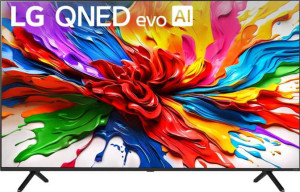
LG 85QNED92AUA 85"
TCL 85C7K 85"

LG 85QNED92AUA 85" TCL 85C7K 85"

Overview

When choosing between the LG 85QNED92AUA 85″ and the TCL 85C7K 85″, buyers are faced with two compelling 85-inch Mini-LED televisions that share a strong foundation yet diverge in meaningful ways. This comparison examines their key battlegrounds, including refresh rate and HDR capabilities, connectivity options, power consumption, and design dimensions, to help you determine which large-screen TV is the right fit for your living room.

Common Features

  • Both TVs have a 4K (UHD) display resolution of 3840 x 2160 px.
  • Both TVs have a pixel density of 52 ppi.
  • Both TVs support 1070 million display colors at 10-bit depth.
  • HDR10 support is available on both products.
  • Dolby Vision support is available on both products.
  • HLG support is available on both products.
  • Both TVs have 4 HDMI ports at version 2.1.
  • Both TVs include Bluetooth and Wi-Fi connectivity.
  • Both TVs have 1 RJ45 port.
  • Miracast support is available on both products.
  • Neither TV has an external memory slot or a VGA connector.
  • Dolby Digital and Dolby Digital Plus support is available on both products.
  • Dolby Atmos and Dolby Audio support is available on both products.
  • Digital Out support is available on both products.
  • Stereo speakers are present on both TVs.
  • SRS TheaterSound HD is not available on either product.
  • Dolby Virtual is not available on either product.
  • Both TVs support VESA mounting.
  • AirPlay support is available on both products.
  • Both TVs have a built-in smart TV platform, are compatible with Google Assistant, support remote smartphone control, and support USB recording, while neither works with Siri/Apple HomeKit or has a rechargeable remote control.
  • Both TVs have a standby power consumption of 0.5W.

Main Differences

  • The display type is Mini-LED, LCD, LED-backlit on LG 85QNED92AUA 85″ and QLED, LED-backlit, LCD, Mini-LED on TCL 85C7K 85″.
  • The screen size is 84.5″ on LG 85QNED92AUA 85″ and 84.6″ on TCL 85C7K 85″.
  • The refresh rate is 120Hz on LG 85QNED92AUA 85″ and 144Hz on TCL 85C7K 85″.
  • HDR10+ support is present on TCL 85C7K 85″ but not available on LG 85QNED92AUA 85″.
  • Adaptive synchronization includes AMD FreeSync and AMD FreeSync Premium on LG 85QNED92AUA 85″, while TCL 85C7K 85″ also adds AMD FreeSync Premium Pro.
  • Wi-Fi 6E (802.11ax) support is available on LG 85QNED92AUA 85″ but not on TCL 85C7K 85″, which supports up to Wi-Fi 6 (802.11ax).
  • The Bluetooth version is 5.3 on LG 85QNED92AUA 85″ and 5.4 on TCL 85C7K 85″.
  • The number of USB ports is 2 on LG 85QNED92AUA 85″ and 3 on TCL 85C7K 85″.
  • A 3.5mm audio jack socket is present on TCL 85C7K 85″ but not available on LG 85QNED92AUA 85″.
  • The width is 1889.8 mm on LG 85QNED92AUA 85″ and 1888 mm on TCL 85C7K 85″.
  • The weight is 35199 g on LG 85QNED92AUA 85″ and 36600 g on TCL 85C7K 85″.
  • The thickness is 60.9 mm on LG 85QNED92AUA 85″ and 57.9 mm on TCL 85C7K 85″.
  • The height is 1082 mm on LG 85QNED92AUA 85″ and 1084 mm on TCL 85C7K 85″.
  • The volume is 124526.10324 cm³ on LG 85QNED92AUA 85″ and 118497.6768 cm³ on TCL 85C7K 85″.
  • Alexa compatibility is available on LG 85QNED92AUA 85″ but not on TCL 85C7K 85″.
  • The operating power consumption is 368W on LG 85QNED92AUA 85″ and 103W on TCL 85C7K 85″.
Specs Comparison
LG 85QNED92AUA 85"

LG 85QNED92AUA 85"

TCL 85C7K 85"

TCL 85C7K 85"

Display:
display resolution 4K (UHD) 4K (UHD)
Display type Mini-LED, LCD, LED-backlit QLED, LED-backlit, LCD, Mini-LED
screen size 84.5" 84.6"
resolution 3840 x 2160 px 3840 x 2160 px
pixel density 52 ppi 52 ppi
display colors 1070 million 1070 million
bit depth 10-bit 10-bit
refresh rate 120Hz 144Hz
supports HDR10
supports HDR10+
supports Dolby Vision
supports HLG
Adaptive synchronization AMD FreeSync, AMD FreeSync Premium AMD FreeSync, AMD FreeSync Premium, AMD FreeSync Premium Pro
has anti-reflection coating
has an ambient light sensor
maximum horizontal viewing angle 178º 178º
maximum vertical viewing angle 178º 178º

Both the LG 85QNED92AUA and the TCL 85C7K share a strong display foundation: identical 4K (3840 x 2160) resolution at 52 ppi, 10-bit color depth rendering 1.07 billion colors, and the same wide 178° horizontal and vertical viewing angles. Both panels also support HDR10, Dolby Vision, and HLG, meaning they are well-equipped for the vast majority of HDR content available on streaming platforms and physical media. In everyday non-gaming, non-HDR10+ use, these two displays will feel very comparable to most viewers.

The meaningful differentiators emerge in gaming and advanced HDR performance. The TCL's 144Hz refresh rate versus the LG's 120Hz provides smoother motion in fast-paced gaming and high-frame-rate content — a tangible advantage for console and PC gamers. The TCL also extends its adaptive sync support to AMD FreeSync Premium Pro, which adds low-framerate compensation and HDR support within the sync window, whereas the LG tops out at FreeSync Premium. Additionally, the TCL supports HDR10+ — a dynamic metadata HDR format used by Amazon and some Blu-ray titles — which the LG lacks entirely. The TCL's panel is also classified as QLED in addition to Mini-LED, indicating a quantum dot color filter layer that typically expands the color gamut and improves color volume.

The TCL 85C7K holds a clear edge in this display category. Its higher refresh rate, broader HDR format compatibility (adding HDR10+), superior adaptive sync tier, and QLED color enhancement give it measurable advantages for both gaming and premium HDR viewing. The LG is by no means weak here, but spec-for-spec, the TCL offers more headroom for demanding use cases.

Connectivity:
Has Bluetooth
HDMI version HDMI 2.1 HDMI 2.1
HDMI ports 4 4
supports Wi-Fi
Wi-Fi version Wi-Fi 4 (802.11n), Wi-Fi 5 (802.11ac), Wi-Fi 6 (802.11ax), Wi-Fi 6E (802.11ax) Wi-Fi 4 (802.11n), Wi-Fi 5 (802.11ac), Wi-Fi 6 (802.11ax)
Bluetooth version 5.3 5.4
USB ports 2 3
RJ45 ports 1 1
supports Miracast
has a socket for a 3.5 mm audio jack
has an external memory slot
has a VGA connector
has a DVI connector

On the wired side, both TVs are evenly matched: four HDMI 2.1 ports, one RJ45 Ethernet port, and Miracast support. HDMI 2.1 is the current gold standard, enabling 4K at 120Hz and full bandwidth for next-gen consoles and high-end GPUs. Where the port count diverges is USB — the TCL 85C7K offers 3 USB ports versus the LG's 2, a small but practical win for users juggling flash drives, external hard drives, or USB audio devices simultaneously.

Wireless connectivity tells a split story. The LG 85QNED92AUA supports Wi-Fi 6E, extending connectivity into the 6GHz band — a real advantage in crowded wireless environments, as the 6GHz spectrum is far less congested than 2.4GHz or 5GHz and offers lower latency for streaming and gaming. The TCL tops out at Wi-Fi 6, which is still excellent for most households but lacks that extra headroom. Flipping the advantage, the TCL runs Bluetooth 5.4 versus the LG's 5.3 — a minor generational step that brings marginal improvements in connection stability and efficiency, though the real-world difference for typical TV use cases like soundbars or headphones is negligible.

The most practically significant exclusive belongs to the TCL: a 3.5mm headphone jack, which the LG omits entirely. For users who want to plug in wired headphones directly — whether for late-night viewing or accessibility reasons — this is a concrete usability advantage. On balance, the two TVs are closely matched in connectivity, but each has a distinct edge: the LG wins on wireless range with Wi-Fi 6E, while the TCL wins on physical versatility with an extra USB port and a headphone jack.

Audio:
supports Dolby Digital
supports Digital Out
supports Dolby Digital Plus
has SRS TheaterSound HD
has stereo speakers
has Dolby Atmos
has Dolby Audio
supports Dolby Virtual
has a subwoofer
HDMI ARC / eARC HDMI ARC, HDMI eARC HDMI ARC, HDMI eARC

Rarely does a spec group come down to a complete dead heat, but that is exactly the case here. Every audio specification provided for the LG 85QNED92AUA and the TCL 85C7K is identical: both include built-in stereo speakers with a subwoofer, support the full Dolby audio stack — Dolby Digital, Dolby Digital Plus, Dolby Audio, and Dolby Atmos — and offer both HDMI ARC and eARC for external audio system integration.

The presence of Dolby Atmos on both is worth noting for context: it enables object-based surround sound processing, meaning compatible content can place audio cues in three-dimensional space rather than fixed channels. Combined with eARC support, both TVs can pass high-bandwidth audio formats — including lossless Atmos from a connected soundbar or AV receiver — without compression, which matters most when pairing either set with a premium external audio setup.

Based strictly on the provided specs, these two TVs are perfectly tied in the audio category. Neither holds any measurable advantage over the other — every format, every feature, and every output option is shared equally. Buyers prioritizing audio specifications should look to other categories to differentiate these two models.

Design:
width 1889.8 mm 1888 mm
weight 35199 g 36600 g
thickness 60.9 mm 57.9 mm
height 1082 mm 1084 mm
volume 124526.10324 cm³ 118497.6768 cm³
Supports VESA mount

At 85 inches, neither of these TVs is going to be described as light, but there is a meaningful gap in weight: the LG 85QNED92AUA comes in at 35.2 kg versus the TCL 85C7K at 36.6 kg — a difference of roughly 1.4 kg. That gap is largely irrelevant once either set is wall-mounted or placed on a stand permanently, but during installation it is a noticeable distinction, especially when maneuvering the panel solo or in a tight space.

In terms of physical footprint, the two are nearly indistinguishable — width and height differ by under 2 mm in each dimension, meaning they will occupy essentially the same wall or cabinet space. Where they do diverge is depth: the LG measures 60.9 mm thick compared to the TCL's slimmer 57.9 mm. That 3 mm difference translates directly into the LG sitting slightly further from the wall when mounted, which can matter for cable management or in installations where a flush-to-wall profile is a priority. Both support VESA mounting, so neither has an advantage on that front.

Overall, the design category is very close, but the TCL 85C7K holds a marginal edge — it is slimmer in depth and, despite weighing more, its smaller overall volume suggests a more compact chassis profile. The LG's lighter weight is a modest counterpoint, most relevant during the installation process itself. For the vast majority of buyers, these physical differences will have little day-to-day impact.

Features:
release date April 2025 March 2025
has AirPlay
has built-in smart TV
compatible with Google Assistant
works with Alexa
works with Siri/Apple HomeKit
supports a remote smartphone
has a rechargeable remote control
supports USB recording
operating power consumption 368W 103W
standby power consumption 0.5W 0.5W
has a search browser
has a sleep timer
has a child lock
has voice commands

The smart feature set between these two TVs is largely aligned — both offer AirPlay, Google Assistant, voice commands, USB recording, and smartphone remote support, making either a capable hub for a modern connected living room. The one voice ecosystem difference worth flagging: the LG 85QNED92AUA also supports Amazon Alexa, while the TCL does not. For households already invested in Alexa-based smart home devices, this gives the LG a tangible integration advantage. Neither set supports Apple HomeKit or Siri, so that is a shared limitation for Apple-centric smart home users.

The most dramatic gap in this entire category is power consumption. The LG draws 368W during operation compared to the TCL's remarkably low 103W — the TCL consumes less than a third of the LG's operating power. At typical usage rates, this difference compounds significantly over time: running either TV for five hours a day, the LG would consume roughly 670 kWh more per year than the TCL. Depending on local electricity rates, that could translate to a meaningful addition to annual energy bills. Standby consumption is identical at 0.5W for both.

The TCL 85C7K holds a substantial edge in this group primarily due to its dramatically lower operating power draw, which has direct long-term cost implications. The LG counters with Alexa compatibility, a useful advantage for Amazon smart home users, but that single feature does not offset the efficiency gap for most buyers. Power-conscious consumers or those in high electricity-cost regions should weigh the TCL's efficiency advantage seriously.

Comparison Summary & Verdict

Both the LG 85QNED92AUA 85″ and the TCL 85C7K 85″ are well-matched 85-inch TVs sharing 4K resolution, Dolby Vision, Dolby Atmos, four HDMI 2.1 ports, and AirPlay support. However, their differences point each toward a distinct audience. The TCL 85C7K 85″ pulls ahead for gamers and cinephiles with its 144Hz refresh rate, HDR10+ support, AMD FreeSync Premium Pro, an extra USB port, a 3.5mm audio jack, and a remarkably low 103W operating power consumption, making it the more energy-efficient and feature-rich display choice. The LG 85QNED92AUA 85″, on the other hand, offers Wi-Fi 6E connectivity, native Alexa integration, and a slightly slimmer, lighter build, appealing to smart home enthusiasts who value seamless voice control and cutting-edge wireless performance over raw gaming specs.

LG 85QNED92AUA 85
Buy LG 85QNED92AUA 85" if...

Buy the LG 85QNED92AUA 85″ if you rely on a smart home ecosystem with Alexa and want Wi-Fi 6E support for the fastest wireless connectivity available.

TCL 85C7K 85
Buy TCL 85C7K 85" if...

Buy the TCL 85C7K 85″ if you want a higher 144Hz refresh rate, HDR10+ support, and dramatically lower power consumption for everyday use.